When I celebrated my 50th birthday some 20 years ago, I began snapping selfies of my face along the way to chart aging between 50 and 70. I will be 70 in March.
There are days when my face can be disheartening – and other days where I think, “Not bad…Stud Muffin…” At 69? Hardly… I have been 30 and I’ve been 69 and 30 was better.
Much better…
Can I still do the things I did at 30? No… In my day, I could lift 200 pounds. Today – Never! I’ve been helping a neighbor with his Ford Mustang project and I needed help lifting his transmission onto a hand truck. Erick, age 31, walked up and said, “let me help you with that…” grabbing the transmission and slinging it onto the hand truck. His transmission weighs 180 pounds.
I remember when I could do that…and I am paying for it now in joint pain.,
I call this time in life the age of denial – Boomers and GEN-Xers who deny the aging process. Boomers and Xers watched our parents grow old and fade away. This was not going to happen to us! By golly, we were going to stay young forever, enjoying eternal youth and prosperity.
Boy were we naive…
Mother Nature hasn’t changed much in thousands of years. Strides in medical science and reduced levels of stress have enabled us to age more gracefully. However, aging is also in our genetics and our lifestyle. We were born to grow old and die the minute the egg began to divide. Life began at a euphoric moment when our parents were having a happy.
I knew I was aging when I was walking through Target and a woman said to her child, “Step aside for the gentleman, Honey…”
I was 50…
James at 49…
It is remarkable how we perceive aging – at any age. I hear young people say, “Oh My God I am going to be 30!!!” and I have to laugh. Thirty?! You’re kidding me, right? Hard to feel sympathetic at nearly 70. However, I recall my 25th birthday thinking I was growing old. Older, maybe… But old?
I had no idea.
Seventy was something your parents were – or your grandparents. But you?! Us?! I will say to you wrapping up the sixties is surreal. Cresting 60 was sobering. But 70? This is when your own mortality comes up on the radar like approaching thunder in the distance. It gets your attention.
It has so often been said there’s a lot to be said for not having a choice. There are a lot of our fellow Hoosiers who are not here anymore. With each, we wonder what it is like to die – and we wonder what it is like to be them. Throughout our lives, we fear dying. Yet I’ve come to find I don’t fear dying anymore like I did at 30. I’ve had my time in the sun. Yet I don’t really want to die right now. Too much left to be done.
Okay – we’ve come this far as the generation that remembers great hazardous toys and the enjoyment before they were outlawed. Look – we grew up in cars with steel dashboards void of safety belts, crush zones, air bags – with the added benefit of unlimited power window travel, and those short-lived Mercury and Lincoln sedans with the power rolldown rear backlite glass where the coolest kids crawled out onto the trunk lid at 70 mph. These dare devils fell off the car, and the rest of us smart enough not to got on with our lives.
Why would dangerous toys scare us? These dangerous toys had a high thrill quotient – a few seconds of fear followed by the added benefits of injury.
“WOW! Let me try that!!!”
Let’s look at a few of them. Lawn Darts are at the top of the list of dangerous toys for the foolish. You’d shoot the darned things up in the air and they would come down via gravity to a planned target in the soil. The perceived problem was accuracy. A lot of kids never had a planned target. They’d launch these things and they landed wherever they landed – sometimes into a kid’s shoulder, foot, or skull.
Not a good thing.
No accounting for wind direction. The rest of us who had some level of common sense at age seven knew to get out of the way.
Darwin, I am afraid, also applies to children.
Yo-Yo Water Balls, much to my amazement, also lead the list. This is one of those toys where parents require some common sense. Yo-Yo Water Balls are colorful, fluid filled water balls with slingshot capability. They can also be slung around like a lasso and thrown. Lots of potential for eye injuries, facial bruising, and choking. “Choking,” you say? Yes, choking… The cord attached to the Yo-Yo ball can wrap around a child’s neck causing strangulation.
Ironically, Yo-Yo Water Balls are still being sold around the globe.
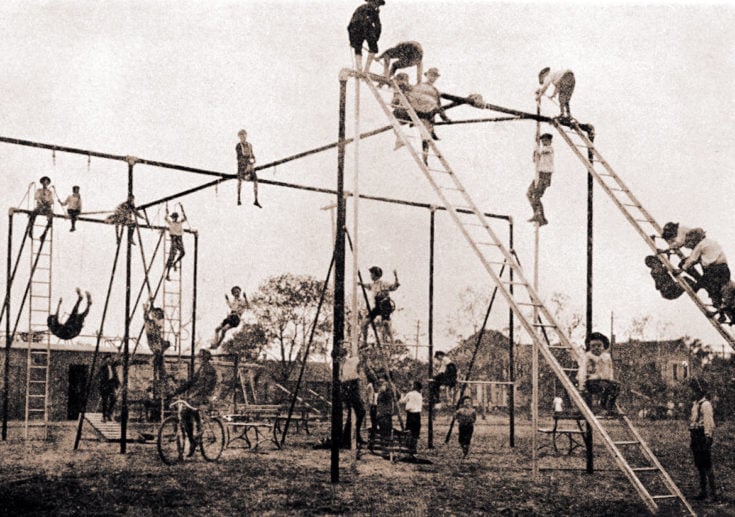
Playground architects obviously did not understand gravity and putting a kid 12 feet in the air in this high-impact pastime.
Aqua Dots are yet another considered hazardous toy because they contain a date rape drug known as GHB. Not for human consumption, but always some stupid kid in the neighborhood who would try to drink the fluid. “What’s wrong with Joey – he isn’t making any sense?”
What could go wrong with a Cabbage Patch doll – those cute little stuffed dolls kids wandered around with during the 1980s? Of course, too much of a good thing – the Snacktime Cabbage Patch Doll pulled from store shelves due to its chewing mechanism along with caught fingers and hair.
Small parts in toys were always fair game for the child safety authorities. Children would try to swallow these parts with catastrophic results. Sharp edges were good for blood on the living room carpet. Lead and asbestos in toys led to illness and unexplained deaths. Boomers grew up with all of it – and most of us are still here.
Of course the biggest insult is playground equipment. It has been a while since I’ve taken my son and grandchildren to the park, but the last time was disappointing. Whatever happened to monkey bars, jungle gyms, see-saws, merry-go-rounds, swings, sandboxes, stainless steel sliding boards, and hard concrete?
Merry-Go-Rounds were good for great fun, getting thrown off, and vomiting from motion sickness. Kids, laughing hysterically, would jump off and toss their lunchtime cookies all over the playground. Or…bleeding profusely, would run home crying.
What harm could a sandbox cause? That stuff we didn’t recognize. We’re play in the sand, put our hands in our mouths, and become sick from the microorganisms in the sand. We couldn’t see these little creatures so what harm could they cause? Cats in the neighborhood would relieve themselves in the sand and leave a gift.
Swing sets were always good for high impact potential. We’d swing as high as we could, with no regard for the dangers – nor care. If the swing sets were poor maintained, a chain would break, or we’d tag a finger on a rusty bolt. This was when we learned about tetanus and the sting of our first tetanus shot.
Sliding boards were a learn as you go experience. At high noon, we’d learn. We’d plant our skinny butts on that third-degree burn heat of stainless steel in the hot summer sun and find out. For an extra added attraction, we took Mom’s wax paper and worked the surface for a high-speed descent to the firmament. It was great fun until you descended at a rate of 180 mph and landed on the hot asphalt.
When we ran out of ideas, there was always Dad’s toolbox in the garage…..
Comedian-Satirist George Carlin gave us all a lot to think about in his 71 years on this apple. One was about the strange passage of time and how the concept of time was all made up by mankind. I think of this every New Years as the ball drops over Times Square followed by millions of hugs and kisses and letting the past go where it always goes from one year to the next – and that weird feeling that comes with the rest of the world ringing in the new year before us.
Last year becomes old and dusty overnight.
I think of long-standing New Years traditions we’ve followed through the decades. There have been many. Some have endured while others have not.
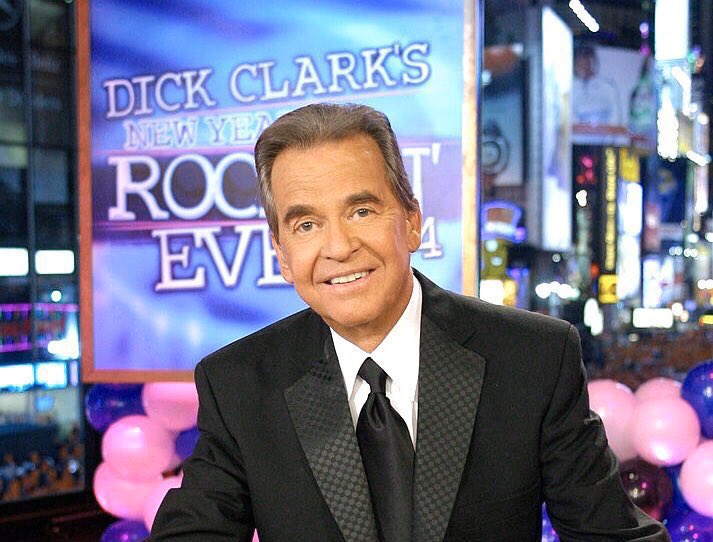
Undoubtedly the most observed New Years occasion in America has been Dick Clark’s New Year’s Rockin’ Eve – today hosted by Ryan Seacrest on ABC much as it has since the early 1970s primarily from Times Square in New York. New Year’s Rockin’ Eve offers real time activities along with pre-recorded events leading up to the ball drop at Midnight Eastern Standard Time.
Dick Clark’s founding of New Year’s Rockin’ Eve presented competition to Guy Lombardo’s New Years specials on CBS. Those first three seasons aired on NBC before moving to ABC in 1974-75. ABC became its permanent home.
When Guy Lombardo passed in 1977, CBS lost ground as the “go-to” New Years network, with viewers turning their attention to New Years Rockin’ Eve on ABC. This New Years tradition has maintained high ratings ever since – peaking in 2012 at 22.6 million viewers.
Long-time host and American icon, Dick Clark, hosted New Years Rockin’ Eve until suffering from a stroke in December of 2004. Regis Philbin quickly stepped in as guest host until Ryan Seacrest took over as co-host with Clark during his stroke recovery. Clark struggled with speech issues, which made his appearances more challenging. He remained host with Seacrest until his death in April of 2012.
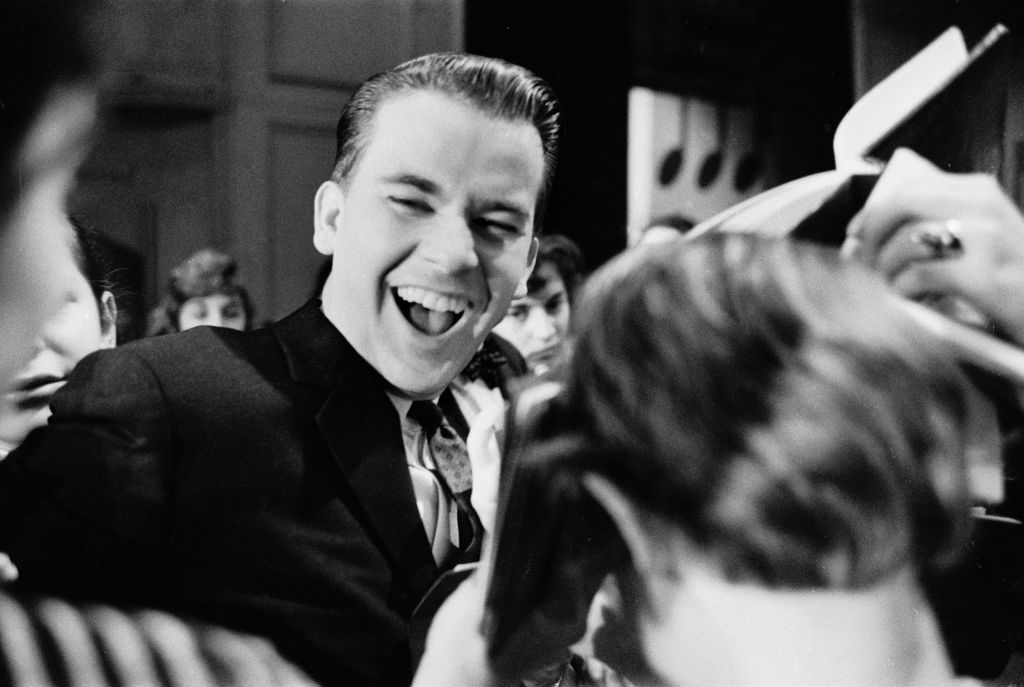
It can easily be said Dick Clark was the heart and soul of baby boomer America dating back to American Bandstand’s beginnings in 1956 as a locally broadcast weekend program primarily for teens. It was via Dick Clark’s American Bandstand that America was introduced to the rock and roll phenomenon that swept America and the world. He introduced viewers to the Motown sound and hordes of other pop music forms. He unified black and white Americans by bringing them together on the dance floor without segregation. It became the norm as a result of his policy.
American Bandstand was so successful that the ABC Television Network picked it up in 1957. With that transition to ABC, American Bandstand rose to national stardom, becoming one of the longest running shows in American history. What made the show so successful was Clark’s youthful personality and his ability to engage young people. He was immediately likeable. What’s more, parents trusted him and began to embrace rock and roll music. People found rock and roll music wasn’t just a fad, but an enduring pastime that became an integral part of the American experience.
It caught on and never left.
By 1958, American Bandstand was so popular, with some 50 million viewers, that it became a Saturday night tradition airing in the same time frame as time-proven successes like Lawrence Welk, which was popular with older audiences. Clark’s great success became the great success of rising performers. It cannot be overstated that Clark put a lot of young performers in the spotlight with enduring success. Some are very much still with us decades later.
American Bandstand left its birthplace of Philadelphia for Los Angeles in 1964 as boomers were coming of age in great numbers. The move to Los Angeles grew the show’s roots with a more diverse population and a growing audience.
American Bandstand aired daily Monday through Friday until the mid-1960s, then, moved to Saturday nights until 1988. In time, the American Bandstand lost its sizzle as boomers became adults and turned their attention to other venues. No one had time to watch American Bandstand.
It cannot be said enough the positive effect Dick Clark had on American culture. He stood by us well into the 21st century when his failed and he just couldn’t do it anymore. His loss was felt in the wake of his failing health and passing in the 2000s when a lot of us wondered how to end one year and begin the next without him.
When you get to be our age, you have a lifetime of holiday memories. Whether you are of the Christian faith, Jewish, or everywhere in between, the holidays have always been a pivotal point between one year and the next.
I’ve tried hard to hang onto the magic of Christmas. “A Christmas Story” movie, which hit the screens in 1983, captures the glory of Christmas through the eyes of a child. Jean Shephard’s incredible writing and gift of storytelling was unequalled. We lost this Chicago native in 1999, yet his legacy remains.
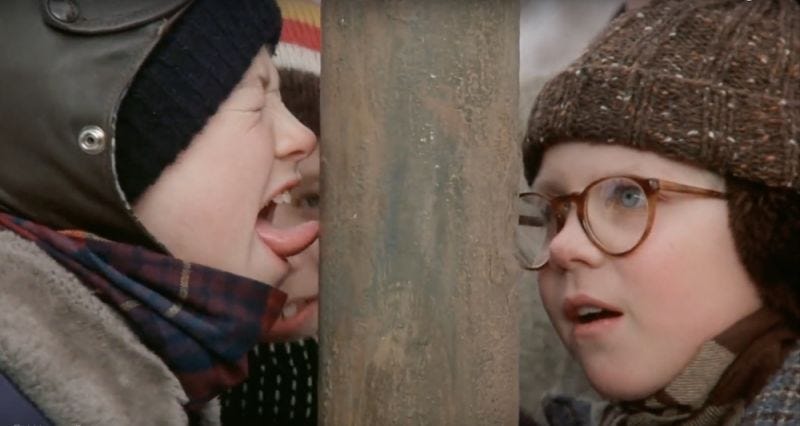
There are a bunch of us who can relate to his childhood, his experiences, and his memories. It was the perfect combination of writing, direction, casting, and the delivery. It was done so well you can feel the cold, smell the coal of a “blasted, stupid furnace,” and feel the raw emotion of a child growing up during the Great Depression. All of the silly stupid kid experiences – the music, the triple dog dare, the neighborhood bully and his little toady, a screaming mother, the idle threats of a clueless father, and the battle of wits over a “major award” leg lamp – the latter of which you had to wonder ever existed.
In truth, the leg lamp was a figment of Shephard’s imagination, yet conceivably something Madison Avenue would come up with. The leg lamp reminds me of my father when he brought home a cheesy particle board mid-century modern record cabinet and commented on how beautiful it was – however, only in his eyes.
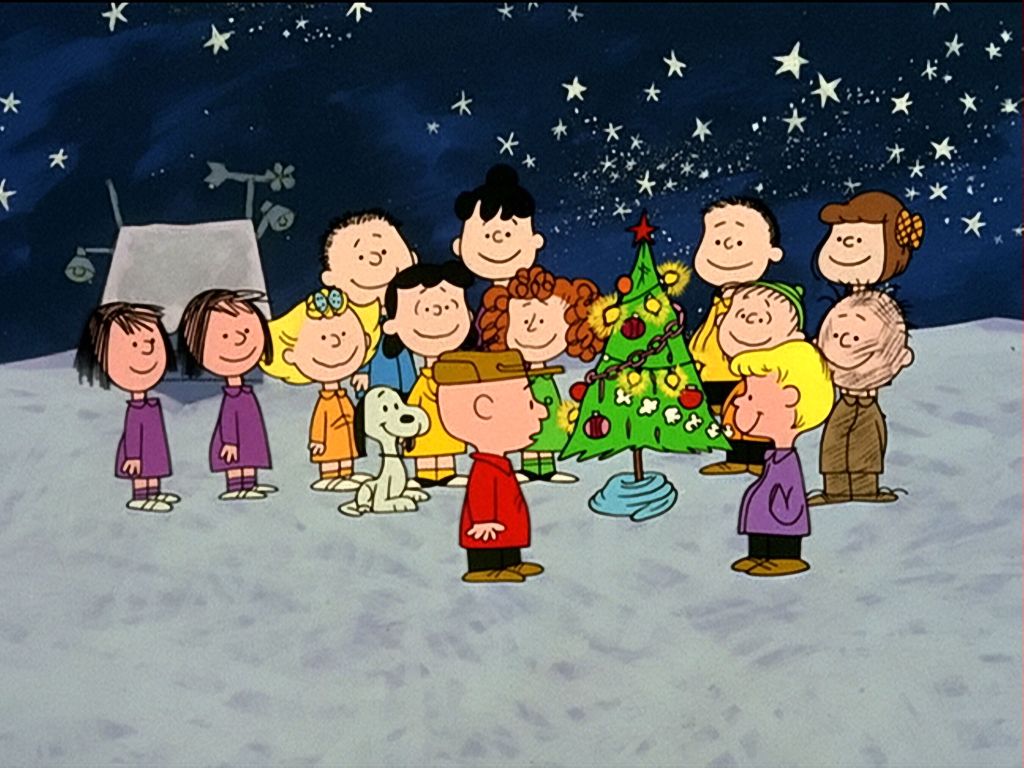
Another Christmas favorite is “A Charlie Brown Christmas” and the magic of cartoonist Charles M. Schultz. At age 9, I had no idea who Charlie Brown because, unlike most kids, I didn’t read the comics. However, my dad did. he marched into the living room and said, “We’re going to watch Charlie Brown…” to which I said, “what’s a Charlie Brown?” I’d soon learn…
“A Charlie Brown Christmas” really was an advertising exercise when you cut through the muck of television advertising and CBS. It was a terrific idea they were convinced would fail. They just didn’t understand what a great idea it was. It became a phenomenon with baby boomers and generations to follow. It was based on the Charlie Brown comic strip, which debuted in 1950 and became a huge success. It became the first comic strip to become a TV special.
The first ever Charlie Brown holiday television special, sponsored by Coca-Cola, was produced in whirlwind fashion in a matter of weeks virtually void of a budget, airing in just six months to a receptive audience – adults and children alike. Seems a lot of kids could relate to Charlie Brown and the cast of characters. Historians say this special was unconventional in every possible way. They hired child actors to do the voiceovers. The musical soundtrack was a jazz score produced by pianist Vince Guaraldi. The cartoon work was simple in scope and predicted to fail.
“A Charlie Brown Christmas” grabbed our hearts by the throat and became an annual holiday tradition. We’ve been tuning in ever since and for 60 years! For a long time, some 56 years, it aired on CBS. In due course, it slipped away to other network venues including the latest – Apple TV+ as a streaming grab.
Though “A Charlie Brown Christmas” was expected to fail, the outcome was completely unexpected. It enjoyed high ratings and got both an Emmy and the Peabody Award. Critics loved it. “A Charlie Brown Christmas” remains a holiday favorite because it makes us feel safe, innocent, and with a warm heart. It set the tone for a series of Peanuts specials in the years to follow. What’s more, its Vince Guaraldi jazz soundtrack sold some five million copies in the United States alone.
May each of you have a safe and glorious holiday season as we welcome 2026, in hopes of better times and finding that ongoing path to peace both domestically and worldwide. We could use a little more Charles Schultz and Jean Shephard.
Do you ever find yourself lost in the virtual reality of classic television? I obsess over classic TV and I am an avid watcher. I’ve burned up valuable time watching “The Andy Griffith Show,” “The Dick Van Dyke Show,” “I Dream of Jeannie,”“Mister Ed,”“Dennis the Menace,”“I Love Lucy,”“The Monkees,” “Ozzie & Harriet,” and a host of others – some really awful – but watchable.
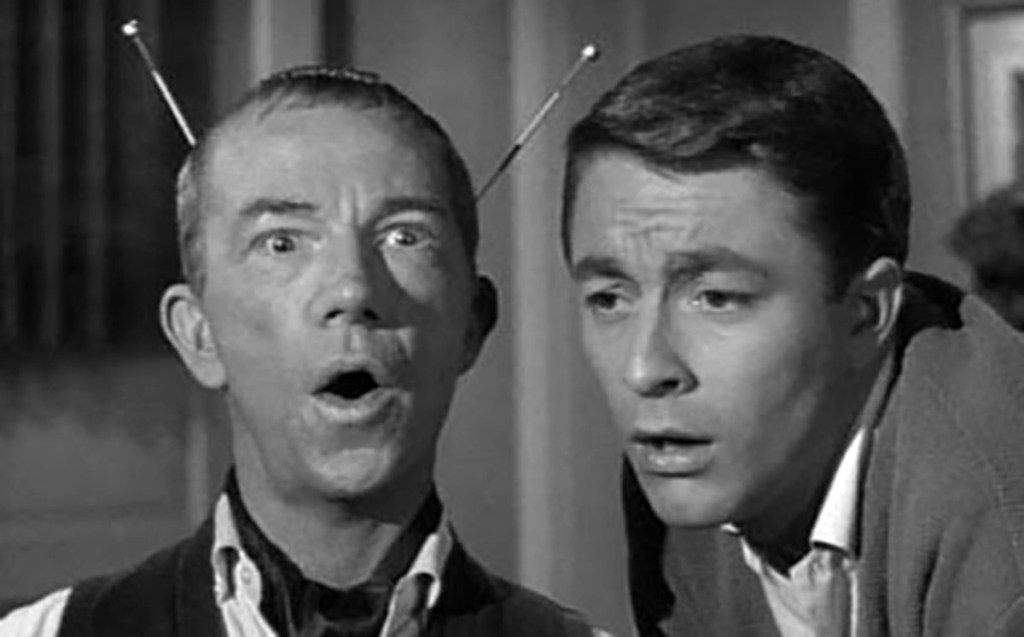
In the past few weeks, I have been overdosing on “My Favorite Martian,” a mid-1960s science fiction TV comedy, which struggled to find an audience and meaningful ratings on two networks in three seasons. I admit to having developed a fondness for Ray Walston and Bill Bixby, who played the Martian (Exigius 121⁄2) and Earthling Tim O’Hara, sharing a loft next door to their attractive yet scatterbrained landlady, Lorelei Brown, (actress Pamela Britton) in suburban Los Angeles.
O’Hara, a roving reporter for the fictional Los Angeles Sun newspaper, was covering an X-15 test flight over the high desert north of Los Angeles when who should crash land from space but “Exigius 121⁄2” (Ray Walston), a Martian anthropologist who nearly collided with the X-15 on a journey to study primitive Earth.
O’Hara winds up being Exigius 121⁄2‘s caretaker on Earth until he can repair his broken spaceship and return to Mars. Because Tim O’ Hara doesn’t know how to explain Exigius 121⁄2‘s presence, he becomes Uncle Martin. The spaceship gets parked in Tim’s garage under lock and key while the two try to keep a bizarre secret. “
“My Favorite Martian” struggled in the ratings though it was a good way to spend 30 minutes. Even with a different network in color, it aired just three seasons.
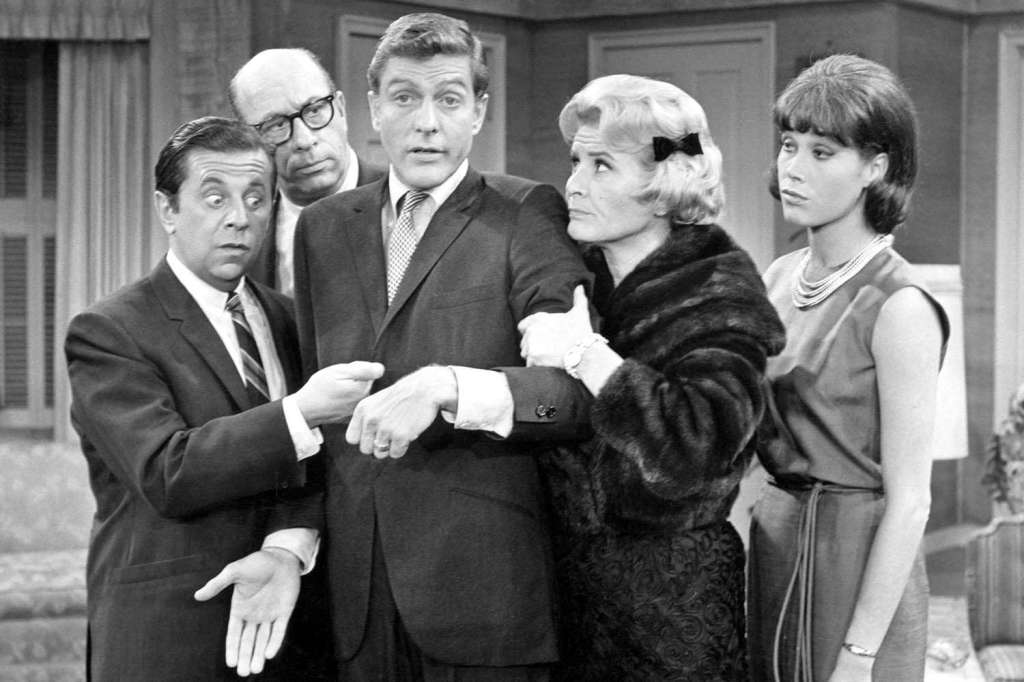
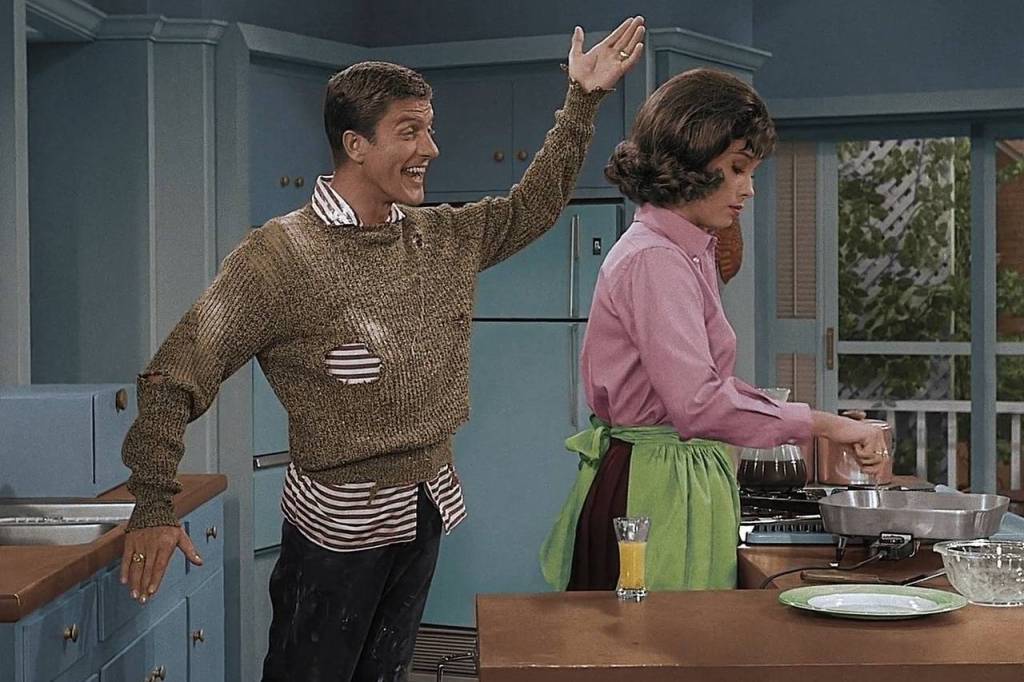
Another obsession is “The Dick Van Dyke Show” which is another periodic television obsession. When I watch, I just can’t get enough of it. Dick Van Dyke, who played Robert Petrie, was a fictional comedy writer created by the late Carl Reiner that first aired on CBS in October of 1961. The show focused on both the home and work life of Rob Petrie, head writer for the “The Alan Brady Show” which was live from New York – yet we never actually saw the show. The one exception being the “Alan Brady Christmas Show” featuring the show’s writers and the Petrie family.
“The Dick Van Dyke Show” would never have been the success it was without the chemistry it had – conception, writer, direction, actors and its cast of characters. One-line comic genius Morey Amsterdam never missed. Even when he flubbed his lines, he always knew how to save a scene. Poor Sally Rogers (Rose Marie) could never land a fella. Mel Cooley (Richard Deacon) never could get Alan Brady’s respect. Meddlesome neighbors, Millie and Jerry Helper (Ann Morgan Guilbert and Jerry Paris) never stopped being meddlesome neighbors. Son Ritchie (Larry Matthews), was always the incredible low maintenance boy.
Alan Brady (Carl Reiner, the show’s creator) was a mystery until he smoothly segued into the show. At first, we saw the back of his head and heard his obnoxiousness. The peak of his performance was “Coast to Coast Big Mouth” when Laurie Petrie went on a game show and accidentally mentioned Alan Brady was bald. The secret was out and both Mary Tyler Moore and Carl Reiner did their best work as comedic actors. Even Reiner couldn’t control his emotions in that historic scene.
Alan Brady will always remain Reiner’s greatest comedic work.
The “Dick Van Dyke Show” would have aired in color in its sixth season had the show continued for the 1966-67 season. Cast and creator elected to wrap while the show was on top, leaving us with five seasons of incredible reruns.
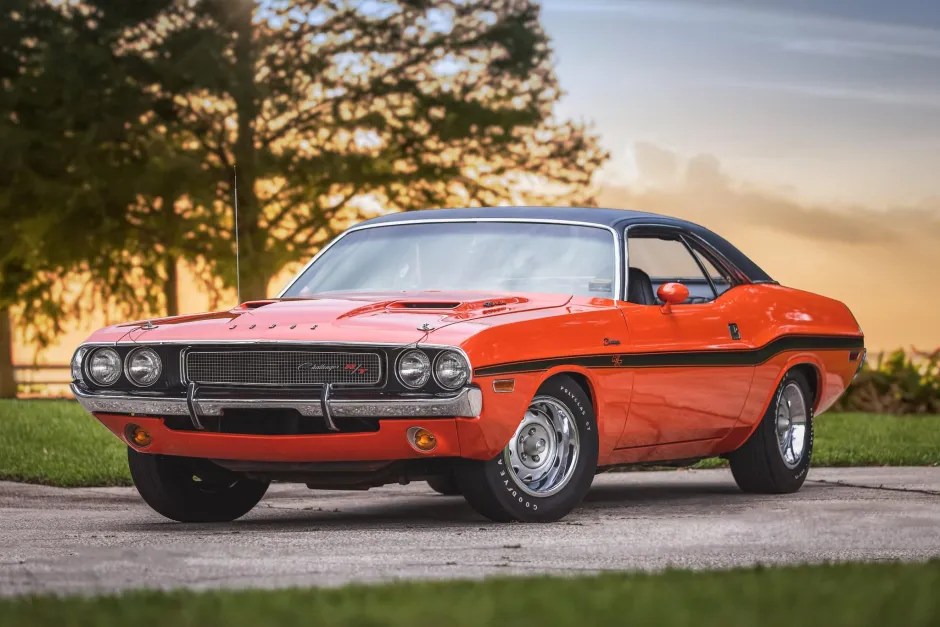
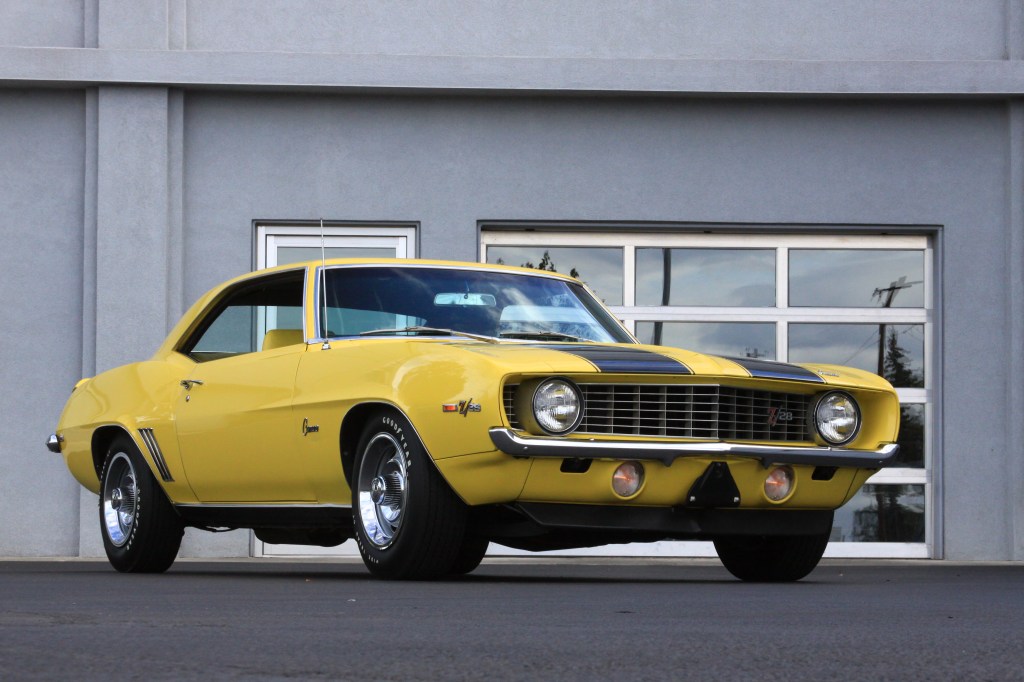
Some 60 years ago when we sang “Get Your Motor Running…” and revved our engines with the roar of V-8 muscle, along with our endless search for adventure, there was the all-American muscle car.
If you remember high school and all that muscle in the parking lot (along with the vice principal), you remember the roar of V-8 power, rubber burning, the bang-shift of a T-10 four-speed, and the art of getting sideways.
I suppose muscle is a matter of perception.
Back in the day, muscle cars maxed out around 350-400 horsepower and were rather crude and void of options. They were generally ordered without air conditioning and nearly always fitted with a four-speed transmission.
Automatics were for wimps.
In more recent times, the 800-horse Dodge Hellcat Challenger, Shelby Mustang, and ZL1 Camaro have passed up these timeless classics in terms of raw power and creature comforts. There has never been a better (or faster) factory muscle car in American automotive history. You drive off the dealer lot and get insane horsepower numbers with air conditioning, full spectrum sound, cruise control, sound deadening, ass-hugging high-back bucket seats, air bags, crush zones and side-impact protection, GPS, back-up camera, electronic engine control, traction control, and monster-sized four-wheel power disc brakes, competition suspension, and high insurance rates to have the most fun you can have with your pants on.
What today’s muscle cars lack is the styling we had at the cusp of the 1970s. Few muscle cars were sexier than the Dodge Challenger and Plymouth ‘Cuda for 1970-74. The ’69 Camaro in all its forms was an exciting game-changer.
I am a Ford guy, but I will take a 1968-70 AMC AMX two-seater any day. A raw sex pocket rocket from Kenosha, Wisconsin with two seats and endless style. Ford Mustang Sportroof for 1969-70 was a showstopper – especially with the Mach 1 or BOSS 302 package. And Chevelle SS from 1965-72? Equip these Heavy Chevys with a 396 or 454 and you could rock the earth.
Pontiac’s awe-inspiring GTO started the whole muscle car craze as an obscure LeMans option in 1964 to keep it below the corporate radar. When GM’s upper management looked at the sales numbers, they loved and accepted the GTO for 1965 when GTO became a visible option. It didn’t get any better than the ’65 GTO.
Detroit knew how to get the attention of young people – baby boomers – in the mid-1960s. Chrysler (Plymouth and Dodge) knew how to build fast cars and was the one to beat as the 1960s unfolded. Those Max Wedge Plymouths and Super Stock Dodges spanked the competition in drag racing and stock car competition. No one could beat them until Ford rolled out the very limited production ” Thunderbolt” Fairlane sedan in 1964 to replace the lightweight Galaxies.
Chevrolet quietly infused the 427ci “Mystery Motor” into NASCAR competition before introducing it to the public in 1965 as the 396 big block. The big-block Chevy became an industry standard for power for decades to come. In fact, Chevrolet continues to sell small- and big-block Chevy engines and parts for enthusiasts still high on the muscle car madness of the 1960s.
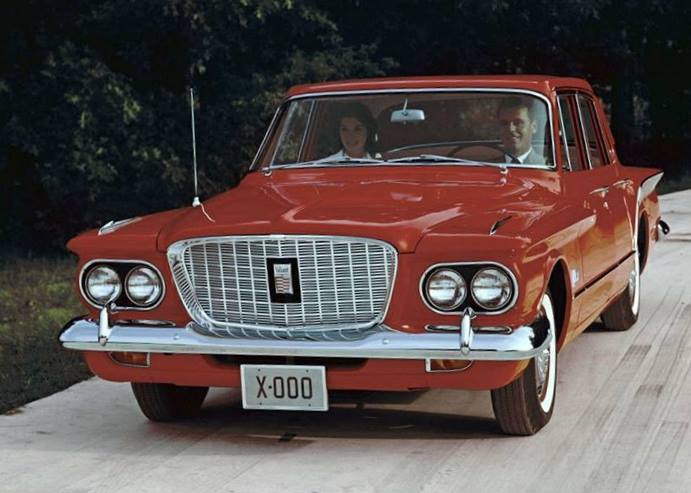
Chrysler’s 1960 Valiant, which was not a Plymouth that first year.
What’s with the fondness we have for our first cars, and how many of us still have them? I admit to being a total dork in my adolescence – glasses and really bad hair – was drawn to dork things – like dorky cars. Where most guys my age loved muscle cars like Chevelles, GTOs, and Roadrunners, I gravitated to dork cars.
In April of 1964, my dad pulled up in front of our apartment house in Laurel, Maryland with a really bizarre-looking finned, black four-door sedan. I had seen them before when we lived in Hawaii when my dad was stationed to Oahu. One of the colonels he worked with had one, a pastel green 1960 Valiant. They were all over Oahu – these wonderfully ugly finned Valiants and Lancers.
All I knew at age 6 was – I liked them…a lot.
When my dad arrived home in Laurel, Maryland a world away from Hawaii in a 1961 Valiant V100 base sticker priced ride with no radio and a three on the floor, I was euphoric. I loved that car. A dork car!!!
Do you remember your first car?
I do…
That black Valiant became old and decayed, rusted out in the harsh Maryland salty air maritime climate. I wanted that car – the very car I grew up in. The floors were falling out of it. It had become our second car. My mother, suffering from arthritis, couldn’t drive a stick anymore. My dad elected to trade it in on another used car – a ’64 Buick Special sedan – for $400.
I hated that Buick and I never forgave him for trading the Valiant.
My mother’s hairdresser had a 1960 Valiant sedan similar to the black ’61 my ol’ man traded away. When it was time for her to unload the Valiant, she gave it to me in February of 1972. My first car… A dork car!!! Despite the stigma that went with owning an old finned family sedan, I didn’t care what people thought.
Our 38,000-mile Carnival Red ’61 Valiant V100 found at a Minnesota Chrysler dealer. It had been a parade car in a small Minnesota town – a pristine low-mileage vintage Valiant like my mom’s.It needs a little love…
My father, a product of the Great Depression, didn’t see the point in my driving an old “piece of junk” as he so often put it. Still…I loved that car and wasn’t parting with it under any circumstances. One cold February morning a year later, I was on my way to school in the Valiant when the transmission quit. It was towed to Brooks Mobil in the heart of Bowie, Maryland. My father instructed Brooks to haul it away.
I never saw the Valiant again. I never forgave my father for that either.
First cars are a rite of passage – symbols of freedom for teens everywhere. Time to get out from under our parents’ domain. In all the years I’ve been an adult, I’ve wanted a 1960-61 Valiant. In my forties, I decided to find one and buy it. Figuring most of them were gone, I bought the first one I found – a really bad ’61 V200 hardtop (quite rare) in Ventura, California. When I bought that car, I didn’t bank on how to find parts for it because they were hard to find and expensive. I stored it for a time, then, found another Valiant – a 1960 V200 up in the Bay Area. I snapped it up and sold the ’61 hardtop to a buyer in Australia. They love these old Valiants down there.
My wife Barbara decided she liked these vintage Valiants and wanted one too. I was cruising eBay one morning when I stumbled upon a Carnival Red ’61 Valiant V100 in Minnesota with the slant six and push button automatic transmission. I snapped it up for a modest amount of cash and had it shipped here to California. When I sat in it the first time, the aroma of a dusty old interior and cigarettes brought back memories of my mom’s Valiant. I always sat directly behind her so she couldn’t belt me for misbehaving while she was driving.
Goes to show you never get over losing that first car.
Thanksgiving…. turkey, dressing, stuffing, mashed potatoes, veggies of all sorts, pies, nibble food leftovers…a tradition that has been going strong for over four centuries. Now that’s a lot of turkey, stuffing, cranberry sauce, mashed potatoes, green beans, pumpkin pie, and Grandma’s really awful hamburger casserole.
That first Thanksgiving in 1621 was shared by colonists and the Wampanoag people as a gesture of friendship and goodwill. They understood the importance of extending a hand and the meaning of compromise. Getting along was of great importance. Perhaps we could learn something from those who’ve gone before us.
Does anyone really understand what Thanksgiving Day is all about? Did you know Thanksgiving is celebrated on the fourth Thursday of every November in the United States, unlike Canada’s Thanksgiving, which is celebrated on the second Monday of October primarily due to declining weather conditions in November? Thanksgiving Day was declared a national holiday in 1863 by President Abraham Lincoln.
As you might imagine, Thanksgiving is a simple concept – giving thanks for our blessings and what we have. When I was a little kid, Thanksgiving meant going to my aunt and uncle’s house in Wheaton, Maryland – or to my grandparents in Arlington, Virginia, across the Potomac from D.C. and Maryland.
It also meant being car sick, which didn’t leave much of an appetite for turkey.
To this day, I can still smell green beans and stuffing in modest Maryland and Virginia galley-style kitchens, waiting for dinner to be served in cramped dining rooms. With these memories are recollections of football games and holiday parades on a classic RCA console TV, with nice memories of hanging with the family and romping around a groovy basement with knotty pine paneling.
Like most of you, these are distant memories, with most of our ancestors gone now – yet the sweet memories remain. I remember my grandfather’s powerful hands and his gentle laugh whenever I had something stupid to say. My aunt and my grandmother knew how to rustle up a delicious feast where most of us wound up on the sofa in a carb coma until it was time for dessert. My aunt and my grandmother in the kitchen were forces to be reckoned with.
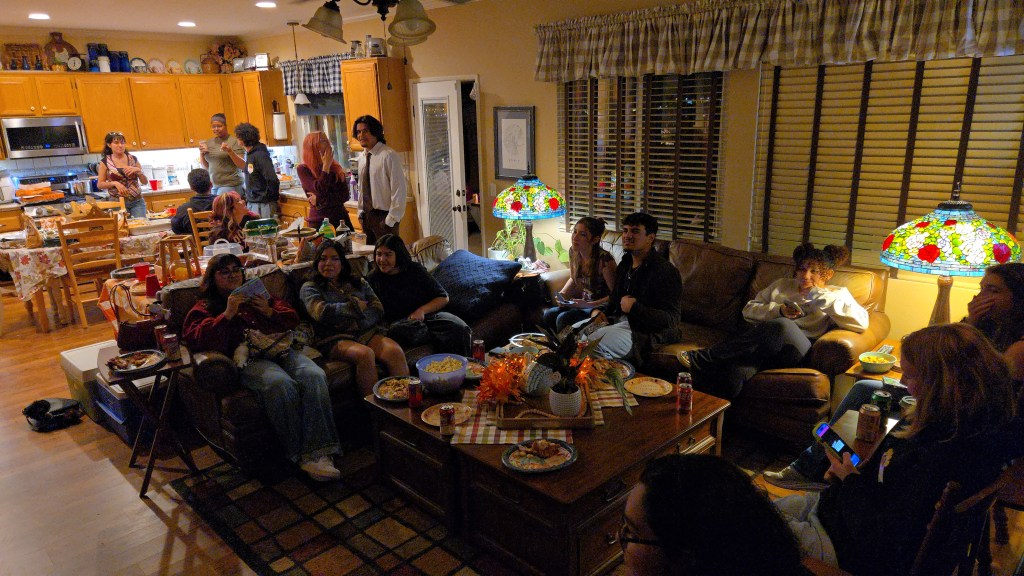
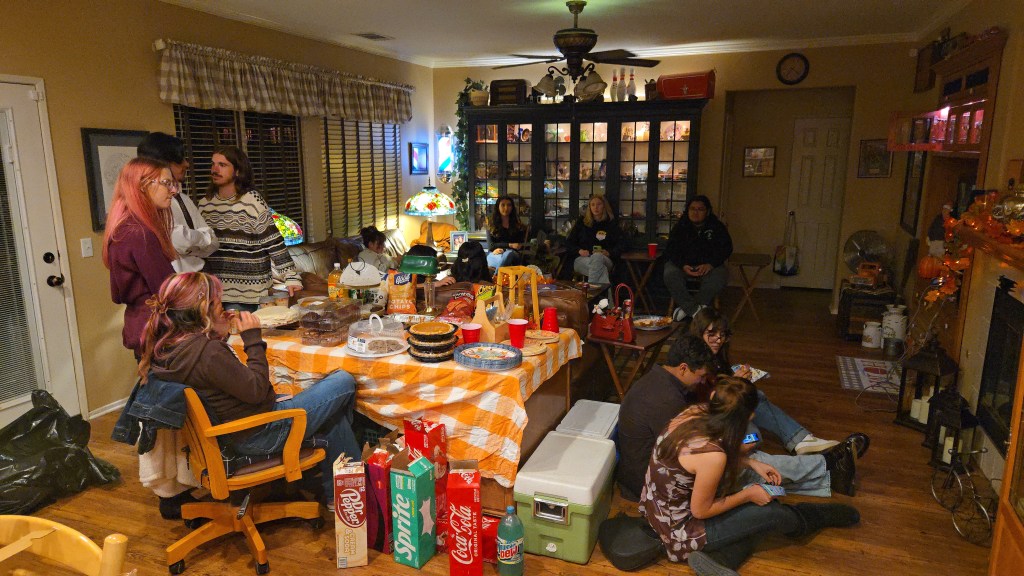
My son, Jacob, age 17, fosters a new tradition known as “Friendsgiving…” where close friends gather together to celebrate enduring friendship. Our home was full of young people coming of age, having a glorious time with each other. When it was over, they cleaned up the place, hugged each other, and headed home.
We old timers regard today’s young people as “snowflakes…” but nothing could be further from the truth. Young people aren’t afraid to show their feelings today. They express themselves quite well and are unified in a wonderful display of support for democracy and the American way of life. I watch them at high school events, showing abundant affection and love for each other. It is not perfect, but a work in progress and a good example for the rest of us.
I have tremendous faith in young people and their desire to keep Thanksgiving rolling in an alternative called “Friendsgiving” which runs deeper – with expressions of love for each other and limitless support in a perfect circle of life.
Friendsgiving 2025 – with the Class of 2026 celebrating enduring friendship.
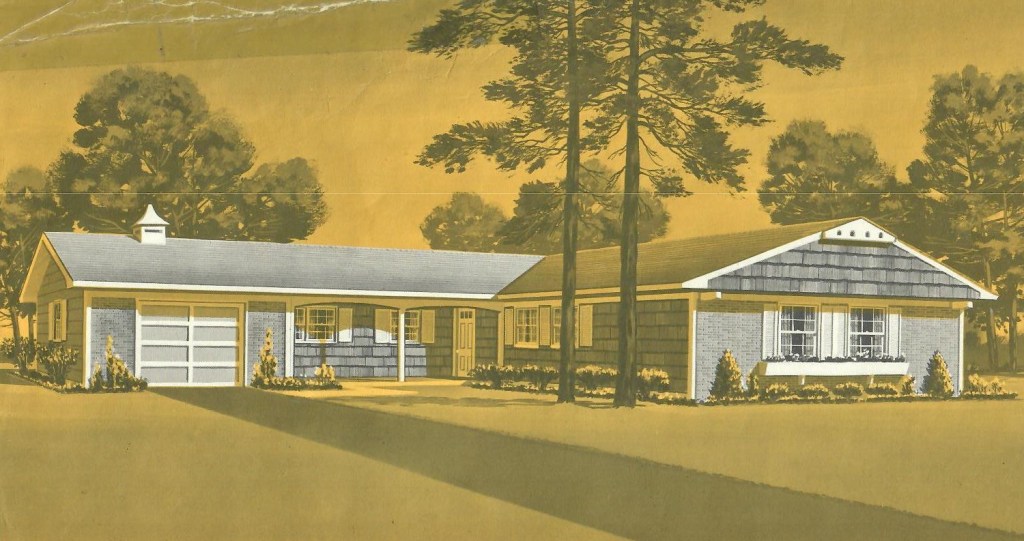
When we were growing up, home ownership was the American Dream and within reach for most people. Veterans came home from World War II ready to segue into post-war civilian life. The dilemma for most Veterans was a critical housing shortage. Vets couldn’t even find an apartment, let alone a house. They moved in with family, rented rooms, and lived in attics and basements.
Builders and developers saw this as an extraordinary business opportunity and bought up land wherever they could find it. Suburbia was born. VA and FHA benefits further fueled the housing boom and the profits. Product planners and architects designed and conceived affordable homes buyers wanted and developed communities where families could live and raise kids. The housing boom of the 1950s and ’60s had its challenges, but it was nonetheless a dreamy time in America.
The only way was up.
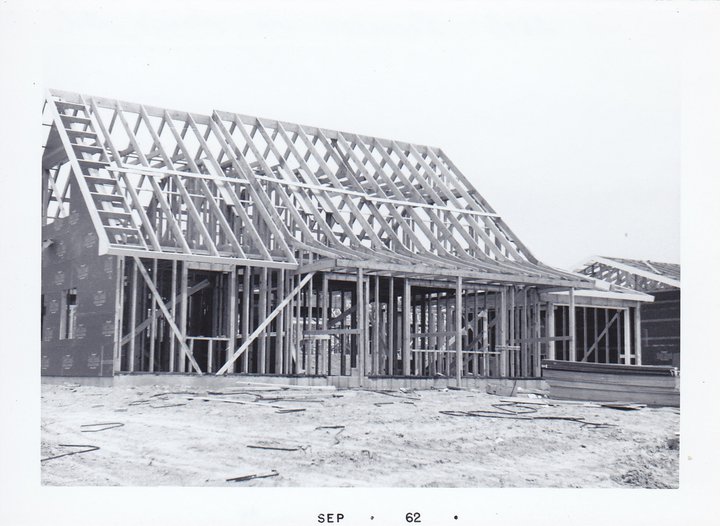
Before World War II, “suburbia” was unheard of. There were cities where most people lived and the outlying reaches of rural America where few lived. Rural America was within 25 miles of most cities. Farmland, isolated rural communities – a simple quiet life that was about to change. Developers bought vast stretches of land, cleared the dirt, grass, and trees, and went to work mass producing tract homes.
If you could drive a nail, paint walls, sweat pipes, install bath fixtures, pour concrete, and lay roofing materials, there was work for you to where you could afford to buy the very home you had built.
The Henry Ford economy was alive and well, with a huge return on investment.
Developers rose from the earth, with some having been in the game a long time while others were Veterans, home from the war, with pent-up energy and vision ready to begin civilian life and prosperity. William “Bill” Levitt, A Navy Seabee fresh from the vast Pacific, came home to New York with an idea. He was going to build thousands of homes Veterans could afford.
Mass production home building wasn’t anything new for Levitt & Sons. It built homes for U.S. Navy personnel in Norfolk, Virginia, and also had a long history of luxury home building in the New York area. It has been said Henry Ford invented the automobile assembly line. Bill Levitt invented the home assembly line in reverse. Instead of product moving from worker to worker with specific tasks, workers moved from product to product. This made homes plentiful and affordable. Buyers lined up for a shot at home ownership.
Levitt & Sons built its first community out on Long Island outside of New York, erecting more than 17,000 homes before moving on to suburban Philadelphia in Bucks County and on the other side of Philly in New Jersey where thousands of home emerged from the dirt. Dozens of Levitt communities would follow from as far away as Chicago, Florida, Puerto Rico, and even France.
The prosperity wouldn’t last. Faced with a very competitive market, Levitt chose to sell out to ITT, losing his shirt in the process. The Levitt name would survive. Bill Levitt would ultimately be out of the home building business.
A Levitt & Sons classic Cape Cod in the suburban Washington, D.C. community of Belair At Bowie, Maryland – one of seven models available in the 1960s. This was Levitt’s first venture outside of New York, Pennsylvania, and New Jersey.
Whatever happened to the dream of home ownership, and why are very few young people unable to buy that first home today? We are in a different day and age under different circumstances than we were 60 years ago. Young people face huge obstacles in an environment of rising home prices, higher mortgage rates, supply and demand, and enormous personal debt loads.
I bought my first home at age 21 when I was in the USAF in an isolated region of Oklahoma for $19,000 in 1977, which was remarkably low compared to real estate in more populated urban areas. Comparable suburban homes would have been upwards of $25,000 to $35,000, which would have been beyond my means.
The American Dream remains. How to get there today is anyone’s guess.
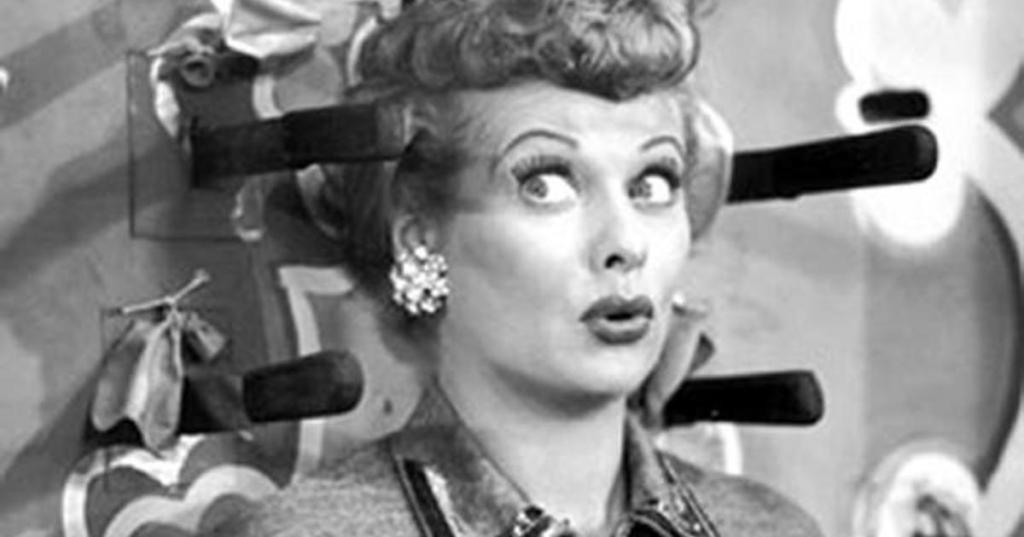
We just can’t get enough of Lucy. “I Love Lucy” has been a global phenomenon for nearly 75 years. It has been on the air continuously for three-quarters of a century without pause ever since she dethroned Milton Berle as the king of prime-time television in 1951.
“I Love Lucy” aired on CBS from October 15, 1951, until May 6, 1957, when it segued into “The Lucy-Desi Comedy Hour” as one-hour specials from 1957 to 1960, with a lineup of familiar guest stars who wanted to be seen. It returned during the 1960s as a series of one-hour summer special reruns that aired in CBS prime time.
Regardless of how many times I watch “I Love Lucy,” I can’t quit laughing. I am not always sure the generations following us feel the same way about Lucy. Those of us who grew up with “I Love Lucy” understand the humor. My grandfather, born in 1894, hated “I Love Lucy.” I suspect he didn’t care for the humble housewife getting the best of her husband. Yet, Lucy and Ricky (husband Desi Arnaz) were a “Spy-vs-Spy” adventure because she always got caught and Ricky responded with, “You got some splainin’ to do…”
It was a great battle of the sexes and a timeless situation comedy.
Though Lucy remained high in the ratings, it began to slide as the show’s producers attempted to make the series more viewable. By the fifth season, with a brief stint in Hollywood, extended trips to Europe and Japan, and a move to Connecticut, it had become decidedly stale and had run its course.
What made “I Love Lucy” so successful was the extraordinary combination of great comedic acting, writing, direction, and Desi’s three-camera approach to filming. With the three edited together, this approach worked with fluid precision.
“I Love Lucy” displaced Milton Berle as the most-watched television show in the United States during its network run in the 1950s. It remained on top of the Nielson ratings for four of its six seasons. What’s more, “I Love Lucy” has been syndicated in multiple languages around the world. It remains popular, especially with boomers, to the tune of 40 million viewers every year.
This popular sitcom was the first scripted TV show burned on 35mm film in front of a studio audience. It won five Emmy awards as a result. Audience poles have often said “I Love Lucy” is the best show of all time. No matter how we are feeling, rain or shine, “I Love Lucy” remains the go-to sitcom when we are bored out of our minds and sick of the news.
The show’s producers did “Lucy” so well that we fell into believing we were looking at a New York tenement apartment when, in reality, “I Love Lucy” was shot on a modest sound stage on Cahuenga Blvd (Desilu-Cahuenga) at the north end of Hollywood. It was aired live on TV while also being recorded on 35mm film. Desi’s approach to business kept the Lucy phenomenon rolling for decades. It continues to pay dividends 70 years later. Audience response enhanced the viewing experience. The “Uh-Oh” response you hear periodically throughout the episodes was Lucille Ball’s mother seated in the audience.
Lucy’s segue into the early 1960s with “The Lucy Show” and “Here’s Lucy” later on in 1967 enjoyed healthy ratings, though it seemed a lot of Americans had had their fill of Lucy. I believe what made Lucy successful in the 1960s was a balance of great comedic actors and America’s neurotic need for more Lucy. The storylines just didn’t compare with “I Love Lucy” in the 1950s. They were just out of ideas.
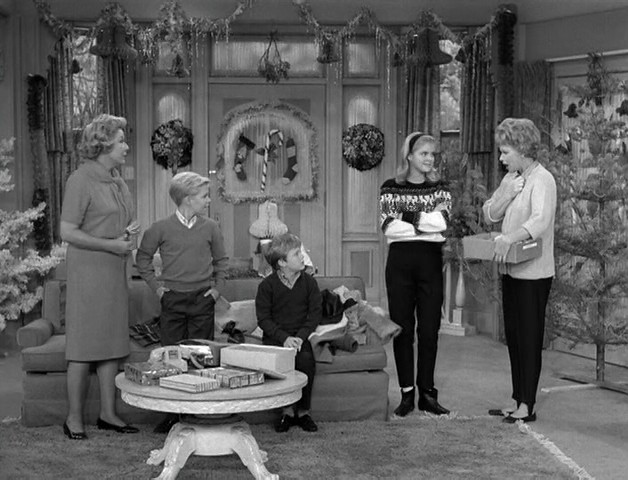
“The Lucy Show”in the early 1960s.
Though I am not a psychologist, it is my belief Lucille Ball just could get enough of the spotlight. She embraced it and pushed the limits of stardom. When “The Lucy Show” wore out its welcome, they resorted to nepotism, bringing in daughter Lucy and son Desi along with the great talents of Gale Gordon. It was Gordon’s great comedic abilities that made these rather lame episodes sizzle.
If I had the chance to reinvent Lucy after “I Love Lucy,” I would not have had Lucy as Lucille Carmichael and Vivian as Vivian Bagley. That approach was weak right from the start with widowed women with children. I would have recast Lucy and Vivian as Lucy Ricardo and Ethyl Mertz – in a new post-Ricky and Fred sitcom as either divorced or widowed women. Because divorce was taboo at the time, being widowed would have been the best option. William Frawley went on to star in “My Three Sons” as “Bub” in 1960. Lucy and Desi had divorced, which swiftly eliminated the “I Love Lucy” option. Desi stayed on as producer, replaced by her second husband, Gary Morton in the 1960s.
What made “The Lucy Show” a knockout was comedic actor Gale Gordon as her boss Mr. Mooney. As you might imagine, Lucy drove Mooney crazy, much as she did Ricky in “I Love Lucy.”
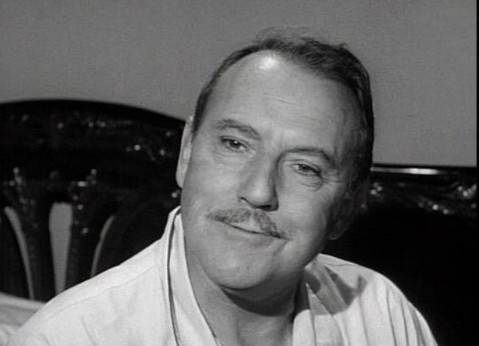
Great Comedic Actor, Gale Gordon.
The storylines, direction, and acting lost momentum in the absence of fresh ideas, making “The Lucy Show” a crashing bore, yet with enviable ratings. “The Lucy Show” continued until 1967 when Lucy was reinvented with “Here’s Lucy.” I am convinced the real success of a re-invented Lucy was the support of great comedic actors who made these shows worth watching. The list of great character actors was endless.
When the entire Lucy phenomenon had passed, Hollywood returned with “Life With Lucy” in the 1980s alongside time-proven Gale Gordon, who still made us laugh. He was still on top of his game some 13 years after “Here’s Lucy” wrapped. Lucille Ball’s last hurrah was the made-for-TV movie “Stone Pillow” where her acting ability was put to the test. Her performance was remarkable.
Despite all of the feelings we have about Lucille Ball, she still makes us laugh and will continue to do so for decades to come.





 Boomer Journey...