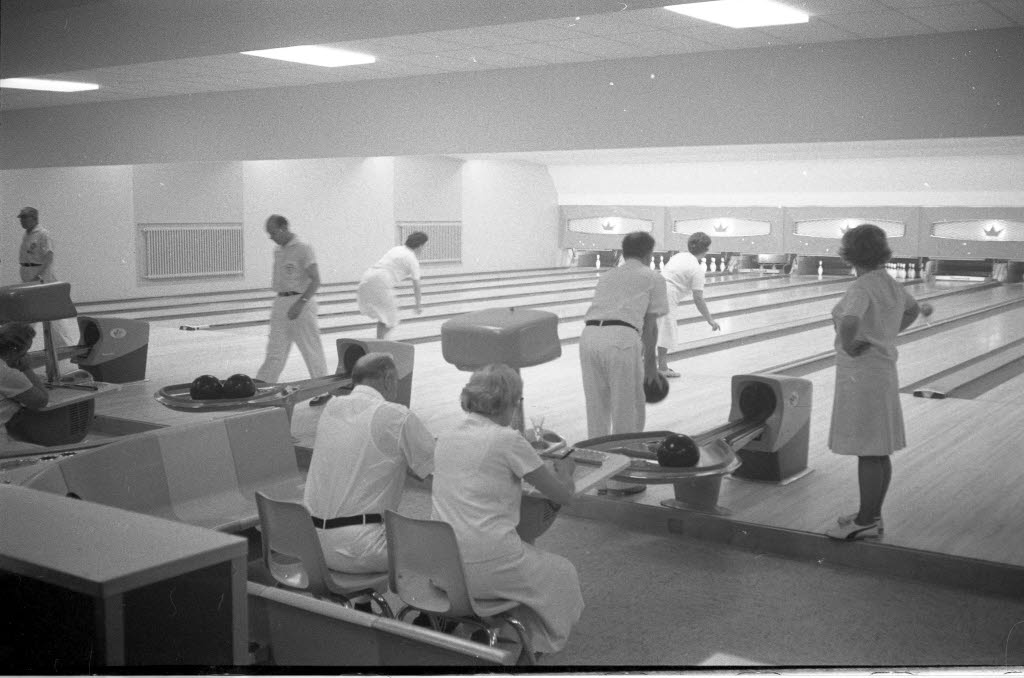
Bowling Alleys are among my favorite childhood memories. I was born in 1956 – fortunate for having been born then. Some of my first memories of life were bowling alleys. My dad was a dedicated league bowler and he did so two to three times a week much to the chagrin of my mother. With enough cattle prodding from her, he was eventually down to one league a week.
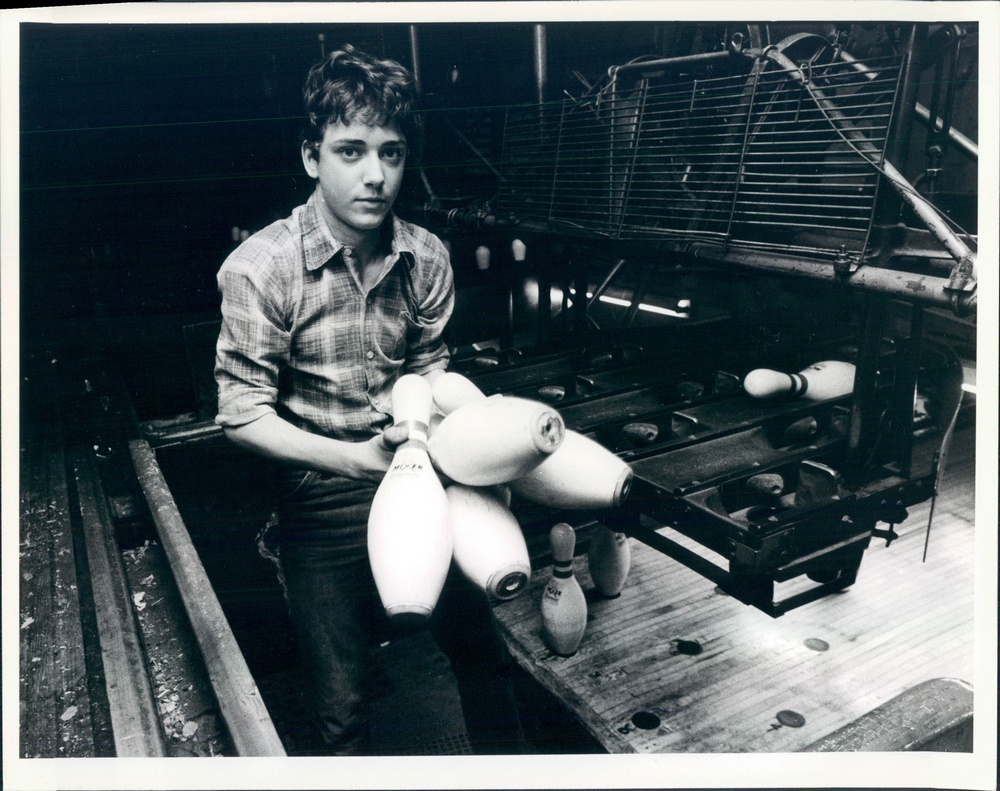
I was born during the emergence of the big mid-century bowling boom – which came of the automation of the game and the demise of the humble hardworking pin boy. No more waiting. No tips. And the raw excitement of the game in those days.
It was a wonderful time to be young and alive.
Modern bowling centers were many at the cusp of the 1960s – bright, colorful, and designed to entice the bowling public. Some houses were open around the clock – especially where factories were. Though the look is dated by today’s standards, it still excites bowlers who remember a different time in America. We were on the grow and headed to the Moon. Design trends followed that vision. Bowling centers were futuristic in their design – with striking masking units, ball returns, telescores, and wraparound seating. They were terrific community gathering spots even if you didn’t bowl. You could visit with friends, sip a beer, down a hot dog, and swap lies with great friends.
Bowling alleys offered the best food in town – burgers on the grille, hot dogs, crispy fries, hot apple pie, plenty of beer, and fast-quick turnaround for hungry keglers between frames. Most houses had billiard rooms with at least four pool tables where you could shoot pool when bowling just wasn’t your thing or to relax after a league. There were nurseries for those who didn’t have anywhere else to ditch the pesky little particles – which was where a lot of us spent our time while the parents bowled and spent time working on their game.
Bowling was all over the airwaves. “Bowling For Dollars,” “Championship Bowling,” and ABC’s “Professional Bowlers Tour,” which aired for 35 years on Saturday afternoons to infuse live entertainment into your winter afternoon. My father and I would watch – and witnessed historic moments in bowling history – the 300 games, 7-10 split conversions, and a host of other moments.
I personally went to an airing of the Professional Bowlers Tour – the Fair Lanes Open – at Springfield, Virginia in February of 1972. It was quite a rush on a cold winter day seeing it all live and in person. I shook hands with Chris Schinkel and Billy Welu who hosted the Pro Bowlers Tour in those days. Sadly – we lost Welu to a massive heart attack two years later. He was replaced by Nelson Burton, Jr. who provided commentary for decades to follow. The once very popular Pro Bowlers Tour declined in the ratings, and ABC dropped it and the Wide World of Sports in the mid-1990s.
The Professional Bowlers Association (PBA), in search of viewers, has become more like World Wrestling, with professional bowlers yelling at the pins and getting into fits of rage in order to keep and maintain an audience. Despite all the fanfare, the results are marginal at best. Those of us who remember ABC’s Professional Bowlers Tour are not impressed nor inclined to tune in.
The decline of bowling in the past couple of decades can be attributed to the distraction from other entertainment venues and the lack of commitment to bowling leagues, which are the life’s blood of any bowling center. Seems people just don’t have time for bowling leagues and that sweet connection to others anymore. To me, an avid bowler at one time with a 185-195 average in league play, it was everything to turn out on a weeknight, hook up with friends, and experience the euphoria of a solid pocket hit.
Ten in the pit – thank you very much.

When I was 10, my dad would take me out to Odenton, Maryland for a Saturday morning youth league up on the hill above Maryland’s Route 175. Such anticipation I tell you. We would walk into the building and the place was dead quiet with the din of a handful of youngsters waiting to bowl. Counter personnel would announce practice bowling, you’d hear twelve Brunswick machines wake up with that familiar turret belt whine, and the game was on.
We had a terrific time.
There were two bowling centers in Odenton in those days – Mr. & Mrs. Q’s “Bowl-A-Rama” on 170 (now Greenway Bowl). Bowl America up on the hill above Odenton where I bowled with dozens of others was the better of the two houses in those days. Bowl America was a Brunswick house with 34 Gold Crown lanes clad in mid-century aqua pastels. Bowl-A-Rama was an AMF house with 40 lanes – 16 of them duckpins popular in the mid-Atlantic. Bowling chains like Bowl America, Fair Lanes, and a host of others have fallen on hard times and the decline of business. Bowlero has capitalized on this decline by acquiring existing centers and reinventing the bowling experience.
If you remember bowling more than a half-century ago, you remember the distinct differences between Brunswick and AMF houses. The acoustics of a Brunswick house was low frequency rumble as balls hit the pins. It was Brunswick’s long wooden kickbacks and the pit acoustics of A-Model pinsetters that made them sound that way.
AMF centers were more high frequency – with a light and airy sound with wooden and steel kickbacks to get that level of acoustics. In fact, AMFlite II bowling pins had a higher pitch “ring” than the competition. A house full of new AMFlite pins yielded a deafening decibel level until the pins became seasoned and settled. AMF lanes were low profile with a short step-up. The approaches had colorful dots, which made it easier to position yourself. Brunswick lanes were taller with a rubber mat to catch snack bar crumbs and debris. These mats had a layout of the pin deck.
Baby Boomers have lived through an incredible time in history – with the excitement of the bowling boom among the memories.
In short…a great time.
 Boomer Journey...