I don’t know about you, but I am lonely.
Are you lonely?
In a world with endless forms of communication ranging from the humble telephone to email to messaging to the PC to the mobile phone, we are so disconnected.
How can we be so connected – yet so disconnected?
Cell phones, tablets, and laptops have become a global obsession. We just can’t put them down in our quest to be entertained around the clock. In fact, it is remarkable how psychotic we become when we lose track of our cell phones or the internet is down. We get panicky like coffee drinkers get when the coffee maker breaks down.
It just cramps our style.
Ever since Alexander Graham Bell said, “Mr. Watson! Come Here! I need to see you!” from the next room back in 1876, the speaking world has never been the same. Scottish born Bell changed the world with the first words ever uttered over a telephone. Bell’s invention began with an effort to transmit pulsing telegraph signals as a form of communication and so it went. His telegraph idea went from pulsing to real words.
Bell began to wonder if his telegraph invention could be used to transmit the sound of human voice. In due course, it led to his immortal words. Watson heard every word even though there was distortion. It wasn’t perfect by any means, but it was a start. It makes you wonder who the first person was to burp or flatulate into a telephone receiver (I know you are laughing).
It took a long time for the telephone to take hold, but when it did, this amazing invention spread like wildfire to ultimately being found in every home. In the beginning, homes generally had one telephone located in a hallway or on a table. Builders began featuring telephone cubbyholes with jacks in hallways and on staircases. By the 1960s, every home had at least two or more. The dial phone led to Touch-Tone in 1968, which was the norm by the 1980s.

Wikipedia tells us Western Electric experimented with the push button telephone as early as 1941 with methods of using mechanically activated reeds to produce two tones for each of the ten digits and by the late 1940s such technology was field-tested in a Number 5 Crossbar Switching System. Technology at the time proved unreliable and it was not until after the invention of the transistor in the late 1940s that push-button dialing technology became practical.
Wikipedia goes on to say on 18 November 1963, after approximately three years of consumer testing, the Bell System in the United States officially introduced DTMF technology under its registered trademark “Touch Tone.” It was a remarkable invention that became the norm.
There was a day when a mobile phone was for the very affluent. We remember television shows and movies where private investigators and the very wealthy donned their mobile phones at the wheel for a chat. It all began with a handheld mobile radio telephone, which was envisioned in the early stages of radio development in the 20th century.
Finnish inventor Eric Tigerstedt filed a patent for a pocket-size folding telephone with a very thin carbon microphone. Does this sound similar to what you have in your pocket? The effort to invent a portable telephone dawned after World War II. The Bell System was very instrumental in making it happen.
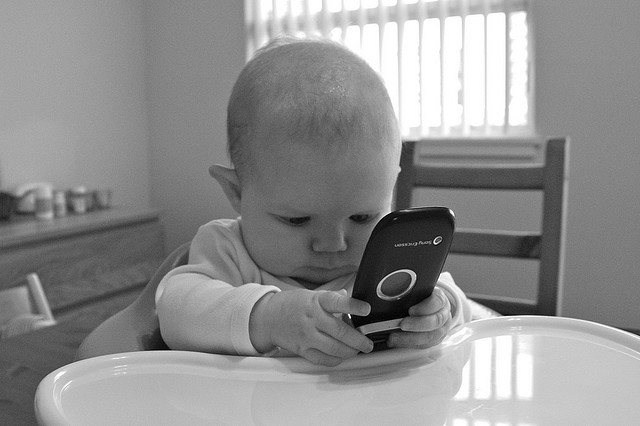
As the 1990s unfolded, cellular mobile telephones became more and more common and our trek toward loneliness began. Although the cellular telephone in all its forms has connected us like never before, it has also isolated us to the point of obsession. I see couples in restaurants where both are engrossed in their cells and laptops. People text one another in their own homes just rooms apart. Flip phones have evolved into Smart Phones with video capability to where you’re never far apart, yet very much isolated from one another.
Oh…hold on…I have to take this call…
 Boomer Journey...
The trouble is we are a tactile species and no amount of tapping glass is satisfying.
LikeLike
Your ending was hysterical! It gave me a good chuckle!
Have a Wonderful Christmas or however you celebrate!
Adele Liebermann – Richardson Class of ‘70
Cell: 443-336-3634
>
LikeLike