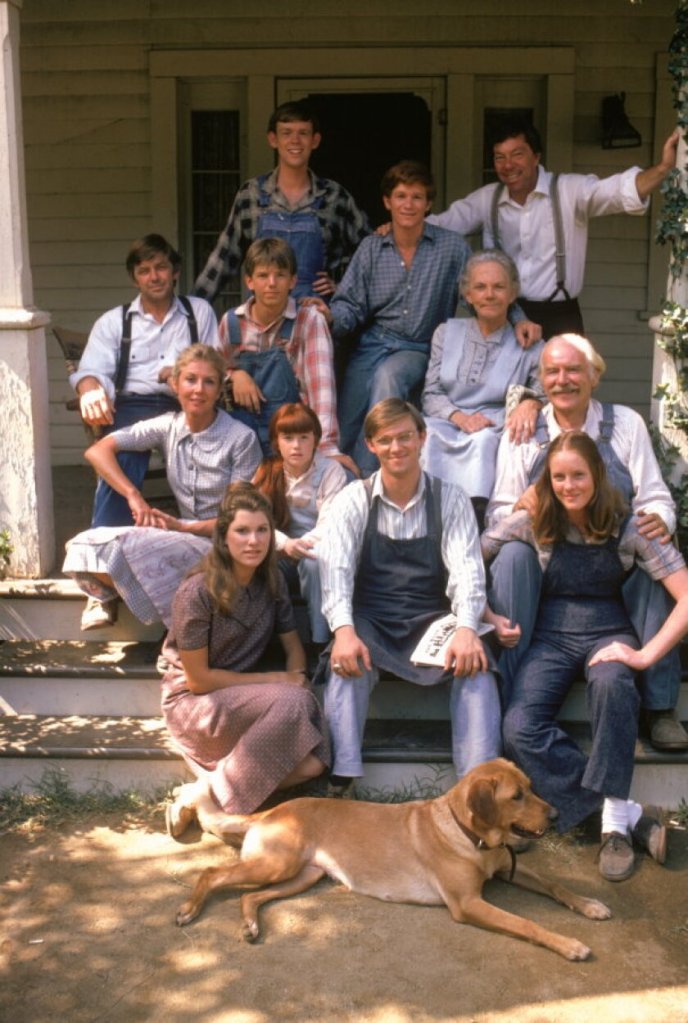
There’s a reason why Earl Hamner’s “The Waltons” television series endures today. It is an accurate portrayal of American life a century ago amid the Great Depression and the unfolding of a World War. “The Waltons” touched our hearts with an in-depth look at Appalachian life in a fictitious Jefferson County, Virginia.
“The Waltons,” produced by Lorimar Television and Warner Brothers in Southern California invited us back into our living rooms for a heartwarming slice of rural American history for nine seasons on CBS. There had never been anything like it before nor has there been anything like it since.
We just couldn’t get enough of it.
“The Waltons” offered up a great cast of characters, actors, direction, and Earl Hamner’s exceptional screenwriting. We were invited to come sit around the table with the family and follow each of them through their lives and experiences. Emotionally, it could be a tough watch at times. Sometimes, it made us cry.
Those of us who are familiar with rural Virginia know the topography of “The Waltons” just was not our Appalachia. It just wasn’t green enough. Walton’s Mountain was akin to Hamner’s childhood and early life. In truth, the Walton home on our television screens was nothing more than a facade on a Warner Brothers studio backlot.
Hamner’s stories each week were a reflection of his childhood, which added authenticity to the series. We romanticize “The Waltons” for its “down-home” quality primarily because it provided insight into people from another time. We’d heard about the Great Depression and World War II from our elders and watched our share of documentaries in junior high school. “The Waltons” was an accurate presentation of the times through the eyes and memories of book author and screenwriter Earl Hamner. There has never been a better storyteller.
Hamner would set the story in his most genuine formal Virginia dialect and explained to us what we were about to see – offering a conclusion to each episode along with a sweet harmonica wrap-up.
It calmed the soul.
“The Waltons” was born of Hamner’s 1961 novel “Spencer’s Mountain” and later the movie “Spencer’s Mountain” in 1963. The book and the movie became “The Waltons” in September of 1972. “The Homecoming – A Christmas Story” aired in December of 1971, which set the stage for “The Waltons” a year later. We just couldn’t get enough of the Walton family, with a couple of made-for-TV movies airing in the decade to follow. We weren’t about to miss it.
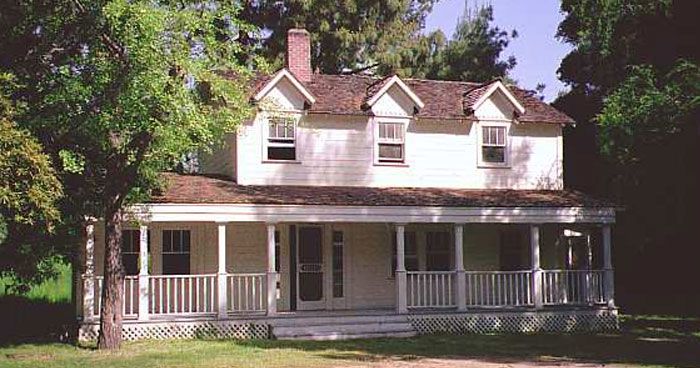
The Walton “home” was little more than a Burbank, California studio backlot facade. There was nothing inside except platforms and stairs. It has appeared in numerous television shows and movies through the years.
The show’s closing sequence featured the family saying “goodnight” to one another before going to sleep for the night when the one remaining lighted window would go dark. The “Goodnight John-Boy…” routine became cliche throughout American culture. We all said it.
We fantasize about “The Waltons” because it exhibited the unconditional love so many of us have desired in our own lives. It was a nice escape from the struggles of the 1970s and remains such today.
“Goodnight Everyone…”
 Boomer Journey...
Cabot Cove, Maine in “MurderShe Wrote” was really Mendocino. All that to say more people ease into suspension of disbelief than know the reality. Until a random palm tree sneaks into a distance shot🤣 My mother grew up in the Ozarks, I spent time there as a kid. All I can about the Walton’s I was always a little clean.
LikeLike