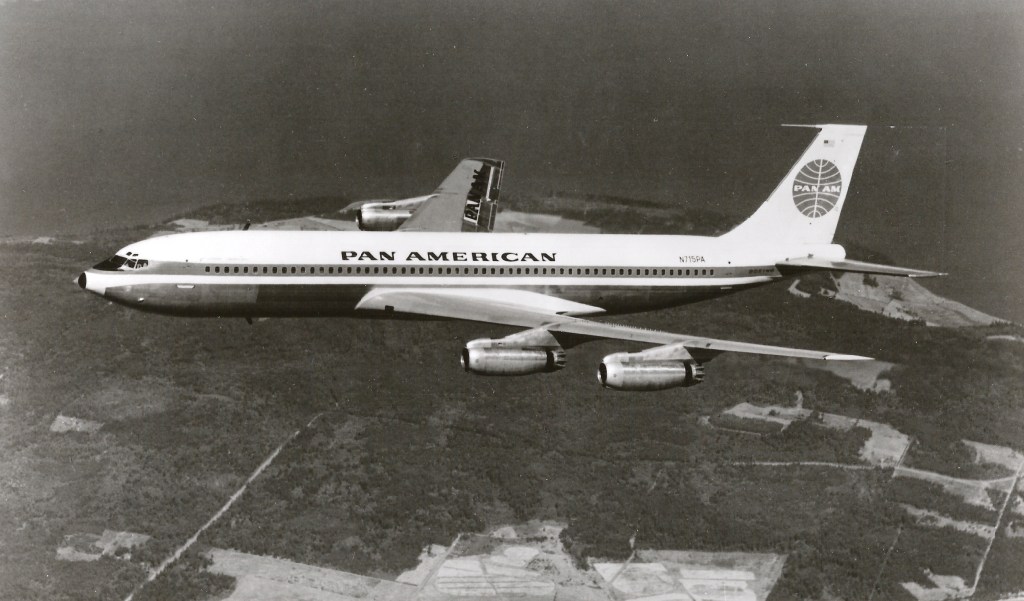
It is remarkable how mankind evolved from the Wright Brothers’ first flight in 1903 with their dope and fabric fixed-wing “Wright Flyer” biplane to jet travel across the Atlantic in less than 60 years.
Taking to the skies took raw guts and vision, followed by the desire to go farther and farther. Those with a fear of heights need not apply. Man has never been content with the here and now. We’ve always had great wanderlust, seeking to know what’s out there, whether it was the “New World” of the North American continent an ocean away, the surface of the Moon, or the vast expanse of the cosmos.
Next stop – Mars.
Our mantra has always been “Road Trip!!!”
The desire to fly was nothing new in 1903. Man had wanted to fly for centuries – doing what the birds did. I am pretty sure the Wright Brothers weren’t the very first aviators to take to the skies – only the latest. Because man didn’t completely understand flight, it took a while to get a controllable craft into the air.
The Wright Brothers worked feverishly on a flying machine for years before the Wright Flyer took to the skies on the Carolina coast. On December 17, 1903, the Wright Flyer became airborne, flying a short distance and claiming its place in the aeronautical history books.
My grandfather, Lt. Paul W. Proctor, a White House policeman and native Washingtonian, walked over to Ft. Myer, Virginia as a young man to see the Wright Flyer, which was a remarkable sight for his time, considering no one had ever really flown a fixed wing craft when he was born in 1894. He wouldn’t live to see a man on the Moon – however, he lived to see the Jet Age before he passed in 1966.
My grandmother – born in 1892 – lived to see Neil Armstrong and Buzz Aldrin step onto the lunar surface. She lived to see all of the Apollo missions before these NASA missions before she passed in 1976.
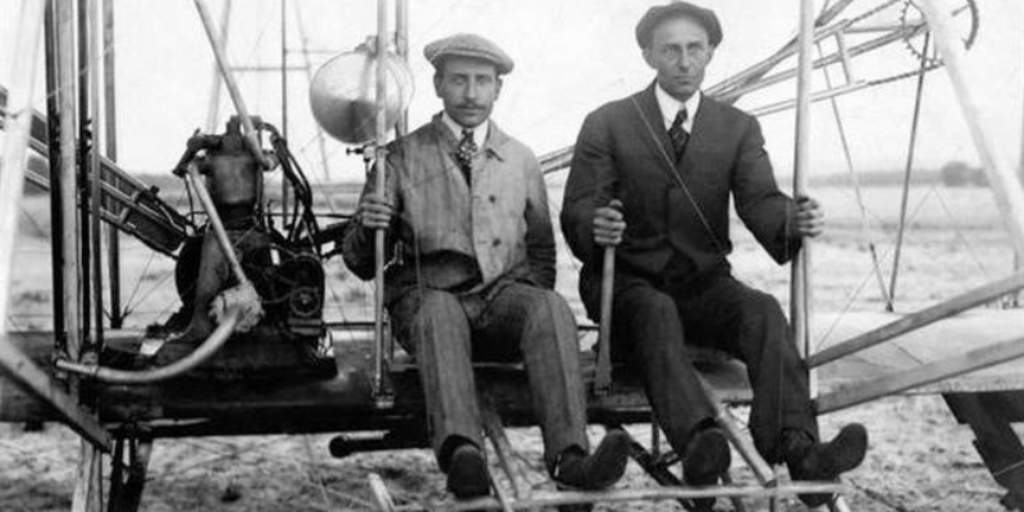
The Wright Brothers – Orville and Wilbur – in their homebuilt Wright Flyer.
Pan American World Airways, one of many great aviation pioneers, had the audacity of vision. What began as a modest effort by two U.S. Army Air Corps majors to get air mail between Key West and Havana grew into a world-class commercial airline.
In the 1930s under the leadership of legendary Juan Trippe, Pan Am experienced phenomenal growth, crossing the oceans and hemispheres. Trippe’s vision connected the world, first with the Boeing flying boats known as “Clippers” then ultimately enormous Douglas piston liners, then jet travel in the 1950s. Trippe launched Pan Am’s own jet age with orders for Douglas DC-8s and Boeing 707s. Trippe ultimately chose the 707 for his massive growth plan, selling most of the DC-8s to United.
Pan American took airline travel to a stratospheric level of service with a seasoned professional staff with high standards and the best of amenities, with real “pie-in-the-sky” service. By the 1970s, Pan Am had transported 11 million passengers to 86 countries on all the world’s continents with the exception being Antarctica. Trippe’s goal was supersonic transportation to anywhere in the world. Increasing concern for the environment and Boeing’s increasing interest in volume market subsonic wide-body jet service sidelined Trippe’s plan, which also included space travel.
Any time Boeing Chairman Bill Allen heard from Trippe, it had to have put Allen on a diet of anxiety medication because he understood what hearing from Trippe meant. Trippe didn’t just dream – he dreamed big. At the cusp of the 1950s, Trippe wanted jets. Allen bet the entire worth of Boeing to develop the Jet Demonstrator – the 367-80, a four-engine jet transport known as the Boeing 707. Boeing used the “367-80” for its 707 designation to keep the jet demonstrator a secret.
Pan American launched Boeing 707 jet service across the Atlantic, the vast Pacific, and to South America as the 1960s unfolded, becoming “The World’s Most Experienced Airline,” and so it went.
Pan Am to the world.
A decade later, Trippe summoned Bill Allen for drinks and dinner. He advised Allen he wanted a really big plane with a capacity of 450 passengers that would cross oceans and do it great numbers. He also wanted it right away. Allen returned to Boeing with a plan he presented to Boeing product planners, engineers, and workers. These seasoned Boeing professionals became known as “The Incredibles.”
Boeing acquired massive acreage northeast of Seattle, Washington, at Everett and erected the largest building in the world under one roof to build its new double-decker, twin aisle, jumbo jet 747. The 747 prototype, Ship 1, was assembled in a building that was not yet completed.
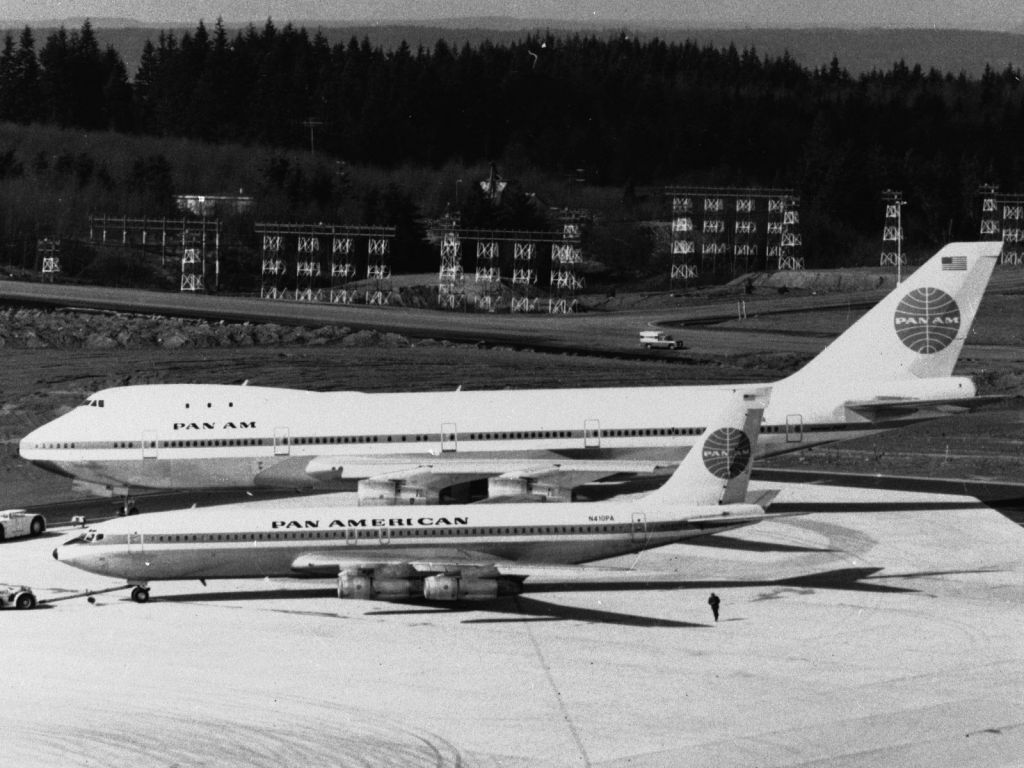
Boeing’s new 747 “Jumbo Jet” alongside the Jet Clipper 707.
Pan American made the world smaller with its fleet of 707 and 747 jets. It merged with National Airlines in 1980, picking up National’s domestic routes to feed its international route map. It seemed the perfect marriage.
Time was not kind to Pan Am despite the National Airlines merger. Airline deregulation, coupled with the tragic Christmastime bombing of Pan Am 103 over Lockerbie, Scotland, doomed Pan Am to extinction in 1991. It could not overcome the financial losses. However, Pan Am paved the way to a smaller world and travel we could have only dreamed of 100 years ago.
 Boomer Journey...