
Every once in a while, I like to salute the great actors and film producers of our time. “The Way We Were” is an excellent example, though it doesn’t get much attention these days. “The Way We Were” was a highly acclaimed romantic drama about two conflicting personalities who fell deeply in love with each other but couldn’t live together in peace.
Sound familiar?
“The Way We Were” was an adaptation of a screenplay from Arthur Laurents’ 1972 novel, which reflected upon his college years and political issues of the times. This novel and screenplay became one of the greatest love stories of our time. I suspect a few of us can relate to it because “The Way We Were” was a reflection of ourselves – our loves, our successes, and our failures.
Boomers are surely the divorce generation, with so many of us in second and third marriages. We made it “okay” to divorce when it just wasn’t working out. By contrast, the Greatest Generation before us stayed together despite their differences and the unpopular decision to divorce.
Divorce just wasn’t discussed or done.
“The Way We Were” was a box office success, moving quite a few of us to tears as we walked out of movie theatres around the world more than 50 years ago. It was nominated for and won several Academy Awards for Best Original Dramatic Score and Best Original Song for the theme “The Way We Were,” sung by Barbra Streisand and heard around the world. “The Way We Were” was easily one of the greatest romantic films of our time. I would wager nearly every one of you has the 45 or record album in your vinyl collection.
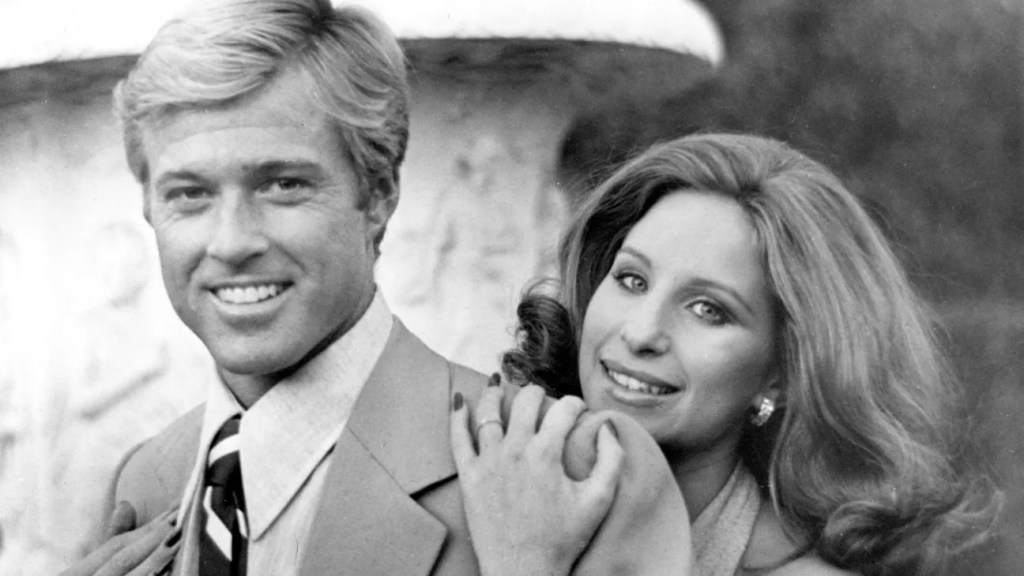
The story begins at a college rally at the cusp of the 1930s. Katie Morosky (Barbra Streisand) caught Hubbell Gardiner’s (Robert Redford) eye with her persona and her passionate words. College ended, and both Katie and Hubbell moved into adult lives and a world war. Katie and Hubbell were both diametrically opposed – dramatically different people who lived a life of conflict from the time they met. He was conservative and carefree, and she was liberal and both serious and passionate about everything. Her life was her causes.
Hubbell was a WASPY guy who never took life too seriously – and Katie, who took everything seriously. The joy of “The Way We Were” was the authenticity. It captured the very essence of the 1930s and ’40s – the music, society, and the times. You get so lost in the plot that you forget it is 2025.
Years later, Katie rediscovers Hubbell at a New York nightclub and is immediately drawn to him. Because Katie was very forthright, she walked up to a sleeping Hubbell Gardiner, carefully balanced on a bar stool in full Navy full dress, and gently corrected his hair. This was who Katie was. She worked tirelessly to fix things she perceived as needing correction – even when they didn’t need correcting. She wanted him to care the way she did and be as passionate as she was. Her expectations of Hubbell and his circle of friends were never realistic.
The story follows their lives to Hollywood and a very different and certainly affluent lifestyle. While Hubbell finds comfort in a Hollywood lifestyle, Katie believes his enormous talent is being wasted in film. As the 1950s and McCarthyism unfolded and began to adversely affect their lives, her political activism returned, endangering his career. When Katie and others began confronting Washington over free speech, it began straining their marriage – which wound up in divorce.
Although fiction, perhaps Katie and Hubbell can serve as a lesson for a lot of us. As we journey through life, we learn something important about ourselves – and more importantly, the person we’ve chosen to spend life with.
Like life, “The Way We Were” wasn’t a perfect love story.
 Boomer Journey...