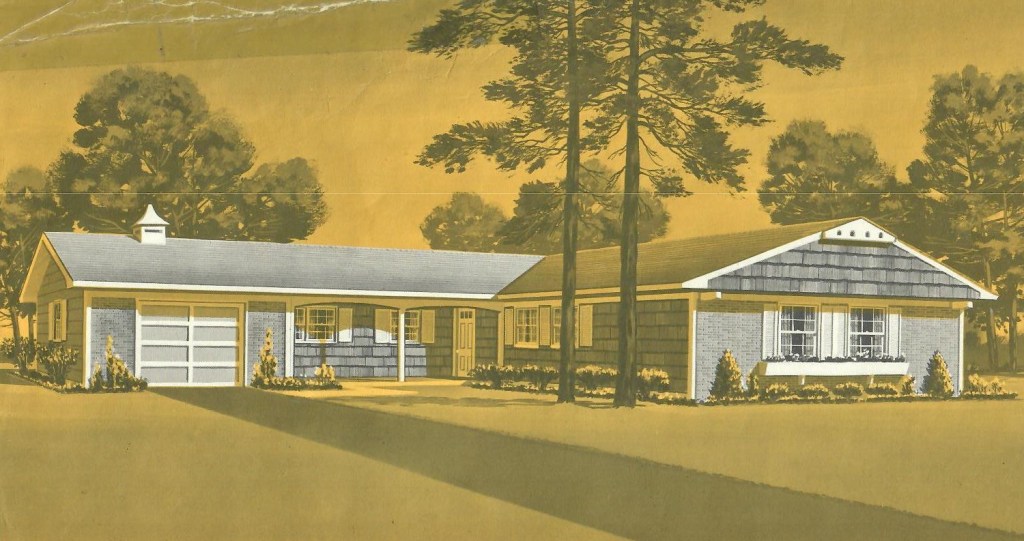
When we were growing up, home ownership was the American Dream and within reach for most people. Veterans came home from World War II ready to segue into post-war civilian life. The dilemma for most Veterans was a critical housing shortage. Vets couldn’t even find an apartment, let alone a house. They moved in with family, rented rooms, and lived in attics and basements.
Builders and developers saw this as an extraordinary business opportunity and bought up land wherever they could find it. Suburbia was born. VA and FHA benefits further fueled the housing boom and the profits. Product planners and architects designed and conceived affordable homes buyers wanted and developed communities where families could live and raise kids. The housing boom of the 1950s and ’60s had its challenges, but it was nonetheless a dreamy time in America.
The only way was up.
Before World War II, “suburbia” was unheard of. There were cities where most people lived and the outlying reaches of rural America where few lived. Rural America was within 25 miles of most cities. Farmland, isolated rural communities – a simple quiet life that was about to change. Developers bought vast stretches of land, cleared the dirt, grass, and trees, and went to work mass producing tract homes.
If you could drive a nail, paint walls, sweat pipes, install bath fixtures, pour concrete, and lay roofing materials, there was work for you to where you could afford to buy the very home you had built.
The Henry Ford economy was alive and well, with a huge return on investment.
Developers rose from the earth, with some having been in the game a long time while others were Veterans, home from the war, with pent-up energy and vision ready to begin civilian life and prosperity. William “Bill” Levitt, A Navy Seabee fresh from the vast Pacific, came home to New York with an idea. He was going to build thousands of homes Veterans could afford.
Mass production home building wasn’t anything new for Levitt & Sons. It built homes for U.S. Navy personnel in Norfolk, Virginia, and also had a long history of luxury home building in the New York area. It has been said Henry Ford invented the automobile assembly line. Bill Levitt invented the home assembly line in reverse. Instead of product moving from worker to worker with specific tasks, workers moved from product to product. This made homes plentiful and affordable. Buyers lined up for a shot at home ownership.
Levitt & Sons built its first community out on Long Island outside of New York, erecting more than 17,000 homes before moving on to suburban Philadelphia in Bucks County and on the other side of Philly in New Jersey where thousands of home emerged from the dirt. Dozens of Levitt communities would follow from as far away as Chicago, Florida, Puerto Rico, and even France.
The prosperity wouldn’t last. Faced with a very competitive market, Levitt chose to sell out to ITT, losing his shirt in the process. The Levitt name would survive. Bill Levitt would ultimately be out of the home building business.
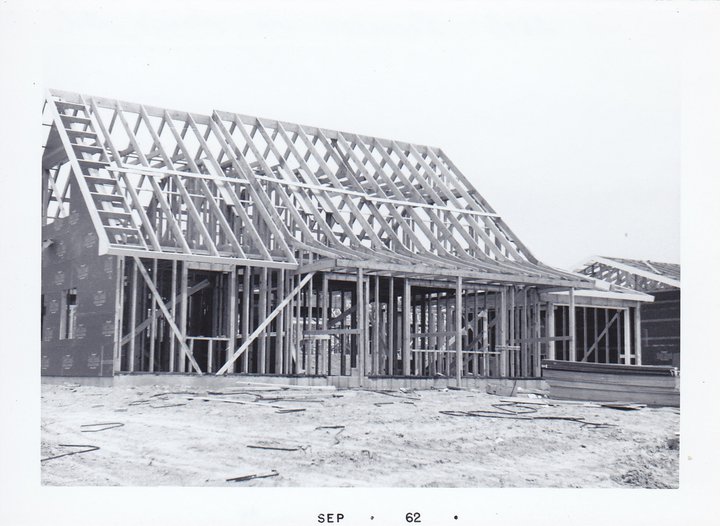
A Levitt & Sons classic Cape Cod in the suburban Washington, D.C. community of Belair At Bowie, Maryland – one of seven models available in the 1960s. This was Levitt’s first venture outside of New York, Pennsylvania, and New Jersey.
Whatever happened to the dream of home ownership, and why are very few young people unable to buy that first home today? We are in a different day and age under different circumstances than we were 60 years ago. Young people face huge obstacles in an environment of rising home prices, higher mortgage rates, supply and demand, and enormous personal debt loads.
I bought my first home at age 21 when I was in the USAF in an isolated region of Oklahoma for $19,000 in 1977, which was remarkably low compared to real estate in more populated urban areas. Comparable suburban homes would have been upwards of $25,000 to $35,000, which would have been beyond my means.
The American Dream remains. How to get there today is anyone’s guess.
 Boomer Journey...