Comedian-Satirist George Carlin gave us all a lot to think about in his 71 years on this apple. One was about the strange passage of time and how the concept of time was all made up by mankind. I think of this every New Years as the ball drops over Times Square followed by millions of hugs and kisses and letting the past go where it always goes from one year to the next – and that weird feeling that comes with the rest of the world ringing in the new year before us.
Last year becomes old and dusty overnight.
I think of long-standing New Years traditions we’ve followed through the decades. There have been many. Some have endured while others have not.
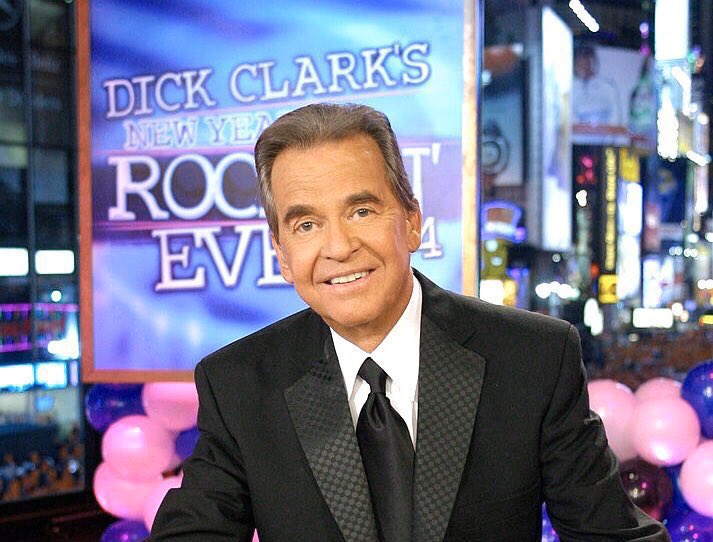
Undoubtedly the most observed New Years occasion in America has been Dick Clark’s New Year’s Rockin’ Eve – today hosted by Ryan Seacrest on ABC much as it has since the early 1970s primarily from Times Square in New York. New Year’s Rockin’ Eve offers real time activities along with pre-recorded events leading up to the ball drop at Midnight Eastern Standard Time.
Dick Clark’s founding of New Year’s Rockin’ Eve presented competition to Guy Lombardo’s New Years specials on CBS. Those first three seasons aired on NBC before moving to ABC in 1974-75. ABC became its permanent home.
When Guy Lombardo passed in 1977, CBS lost ground as the “go-to” New Years network, with viewers turning their attention to New Years Rockin’ Eve on ABC. This New Years tradition has maintained high ratings ever since – peaking in 2012 at 22.6 million viewers.
Long-time host and American icon, Dick Clark, hosted New Years Rockin’ Eve until suffering from a stroke in December of 2004. Regis Philbin quickly stepped in as guest host until Ryan Seacrest took over as co-host with Clark during his stroke recovery. Clark struggled with speech issues, which made his appearances more challenging. He remained host with Seacrest until his death in April of 2012.
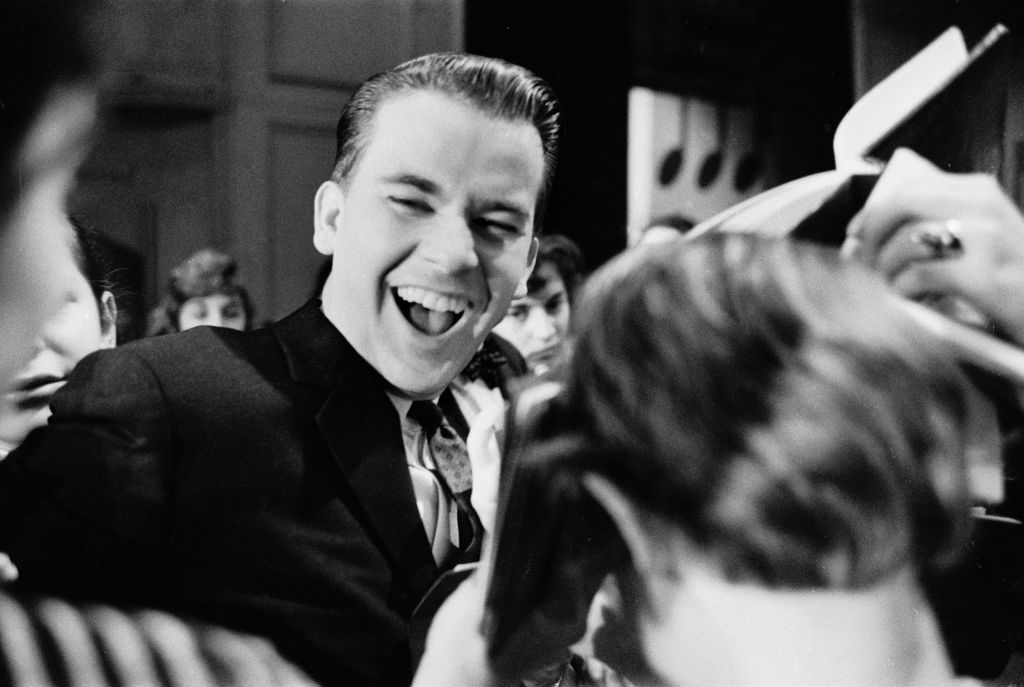
It can easily be said Dick Clark was the heart and soul of baby boomer America dating back to American Bandstand’s beginnings in 1956 as a locally broadcast weekend program primarily for teens. It was via Dick Clark’s American Bandstand that America was introduced to the rock and roll phenomenon that swept America and the world. He introduced viewers to the Motown sound and hordes of other pop music forms. He unified black and white Americans by bringing them together on the dance floor without segregation. It became the norm as a result of his policy.
American Bandstand was so successful that the ABC Television Network picked it up in 1957. With that transition to ABC, American Bandstand rose to national stardom, becoming one of the longest running shows in American history. What made the show so successful was Clark’s youthful personality and his ability to engage young people. He was immediately likeable. What’s more, parents trusted him and began to embrace rock and roll music. People found rock and roll music wasn’t just a fad, but an enduring pastime that became an integral part of the American experience.
It caught on and never left.
By 1958, American Bandstand was so popular, with some 50 million viewers, that it became a Saturday night tradition airing in the same time frame as time-proven successes like Lawrence Welk, which was popular with older audiences. Clark’s great success became the great success of rising performers. It cannot be overstated that Clark put a lot of young performers in the spotlight with enduring success. Some are very much still with us decades later.
American Bandstand left its birthplace of Philadelphia for Los Angeles in 1964 as boomers were coming of age in great numbers. The move to Los Angeles grew the show’s roots with a more diverse population and a growing audience.
American Bandstand aired daily Monday through Friday until the mid-1960s, then, moved to Saturday nights until 1988. In time, the American Bandstand lost its sizzle as boomers became adults and turned their attention to other venues. No one had time to watch American Bandstand.
It cannot be said enough the positive effect Dick Clark had on American culture. He stood by us well into the 21st century when his failed and he just couldn’t do it anymore. His loss was felt in the wake of his failing health and passing in the 2000s when a lot of us wondered how to end one year and begin the next without him.
We’re still wondering…
 Boomer Journey...