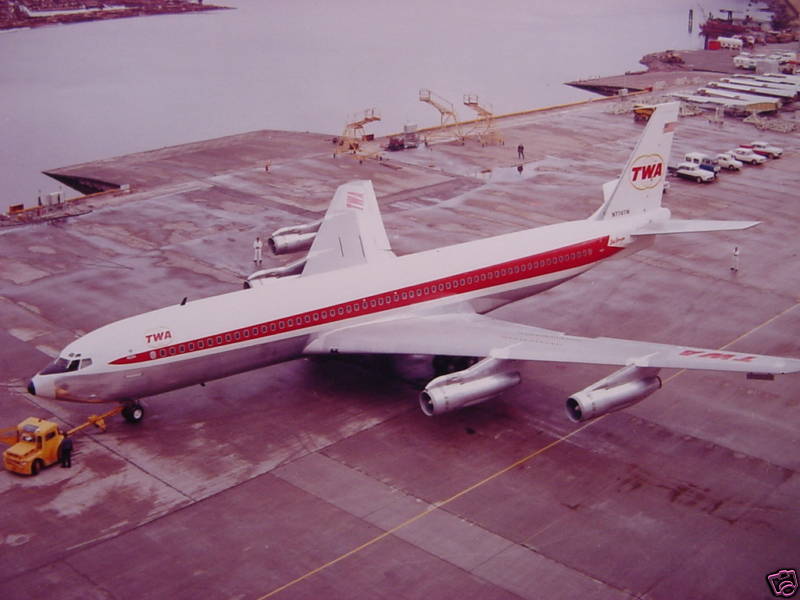
My very first airplane ride was in December of 1961 at the dawn of the Jet Age. My father was headed for a two-year tour of duty at Pearl Harbor with the NSA. He was a career cryptologist at the height of the Cold War. The ol’ man was a Navy guy who came out of the service and went right into the NSA.
When we were living in Hawaii during the Cuban Missile Crisis in 1962, he didn’t come home for more than a week. My mother was pacing the floors, sick with worry, wondering where he was and if he was ever coming home. She didn’t hear from him until he walked through the door. He never apologized or explained.
In the weeks leading up to our move to the Pacific, my mother spoke of our new home in Hawaii and the upcoming trip out there on a jet. At age five, I had no idea what an airplane was, let alone a jet. We boarded a United Airlines Boeing 720, a downsized long-range version of the legendary 707, at Baltimore’s Friendship International Airport (now BWI) for the ride to Kansas City’s Municipal Airport to spend Christmas with family in Independence before jetting off to Honolulu.
That two weeks in Missouri were miserable. We all came down with the flu and spent the visit in bed. It was very bewildering for a little man. My Uncle Johnny, who was a captain with Trans World Airlines, had an aluminum Christmas tree with a color wheel, which seemed odd to a little guy like me.
I didn’t know some trees were made of metal.
When it was time to fly away, we boarded another United Boeing 720 for the 600 mph ride to San Francisco International. My mother hated the approach into SFO – with nothing but water beneath the aircraft until we landed.
My Aunt Marilyn picked us up at SFO and headed to their apartment in Oakland across the Bay for dinner and nap time. That night, she ran us over to Travis AFB for the Pan Am 707 ride to Oahu. I still don’t know how she got all of us into a VW Beetle, including all of our luggage.
My mother, terrified of flying, was alarmed by the sparks coming from the ethanol-injected Pratt & Whitney jet exhausts. My dad always jokingly said she held the plane up all the way to Hawaii.
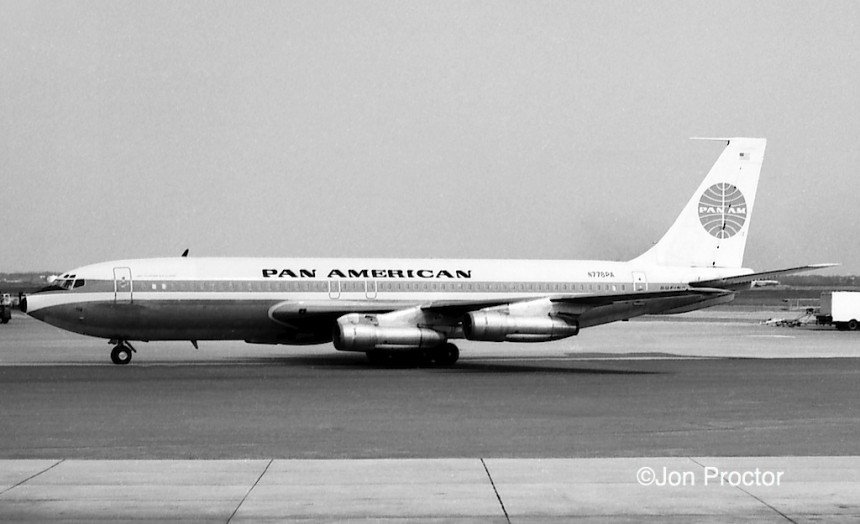
Pan Am’s iconic Boeing 707 was seen and heard around the world. Pan Am was the first to offer trans-Atlantic service from New York to Paris in October of 1958. From then on it was Pie In The Sky with the “World’s Most Experienced Airline.” My dad flew Pan Am all over the Northern Hemisphere. He commented Pan Am would always get you there – but never left on time.
When we deplaned at Honolulu in the wee hours of the morning, we were welcomed with the traditional Hawaiian greeting and hopped into a rental car for the trek to Pearl City Highlands.
What stands out most in my Jet Age memories was the service. Impeccable service from United. At the time – “Pie in The Sky” was genuinely Pie In the Sky. We were served meals on heavy china and handed silverware. You wonder how the darned thing ever got off the ground. The reason I remember what we flew on were the overhead passenger service pods unique to Boeing aircraft at the time along with starburst lightning and seats that were actually comfortable.
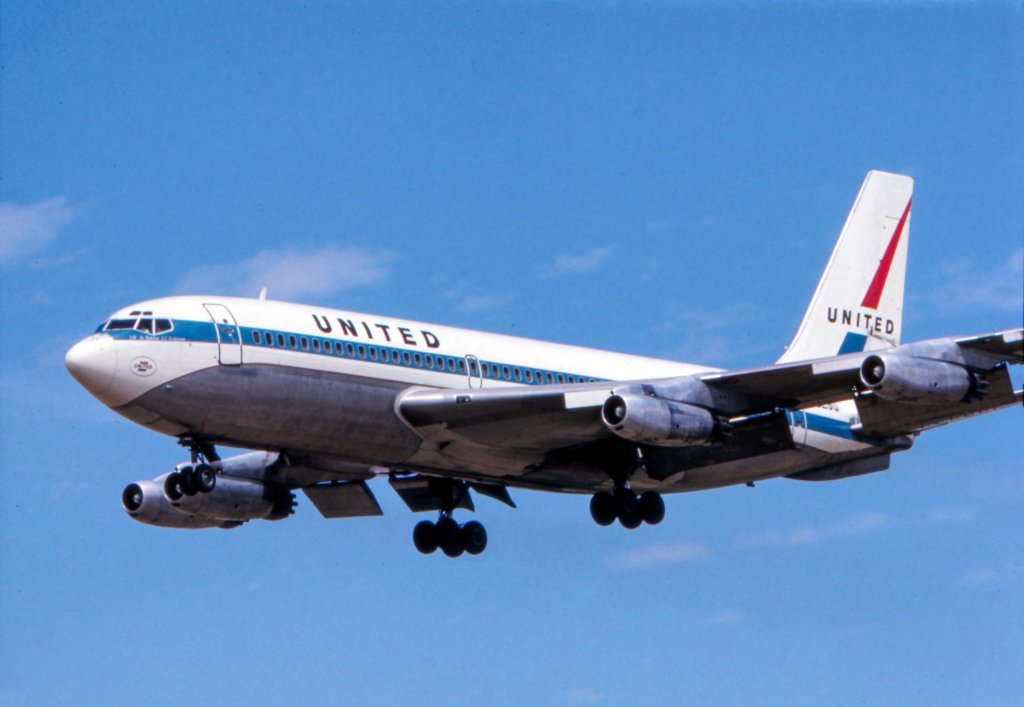
United’s JT3C turbojet powered 720, which was the dominate bird from coast to coast and for the regional milk runs. These things cruised at 600+ mph. Coast to coast in four hours – faster than the pistonliners and smoother to boot.
Of course, nothing remains the same including the airline industry, which has had its share of challenges since the 1960s. Deregulation handed the industry freedom to grow in 1978, which was a dual-edge sword because growth got a lot of airlines into trouble. They had greater plans than they had money. Deregulation also presented stiff competition that has been, at times, unsustainable. Some of the greatest names in airline history are gone now or have been merged into other carriers.
United, once a great name in the industry, is now what used to be Continental Airlines, which took advantage of United’s bankruptcy in the wake of the September 11th attacks, surviving in name only. Today’s United Airlines is nothing more than a renamed Continental Airlines. Investor-driven United offers the same disappointing service that was always a given on Continental.
America West, an aggressive upstart, absorbed a bankrupt USAir, then systematically acquired the biggest fish – a bankrupt American Airlines. AA isn’t former CEO Robert Crandall’s American Airlines. American, as we long knew it, was a great airline in gleaning polished aluminum and a paint scheme dating back to 1969.
This iconic polished aluminum livery for American Airlines in 1968 was conceived by designer Massimo Vignelli of Vignelli Associates, which created this legendary look with red, white, and blue stripes over aluminum and the world-renowned Helvetica font. The “Scissor Eagle” logo on the tail was added by the Henry Dreyfuss firm. People jokingly called the scissor eagle look “praying hands.”
In closing, I will tell you flying today is nothing like the sweet memories of 60 years ago. Change began with deregulation and the growing flying public population. With that growth came torn tee shirts, ripped jeans, and passengers who saw jetliners as nothing more than flying busses. People used to board jetliners dressed appropriately for the occasion who understood common courtesy. The more affordable flying became, the lower the benchmark.
Still…I never board a plane without marveling at the excitement of flight. I can board a plane in Los Angeles and be on the ground in Baltimore in four hours. With a strong tailwind, you can cross this continent in four hours flat.
Why would anyone not be moved by that?
 Boomer Journey...