Things I Just Don’t Understand About California

Do you remember when the Ricardo’s and the Mertz’s headed off to California in a ’55 Pontiac convertible singing “California Here I Come…” for a new adventure and the launch of Ricky’s movie career?

Ah – the Golden State, the mass migration West, and our endless national obsession with this place.

I am an East Coast boy lost in a place called Los Angeles. There are things I will never understand about California and I’ve been here 30 years. I am still adjusting to the place.

I am a native-born Washingtonian birthed in our Nation’s Capital during a rare March blizzard in 1956. I heard about my birth and the big snowstorm dozens of times from my mother. Not a darned thing I could do about the weather and my premature arrival. I was supposed to be a spring baby.

I’ve been in 49 out of 50 states and I’ve lived in eight of them. Now that’s a lot of moving.

I’ve had the good fortune of traveling from coast to coast and experiencing the many different cultures there are across the vastness of our United States. The only state I haven’t visited is North Dakota, which I intend to visit soon. Head for Minnesota and turn left.

I have lived in Florida and swatted mosquitoes, gnats, and love bugs. I do remember Oklahoma’s tornado warnings and stunning hailstorms. I’ve shoveled snow and scraped ice off car windows in Detroit. I’ve also lived in the South and attempted to understand that “queeeeit!!!” means “quit!!!”

I will never understand California.

Of all the places I’ve been, I’ve found California to be most unique – more different than any place I’ve ever been. Unique in a good way – and also quite unique in a not-so-good way. California was once a vast paradise until World War II ended and our troops came home from the Pacific. They were on their way home to thousands of destinations where it rained and snowed and was either butt cold or steamy hot. They stepped off ships and planes here in Los Angeles and up north in San Francisco, and found California was the place they wanted to be.

What was not to like about this place? In the post-war years, California was a great place to grow up and grow old. California’s great climate and many incredible destinations within a day’s drive or a short plane ride made people flock here by the thousands. Plenty of jobs and careers were waiting. Aerospace and manufacturing were humming. New communities sprung up all over. Education was state-of-the-art. People felt safe in their neighborhoods. Officers Reed and Malloy (Adam 12) were cruising the streets and arresting the bad guys. There were block parties all over and people knew each other. Overall, people were nice to one another.

California has suffered from exploitation and misguided government if nothing else, which has contributed to its deterioration. Millions have come here – both legally and illegally – and used the place up. A once thriving California has succumbed to the oppression of overwhelming government, high taxes, and an outrageous cost of living. No one can afford to live here anymore. As a result, the masses are leaving California in droves for destinations like Idaho, Utah, Texas, Tennessee, Florida and the Carolinas bringing most of California’s social woes with them. Californians relocate to these places and lament the absence of elements they had in California.

In-N-Out Burger has responded to the exodus from California by erecting restaurants in Idaho, Texas, Tennessee, and others under consideration. It has responded to thousands of requests from transplants who miss a great burger, fries, and a shake for under ten bucks.

Now there’s a California trend we can live with.

The Day Kennedy Died…

Today marks the 60th Anniversary of the assassination of our 35th president – John F. Kennedy.

Baby Boomers vividly remember the Kennedy Assassination – November 22, 1963 – a Friday. It was the most defining moment of our time. My family and I had just moved to Laurel, Maryland and I was in the Second Grade. At the impressionable age of 7, I had little concept of government and what government did. My first memories of a presidency were John F. Kennedy, his inauguration, and The White House in 1961.

At the time, I didn’t even understand my grandfather had been a White House police lieutenant under several administrations since the 1920s. He was the most solid human being I have ever known. He retired from a heart attack in the mid-1940s right after Harry Truman was sworn in as president.

November 22, 1963, a Friday, was like any other autumn day in the Mid-Atlantic – chilly, the rustle of leaves, and the utter boredom of schoolwork. I was a terrible student. To me, education was pointless and tiresome. I just didn’t understand the importance of it. Early that Friday afternoon, we were let out of school ahead of schedule, which was thrilling for a kid like me.

Time to go home!!!

Busses were lined up in front of the building. I had no idea why. The surreal part of the experience was everyone was crying. I did not understand the tears. On the bus going home, I was told President Kennedy had been shot to death in Dallas. I arrived home to find my mother in tears.

In my naive mind I thought, “how can the president be dead?” JFK, our president, was a young and vibrant leader with the nation’s hopes and dreams in his hands. He was a man with vision who gave us hope and genuine leadership. I’ve often wondered how different our world would have been had he and brother Bobby survived.

At such a young age, I was completely clueless. That weekend, our Philco TV was on around the clock – with investigators and the media attempting to dissect the assassination of an American president. The funeral procession down Pennsylvania Avenue was profound. I didn’t understand just how significant it was at the time. Our world was about to change.

There was our world prior to the Kennedy assassination and the world that would follow. The two were as different as night and day. The 1960s, as much as we romanticize them, was not the decade of sweet memories. What we had going for us as children was our innocence with not a care in the world. We could escape to our bedrooms and playgrounds and the world of imagination.

The social unrest of the 1960s was something we saw on the evening news – Vietnam, the riots, rising crime. Seems the early 1960s was peaceful and we were on the rise as a nation prior to the Kennedy assassination. Kennedy had his challenges – the failed Bay of Pigs invasion and personal issues in his own life. Standing up to the USSR and getting the nukes out of Cuba was a big win for Kennedy. His “dream” speech proposing we send man to the Moon and return him safely to the Earth was a page turner. It inspired. It energized NASA. We were going to the Moon.

Isn’t 60+ Something Your Parents Were?

Dunno about you, but I am noticing a change in the reflection in the mirror these days. I knew I was looking older when a young lady at a fast-food restaurant automatically keyed in SENIOR DISCOUNT when I ordered breakfast.

My goodness…

We are all growing older – and the struggles are as unique as our own thoughts and fingerprints.

Baby Boomers were never going to grow old. Remember that?

Well…some haven’t… They’re gone…never to have witnessed the coming of old age. They never had the chance – gone from this world before reaching old age. I think of high school friends killed in car accidents in our senior year – never to see graduation. At least one passed from terminal cancer before he was 20 – gone at such a very young age before reaching adulthood.

It can get depressing….but consider this… At 60+, you’re a survivor. You are still here.

If you’re 60+ and lamenting the arrival of old age, count your blessings. You are still alive. You are still here to feel and experience. You are still making a difference no matter how small. You have air in your lungs and a backache to boot. If you have people close by who love you, count your blessings even if they drive you crazy. If you don’t, mingle with others where there is the potential for friendship and love. Keep on keeping on. Never give up. You are still very much alive to feel both pain and – more importantly – pleasure.

When we were so very young, we saw the world differently than we do now. We’re not unlike the generations that have passed before us. Consider a saying for the ages, “I’ve been young and I’ve been old…and young was better…”

But, was it?

Consider how short on wisdom (stupid) you were at 20. Further consider your life experiences and what you’ve learned in the decades since. You’re a whole lot smarter than you were when Walter Cronkite was at the news desk and Apollo 11 landed on the Moon.

Further consider the prosperity path – the post-war world handed to us by The Greatest Generation as we crested adulthood. We’ve had it better than any generation before us. It has been what we’ve done with it since that has determined where we are now.

At the cusp of the 1970s, boomers repeatedly said, “Never trust anyone over 30…” I am snickering as I write this because there’s nothing new under the sun. Do you know who allegedly said this first? Jack Weinberg – born April 4, 1940 – is the first person to have reportedly said this. He was 24 at the time and was a young adult.

He’d never been old.

Today, he is 83.

Weinberg was an outspoken American environmental activist best known for his role in the “Free Speech Movement” at the University of California at Berkley in 1964. His immortal words have endured. Weinberg gets the credit for the phrase, “Don’t trust anyone over 30”. Of course, several outspoken activists have copped this phrase over the years. Abbie Hoffman, Jerry Rubin, and a host of others have taken credit for it.

You can bet young people were uttering these timeless words in the 1800s. Through the ages, there have been generation gaps – none larger than Baby Boomers and The Greatest Generation. The Greatest Generation said, “Rock and Roll has got to go!” Boomers said, “Hell No, We Won’t Go!” We paved the way to a new age where the world was never going to be the same again.

Baby Boomers be damned, yet honored, for the changes that have come in our time. We were going to change the world – and did. We’ve done a lot of good. We’ve also done our share of not so good. We’ve been greedy and selfish. Our parents wanted the very best for us – to have it better than they did. As a generation, we’ve collectively never known hardship. Our parents lived through The Great Depression and a world war. They made sacrifices we’ve never had to make.

Of course, we are older and wiser today. We’ve been selfish and we’ve been innovative. We’ve made great contributions to society especially with civil rights and equal opportunity. We surely have our regrets – things we wish we’d done differently. It is important to remember if you can read these words, you remain very much alive to experience and to feel.

As we head into the twilight, it is a good idea to consider these words – “Life is experiential…” Take these months and years ahead and look at life as an adventure. Embrace it – and others – for we shall not pass this way again.

The Passing of the Incandescent Bulb

I’ve always had a fascination with the humble light bulb dating back to when my right forearm was badly burned by a hot bulb at age five. The scar remains a lifetime later. It wasn’t the painful burn that cultivated my interest in these Thomas Edison-inspired envelopes. It has long been my gazing at a white-hot tungsten filament and marveling at the brilliance and how it works.

How could a tiny tungsten coil glow so brightly and not burn up? I didn’t understand the filament was in a vacuum void of oxygen where it was impossible to extinguish itself. I learned as I went too – sticking my finger in a Christmas light socket and getting a jolt and learning never to do it again even though I did it again and again. I wondered what the intense tingle was in my pinky, eventually learning it was the raw power of alternating current.

Christmas lights were a favorite in a wide variety of colors. I found offshore imported Christmas light bulbs got much hotter than GE or Westinghouse lamps though they all still got hot. Miniature “twinkle” lights didn’t get hot. GE called them “Merry Midget” lights.

This past summer officially signaled the end of the era. As of August 1, 2023, you can no longer purchase incandescent light bulbs, nor are they manufactured in the United States. This ban also applies to Halogen bulbs and it’s possible – by 2025 – Compact Fluorescent Light bulbs (CFL) will also be phased out under the Biden administration’s new environmental standards.

The time-proven old school light bulb is being phased out in favor of LED (Light Emitting Diode) light bulbs, which use less energy while also lasting longer. The U.S. Department of Energy (DoE) estimates that the switch to LED lamps will save American households an average of $100 per year on energy bills, totaling about $3 billion in energy costs for American consumers across the board.

I struggle to believe any of it. I smell a money trail – especially for investors who have invested heavily in the LED and environmental industries. LED lamps have replaced every form of lighting imaginable. Although I believe in environmental responsibility, I also believe cold hard cash fuels the environmental movement. There’s money in the environment or it wouldn’t be a priority.

LED lights emit a near monochromatic light, which has its advantages and disadvantages. For one thing, many of them nearly blind you with intense light. LEDs have the ability to produce high-quality white light while consuming less electricity according to the Department of Energy (DOE). However, car headlights, which are largely LED now, deliver light so intense that oncoming traffic is blinded by the light. Although they light the road ahead, they also blind others.

This technology offers the highest luminous efficiencies of any light-source technology and prices have dropped significantly since LEDs have hit the marketplace, the DOE tells us. LEDs can also last far longer than old school hot incandescent lightbulbs, with a lifespan of 30,000 to 50,000 hours or even longer compared to just 1,000 hours for incandescent light bulbs. I personally have seen some incandescent light bulbs last years, including those in my hallways and bathrooms. My home is 23 years old and the Hungarian-made light bulbs in some of the builder-provided fixtures are still in use. This is easily longer than 1,000 hours.

Although I believe LED lamps are better than the classic light bulb, there is still room for improvement in terms of color, light distribution, and durability. These LED light strips are notorious for short life. They flicker and they die.

Despite the demise of the humble glass envelope, you can still purchase conventional light bulbs for some applications including black lights, yellow bug bulbs, infrared lights, plant lamps, reflector style lamps remain legal and for sale.

Touring The Model Homes…

Announcing the passing of a great American pastime – the touring of new model homes…

Does anyone do this anymore?

Walking through model homes was on a par with going to an amusement park or a drive to the beach. It was just something we did on the weekends as a family. It allowed us to dream. It was euphoric.

We wondered…what would it be like to live in a new home?

New homes yielded the aroma of oil-based paints along with the gassing off of plastics and new carpet. We didn’t understand then the hazards of what we were breathing in – including asbestos.

Model homes, of course, were never realistic for most of us. They had mid-century modern display furniture and were homes fitted with all of the desirable options people wanted like the best kitchen cabinets and appliances, upscale bathroom counters and ceramic tile, carpeting, high-end light fixtures, and finished basements. These were all elements dreams were made of.

Because developers didn’t want you defecating in their potties, there was plywood installed between the toilet seat and bowl to keep people honest. Developer Levitt & Sons, as one example, placed a rope across the doorways to keep people out of the bedrooms. Levitt also placed a large chunk of Plaster of Paris in the toilets to prevent people from doing the naughty in its bowls.

When I was a kid, touring model homes was the only thing my family ever did together. We never went to the beach or down to D.C. to tour the Smithsonian. We drove to Arlington to see my grandparents or “up home” to Greenwich, Virginia to see the relatives on my mother’s side. That left touring model homes as a nice place to dream and pretend with. It gave us hope.

Today, young people are so wrapped up in electronics to where virtual reality seems to be better than the reality of walking through new homes. What I loved most about new homes in the 1960s was walking through homes under construction to see how houses were constructed. It became a passion for me. I wanted to be an architect. When I discovered I was really bad at math, I had to choose another occupation entirely.

I loved the bones of a house under construction – where the plumbing and electrical went, heating and air conditioning, and guessing at where everything would ultimately go. I grew up in the Belair At Bowie, Maryland community just outside of Washington, D.C. which was Levitt’s first community outside of the Northeast. It was also Maryland’s first Levitt community. It was an amazing place to watch grow out of the rural Maryland soil. And, for nine years, Levitt & Sons built more than 9,000 homes some 26 miles outside of Washington.

When we moved to Belair from Laurel, Maryland in 1965, it was an opportunity to wander the homes under construction. Levitt continued building across the Maryland countryside until it ran out of land. For a kid like me, it was pay dirt because I wanted to know all about home and building construction. Levitt & Sons provided the education.

Aggressive housing construction continued well into the 1970s with baby boomers and Gen Xers coming of age. It was a target rich environment for developers and growing families alike. It was also very competitive. Not all developers would survive, including Levitt & Sons, which was the one to beat in the post-war years. When Bill Levitt sold out to ITT in 1967, this created a downward spiral for the Levitt name and Mr. Levitt himself. Because Levitt took the ITT deal mostly in stock options, he lost his wealth to declining ITT stock.

Levitt was never able to regain traction as a home builder. He died broke in 1994 at age 86. A good many home builders from the mid-20th century did not survive in the decades to follow. Savvy developers found the means and resources to keep going – many of which are still with us today.

The Cars We Had…The Times We Lived

I awakened this morning believing baby boomers are quite literally the last generation that has lived America’s exciting post-war car culture. Today’s car culture isn’t like ours was in the mid-20th century. We loved automobiles for their styling and power because they had a lot of both. We revved our engines and postured proudly for all our friends.

We opened hoods and compared engines. We cruised downtown streets and watched ourselves go by in store windows – which was called “profiling” for a good look at ourselves in those days. We would wrap up our profiling – pulling into local cruising spots, revving the engine and shutting it down in a blast of underburned hydrocarbons.

If you drove a “hand-me-down” clunker, you just didn’t profile. It was bad for image. You didn’t want to be seen in the worn out family sedan or station wagon your parents loaned to you to drive. For some – non car people – it didn’t matter. They drove what we called “hackers” which were old beat-up vehicles no one wanted to be seen in and we didn’t care who sat on the hood.

A buddy of mine – Jim Shanley – brought his father’s ’69 Plymouth Fury III to Hilltop Plaza where we hung out on Friday and Saturday nights to put on a show for all of us. He did donuts all over the parking lot with this huge sedan. How Shanley never struck a light pole is beyond me. And how on earth did he dodge the police?

Today’s young bucks call it “drifting…”

I call it stupid despite being a national pastime.

I imagine Jim’s father wondered why his bias-ply rear tires were always bald. Today, a set of high-end performance tires run at least $1,000-$1,500 a pair. I see this reckless nonsense and I don’t get it. We liked fast cars in our youth, but most of us understood how expensive it was to lay down rubber. The foolishness out there today gets a lot more expensive.

When I watch how young people drive today, I have to wonder – were we this bad?

Oh sure, street racing and exhibitions of speed are nothing new. We would stage street races out on Maryland’s Route 3 or Central Avenue just south of my hometown and hope we didn’t get caught. There were certainly the fatalities and seriously injured like you see across the country today.

Not everyone survived.

In those days, we had drag strips around the area before real estate became too valuable to ignore. Many of our favorite racing haunts are gone today. Enthusiasts in New Jersey grieve the loss of Englishtown and Atco – two legendary tracks that had been around for generations. Local residents complained about the noise and politicians answered the call.

Another point is the value of real estate. As a result, we have an even larger problem problem – epidemic street racing casualties – and the masses concerned about what to do about it. Atco, as well as others in the Mid-Atlantic, had been open for more than a half-century, with most opening right after World War II. These days, enthusiasts have nowhere to race.

Drag racers between Washington, D.C. and Baltimore wonder of the fate of Capitol Drag Raceway, which opened in the early 1950s when it was way out in the middle of nowhere. Today, civilization has come to Capitol and it’s only a matter of time before it will be gone. The same can be said for other extinct drag strips around Washington, Baltimore, and Annapolis.

As boomers and as car enthusiasts, we’ve enjoyed the good fortune of the post-war years, exciting and fast automobiles, and an era long to be remembered for generations to come. It leaves one wondering what the car enthusiasts following us will do when there’s nowhere to race.

When We Had Fewer Channels and Better Choices

Do you remember canvassing TV Guide searching for something to watch and selection was simple? You had the three television networks and their affiliates along with local Metromedia (FOX) stations and Public Broadcasting? There was also what we called “Channel U” (UHF) with a very limited number of regional stations.

I remember arriving at my permanent USAF duty station in a very rural part of Oklahoma in 1977 to discover Cable TV. We were too far away from any metropolitan area to depend on rabbit ears or a rooftop antenna. We were billed $7 every other month and thought it absurd we had to PAY for television.

We didn’t quite understand Cable TV was the wave of the future – and it would cost a whole lot more. Worse yet, the networks would take advantage of a paying captive audience and load up the programming schedule with more and more commercial airtime. There is no sense of fair play in anything anymore. Wall Street and Madison Avenue have us by the short hairs.

It is appalling just how bad it has become.

The good news is the cable networks’ attention to baby boomers and the classic sitcoms we grew up with. METV, FETV, Antenna TV, and TVLand have all stepped up with popular sitcoms – both classic and present day. Personal favorites are “Mike & Molly”, “Roseanne”, “Mad About You” and a host of others from recent times. Dusty old sitcoms from the mid-20th century are too numerous to name – “I Love Lucy”, “I Dream of Jeannie”, “My Favorite Martian”, “Dick Van Dyke”, and “Andy Griffith” to name five. I can sit there for hours watch these favorites from back-to-back.

When we were growing up, it was common to have 60-second adventising spots at the top of the hour, at the 15-minute point, and at the bottom of the hour. Today, there can be as many as 20 commercials at the 10-minute mark followed by five minutes of program time followed by another 10-20 commercials – most of them pharmaceutical in nature to convince the viewing public they have some sort of ailment they don’t have – “See your doctor…”

The news networks like MSNBC, CNN, FOX and the rest are big on stringing you along with teasers until the last 15 minutes of programming – then, one story and “after the break…” or “after a short break…” which is a bold-faced lie. Also – the ever popular…”stay with us…” and “be right back…” I wear my remote out surfing because I refuse to sit through five minutes of lifestyle drug company commercials. You know, two women playing bad mitten trying to look like they actually know how to play or some aging baby boomer fishing with the grandkids.

Respectful Disagreement – It’s Important

Human Beings have always had a tough time getting along. When you examine recorded history, mankind has been battling for thousands of years over a wide variety of subjects – land, politics, religion, you name it. We are not as barbaric as we used to be – at least not in the modern “civilized” world. We’ve become more sophisticated at how we attack one another.

Beheadings are not as common these days nor is burning people at the stake. However, we are pretty good at bombing each other and typically from a safe distance with drones, cruise missiles, and high-altitude aircraft. Bombing the enemy from a safe distance means we don’t have to look at the carnage we’ve delivered to others. We’re more isolated from the enemy.

We’ve also become pretty predictable with mass shootings and using firearms instead of our minds to settle disagreements. There are the mass shooting deniers – those who write killing the innocents off as “the cost of doing business…” Collateral damage…right Washington?

We also remain a nation where politicians beyond draft age still send young people off to war.

We’re darned good at that.

What I am saying here is nothing new. This is only the latest version of what society has been doing for centuries. Seems we can justify anything because it is what we want at the time. We may later regret what we’ve done – maybe…

It is also true we have a lot to answer for today in how we treat one another both in person and in social media. Social Media has created a crop of seasoned keyboard warriors. We level one another with words – the hateful things we’d never say to a person’s face. Human beings possess a lot of courage while sitting at a PC or staring at a cell phone from a safe distance. We fall all over ourselves when the person we’ve attacked online shows up at the front door.

“Awe Phil…I was only kidding…”

Used to be we respected one another’s opinion whether we agreed or not. Politics was normally never discussed out of mutual respect and the valuing our relationships. Our friendships were more important than a difference of opinion. We agreed to disagree and it was okay. These days, it can get quite ugly where friendships that have endured for decades suddenly end in a fiery crash without any forethought to how short life really is.

Friendships end over a difference of opinion because we’re not mature enough to handle a differing point of view. “It is my way or the highway” – and so it goes. We’ve become unable to settle our differences without conflict. This is what the dumbing down of society and pitting us against one another has done to relationships. We’ve lowered the benchmark in order to feel better about ourselves.

It isn’t working. Low self-esteem inspires people to behave badly.

I am a centrist – liberal about some things and conservative about others. I believe in helping those who genuinely need help. That’s what responsible government and people with heart do. Otherwise, we should be responsible for our own lives and make our own way. We live in day and age where it is fashionable to kick someone when they are down instead of reaching out and lending a hand.

Well, what about that?

What has become of society that we’ve set the benchmark for common decency so low? We’ve become a mean-spirited society fueled by the disgusting demeanor of bad politicians and public figures with foul mouths. What does it say about us when the United States Senate is considering lowering the dress code – which has already happened in the House of Representatives?

It speaks volumes.

It says everything about what we’ve become.

This trend began more than a half century ago when people started boarding aircraft in tie-dyed tee shirts and holes in their jeans. It became fashionable to go casual – everywhere. Government offices and the private sector had formal dress codes that needed to be adhered to or you were asked to go home and change.

With all this chatter about our personal rights and space, we’ve lowered the benchmark for common decency even further. When I attend school functions at our son’s high school, I am appalled at how alarming personal appearance has become. We’ve become a nation of “dressed down” slobs. Oh sure, I sound like our parents long ago when it was “long hair has got to go!” However, let’s talk about minimums. There are no minimums because we’re still endeavoring to reach rock bottom. Like it or don’t, baby boomers started these trends, which have only become worse over time.

That, friends, is on us.

We are in need of a social overhaul – the reconstruction of how we think, appear, and treat one another. This comes from the proper breeding and rearing of our kids and grandkids. Setting the proper example for them to pass along to their offspring.

On a larger scale, government…the politicians we elect…must set a proper example in the form of leadership and common decency. The chatter I am hearing out of the House of Representatives is stunning. It radiates across the rooftops and plummets into our communities.

We have lost our way…

The best place to begin is in our own homes. What example are we setting for our kids, grandkids, and neighbors? I have to examine my own demeanor at home – my language, temper, and how I speak to my family – especially when things become frustrating.

Do I remember to count to ten?

And do I ever stop to consider how damaging words can be though they don’t spill blood? Words do more damage than physical harm ever could. This is something to remember whenever we go onto social media and have a strong opinion about an issue.

Think about it…

Autumn And the Sweet Aroma of Woodsmoke

Our sense of smell is the greatest memory trigger we have by design. When I was a child growing up in Maryland, that first hint of the holiday season lay in the sweet, wonderful aroma of woodsmoke in the air along with those first chilly evenings in autumn.

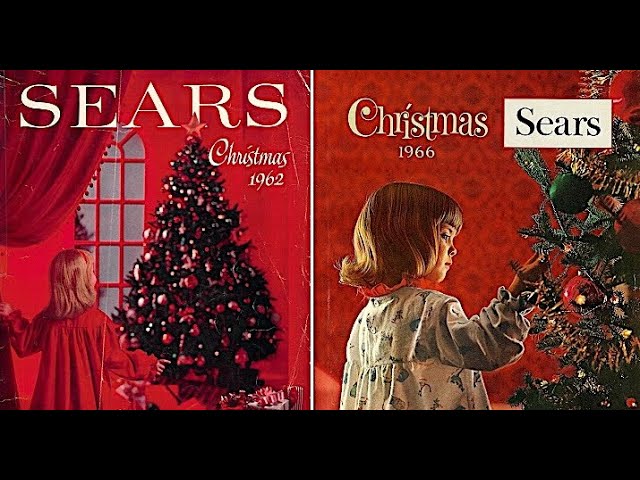
Seems the smell of woodsmoke from burning fireplaces and autumn leaves always occurred around Halloween. We would be walking suburban Washington streets with our trick or treat bags and the aroma of woodsmoke would tickle the olfactory nerves – which set a succession of reactions in my brain signaling the approach of the holidays. Granted, the holidays were a couple of months away, but the SEARS Wish Book always managed to show up in October.

Memory really is the darnedest thing. In my late sixties, woodsmoke still triggers a euphoria unmatched. Where I live in California is no match for Maryland autumn woodsmoke. I suppose they grow different trees in Maryland than they do in California. It just isn’t the same for this East Coast born and bred soul lost in a place called Los Angeles. It just isn’t the same.

When I was in Maryland earlier this year when it was still cold, woodsmoke was thick in the air and it was better than any form of alcohol or recreational weed could offer. I took on huge lungfuls of oxygen and other gasses and held them in my lungs. It was incredible. I longed for my Maryland roots and the sweet smell of autumn.

Saluting The People Who Molded Us

There’s a reason why we romanticize our childhoods and have a strong yearning for the past. We love “The Waltons,” “Leave It To Beaver,” and “The Andy Griffith Show” for the feel-good messages they share and the lessons they still teach today. Baby Boomers have found over a lifetime there are no free lunches. Our actions yield both benefits and consequences.

If you were raised in a household with responsible parents and grandparents who mentored and taught you the right values, you have a clear understanding of right and wrong. We have “The Greatest Generation” to thank for what they’ve taught us and left to us. They understood commitment and duty. They learned early on to step up, stand strong, and keep liberty shining.

That’s what they did.

We can say they never complained and, when called to duty, signed up and served. The biggest misconception is that they never complained. Oh sure, they complained – a lot. There were the duty dodgers – those who sat in the sidelines and watched the action while others did the work. That has always been true and continues to be so. Had it not been for those who stepped up, we would not be a free society today. There were those who stepped up and did what they had to – often at the expense of their own lives.

To those I say – grateful for your service to humanity and country.

Not all of us had great childhoods and mentors. Some of us come from broken homes and chaotic childhoods. There are those of you who were bullied at school and at home – victims of circumstances beyond your control. Alcoholic parents. Turbulent marriages. Abusive relatives. There are as many situations as there are people.

The list goes on and we all have our stories.

What matters is where we are today and hopefully what we will be tomorrow. And always remember – where there is breath, there is hope.