The Larger Than Life Twin Towers

They’ve been gone a long time now – destroyed by terrorists in the tragic events of September 11, 2001. We really haven’t been the same as a nation since – shaken to our core by such a terrible tragedy. We’ve become more divided, which is exactly what our attackers wanted.

Well, what about that – and what are we doing to unify?

But first, some history. I remember the Twin Towers of New York’s World Trade Center quite well. My passion for the towers came of seeing the Irwin Allen disaster movie “Towering Inferno” in 1975. I was so taken with the enormity of The Glass Tower, a fictitious San Francisco skyscraper that caught fire due to wiring issues in the building and the failure of its “many modern safety systems” to quote the late William Holden (Developer Jim Duncan). It was then I decided to trek to New York in an old Mustang to see skyscrapers in person.

As headed up the New Jersey Turnpike into Newark, I could see them dominating the lower Manhattan skyline. It was a hazy summer day and they were barely visible. Thunderstorms in the area made it challenging to see them. I crossed the George Washington Bridge and headed down Manhattan’s West Side, which is quite a drive by anyone’s standards – roughly ten miles along the Hudson River.

Although the World Trade Center officially opened April 4, 1973 with a ribbon cutting ceremony, the towers were not generally accessible to the public until 1975-76. Tower Two (South Tower) got the observation deck in December of 1975 known as “Top Of The World” where you experienced a speedy elevator that made your ears pop to the 107th floor for a bird’s eye view of lower Manhattan, then, a long escalator to the rooftop. Port Authority literature at the time promoted the observation deck as “It’s Hard To Be Down When You’re Up…The Observation Deck at the World Trade Center.” It was worth every penny to take that express elevator to the top.

I would visit the Trade Center a few more times until I entered the Air Force in 1977 and never took that ride to the top again. I would visit New York again on business, but never had the time to visit the towers. It was an opportunity I would regret missing the morning of September 11th.

It is true New Yorkers hated the twin towers and for decades. It seems they just weren’t as iconic as the grand old man in a three-piece suit – the Empire State Building, which opened in 1931 in awe-inspiring Art Deco style. We’ve never fallen out of love with it. The Empire State remains a world iconic so loved by millions and a place people want to visit to this day. To enter its lobby and behold the artistic beauty and high ceilings along with so many creative nuances is a strong indication of what we used to be as a nation. The Empire State Building was erected in 14 months. Never tell me it cannot be done when America proved to the world on many occasions that it could be done.

It wasn’t until the 1993 bombing of the World Trade Center that New Yorkers began to embrace the twin towers and marvel in their simplistic majesty. New Yorkers realized how close the towers came to falling that cold snowy winter day. It was by luck or chance they didn’t – mostly due to the location of the bomb truck than anything else. The bomber was clearly not a structural engineer. The two big guys survived. As fate would have it, they wouldn’t eight years later. Their days were numbered.

The tragic events of September 11, 2001 will never leave me. I still cry. I still grieve for the dead both in New York and in my hometown of Washington, D.C. Our innocence received a wake-up call that day – an innocence forever lost. It has always been my hope we would become stronger as a society for what happened that day. Instead, we’ve chosen another path and have lost our way. Your guess is as good as mine on what will happen next.

Remembering The Unmistakable, Comical Frank Nelson

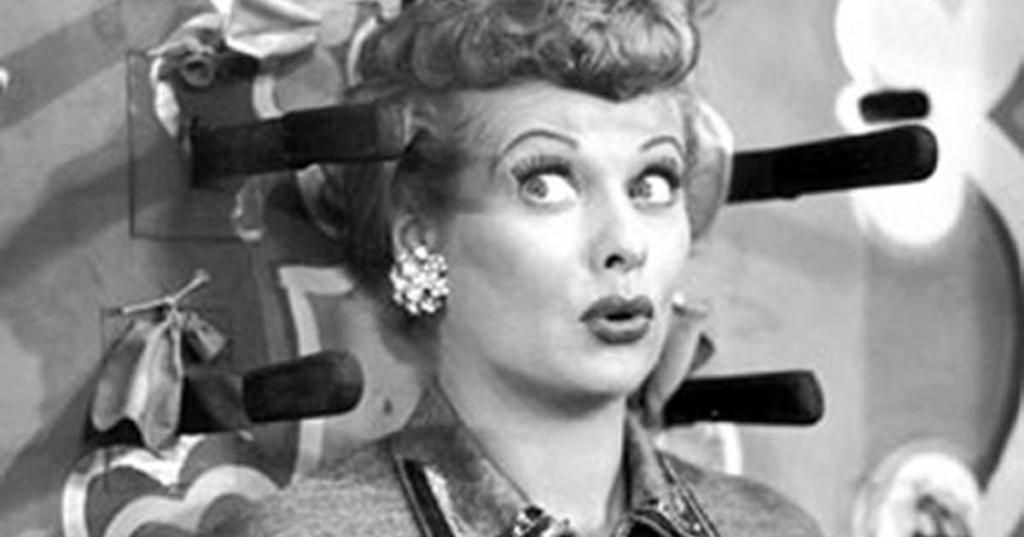
If you’ve watched every single episode of “I Love Lucy” – as I am sure most of you have – you fondly remember this guy. Radio and television personality Frank Nelson. “EEEYesssssss!!!” He spent most of his 75 years making people laugh with his cutting sarcasm and a voice you could never miss – not even in a crowd.

He always knew how to startle some poor soul in a department store and get them falling all over themselves. Nelson was also a terrific voice artist who did cartoon voiceovers. In “The Flintstones,” he played himself among Hanna-Barbera characters.

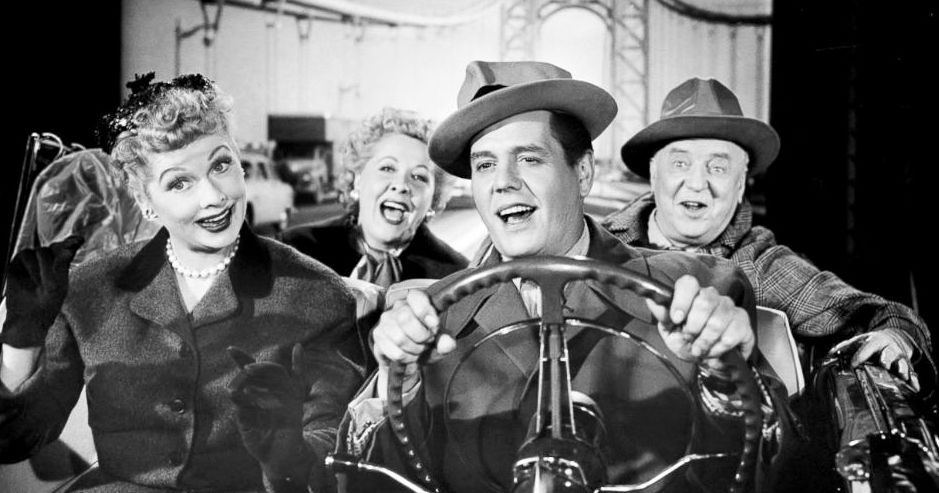
We remember Nelson most as “Freddie Filmore” – a fictious game show host who managed to beat Lucy at her own game. Who could forget “Females Are Fabulous” and the crazy antics of Nelson and the poor slobs who wound up on his show, Lucy among them, who wound up drowned with a seltzer bottle while Ricky stood there in a raincoat and sang. In one episode, Nelson was a police sergeant on the desk with Lucy and Ethyl under arrest as Pick Pocket Pearl and Sticky Fingers Sal. It was a hysterical scene with the two ladies struggling to prove their identities. In the end, Lucy got the best of him – a rare moment in Frank Nelson television.

Nelson got his start in radio in the 1920s and, later on, moved into television and movies. In 1929, Nelson found his way to Hollywood and worked in local radio broadcasts where his distinctive trademark voice hammered the airwaves. His first big break was a sitcom that aired in 1932-33 starring Groucho and Chico Marx.

His career spiraled from there.

Nelson hooked up with Jack Benny during the 1940s and 1950s where he polished his craft. He would do various roles typically as an antagonistic character in a service capacity and greet Benny with his trademark “EEEYeeeeeeeeesssss?!” Audiences fell apart. These two guys would get into it, with Nelson doing what he did best with insulting one-liners. He drove Benny crazy who would respond with, “Now cut that out!!!”

Nelson continued to be a mainstay on television and movie screens for decades before he began to fade away in the 1970s. Impossible to believe Nelson could ever fade away. He would surface in sitcoms and even commercials including McDonald’s. In due course, Nelson’s health began to deteriorate into the 1980s. He lost his battle with cancer and passed in 1986.

Nelson continues to appear posthumously on television screens around the world, reminding us of his comic genius and ability to befuddle people decades later.

The Friend We Had in Allan Melvin

Actor and Comedian Allan Melvin was everyone’s neighbor and best friend. To this day, the man waltzes across our television screens in a wide variety of sitcoms dating back to the 1950s. He always knew how to make us laugh as a comedian or make us quake in our shoes as a threatening street wise bully. He was Archie Bunker’s best friend and Barney Fife’s worst enemy. He was Alice’s long-time boyfriend in The Brady Bunch as Sam the butcher.

Everyone knew his name.

Melvin had a face everyone could remember yet no one really knew who he was. He was always “that guy…you know….that guy…

Allan John Melvin was born in Kansas City, Missouri on February 18, 1923 and spent 84 years on this apple – passing January 17, 2008 at age 84 from cancer. He spent most of his younger years in New York and portrayed a “New York” kind of attitude in his characters long after leaving New York. Melvin married Amalia Faustina Sestero in New York in 1944 toward the end of World War II.

Melvin never once had a starring role, yet he appeared in hundreds of television roles too numerous to name. Melvin was endearing to us all as Sam the Butcher – one of his most memorable characters. Seems he always gave Alice the best deals on meat. Who could ever forget him as Sergeant Hacker in Gomer Pyle USMC in the 1960s and Corporal Henshaw in The Phil Silvers Show early on in the 1950s. He had a natural bend for military characters.

If you spent time in front of the TV as a kid in the 1960s, you knew Melvin by his Hanna-Barbera voiceovers such as Magilla Gorilla as one example of his great professionalism. He could articulate his voice to any character.

Allan Melvin 1967 © 1978 Barry Kramer

Melvin attended Columbia University and got his start in the entertainment business by making nightclub appearances. His first big break was as Corporal Steve Henshaw in the Phil Silvers Show in the 1950s. The Silvers Show was not only a terrific acting opportunity, but a chance to work with great talent and mold his craft.

He grew to be a character we loved.

Melvin’s career took off when he made the acquaintance of Sheldon Leonard and Desilu – which led to opportunities in Andy Griffith, Dick Van Dyke, Gomer Pyle and others. He also appeared in Perry Mason and Lost In Space. You will also remember Allan Melvin for his television commercials – such as Al the Plumber for Liquid Plumer, Kelloggs cereals, and a host of others.

Melvin became a regular on “All In The Family” and “Archie Bunker’s Place” as best friend Barney Hefner whose dog always left Bunker a “pyramid” on his doorstep or played practical jokes on Bunker via Pinky Peterson (actor Eugene Roche).

Barney Hefner can be considered Melvin’s final bow before his health deteriorated and he retire from acting.

Despite All This Technology, We Still Love Vinyl

Despite the age posted on our driver’s licenses, thank goodness for the era in which we grew up. I am talking about the sweet simple memories from our youth and the humble vinyl record.

For some reason unclear to me, there was a warm and cozy feeling that went with a lighted dial, the smell of vacuum tubes, and the glow of a pilot light at floor level when we were listening to music.

It was a reassuring experience I cannot explain.

We’d place a stack of 45s on the turntable, gently turn the reject knob, listen to them flop one at a time, wait for the crackle of a stylus on vinyl, and feel raw emotion for the music we craved.

It was such a rush of euphoria.

Seems 33 1/3rd LPs sounded better than the 45s. It was like they recorded a different version of the song on 45s than we heard on the LPs. It is challenging to define what was different. All I know is they just sounded different.

There’s a certain comfort in playing records than there is in CDs or MP3. Something so familiar and comforting. Perhaps it’s a reminder of our youthful innocence – what we didn’t know about the world around us then.

Playing records was our “social media” in the middle of the 20th century. We gathered as friends and listened to our favorite music. My sisters were big “Monkees” fans thanks to the great success of their spoof rock group TV show and those very first music videos. Seems like The Monkees invented the music video did they not?

My younger sister crushed on Davy Jones. She had Davy Jones posters all over her bedroom walls. It was a big deal when The Monkees came to Baltimore to perform in concert. My sisters went to The Monkees concert while my parents and I went to see “Grand Prix” starring James Garner.

Two different worlds.

My big sister was so taken with The Beatles in the early 1960s. I remember the Sunday night when they debuted on The Ed Sullivan Show early in 1964. I have to admit, I love early Beatles more than I do what came later when it was time to change their image. It was their harmony as a young rock group and how it made us feel when we donned the “Hard Days Night” album.

Even more remarkable is how vinyl records are affecting young people today. They think vinyl records are kind of cool and are lining up to buy them in numbers even if they don’t have a record player. They count on boomer parents and grandparents to still have at least one around. They want to play records yet know very little about how to stack and play them. If they are not careful – which they are often not – they always manage to break your classic record changer by forcing the tone arm instead of waiting for the mechanicals to set the vinyl.

Darned kids…

Whatever Happened to Morning Television for Kids?

When I think of great morning television as a child, I can’t help but think of “The Captain” and “The Best To You Each Morning…” from Kellogg’s of Battle Creek – Captain Kangaroo’s sponsor for generations. When we think of Kellogg’s, we think of The Captain – and vice versa – which was successful marketing.

It worked.

Captain Kangaroo (actor Bob Keeshan) made us feel safe, wanted, and loved. He was America’s grandfather and most terrific morning friend. He hosted a cast of characters who made us feel the same way. They each taught us about what was important.

Aside from, perhaps, Fred Rogers, there was never a better mentor for kids. Rogers always taught us right from wrong and spoke to us with the innocence of a child.

Children’s television was all about education and morals. It was our conscience. It was all about consequences if you did wrong and kudos when you did right. There was such a sweet innocence in the Treasure House, The Neighborhood, and morning television.

Local television stations had children’s TV personalities. In Washington, D.C., we had Ranger Hal (Hal Shaw) in the mornings with the same kind of message. Ranger Hal was true law and order who made us feel good about it. There was also Captain Tugg (actor and announcer Lee Reynolds) in the afternoons, who hosted the Popeye/Three Stooges show right after school and before dinner. Each of these programs made us laugh and they also taught us something important – doing the right thing. Captain Tugg always told us not to try the antics of the Three Stooges.

These locally-produced television shows were intended for child audiences with unique local hosts and focused themes. Seems most were Metromedia stations (now FOX). This concept was post-war at the dawn of television in the mornings before school. It was so successful from a commercial standpoint that it continued well into the 1970s. Captain Kangaroo survived well into the 1980s until even PBS cut this show from its schedule.

Children’s television was all but dead.

These shows were typically Western themed, which were very popular at the time; captains, skippers, commodores (viewer fascination with maritime); jungle explorers, astronauts (the space race), clowns (Bozo), sheriff/deputy/trooper and cops (Mr. Policeman is our friend…), hobos and tramps, railroad engineers, magicians, and more. They hosted popular children’s cartoons and stories.

What these shows did for boomers as children was programming we could relate to. These hosts made us laugh. They would stage pratfalls, things all of us did. Falling over a table or walking into a wall. They would stumble over their words and get into word play. It was all so very entertaining to where we felt like we knew the host and cast of characters personally. When the bad guys stormed onto the set, we were rooting for our heroes.

The reality of children’s television was opportunity – millions of baby boomers born from 1946-64. Millions of kids who wanted breakfast cereals with the toy surprise inside, toy commercials (especially at Christmastime), theme parks (The Wonderful World of Disney), candies and cookies and delicious cakes, and more. It was all about the generous profits that went with children who would hound the parents for whatever was being promoted on television.

At age four, I wanted REMCO’s Whirlybird helicopter and I wanted it bad. My parent’s searched high and low for this fabulous toy and could never find it. Christmas Morning, I couldn’t understand why Santa didn’t bring what I’d asked for. I got a Lionel train set mounted on a plywood board instead. Not bad considering what was available at the time. My desire for the Whirlybird came from what I saw on television.

Mission accomplished for Madison Avenue and Wall Street. Boomer babies kept the economy rolling thanks to children’s television. Yet, we always knew where The Captain’s heart was.

Romanticizing The Muscle Car Era

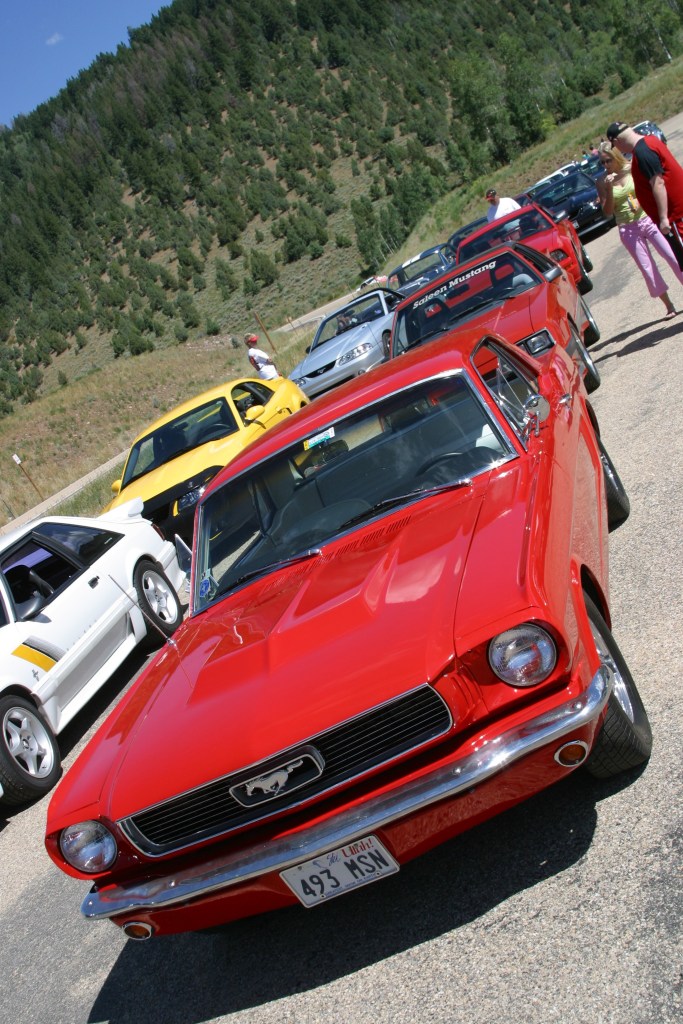
Boomers love the original muscle cars of the 1960s – the GTO, Chevelle SS, Mustang Mach 1 and BOSS, ‘Cuda and Challenger, Corvette, the more unusual Buick GSX and Olds 4-4-2, and the wild and crazy AMX two-seater rocket ship.

We love the “rumpity-rump-rump!!!” sound of a hot cam and throaty dual exhaust tips – laying down rubber and being downright bad ass.

It was the youthful energy of the 1960s that got our motor running – heading down the highway and looking for adventure. At times, we found more adventure than we had anticipated. We’d fire our mills and turn on the music – the best music in modern American history. It was the music the world wanted to hear – genuine American rock and roll pop music. We didn’t need subwoofers – just a pair of stereo speakers and a lot of power beneath the bonnet.

There had never been anything like it at the time and there hasn’t been anything like it since.

This is why we love the fast-quick rides of our youth.

Today’s muscle cars – the Shelby Mustangs, Dodge Challenger Hellcats, and Camaro SS just aren’t the same trip. They’re more advanced and certainly faster than what you had on showroom floors in the 1960s. What Detroit offers us today is brutally more faster than the classics. However, we’re just not as in touch with the road as we were 50+ years ago when the road was ours and all we had was an AM Radio and “The Doors” blasting from a lone monaural speaker.

And air conditioning? Only wimps had air-conditioned cars. And in a muscle car? Forget it. Air conditioning and other power accessories would rob you of all-important tire-barking horsepower. Automatic transmissions were also for the lame. If you had a Chevelle SS with a four-speed transmission, nothing equaled the thrill of leaning on it hard in first gear and hearing gear whine. Banging second and barking the tires. Slamming third and feeling the momentum. Slipping it into fourth and profiling in front of store windows downtown where you could watch yourself go by.

Oh yeah…lookin’ real fine…

Owning a new muscle car in the 1960s was a real ego trip because few others in town could compare. You became the envy of all your buddies who wanted one. You had a new muscle car if you had a good paying job and could afford one or you had parents who spoiled you rotten. I recall one friend with a new Dodge 340 Demon and the characteristic heat riser rattle Chrysler vehicles were known for. He had the throaty 340 Six-Pack – bad ass power by anyone’s standards.

Another friend had a new Chevelle SS with a 396. It romped hard and it got him down the road. His calling card was the roar of the Chevy big-block with a pair of Thrush mufflers and a lumpy cam.

We romanticize these hot American classics, but were they all they were cracked up to be? When it comes to styling, nothing Detroit has built since the 1970s can compare. Classic American muscle cars beat the pants off modern muscle cars in styling alone. They were sexy and they fit right into the sexual revolution. Few things beat the 1970-74 ‘Cuda and Challenger for raw sex appeal. They had the best looking bucket seats ever done with their tapered backs you could ease into.

They rocked in every respect and I wanted one – bad…

Isn’t that just the way it was at the time? For sure for sure…

If you’re seeking comfort, convenience, and all the features of a modern muscle car, go buy a Mustang GT, Challenger R/T, or Camaro SS and saddle up for the smooth, quiet ride to work. However, if genuine American mid-century style is your goal, invest in a classic muscle car for the weekend getaway and that occasional work commute. You can count on a thumbs up from those who appreciate the styling and good looks who wish they were you.

Oh, So Very Young…Then and Now…

Oh, how we love to rag on young people. However, young people don’t understand us any better than we understand them. Much as we did with our parents a half century ago, they are just as determined not to follow the same protocol we have. They see us as dated and out of style. They aren’t going to chase the same ideals and beliefs.

I get it…

There couldn’t have been a larger generation gap than Baby Boomers and the Greatest Generation. Record smashing and “Rock and Roll has got to go!” The McCarthy era. They were decidedly different than we were and still are. They grew up in a different time altogether.

We are more attuned to young people today than our parents were to us. Baby Boomers don’t have issues with long hair and tattoos. We will sit there privately in our homes and inhale weed much as young people still do in 2023. Boomers find themselves listening to today’s music and young people have developed an addiction to the music of our time not to mention a new-found love of vinyl records and turntables. They like hip hugger jeans and bellbottoms.

“For Sure…For Sure…”

Young people like the classic muscle cars of our time too. Our 15-year-old son wants to drive the ’67 Mustang in the garage – the car I’ve owned since my youth. I used to “profile” in front of store windows cruising downtown much as he probably will later on. Young people like the essence of “cool” much as we did in our youth. We still like doing that today hoping no one notices.

As much as we rag on young people today about our differences, we have more in common than we will admit. Perhaps the focus should be on what we do have in common.

The Perpetual, Enduring Tony Bennett

How do you say “so long” to one of the greatest vocalists of all time? It is 4 a.m. on July 22nd and I still haven’t figured how to bid this man farewell. He has been gone scarcely 24 hours. I just can’t do it. I think I will pop one of his LPs on the turntable for another round.

I need to hear his voice.

Born Anthony Dominick Benedetto August 3, 1926 in Long Island City, Tony Bennett grew up in the Astoria section of Queens, New York. By age 10 he was a proven singer with an intoxicating velvet throat.

He was so good he was paid as a singing waiter at Italian restaurants around the city. As he came of age, Bennett attended the School of Industrial Art learning his craft and honing his God-given talent.

Like most struggling young performers at the time, Bennett refined his technique in nightclubs around New York and New Jersey developing his own unique style. He wowed audiences everywhere.

Of course, there would be enormous challenges. In 1944, he entered the U.S. Army Infantry and served toward the end of World War II. By 1945, he was involved in some of the fiercest fighting of the war in Europe to supplement the heavy losses of the Battle of the Bulge. That he survived the intense fighting that ensued can be considered no less than remarkable. At the end of the war, he was involved in the liberation of the Kaufering concentration camp – a witness to the horrible atrocities of the war.

Bennett was then assigned to the Special Services band unit there to entertain American troops. He performed with talent he would come to know for decades. When he came home, he studied at the American Theatre Wing where he was taught the “bel canto” singing discipline – a technique he would practice for the rest of his life.

Despite his great talent, Bennett struggled. In 1949, he got his first big break in Greenwich Village, opening for Pearl Bailey. By good luck or fortune, he became acquainted with Bob Hope as a result of his association with Bailey. His career skyrocketed from there. Bennett signed on with Columbia Records and the only way was up.

Whenever I hear Tony Bennett, it takes me back to childhood in the 1960s with his records on the Hi-Fi and the energy he shared to the atmosphere and audiences everywhere. His voice, coupled with the work of great instrumentalists, got my adrenaline flowing. I loved his work and grew to appreciate the way he evolved in the decades to follow. He never lifted.

Bennett got criticism for sticking with tried and proven music. However, this approach worked well for him and he continued to pack houses and cut records. His style never really went out of style. It is no less than remarkable today he wows audiences ranging from The Greatest Generation to Boomers, to the very young.

Despite his struggles with Alzheimer’s, the decline of his health, and his inevitable passage into the great beyond, we can enjoy video footage and audio recordings of his work and enjoy the cool.

Godspeed, Tony – thanks for a great wealth of musical memories we can continue to enjoy for generations to come.

A Warm Summer Evening and the Rumble of Distant Thunder as we played til’ dark

Do you remember long hot steamy sticky summer days and the oppressive feel of a warm and humid evening playing kickball as the streetlights came on? Sometimes, the parents would let us play until we were enveloped in darkness.

I remember that too.

The evening air would be as dense as molasses and the heat would wrap us in clammy sweat. A nice wrap up to the day was to soak in a hot tub with Mr. Bubble. We’d get out of the tub and the cool air felt so good along with the feel of clean pajamas and fresh bed linens.

I grew up in the Mid-Atlantic. I live in California and – honestly – I am missing the rumble of thunder and the cheap thrill of a summer storm. There was such great anticipation on a warm summer evening with the distant rumble of thunder as it intensified and grew closer.

Where I lived in Maryland was hilly and wooded. You could never see the storms approaching – but you could hear them. The sound was ominous – with concussive thunderclaps indicating cloud-to-ground lightning strikes and the anticipation associated with thunderstorms. It was the thrill of the approaching threat. It made you want to hunker down and curl up.

As a child, lightning was a huge mystery to me. It lasted but a nanosecond with a startling flash and it was gone – followed by the hypersonic demeanor of thunder. The lag between a lightning flash and the thunder always baffled me, especially at eight years old when we were out there in the street in a game of kickball and had to come inside. I was one a kid who wanted to be outside in a thunderstorm to actually see lightning instead of the flash and thunderclap from our living room.

My mother and grandmother grew up in the foothills of Virginia’s Blue Ridge Mountains where the lightning could be quite intense at times. My grandmother told horrifying stories of close lightning strikes and the dangers of lightning storms “up home” in Virginia’s hill country. Both were terrified of the lightning instead of enjoying the thrilling phenomenon of thunder and lightning.

As the storms approached, my mother would round us up and get us inside to sit on the foam rubber couch to “protect us from the lightning.” She didn’t understand lightning. She perceived the foam rubber sleeper sofa would protect us. However, that’s not how lightning works. It’s like that age old myth you are safer in a car due to the rubber tires.

The old rubber tire theory has never been true.

Motor vehicles are hit by lightning all the time. Vehicles are struck and the tires blow from the intense heat of lightning traveling from the rim around the rubber to the pavement. The vehicle’s electronics are typically fried from the intense power surge. Because you are seated in a steel cage, you tend to be safer from the lightning than you would be otherwise.

Another popular misconception is you are safe inside during an electrical storm. That has never been true either. Lightning – which is static electricity – will always find its path – including right through your home to ground or from ground. Unless you are in a steel frame building, there’s always some risk of being struck by lightning. They tell you to stay away from windows, which is a good idea because it reduces your chance of being the victim of a lightning strike. However, the power of a lightning strike knows few limits. It can pass through anything.

I say these things not to alarm you, but to dissolve those old myths shared with us as children and to take you back to a warm summer evening playing kickball or hide and go seek. Hide and go seek was evening better in the darkness of dusk – that is unless you had a weak moment and started laughing.

East Coast Versus West Coast

I’ve been living in Los Angeles for nearly 30 years. I’ve been all over this vast metropolis – from the high desert to San Diego. Los Angeles is unlike any place I have ever lived. It is vibrant, exciting, and one hot mess from the sea to the mountains to the deserts.

Los Angeles is no longer the eutopia it used to be. Core issue here is – too many people discovered this place in the post-war years and have come to So’ Cal’ in an effort to escape the very elements they’ve brought with them. Southern California has also become the epicenter for uncontrolled immigration and out of control homelessness. As a result, crime has spiraled out of control. It has become too expensive to live here hence the growing homeless population.

What has happened here was inevitable.

When I was growing up in Washington, D.C., Los Angeles was a faraway place we saw on television and in the movies. Friends of mine and their families were packing up and moving out of the heat and humidity and cold dampness of the mid-Atlantic and make new lives on the West Coast. People flocked to California for jobs, better pay, a perfect climate, fresh communities, and quality education.

This is the way it was 50-60 years ago.

People loved Southern California for its balmy climate, the ocean, the mountains, and the excitement of the entertainment capital. Contrary to popular belief, there are not celebrities on every street corner though I’ve seen a few in three decades.

LA was never an easy adjustment for a guy like me.

I am an East Coast boy and always will be.

The sharp contrast between East Coast and West Coast becomes very apparent when you move to Los Angeles and observe your surroundings. Most apparent are the people. Because Los Angeles is big on entertainment – narcissism is the first thing you notice….“Hellllloooo?!” Though Washington, D.C. and Los Angeles are a continent apart, they’re very much alike. D.C. is an entertainment capital but for an entirely different reason – politics and enormous egos.

New York can also be considered narcissistic. It is, after all, “The Big Apple” – New York – “HEY, I”M STANDIN’ HERE!!!” However, I love New Yorkers for their abundant character. When you have a friend in New York – you have a genuine friend in New York. Though hard edged, New Yorkers will embrace you given a chance. The same can be said about Boston where everyone knows your name.

There are many ironies that encompass East Coast and West Coast. The more different they are – the more they tend to be the same. The masses came to Los Angeles a half-century to escape the perceived oppressiveness of the Midwest and the East. And now – the masses are flocking to Mid-America and the East to escape the things they despise most about California.

Go figure…