A Dangerous Divide…

Baby Boomers remember the things we were taught in high school a half-century ago.  One of those things was the Civil War in the 1800s.  The subject bored us to tears, yet as students and U.S. citizens in the modern age, we need to understand its significance.   The Civil War tore our nation apart with hundreds of thousands dead and maimed.  It remains our deadliest war and nearly destroyed us as a nation.   A long recovery ensued.  Bitter memories remain generations later.  Construction of the Washington Monument was halted along with a massive expansion of the U.S. Capitol due solely to the Civil War.  Areas of the country destroyed by war had to rebuild. 

I’ve wanted to believe we learned something from the Civil War.  However, I’m not so sure we learned anything.  The deep divide across this country remains for a multitude of reasons, only it’s more complex these days.  Left versus Right.  White versus anyone who isn’t white.  Christian versus non-Christian.  Americans versus the undocumented.  And even North versus South generations later.

A dangerous divide…

Prior to Social Media, we understood civility.  If you didn’t agree politically, you just didn’t discuss it.  The same applies to religion.  We just didn’t discuss it because we understood the consequences.  Horrible disagreements have ended many a friendship and even contributed to the cause of one fatal jet crash in the 1970s.  Two pilots were caught up in the distraction of a heated political argument trying to land in poor visibility.  They hit the ground three miles short of the runway killing most of the souls on board. 

In light of the vast growth of social media and the dumbing down of society, we’re showing our true colors as a nation. People have abundant courage at a keyboard, yet none at each other’s faces.  Seems everyone is an authority—yet few really know what they’re talking about.  It appears we like acting this way because we’re sure doing a lot of it.  Respectful disagreement has taken a vacation and we’ve become rude and insulting with one another. 

Has any of this badmouthing of one another been worth it?

I try to understand where this began.  If you remember the “Morton Downey, Jr” talk show from the 1980s, it remains one example of where this disturbing pattern began—but not the sole reason.  Downey pitted people against each other as he puffed on a cigarette butt.  People yelled and screamed at each other.  Downey joined in the scream fest.  Obnoxious was suddenly in style and has remained so ever since.  They called it “Trash TV” back in the day.  Downey inspired “Jerry Springer” and “Maury” just to name two examples of Trash TV still with us today. 

News programs have resorted to obscene language where I’ve heard “shit” and “bullshit” a number of times from news anchors.  Apparently the FCC is allowing this or the networks just pay the fine and enjoy the ratings.  I have a potty mouth.  I’m not shocked by these words.  I just expect better from respected news organizations.

Anything resembling class has passed in America.

I hear some of you chanting “civil war” and “revolution”—with no idea what each means.  Ever lived through a civil war or a revolution?  Me either… Consider this.  Both mean we become unstable and dangerous.  The post-war peace we’ve enjoyed since 1945 would go right out the window.  As free Americans, we need to understand the consequences of revolution and civil war.  We’ve been here before.  The American Revolution in the 1700s.  Civil War in the 1860s.

People die…

What to do about the great divide?  Best to take it one relationship at time and with patience and tolerance.  Be willing to understand another person’s point of view.  Be okay with a differing opinion.  Don’t let your fragile ego get in the way of peace.  As free Americans, we are all entitled to our opinions and beliefs.  That’s what makes us free Americans.  As long as your beliefs harm no one or damage anything, what’s wrong with having differing opinions?

If you have children and grandchildren—keep in mind they’re always listening.  If you practice uncivil disagreement, your kids will pick up on it.  If you settle your disputes with violence, your offspring will do the same.  This is why it is important to raise and lead by example—and I admit I have been a poor example at times.  I am very passionate when it comes to politics and I yell at the TV.  My son hears it.  When it comes to religion, what others believe is none of my business.

I’m like most everyone else. I like when people agree with me and the hair on the back of my neck tends to stand up when people don’t.  However, it is what I do with that emotion that affects the outcome.  Self-talk helps.  That quiet conversation in our heads that keeps things civil on the outside.  Is disagreement worth the heat and consequences when it goes bad?  In America, we’re supposed to be okay with a differing opinion and be free from the persecution of disagreement.

This is what makes us free Americans.  Think about it.

DAYDREAMING IS SO UNDERATED

Pardon me? What did you say?  I was in daydream… 

I remember those dreaded parent-teacher conferences when I was a kid.  It was a moment when your performance in class was hung out there for all to see.  One issue for me as a student was daydreaming.  “James would do so much better in school if only he would stop daydreaming and participate in class, Mrs. Smart”

Oh, that old saw? Daydreaming, eh?

Daydreaming made me a lousy student.  However, it has made me quite the writer.  Daydreaming is imagination run amuck—imagination on steroids. You need to try some of it yourself as long as you’re not in the middle of a busy crosswalk or performing brain surgery.  

Great ideas…and bad ones…are born of daydreaming.  Daydreaming is an opportunity to open windows and air out your mind – just letting it be—to put your mental transmission in Park and just stop for a moment. It is an element of fantasy.

Daydreaming is giving you room to relax and ponder just about anything.  I watch my 12 year-old son.  He will stare into space for the longest time.  I will softly say to him, “Jakie…” and he’s in another world – dreaming of the future or fantasizing about that cute little redhead in his class.   Where his mind is is anyone’s guess. However, who am I to disturb that process?  Daydreaming healthy regardless of what you happen to be thinking about.

It’s time for a daydream.

I’m back! I like to daydream.  Feels good.  At my age, daydreaming tends to evolve into a nap.  And, napping is good too.  I love a good 20-minute nap where I can prop up my feet, listen to a TV show softly, and rise feeling refreshed.  I’ve never been a great sleeper.  I can fall asleep anywhere.  Staying asleep is another story.  I’ve been a professional insomniac for over 30 years.  It comes from the pressures and anxiety of publishing.  There’s always a deadline or creative process to sweat out. 

Keeps you awake at night.

When I was 30, I saw no point in sleep.  I believed sleep was so unproductive.  I thought, “I’ll sleep when I am dead…”  I couldn’t have been any more mistaken. And, if you don’t sleep, you’re gonna be dead sooner than you planned.  Sleep is as critical as being awake and doing something productive.  Sleep is an opportunity for your mind and body to repair and rebuild.  Don’t you find you have boundless energy when you’ve had a good night’s sleep? 

I do… 

Daydreaming is the daytime form of imagination and eyes-open sleep.  When I daydream I don’t have fantasies aside from having that little spread in the Midwest where I can sit on the back porch and watch the sun set and the storms roll in.  I don’t daydream about Marilyn Monroe or Farrah Fawcett.  I’ve never even had a poster of these American icons on the wall when I was 18.  I daydream about what’s possible.  Realistic daydreams.  When it comes to women, I daydream about what’s possible—the checker at the local supermarket, the neighbor up the hill, that cutie-hottie around the corner.  And, nah, I don’t daydream about young women because the daydream always leads to wondering what on earth we’d talk about afterward. 

Oh, that’s right, I’m not 30 anymore.

I was watching CNN and one of those infamous panels of pundits when I noticed CNN correspondent, John Harwood, lost in a daydream. He was blankly staring at the floor when Don Lemon asked a question clearly meant for him. Harwood was staring into space, undoubtedly exhausted from the drama in Washington and taking a mental vacation. Lemon said, “John?….John?!” and Harwood was startled out of his daydream. It was an “Oh My God!” moment – the man was daydreaming…

Like the rest of us…

If you’re not into daydreaming, you should be.  It is healthy to daydream and for you to leave your kids alone when they’re amid a deep daydream. Let your mind wander – as long as you’re not responsible for a nuclear power plant or manager for a massive factory or maybe even a member of congress.

Come to think of it, we could use a few daydreamers on Capitol Hill…perhaps they’d get something done.  

Fallen Arches —Memories of McDonald’s

I remember my first journey to a McDonald’s in 1961.  We lived in Lanham, Maryland just outside of Washington, D.C.  McDonald’s was new and different then.  It clearly understood why it was in business—to serve the public with great food at a fair price and do it with a smile.  Its squeaky clean red and white tiled walk-up, drive-in restaurants with golden arches in blazing yellow neon were inviting.  The aroma entering the car was too much to resist. 

Our car just kind of turned into McDonald’s on its own.    

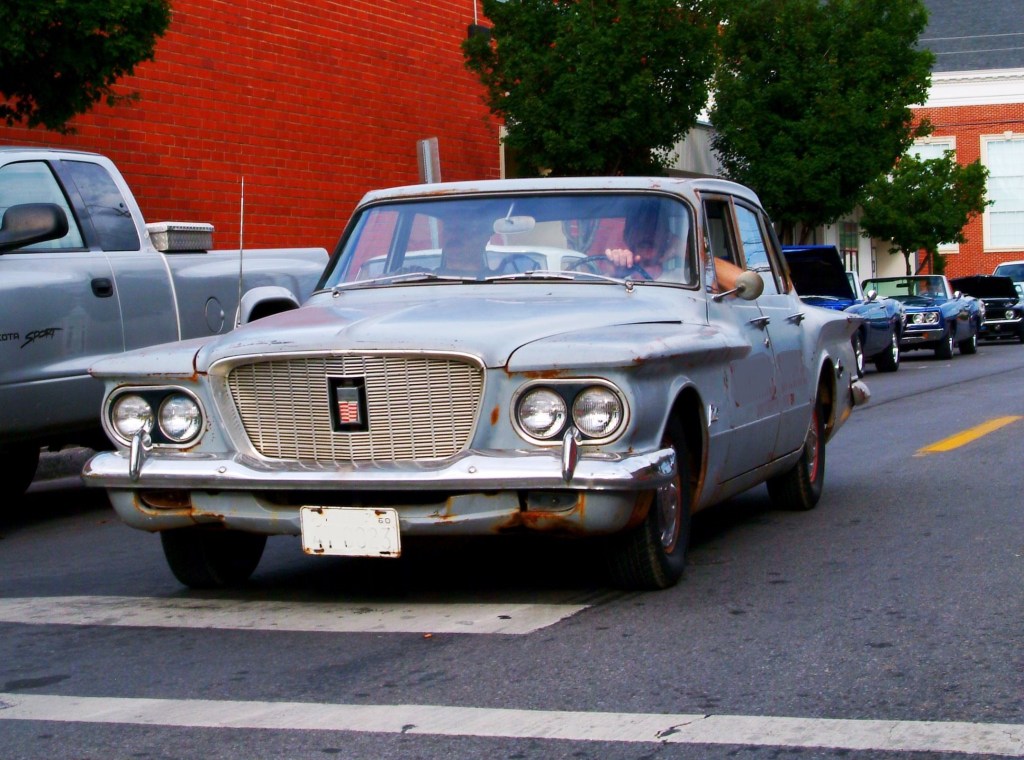
As a little boy age 5, going to McDonald’s was always a treat because my folks could only afford so much and McDonald’s happened so seldom.  My father would walk up to the window, order up a bunch of burgers, fries, and shakes—and my sisters and I would enjoy a great meal in the back seat of an dusty, rusty old Chrysler sedan while my dad puffed on a Salem.  McDonald’s was how parents perpetually occupied children in the 1960s.

McDonald’s Founder Ray Crock

When I think of those joyful times some 60 years ago, I have to wonder what happened to the user friendly spirit of McDonald’s.  That spirit is long gone along with its founders—the McDonald brothers and Mr. Ray Crock.  I see McDonald’s as the General Motors of fast food.  If you serve it, they will come—and they do by the millions.  Patrons will line up for what seems like miles like sheep to savor a Big Mac, Filet-O-Fish, Quarter Pounder with cheese, or a thick chocolate shake. 

I sit here in my shabby little office at age 64 and have to wonder why anyone spends their hard-earned money at a McDonald’s.  However, I can sum it up in a few words. 

Too big to care…

Oh sure, McDonald’s and its franchises do a lot for the communities they serve.  Ronald McDonald House?  Speaks for itself.  Serves people—and children—in real trouble.  Will never fault McDonald’s for what it does for local charities and communities.


I’m talking good old fashioned service and product.  Customer service.  McDonald’s is a miserable fail.  The news isn’t all bad, however.  I recall a McDonald’s in Evanston, Wyoming years back.  Impeccable service—clearly a franchisee who cared.  It had a clean, well maintained dining area and a Play Place for children.  You could sit there, enjoy a meal and the music, chat—and leave feeling like time and money were well spent.

That McDonald’s experience at 7,000 feet high in the mountains was unusual.  It wasn’t your typical McDonald’s.  On the rare occasion I frequent a McDonald’s—and only when there’s no other choice—I leave feeling screwed.  Enter any McDonald’s and you are greeted with a kiosk that is as complex as a Boeing 747 flight engineer’s panel.  The intent of McDonald’s isn’t service, but to eliminate jobs for young people and to confuse you to a point where you wind up ordering four Big Macs instead of one.  These kiosks try to sideline you into another segment of the menu when all you really want is a burger.  “Fries with that?” as expressed by a computer.  No, just a burger, thank you.  “How about a tasty dessert?”  No thanks…  I have actually become so frustrated with the kiosks that I’ve walked out of McDonald’s in disgust.

Honestly—I’d be thrilled with a smiling face and a friendly attitude. 

That demeanor is gone from the airwaves along with the original Ronald McDonald—our friend Willard Scott who is long retired.     

I see McDonald’s and Burger King in the same light.  Both are really too big to care and have forgotten why they’re in business.  They’re just doing the hustle.  You can shrug this off as just doing business as a fast food chain in a dog-eat-dog industry.  However—In-N-Out Burger, largely in California and the far West, has never forgotten why it is in business and what makes it so successful—service with a smile, quickly, with a great product.  In-N-Out, which has been in business a long time, is passionate about what it does—and it inspires terrific people to do a great job. Pass any In-N-Out Burger and there’s always a line. 

What does that tell you?

Carl’s Jr. and Hardee’s are also a good value for the money.  Their restaurants are clean, food is good, and you are generally greeted with a smile and the kind of respect a loyal patron should receive.  What’s more, you don’t have to ask for condiments like you do at McDonald’s and Burger King.  Few things are more irritating than having to stand in line for ketchup, salt and pepper, or sweetener for your tea after you’ve stood in line for the meal to begin with.  McDonald’s and Burger King, it wouldn’t hurt your profits that much to put your customers first. 

When I reflect back to what McDonald’s was in the 1960s—clean restaurants, great service, and good food—fast—I recall the commercials.  “Grab a bucket and mop!”  “If it’s McDonald’s it’s clean…” and “You deserve a break today…” blew away in the winds of time.  Restrooms are filthy, which is a strange irony for an eating establishment.  Tables are dirty and need a wipe down.  Floors need to be swept.  Trash cans are overflowing.  Leaves you wondering whatever happened to “Grab a bucket and mop…”

Every business, no matter how large, should always look at itself and explore how it can serve its franchisees and customer better.  McDonald’s, focused solely on profits, has lost its way. 

No thanks, I will find somewhere else to dine.     

There’s Just Something About Herbie…

Were you ever been bitten by the Bug? 

You’re a baby boomer.  You know what I’m talking about… 

Our collective, massive passion for the Volkswagen Beetle.  Officially named by Volkswagen as the Type 1—the original Volkswagen—“The People’s Car” born of the visions of Ferdinand Porsche and the leader of Nazi Germany, Adolf Hitler.  The Volkswagen Type 1 has touched our lives in ways we haven’t even fathomed.  It has affected our subconscious.  It has driven right smack into our souls.  There’s no getting it out of our minds. 

Virtually everyone and anyone you’ve ever known has driven a VW Beetle. 

If my street back home in the 1960s was any indication of a good cross section of America, there was at least one Volkswagen Beetle on every block.  Any shopping center parking lot across America had dozens of them at any one time.  Their puttering pancake air-cooled four-cylinder engines could be heard anywhere.  If it wasn’t a VW Beetle, it was a dune buggy concocted from a Beetle.

If you need help understanding this one, consider how far reaching this cultural icon has been since it was first conceived in pre-war Nazi Germany in 1938. Hitler saw a very definite need for a simple affordable automobile for the masses. It was a terrific idea that sold well for decades.  It was produced from 1938-2003. 

More than 21.5 million were produced worldwide. 

The VW Beetle has been so far reaching that Walt Disney Productions did a comedy film, “The Love Bug” in 1968 starring Dean Jones, Michelle Lee, David Tomlinson and Buddy Hackett about a 1963 VW Beetle race car named “Herbie” that takes on a life of its own in a wild and crazy comedic film that roars to the very extent of our imaginations.  It is truly a typical silly Disney fantasy flick that made viewers fall in love with Herbie.  I personally would like to know what happened to VW Beetle sales in the wake of “The Love Bug.” 

Herbie got his legendary “53” racing number from the film’s producer, Bill Walsh, who had a great appreciation for Don Drysdale of the Los Angeles Dodgers, whose retired number was 53.  Herbie even received billing in the closing credits, which was undoubtedly the first time an automobile was ever credited in a movie.  Herbie was credited in every “Love Bug” sequel to follow. 

Every so often, one of the real Herbie Bugs shows up at a car show somewhere around the world.  And, goodness knows how many Herbie replicas have been built since the 1968.  C’Mon…you know you want a Herbie replica.  This insanity is on a par with untold thousands of 1967 “Eleanor” Mustang replica fastbacks that have been built since “Gone In 60 Seconds” hit the big screen 20 years ago.

Seems everyone has a VW Type 1 story, including those who claim the world’s record for the greatest number of people crammed into a Bug when they were in college when a phone booth just wasn’t enough.  Or, how many sports jocks it took to pick up a Bug and move it.  I had a buddy in high school who liked to take his VW and chase people off sidewalks around town.  He was slightly left of plum mentally and enjoyed tormenting others.  He also enjoyed moving VWs from one parking spot to another several rows away with the help of a couple of buddies. Just release the parking brake and put it in neutral. It was easy with help from friends.  This was a very popular stunt in the high school faculty parking lot, which kept a lot of educators wondering where their Bugs went, only to discover they were in a different spot.

How many thought they were losing their mind?

The Volkswagen Type 1 was a hot seller for all the years it was produced in at least 21 assembly plants around the world.  Brazil was a big producer of VW Type 1s with 3.35 million Beetles alone.  Sales of the Type 1 ended in the United States when these air-cooled transporters failed to meet even tougher federal emission and safety standards.  They continued to be produced and sold around the world long after sales ended here. 

One of the greatest elements of Volkswagens was the hysterical television commercials that aired in the United States in the 1960s.  There were so many it is impossible to remember them all.  One American carline that gave the Type 1 a run for the money was the 1970 Ford Maverick, base sticker priced at $1,995.00 against the Beetle’s base sticker of $1,829.00.  The Maverick was considered more car for the money and college-bound baby boomers snapped them up like crazy.  The 1970 Maverick outsold even the original classic 1965 Mustang by a wide margin at well over 579,000 units that first year.  In sharp contrast, Volkswagen produced 378,222 Beetles that year.  To spur Type 1 sales, Volkswagen stretched the Beetle two-inches and gave it a better optional suspension system and called it Super Beetle for 1971.

Whether you liked your Beetle standard or stretched, one thing is certain, the collective passion for classic Beetles along with great memories remains strong and not likely to go away any time soon.  Attend any car show across the continent and the Beetle’s continuing popularity will speak for itself.  The Volkswagen Beetle and its corporate cousin Type 2 bus remain hot commodities some 82 years after the Bug’s original introduction.

What about your VW Beetle memories? 

Do You Remember Going To The Airport

Most of you who read this column remember The Jet Age.  Unless you were living under a rock, you will recall the futuristic 1950s and 1960s along with the roar of jet planes and older propeller-driven pistonliners. 

My earliest memories of planes were in Arlington, Virginia just north of Washington National Airport (I am a native Washingtonian who refuses to call it “Reagan” National) at the cusp of the 1960s.  There was always the nostalgic roar of piston-powered Convairs, Connies, Martins, and Douglas airliners overhead. A big thrill for me and a lot of kids in those days was a casual trip to the airport for a few hours of plane watching. Though some would consider it boring by today’s standards, it was rewarding for kids back in the day.  It allowed us to burn off energy and work up an appetite for the airport snack bar or a trip to a hamburger stand afterward. 

My aunt would take us out to Friendship International Airport (now Baltimore-Washington Thurgood Marshall International) outside of Baltimore, which had what seemed a mile-long observation deck where you could hang out and watch planes for 10-cents a head for hours on end. It was a great entertainment value.  This beat the pants off any video game a kid can immerse themselves into today. Planes would take off and we always wondered where they were going.  They’d also arrive leaving us wondering where they’d been.  Passengers deplaned from these glistening airframes dressed up in suits, ties and dresses. That’s just the way it was at the time because, despite jet travel, flight was still a relatively new phenomenon considering Orville and Wilbur took to the skies a half-century earlier.

When jets arrived long about 1959, plane watching became an entirely different dynamic.  For one thing, jets didn’t have propellers, which made it challenging to understand how a plane flew when you couldn’t see any visible means of propulsion. Jets made a tremendous amount of noise and smoke when they left – especially in a water/ethanol-injected takeoff. It was a smoky thundering roar you could hear for miles around. 

My dad explained to me that in order to make a lot of power, jets had to make a lot of noise. That was his reasoning.  Explain that to airport neighbors and environmentalists at the time when conversation in a backyard could not be had at peak departure and arrival times.  Whenever I see a new high-tech Boeing 787 or Airbus A350 takeoff today void of noise and smoke, I think of that statement from 60 years ago. 

We’ve come a long way. 

Going to the airport when I was a kid was a great pastime.  It got kids out of the house and into the sunshine where they could learn something new in the process.  The airport fueled my passion for aviation, which remains strong a half century later.  Flying commercially back in the day was different than it is today.  Passengers board airliners today like they’re getting on a bus.  They don’t even pay attention to the flying experience, which remains remarkable to me even today.  They don laptop computers and personal tablets, turn on their favorite TV show, close the window shade, and zone out without even thinking about where they are—traveling eight miles in a minute six miles above the earth. 

The way people dress today for travel on an aircraft is remarkable too.  They look like they’re on the way to a racing event or a barn raising.  This attitude began with young baby boomers during the hippy era when nonconformists boarded aircraft in sandals, torn up jeans, and tie-dyed tee shirts.

The way we fly hasn’t been the same since.

Although flying commercially has become routine for a lot of people, it will never be routine for me. To feel a jetliner accelerate down a runway and feel it go into the sky draws raw emotion. To me, flying remains a miracle of physics where lift defies gravity and thrust keeps you in the sky. I can hop on a jet, strap in, and be 3,000 miles away in a matter of 4-5 hours. How can anyone actually take that for granted? I never have. And, consider this. You can board a Boeing 777 in Los Angeles and be in Sydney, Australia in 15 hours.

Imagine…

The late United Airlines Captain, Denny Fitch, who entered the cockpit of a very sick DC-10 (United Flight 232 at Sioux City, Iowa) with a blown engine and no hydraulics to help save lives, said that for him it was a very religious experience to take a plane into the air. Those were the words of a truly passionate aviator and humanitarian who understood the amazing element of flight. He’d flown thousands of hours and millions of miles, yet he never lost his fascination with flight.

Fitch, who was a passenger in First Class, raced to the cockpit, grabbed the jump seat between Captain Al Haynes and First Officer Bill Records and managed the power of the DC-10’s remaining two engines, which enabled them to at least maintain some control of the aircraft. They crash landed at Sioux City on a closed runway. Of the 296 souls on board, 112 died. Had it not been for Fitch, all 296 would have perished.

Plane watching isn’t what it used to be. For reasons of security, airports don’t have the viewing locations they once did in the United States. Observation decks are gone and have been since the early 1980s. The British never allow terrorism to deter their plane watching. They still line up along the fences on step ladders for a closer look, acting on their steamy passion for a pastime that seems to have been lost here in the States.


The Beat Of The Brass

It would have been challenging to have grown up in the 1960s and have missed Herb Alpert & the Tijuana Brass.  In 1966, I was 10.  It was Christmastime and we had been out shopping.  My mother popped a fresh vinyl LP on the turntable and Herb Alpert’s “What Now My Love?” began rocking the house on a 1940’s vintage turntable.  Herb Alpert & the Tijuana Brass was a sound so alive.  It made me so excited to be alive, and I was just a snot-nosed kid.  It was such a positive sound—a mix of Latin and Jazz, which worked so well together yet seemed the unlikely duo. 

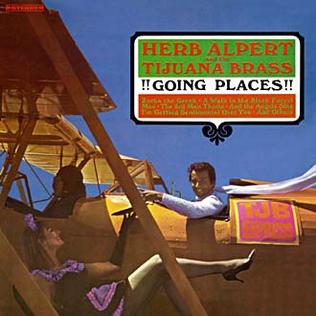
Christmas Morning of 1966, there under the tree was Alpert’s “South of the Border” album, which was even better than the first.  I couldn’t get enough of it.  For my birthday in 1967, I unwrapped Herb Alpert’s “Going Places,” album which further punctuated my passion for the Brass.  I got into band class in elementary school and learned to play trumpet.  I didn’t play very well nor did I go very far.  Automobiles got my attention at age 14 and my Bundy trumpet got left behind.

However, Herb Alpert & the TLB never left my soul.  I have most of the albums Herb Alpert and the TJB produced during a very heady time.  When I was young, I saw Herb Alpert as a great trumpeter.  I thought he was Hispanic.  However, I knew so very little about him.  Herb Alpert grew up and came of age in a faraway place called Los Angeles, California a continent away from my native mid-Atlantic.  My home and my roots were in the National Capital Area on both sides of the Potomac. 

I’d close my bedroom door, put Herb on my humble phonograph, and time would melt away.  I’d get so lost in his music and the talent he amassed to conceive the Tijuana Brass.  Night would come and I would gaze through the frosty glass at the street lights and snowfall listening to the Tijuana Brass.  As the months and years passed, my album collection grew thicker.  There was “SRO,” “Herb Alpert’s Ninth,” “The Beat Of The Brass,” “Volume 2,” “Sounds Like…” and a host of others that remain with me today.

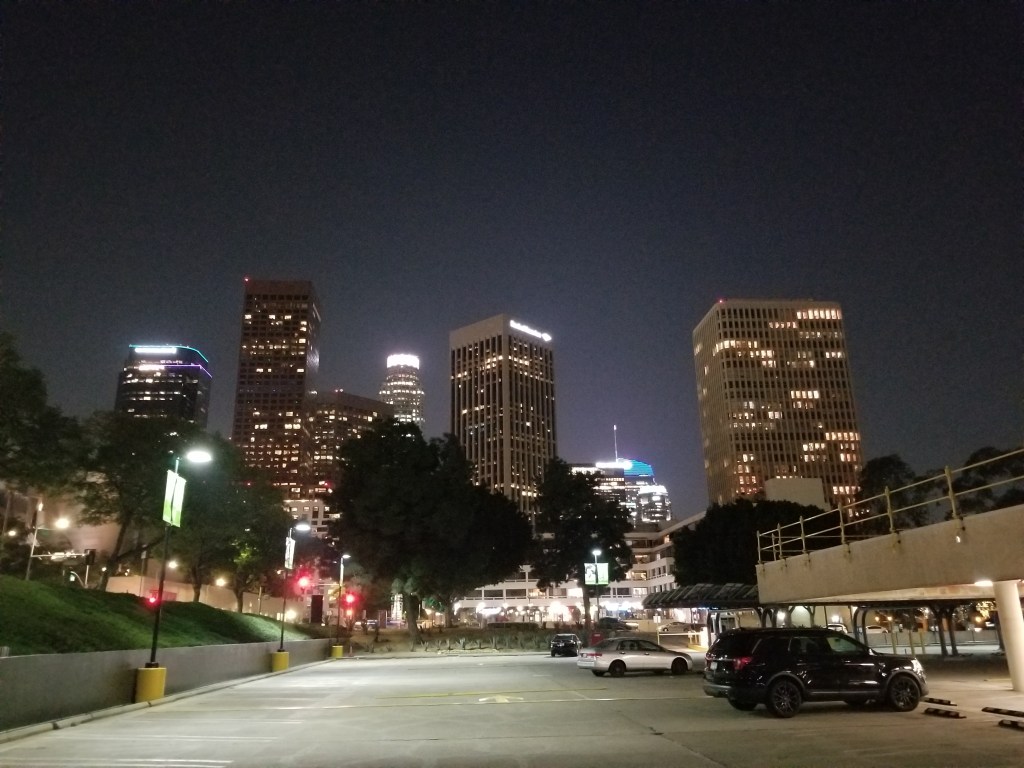
Ironically, Los Angeles has been my home for 27 years and all the great mysteries about L.A. are no longer mysteries.  L.A. is no longer a faraway place.  When my career brought me here three decades ago, I’d drive by what used to be the Charles Chaplin Studios and A&M Records at 1416 North La Brea Avenue on my way down to Wilshire to work and get lost in a daydream of what that place was like in the A&M years.  I thought of the times spent in my bedroom back home in Maryland listening to Herb and the Brass trying to get my mind around the music and that little spot in big L.A.

Herb Alpert was born and raised in Boyle Heights, a close-in suburb on the East Side of Los Angeles.  He was born to Jewish immigrants—Tillie and Louis Leib Alpert—from the present-day Ukraine and Romania.  They were a musical family and Herb Alpert came by his talents honestly.  He started playing trumpet as a kid, which continued to evolve into his time in the Army and really began to flourish when he got out.  He pursued his passion for music, which caught fire in the 1960s with that first TJB album, “The Lonely Bull.”  What followed was a whirlwind rise to the top of the charts.  The Tijuana Brass became a household name and sound, which could even be heard on game shows, commercials, and—yes—even “The Brady Bunch.”

The Tijuana Brass rode the high of success into the 1970s when they all concluded the passion was gone and it was time to move on.  One can only imagine was it was like to be so successful and in the public eye.  Though many envied their great success, it took a toll on each of them.  Times were changing and it was time for Herb Alpert and the Tijuana Brass to move on.        

In the post TJB years, Herb never stopped growing as a seasoned musician and a great artistic talent.  What he’s done in the decades since is no less than remarkable.  Yet—“Mexican Shuffle” and “Tijuana Taxi” continue to play in my head. 

Some things will never change.

Guess Who’s Coming To Dinner?

Do you remember the controversial 1967 Columbia Pictures movie “Guess Who’s Coming To Dinner?” with Spencer Tracy, Katharine Hepburn, Sidney Portier, and Katharine Houghton?  This was a terrific movie that turned racism into an enduring, time-honored love story.  Each family, each race, had something to learn about the other—turning a negative into a positive. 

Why are we still at odds about our differences a half century later?

This awe-inspiring film reminded me of a friend of mine—a black man—who was married to a lovely white Jewish girl in the early 1950s.  They bought a home in a Jewish neighborhood in Los Angeles’ Crenshaw District in 1953, which is where he continues to live today. The demographics of the neighborhood has changed considerably since. 

If you remember America in the early 1950s, you will remember racial tensions at the time. Marvin received death threats from her family.  Neighbors shunned him and took a very dim view of her.  They hated him, yet they had no idea who he was.  They only knew he was black.  She was wholly and completely committed to him. So much so that she said goodbye to her family forever. Marvin and Helene were deeply in love with one another. All they wanted was to be together and live in peace. Sadly, she died from breast cancer, ironically, in 1967 when this movie was made.

My buddy is 87 these days and in poor health.  He never remarried. 

When I consider this one interracial couple story, I think of how far we’ve come since the mid-20th century – or have we?  I am troubled by the ongoing discussion about race because we still haven’t come to accept our differences and live together peacefully.  Race is that 800-pound gorilla in the living room Americans have been uncomfortable discussing for the better part of our post-war lifetime.  Question is—why did race ever need to be discussed in the first place?  What makes humans so uncomfortable with the physical and cultural differences that exist in one another?

What shakes us to the core about our differences?  Because humans are uncomfortable with anything or anyone who is different than we are.  If I speak English and you speak Spanish, German or French, that makes us uncomfortable.  We perceive ignorance in one another because we don’t speak the same language.  In truth, we speak different languages and that’s all it is.  Think of it as Apple versus IBM PC—a failure to communicate and interface. 

Race is all about perception—what we believe each other is whether it is true or not.  There was a day when whites believed blacks could never make it in baseball.  Or, a day when it was believed a black man would never be president and live in The White House.

It was the election of Barack Obama in 2008 that surfaced our decidedly ugly racism like sewage rising out of the muddy soil. Whites looked at President Obama with a raised eyebrow.  There were whites who just couldn’t live with the idea of a black man in The White House while proclaiming some their closest friends were black and their criticism of the man wasn’t racism at all.  Racism, which was never really discussed in a post war America, has become a topic of conversation again a half-century later.

Why?

Because we still haven’t come to terms with our differences.

Instead of discussing race, perhaps it is time to walk the walk.  What about peaceful interaction without extensive discussion and judgement?  Is it not possible to just view one another as Americans – human beings – without thinking of skin pigmentation?

What about that?     

Celebrating Darkness, My Old Friend

What makes us feel so blue in the fall? 

I’ve lived in Southern California for 27 years— however, I am an East Coast boy at heart in a far-flung place called California.  I grew up in Washington, D.C. and have lived in Maryland, Virginia, Texas, Florida, Missouri, Illinois, Michigan, and Tennessee.  I know what the darkness of winter feels like.  I’ve had saliva freeze on my lips scraping a windshield in the subzero cold of Michigan.  I’ve also lived through the hellishness of devastating humidity and triple digit temperatures in the deep South and the mid-Atlantic.  I’ve swatted gnats and mosquitoes in Florida and wondered where flying insects of any kind were on the California desert.  

Suffice it to say I’ve lived through virtually every type of climate imaginable while my 12 year-old son has never seen anything but warm sunny California weather.  He’s in for quite the awakening should he ever journey beyond California’s largely uneventful climate. 

Even the slightest rumble of thunder scares him. 

When you’ve lived in Southern California for most of your life, you forget the dread of oncoming winter because it doesn’t get all that cold here.  The weather here in So’ Cal’ doesn’t change much from day to day.  It is sunny, hot and dry most of the time.  Some winters bring not one drop of rain.  There’s endless sunshine to where you grow downright sick of the sun and blue skies. You long for a cloudy rainy day.  Winter rains bring the growth of green lush brush and tree growth.  Fires burns all that growth away when things get dry and crunchy and humans get careless.  Dry lightning is responsible for the rest.  Winter rains following a long drought and fire bring mudslides because all that fresh plant matter has been consumed by fire.  You haven’t seen dry until you’ve lived in the dry and dusty Southwest—where rain can be absent for years at a stretch. When it rains, the grateful desert yields a fresh aroma unequaled – that smell of wet concrete for the first time in ages.

When I lived in the East and Midwest, those first chilly days of fall were refreshing—yet with a certain amount of dread because it was about to get really cold.  When you’ve lived the darkness of winter and the bone-numbing cold of north winds, you develop a certain amount of contempt for Old Man Winter.  That said, fall brings dread for a large segment of the population.

What I love most about fall is the calming effect of autumn.  The sun slips lower and lower in the sky into the lazy sleepy days of winter.  Because I live in California, the days tend to be longer for me in winter than those of you who live in the great white north.  In the north, winter days are short and quite cloudy to where you wonder if you will ever see the sun again.  Yet, in the summertime, the north witnesses days that never seem to end.  Here in California, summer days are shorter than they are in the north—proof the Earth really is round. 

Mother Earth is never what you think she is.

Autumn welcomes the onset of winter.  Winter is a time of rest, hibernation, popcorn, and a sleepy afternoon watching old movies.  What is it about old movies on a cold winter afternoon with a roaring fire in the fireplace?  Ted Turner knew what he was doing when he founded Turner Classic Movies (TCM).  CNN is for news hounds.  TCM is for the romantic at heart.  I’d like to return to the 1940s and the way people dressed and styled their hair.  In those days, people had class and dignity in a spirit of mutual respect—with simple courtesies long since forgotten.

I believe we should each embrace the seasons in all their forms because they always pass.  Instead of dreading fall and the arrival of cold air, embrace these elements because they will pass in short order.  Take a deep breath, inhale the woodsmoke, and bask in the rustle of leaves.  Another year is passing.  A new year is pending.  The holidays are coming.  The snow will fall. 

It is a time of regrouping and starting over.    

Autumn Air and Back to School

My mind is abuzz with memories from long ago as we enter yet another autumn.  As the air begins to cool, we are again reminded of the passage of time.  Fall does that.

Do you remember autumn, the cool air, and heading back to school?

Those first few days back in a classroom in the 1960s were always hot and humid, which made it challenging to learn anything.  Our minds were numb from the heat.  We didn’t have air conditioned classrooms in 1965.  I recall hot sticky late summer days and the resonance of Katydids echoing throughout the trees.  The air was moist, heavy and alive with the sounds of Mother Nature getting ready to bed down for a long winter’s nap.  Katydids, also known as “Bush Crickets,” signaled the end of summer.  We associate that sound with the dog days of summertime.  They began their concert with short chirps in July that grew into a steady buzzy roar as late summer ensued. 

Of all the seasons, fall has always been my favorite.  It is a season of calming, settling in, and preparing for the darkness of winter.  For some, autumn is decidedly depressing.  There’s less daylight, which affects our moods.  The trees and grass gradually become grey and barren. The rustle of leaves and chilly northern breezes signal the onset of winter.  Nature goes to sleep in a process of rest and regeneration. It is surely true more people die in the fall than in any other season. 

Fall is all about closure and the end of another year.

Ironically, those first hints of autumn are also times of great anticipation.  The sweet wonderful aroma of woodsmoke in the air is a smell we become conditioned by early on.  Doesn’t the smell of woodsmoke from neighborhood fireplaces and cookouts remind you of Christmastime?  That’s our conditioning from the time we can toddle.  It seems to begin long about Halloween and becomes sweeter as autumn deepens.

Back to school was always a dreaded time. Shoes that were too tight. Time in a dressing room trying on all sorts of clothes – including heavily-starched shirts and pants that did not fit. That first early morning breakfast of the school year – Cheerios and white toast with not enough butter. The smell of a school bus that had been closed up all summer. Passing the same line up of homes and businesses. Turning the corner and roaring up in front of our schools. A new and different classroom. A fresh face teacher you either liked or immediately hated. The issuance of book covers with local business ads.

Madison Avenue liked starting brand loyalty early.

Unless you really loved school, each school year was long, boring, and monotonous. “Get out your arithmetic books and turn to page 24…” Because I personally hated math, it was challenging to turn to page 24 and actually be interested. The good news is – I loved English and History.

Springtime was always an awakening.  Trees began to bud and life returned in a rush of euphoria.  As swiftly as school began, it wound down to a close and all those goodbyes from teachers and classmates.

See you in September… 

The seasons and the school years were but the beginning of a lifetime of endless turnover, which led us all to where we are now—amid reflection…

Holding On and Letting Go…

From the time we are born, we begin the fundamentals of relationships beginning with our parents and ultimately siblings and extended family.  Those first interactions are with the soul who has given us life—our mother.  Close by under the best of circumstances is our father.  Together, they teach and mentor us as we make our way through childhood.  If they’re fortunate and been on top of our upbringing, we emerge into the world as responsible adults. It is a fragile formula and something like Oklahoma weather in May.   

Being a parent has never been easy.  It is easily the toughest job we will ever have with the greatest responsibility, and certainly the most thankless—and that’s okay.  We’re not in the parent business for gratitude.  As parents, we are supposed to stand by our children through the toughest of times—keeping them on course to where they don’t become a burden to society. 

If you bring a child into this world, you must first be willing to accept responsibility for them, and that’s a tough one to chew in the hardest of times, especially if you’re a parent with a teen out of control.  As your children grow into adults, you have to begin letting go and allowing them to make their own mistakes and bask in their own success or misery. It is the only way they will ever learn how to be responsible adults. Pain teaches…  It is always good for you to be there for your kids as an advisor, especially in adolescence.  However, in letting them make their own decisions, allow them to make and accept responsibility for their own mistakes. 

What hurts the most as a parent is watching your kid go through being hurt because what hurts them surely hurts us.  My wife and I are late-in-life parents.  We adopted our son, Jacob, at birth at 50 and 52 respectively.  It is remarkable how many people comment on our grandson, only to be politely corrected that he is our son. 

At 52, I was more ready to be a father than I was at 32 when my first born arrived in 1988.  I had a lot to learn about being a father at 32 and had a long way to go. There was so much I didn’t understand about what a child needs.  I made a lot of terrible mistakes as a father—and as a long-distance father two-thirds of a continent away, huge mistakes and erred judgment—which did indelible damage to my kids because they always needed me close by. 

I made a tough career decision in 1994 that moved me in Los Angeles where a career decision should have been more a personal one—where I would have put my kids ahead of my career. My kids remained in Tennessee.  A divorce followed, further straining an already fragile relationship.  No one has ever said on their death bed they wished they’d spent more time at the office.  The deepest regret has always been not having spent more time with the family.

No matter how much you love your children, distance puts incredible strain on the relationship you have with them.  As a faraway parent or grandparent, you miss a lot of important moments in their childhoods though you do manage to make a few of them. If you and your ex have an adversarial relationship, kids suffer the most. 

As a long-distance father, it was never been easy for me to watch my kids growing up far away.  They’re all grown now, two of them with children of their own.  It is surely something watching them raise their kids and watching another generation unfold.  And, no matter how much I want to be a part of their lives, it will never be the same 1800 miles away.  I never kid myself.  I am little more than a figurehead grandfather in faraway California.  I have to stay on top of video chats with them, which don’t happen as often as I’d like between my schedule and theirs.  

Chances are good you’re a long distant parent or grandparent.  You understand how challenging it is emotionally to miss your kids and grandkids.  If you have a tight budget and can’t travel to see them as often as you’d like, rely on technology to keep you close.  There are video chat apps that enable you to stay close to those you love.  What’s more, these apps are largely free which means you’ve run out of excuses.

I’ve learned with my kids not to hover over them as adults.  I know they’re on the same trip I was as a young man.  Sometimes, there just isn’t the time to call or write. Life gets darned hectic.  A child is but the one relationship you as a parent have where your child grows up and goes out into the world—without you.  This is where you have to be strong enough to know how much your child loves you—and find the courage to let them go.  If you hear from your kids on a regular basis, you are fortunate because not everyone has that. There are parents who wonder where their grown kids are – and that has become the norm. 

I’ve said this before—whether it is your child, a friend, or a member of your family, it is always best to set them free emotionally and see where it goes.  If you hear from them, you have a healthy relationship.  If you don’t, you were never connected to begin with. It is never good to remind anyone to think of you.  Healthy relationships don’t require constant reminders.  They just happen naturally. Let them know what they mean to you, then, step back and see if they circle back to you.