The Waltons and The Literary Genius of Earl Hamner

There’s a reason why Earl Hamner’s “The Waltons” television series endures today. It is an accurate portrayal of American life a century ago amid the Great Depression and the unfolding of a World War. “The Waltons” touched our hearts with an in-depth look at Appalachian life in a fictitious Jefferson County, Virginia.

“The Waltons,” produced by Lorimar Television and Warner Brothers in Southern California invited us back into our living rooms for a heartwarming slice of rural American history for nine seasons on CBS. There had never been anything like it before nor has there been anything like it since.

We just couldn’t get enough of it.

“The Waltons” offered up a great cast of characters, actors, direction, and Earl Hamner’s exceptional screenwriting. We were invited to come sit around the table with the family and follow each of them through their lives and experiences. Emotionally, it could be a tough watch at times. Sometimes, it made us cry.

Those of us who are familiar with rural Virginia know the topography of “The Waltons” just was not our Appalachia. It just wasn’t green enough. Walton’s Mountain was akin to Hamner’s childhood and early life. In truth, the Walton home on our television screens was nothing more than a facade on a Warner Brothers studio backlot.

Hamner’s stories each week were a reflection of his childhood, which added authenticity to the series. We romanticize “The Waltons” for its “down-home” quality primarily because it provided insight into people from another time. We’d heard about the Great Depression and World War II from our elders and watched our share of documentaries in junior high school. “The Waltons” was an accurate presentation of the times through the eyes and memories of book author and screenwriter Earl Hamner. There has never been a better storyteller.

Hamner would set the story in his most genuine formal Virginia dialect and explained to us what we were about to see – offering a conclusion to each episode along with a sweet harmonica wrap-up.

It calmed the soul.

“The Waltons” was born of Hamner’s 1961 novel “Spencer’s Mountain” and later the movie “Spencer’s Mountain” in 1963. The book and the movie became “The Waltons” in September of 1972. “The Homecoming – A Christmas Story” aired in December of 1971, which set the stage for “The Waltons” a year later. We just couldn’t get enough of the Walton family, with a couple of made-for-TV movies airing in the decade to follow. We weren’t about to miss it.

The Walton “home” was little more than a Burbank, California studio backlot facade. There was nothing inside except platforms and stairs. It has appeared in numerous television shows and movies through the years.

The show’s closing sequence featured the family saying “goodnight” to one another before going to sleep for the night when the one remaining lighted window would go dark. The “Goodnight John-Boy…” routine became cliche throughout American culture. We all said it.

We fantasize about “The Waltons” because it exhibited the unconditional love so many of us have desired in our own lives. It was a nice escape from the struggles of the 1970s and remains such today.

“Goodnight Everyone…”

Lassie!!!

Not many of us can forget “Lassie” – the popular television series that aired on CBS every Sunday evening for 17 seasons before it had finally run its course. The last two seasons were syndicated.

Lassie” had to have been one of the longest-running TV series of its time, and you can bet they had run out of ideas by 1974 when the show wrapped. I mean – how many times could Timmy fall down a well?

In truth, Timmy never had to be saved from the well. But that didn’t stop Lassie from her appointed rounds.

Lassie was a male “Rough Collie” long on adventure – sharing “her” life-saving skills with animals and with people. Few ever got that Lassie was a boy dog. I mean, you never saw any indication that Lassie was a male. I never did.

The Lassie concept was born of the genius of television producer Robert Maxwell and animal trainer Rudd Weatherwax, who developed the series into something long on love and hope. Children and adults alike loved the series.

Always a happy ending.

I remember when this popular black and white television series segued into color in 1965. We didn’t have a color TV at the time, but my friends did. “Lassie” was among many addictive animal shows like “Flipper”, “Daktari”, “Gentle Ben,” “Mister Ed” and a host of others that kept us entertained and out of trouble.

Well…not always in my house…

What we remember most was the “Lassie” theme, which evolved into different versions with time but was essentially the same. The launch theme “The Secret of the Silent Hills,” composed by Willaim Lava, was employed for both the opening and closing credits. Later on, Raoul Karushaar, who was the musical director for “Lassie, has long been recognized as the theme’s composer. Most of us remember the Muzzy Marcellino “whistled” version of the “Lassie” theme, which first ran in the show’s fifth season where we first came to know the Martin family.

The Martin years were what I remember most. We’d visit my cousins over in Wheaton, Maryland on a Sunday and become very familiar with Ed Sullivan, Disney, and of course, Lassie on a Sunday evening before it was time to head home.

I suppose “Lassie” could easily be considered right for the time and in a new medium known as television. Always a moral to be learned from television in those days. “Lassie” was surely all American in a society that had a lot to learn at the time – and we surely had a lot to learn.

Old Age and That Dreaded Hospital Stay

Well – Friends – I feel officially old on a chilly April morning in 2025 – and that’s okay. It indicates my status as a survivor. Just had neck fusion surgery and have regained the mobility I’ve long needed on my left side. There hasn’t been much pain, but more a numbness and tingling in my left arm and hand that led to this surgery.

I’ve enjoyed the best healthcare I’ve ever had here on Southern California’s high desert north of Los Angeles, where I have lived for 25 years. The best surgeon and surgical team, and the best recovery professionals I’ve ever had practice their professions at the Palmdale Regional Medical Center.

I never had to want for anything.

I’ve had neck issues dating back to the USAF in 1981 when I managed to injure my neck working on the rotund C-5 Galaxy and C-141 Starlifter cargo jets. I’ve nursed this issue along for more than 40 years with PT and steroid shots. It then became a problem I couldn’t ignore.

My message to you folks here is simple. You may be older – but take the time to embrace life. If you’re miserable – change it. If you’re happy and content, hang on tight and make the most of the blessings you’ve been handed.

I am a survivor as are you if you’re able to read this editorial. I am one year from 70, when a lot of our fellow Hoosiers have passed. That isn’t a badge of honor, but instead an admission of humility. I am aware we’ve just so much time on this apple. We are all human beings, wondering how much time we have left. I think we do that for most of our lives especially when someone close to us dies.

“Do I have one day left or do I have 30 years?” It is always just under the surface.

I am sad for those who have passed. Sadder – still – for their families and friends who grieve. Losing those you love and have needed is especially emotional, especially if you’ve loved, admired, and have needed them over a a lifetime.

There’s such a fine line between life and death – a very fine line.

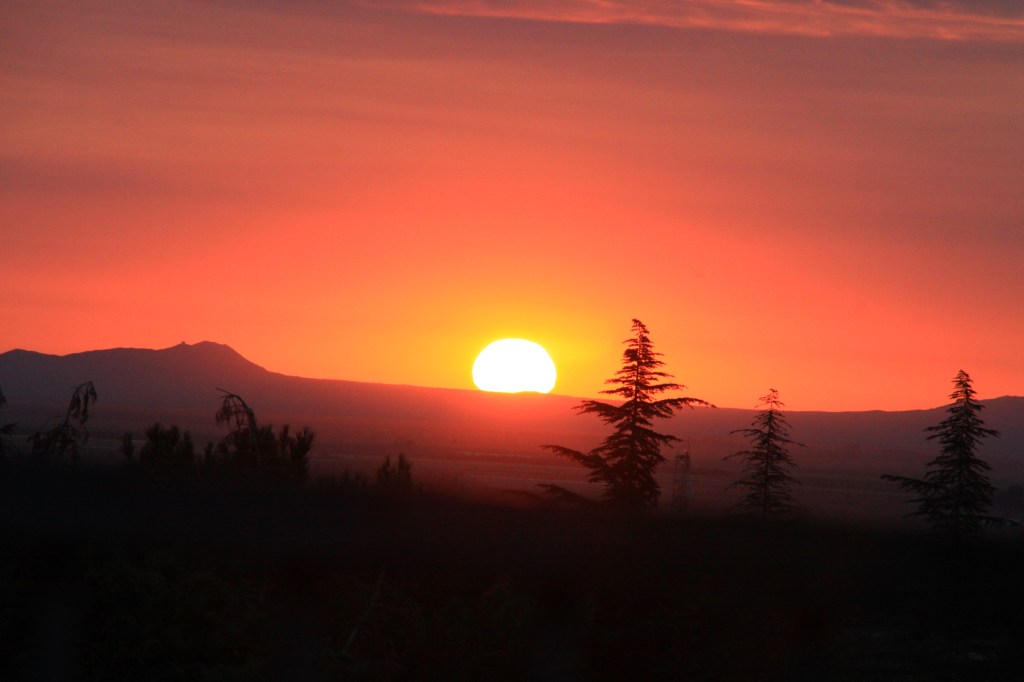
High Desert Sunrise – life anew…

When they were wheeling me to the operation room (OR) , I wondered what it was like to die. “Is this my last day?” as the ceiling rolled by overhead. That was my last thought, and in a nanosecond, I was waking up in my room, stuffed in a neck collar, wondering where I had been for three hours.

My anesthesiologist was a remarkable man – soulful, professional – clearly a deep thinker. He asked me all the questions important to a man who had my life in his hands. He explained it all in detail – including the importance of wearing my CPAP mask. He respectfully explained the strain sleep apnea places on the heart. This was where the fine line between life and death was apparent. In his many years of putting people under, he’d seen it all – watched people die – and watched people live under his care. He understood just how important my answers were.

The moments when we go under the knife give us pause because every surgery poses some risk – a reaction to the anesthesia, a bleed out, surgical error, and more. Despite every effort at caution and professionalism from surgical staff, people go into an operating room and die from an assortment of issues. This has crossed my mind every time I’ve been put under.

Throughout this hospital stay, I’ve been reminded of how much I love my family and how much they have loved and needed me. I never forget, nor do I ever take them for granted. Family life has its challenges. However, not everyone has it.

That said, treasure every moment you have in life and never take those who love you for granted because tomorrow is never guaranteed – unless you have a tax audit.

Do You Remember Family Vacations?

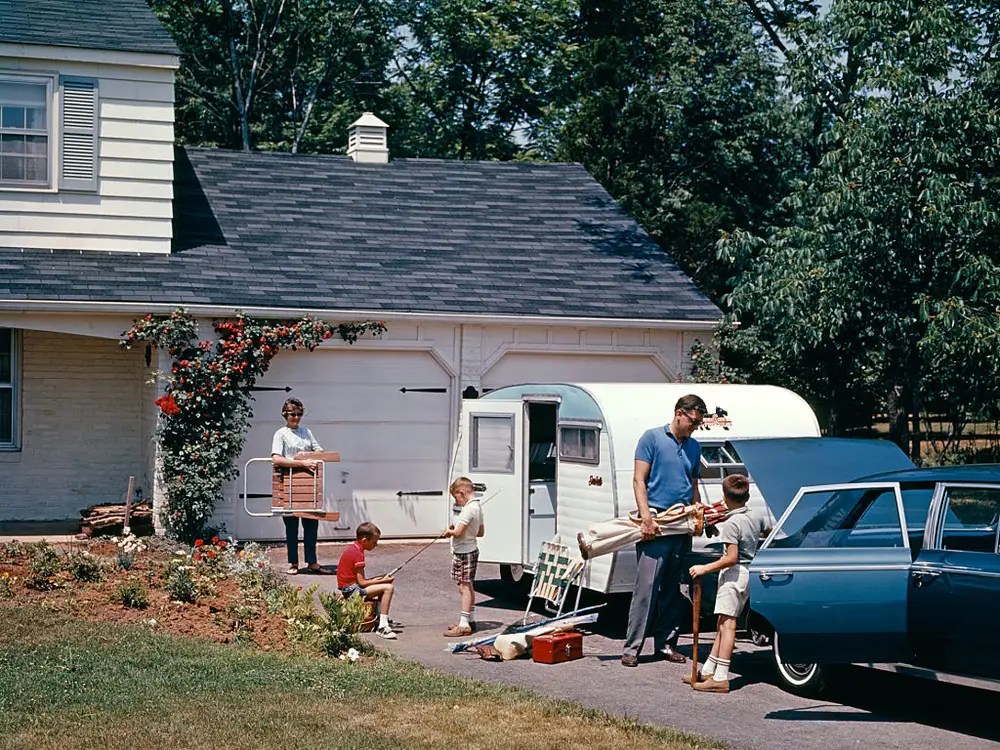
My goodness how the world has changed. Consider the humble family vacation for instance back in the day. In the post-war years and the growth of America at the time, there was such an atmosphere of freedom – to go anywhere we wanted when we wanted. The American highway was ours for the taking. The ol’ man had worked hard, summer was arriving, and it was time to enjoy our freedom.

Eisenhower’s growing interstate highway system, Disneyland – and Disney East known as Disney World in hot sticky Central Florida. California here we came! The Poconos! Wild and wonderful West Virginia. Aspen! Seattle’s new Space Needle! A host of amusement attractions across the country.

Seems every region had some sort of amusement attraction. We had ours not far away in the D.C. area – mostly in Virginia. In the Southeast there was the Great Smokeys and Six Flags. In the Mid-Atlantic we had a host of huge amusement parks – most of which are gone today. There were literally hundreds of thousands of entertainment venues everywhere. California and Texas had the majority of them. St. Louis and Kansas City had the Ozarks. Chicago had seemingly dozens of amusement attractions. New York had the World’s Fair.

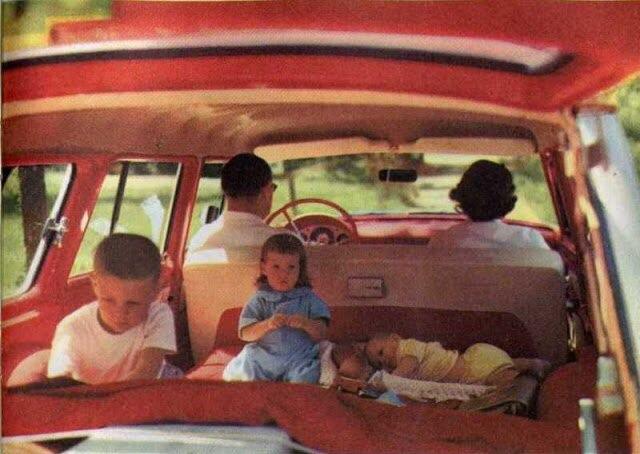
Regardless of where the parents decided to take you, most trips involved a lengthy ride in the “Are we there yet?” family car – often hundreds, sometimes thousands of miles away. Air conditioning in a car was considered a luxury in those days. We sat in the back seat and roasted (and perspired) in the summer sun at 65 mph. If we acted up, there was the dreaded roadside spanking and the constant “If I have to pull this car over!” and “I’m going to get my belt!” to keep us in line. Failing that, the ol’ man could clock all of us with one swipe.

I was never jealous of my cousin’s summer vacations nor those home movies at Thanksgiving and Christmastime. I just couldn’t relate to them. We never took summer vacations. One, we could not afford them. Two, my father never would have been up for one. He was a homebody who enjoyed his mystery novels and watching the “O’s” play on a portable Hitachi 19-inch TV with a can of Bud’ in his hand.

Summer vacations were something we watched others take. They’d head off in their Chevy station wagons and return tanned and blonde from the sun right before it was time to go back to school. At times, I wondered what I’d missed growing up.

I found myself content with playing in the yard, cruising the neighborhood on my bike, and retreating to my room in a world of imagination.

How did you spend your summer vacations?

Why Do We Watch Old Sitcoms?

Why do we watch old television sitcoms? Because the memories make us feel good. We were kids, so what did we really know? The raw beauty of being a child in the 1960s was our innocence depending upon where and how we lived.

In truth, the 1960s were a turbulent time of change, the Vietnam War, three political assassinations, riots and protests, the Apollo 1 accident, and a lot of political upheaval. Two assassinations and the war prompted political turmoil, leaving us all wondering how different the world might have been had the Kennedy brothers lived.

The situation comedies of the 1960s were a nice escape – often fantasies – some truly awful – but no less an escape. They enabled us to escape the troubled times beyond our doors. Many of these sitcoms were short-lived really awful programs like “My Mother the Car,” “He & She,” “Good Morning World,” “It’s About Time,” “Rango,” “The Hathaways,” “McHale’s Navy,” “Occasional Wife,” and a host of other forgettable situation comedies we’d like to forget.

Some sitcoms got a lot of criticism – like “My Favorite Martian.” What I love most about this show is its witty banter and great on-screen chemistry among the actors, writers, and directors. It has been said the cast and crew had a wonderful time working together. There were no bad apples in this cast of characters.

Admittedly, “My Favorite Martian” struggled in the ratings because it was a really absurd idea, especially when we knew very little about Mars. What kept us tuned in was the sophisticated nature of this sitcom. Newspaper reporter Tim O’Hara (Bill Bixby) wound up in situations he could not explain to anyone, especially with a vanishing Uncle Martin and a spaceship parked in the garage. No one could have carried that role better than Bill Bixby who had a natural gift for comedy. Ray Walston, a terrific actor in his own right, allowed us to look at ourselves as Earthlings. I watch “Martian” to escape the times we are currently in.

“My Favorite Martian” was a sophisticated sitcom that aired for three seasons on two networks through 1966 when it had finally run its course. The third season, produced by MGM (the first two by Desilu) was a bit of a reach. It had lost its charm and its core audience.

There were the goofy sitcoms we still watch like “The Brady Bunch” and “Gilligan’s Island” produced by the late Sherwood Schwartz. Seven stranded castaways? Two lonely souls somehow formed a family? Who would have thought these sitcoms would have such notoriety 50-60 years later? The popularity transcends Boomers and GEN Xers. Younger generations behind us have embraced these classic sitcoms, which illustrates how timeless they were.

The resurgence of classic sitcoms and streaming channels indicates just how popular these programs are. As boomers retire and settle into quiet lives, these old shows keep us entertained. And honestly, today’s sitcoms don’t hold our attention the way the classics did. But that’s another subject for another day.

The Passing of Common Decency…

Most of you remember “The Captain”…Captain Kangaroo…“The Best to You Each Morning…” sponsored by Kellogg’s, on CBS each weekday morning before school.

The late Bob Keeshan, the Captain himself, was the ultimate grandfather or favorite uncle. We loved his warm and gentle style and the values he taught us.

Keeshan was The Captain and The Captain was Keeshan.

With a risky roll of the dice by the network, Keeshan came on the air in 1955 amid the growing baby boom with an agenda of entertaining children and teaching them about life. Captain Kangaroo was a smash hit – embraced by millions of children across the country. He covered every subject imaginable – including how to treat one another. We saw in “The Captain” who Keeshan was – an advocate for children and a mentor for all of us. I still find myself practicing what Keeshan taught us.

Surely, we had to have learned something from him.

That said, it is remarkable what we’ve lost over the decades. The Captain taught us Common Decency – the art of treating one another respectfully, whether we agreed or not. This begs the question, whatever happened to respectful disagreement – a day when people could disagree with civility?

As the Captain and our adult mentors taught us long ago – we don’t have to agree on the issues – but please be respectful in our disagreements. If things got unpleasant in a classroom, we were told to go stand in the hallway or in a corner of the classroom.

Disrespect was not tolerated.

Why is it tolerated and even fashionable today to be rude and insulting? Where did this pattern of ugliness begin? It has been said fecal material rolls downhill and it does. Never have we seen it this bad and on this level. It begins at the top and in government by those who should know better. These are the people we elect to run the country, our communities, our states, and the private sector.

It is high time we took a long look at ourselves in a full-length mirror. Common Decency begins in our homes and in our families and neighborhoods. Seems we’ve taken the governor off of our mouths – that filter presented to us by our parents and teachers a lifetime ago. Where is that mouth filter we need so badly?

The path to civility begins in ourselves. What about that?

Remembering The Euphoria of Springtime

Behold…

Do you hear that?

Smell that?

Feel that?

The Northern Hemisphere is waking up. It is springtime…for some of us. I remember the sounds and the aroma of springtime from a lifetime ago. Maryland and the Mid-Atlantic were an awakening in spring. The sweet scent of clover and honeysuckle brought about an overwhelming level of euphoria – knowing we were witnessing a rebirth and that everything was going to be okay.

That was then – this is now.

We are all significantly older these days, however, the memories remain sweet and wonderful. I live in the California desert and our springtime is noticeably different than the springtime of my youth.

California’s climate is decidedly different than what you find in the north and east. Our four seasons here don’t follow the same path as the rest of the country. The same can be said for Arizona, Nevada, New Mexico, and even segments of Colorado and Utah. The weather here in the west just isn’t what you find in the north and east.

How many of you grew up east of the Rockies and have migrated west to get away from the cold and dampness of winter? Perhaps you migrated west for a job. I have a buddy here in LA who was born and raised in New Jersey. We were having lunch at a Burbank deli, reflecting on our respective lives when the conversation turned to climate. He said…“I miss weather…”

I knew exactly what he meant.

Springtime signaled the onset of summer – freedom for a kid…

California weather differs between up North and down to the Southland. Northern California gets the rain we don’t always see in So’ Cal’. Sometimes, they get too much rain. Would you folks in the Bay Area and Mount Shasta send us some of your rain?

Despite California’s sunshine, I long for weather east of the Mountain West. Those you who live in the East think of the desert West and think “Well, must be nice…” In the perceived paradise of California, we awaken to the blazing morning sun and think, “I wish it would rain…”

Seems we always want what we cannot have.

What’s Frustrating You and What to Do?

Conflict and chaos are the darnedest human elements. They keep people at odds. Some thrive on conflict and chaos. They live for it. However, if you desire peace and some level of smooth, understand what you have control over and what you do not. Self-control is dicey at best because we don’t always have control over our own emotions and actions. You have no control over others.

It is true that when you have humans and other living creatures, you’re going to have conflict. In the animal kingdom, it becomes well-defined. There are no misunderstandings. Animals communicate effectively and quickly – and often in violent terms when the weakest in the disagreement walks away with scar tissue and its tail between its legs. Message received.

Not everyone has the same approach or priorities, which fuels conflict. What’s important to you might not be important to someone else. This is especially true in the workplace and in our homes. Conflict exists in friendships, with work associates, in marriage, with our kids, an annoying neighbor, or anywhere there is politics.

Politics is little more than perception – what people believe and want. We apply the word “politics” to elected officials who earn a living and operate in the public trust – the politicians we loth. They will fight like hell to keep political power. Yet politics is the process of working through decision making in a group or groups involved in making important decisions that affect our lives. Ideally, you have a group of decision makers with the same vision operating for the greater good. Rarely does this work in reality. People generally want what they want when they want.

It is true conflict makes people uncomfortable. Few things fuel anxiety more than disagreement and conflict. It is challenging at best. Experts on this subject offer the following advice. It is human nature to take your marbles and go home rather than tangle with a difficult personality. The question is – do you confront a person seeking compromise or do you hit them in the head with a mallet? Seems everyone wants their own way – but life rarely works out that way.

One thing I learned the hard way is to practice cognitive thinking – how I respond to a situation. My very nature is to react instead of proacting. I can tell you that never works. When you’re dealing with an impossible jackass, reach inside and evaluate what is upsetting you and regroup. There are people you will reach compromise with – and impossible people to negotiate with. They want it all.

Sometimes, you have to cut your losses and move on.

Life is all about compromise if you want to get along with others. It is about human dynamics and whether you naturally dovetail or not. If you enjoy a good connection with an associate, it is easier to work through decisions with a spirit of compromise. The most important part of interaction is the ability to listen and really listen – something I’ve never been good at. Resist the urge to speak and instead – listen.

When you listen, you understand another’s point of view. When you understand, you develop empathy and begin to understand. With understanding, you develop a strong connection – and without conflict. You’re not always going to agree on the issues but understanding leads to respect and empathy. Without empathy and mutual respect, it doesn’t work, which is when you have to decide what’s next.

Dementia – Helping Those We Love

When my dad passed in 2001, it was the first time I’d ever heard the word “dementia.” I didn’t know what the word “dementia” meant, but I would learn how profoundly it would affect my mother in the years following my father’s death.

It was in the latter part of the 1980s when I began wondering what was going on with my mother, who was 66 at the time. She lived 800 miles away from me on the East Coast. We talked on the phone a couple of times a month and wrote letters. I still have many of her letters all these years later, which keeps me connected to her.

It was the little things my mother would say to me that didn’t always add up. She repeated herself a lot, which is normal when we pass 60. Other nuances of her demeanor and the way she sounded concerned me. My mother had always been a strong, sharp articulate woman long on wisdom. She’d been through a lot – divorce and alone with two kids for a time who knew instinctively how to run a household and raise kids. She taught us proper values and kept a close eye on us.

She was my conscience, my mentor, and my greatest friend.

I didn’t understand what was happening to my mom early on. She was slowly slipping away right under our noses. She seemed disconnected when we had always been close. We grew further and further apart.

In time, we became strangers.

On the rare occasion I had contact with my siblings, they voiced frustration with our mother. My belief was, “Well, that’s just Mom…” I wasn’t there daily to see what was happening. When I visited my folks, I saw nothing alarming – but she was clearly different. She was always glad to see me. In time, our visits became fewer and her awareness more distant. At times, I felt like I was chatting with a stranger.

When my father’s health deteriorated from kidney failure and heart disease, she detached from him. She became more recluse – isolated from everyone. Eventually, she wouldn’t leave her bedroom. Frustration in the family abounded because no one understood what was happening to her.

My dad passed and my mother went into assisted living. Her focus was The Weather Channel – the only program she watched. I think it was the consistency of The Weather Channel she found comforting. It was familiar and it never changed.

When I visited her in assisted living, she was quite formal. She had no idea who I was. Twenty minutes into our visit, she shouted “JAMIE!!!” and knew who I was. As our visit ensued, she didn’t know who I was. I’d listen to her stories and her fears. Her awareness of who I was changed from minute to minute. Her mental health deteriorated further and she was moved to a nursing home. It wasn’t what anyone wanted for her, but it was unavoidable. She would pass in 2008 at age 84.

The Alzheimer’s Association tells us Dementia is not a single disease, but instead an overall term to describe a collection of symptoms that one may experience if they are living with a variety of diseases – including Alzheimer’s disease.

It adds – diseases grouped under the general term “Dementia” are caused by abnormal changes to the brain – symptoms – that trigger a decline in thinking skills – also known as “cognitive” abilities – severe enough to impair daily life and independent function. They also affect behavior, feelings, and relationships.

I can tell you firsthand dementia adversely affects families, marriages, and friendships. It causes family disagreements on what to do with the affected family member. I can tell you dementia isn’t a disease you can handle alone.

It is said Alzheimer’s disease accounts for 60-80 percent of dementia diseases according to the association. There is “Vascular Dementia,” which happens due to microscopic bleeding and blood vessel blockage in the brain – which is the second most common cause of dementia. The Association goes on to say those who experience the brain changes of multiple types of dementia simultaneously can have what’s known as “Mixed Dementia.” It also adds many other conditions can cause cognitive impairment that are not dementia including some that are reversible, such as thyroid problems and vitamin deficiencies.

I’ve known those who have personally experienced Dementia. I watched a close buddy, age 87, slip away in months from dementia. He never got out of bed and would not leave his home. His family was intolerant of his condition and there was abuse. More recently, another close friend of mine watched his mother decline and pass in six months from a rapid form of Dementia. He was devastated.

I will add dementia is not unique to the elderly. It can happen at any age. What’s more – not enough is known about this disease presently but it has become more common as the aging population grows.

If your family is affected by dementia in a loved one, practice tolerance, get professional help, and do not go it alone. It is important to understand victims of dementia cannot help their condition or their behavior.

Lillian Proctor, my mom, circa 1944, age 20, Arlington Forest, Virginia coming of age. She was a fiercely independent Washington girl who had to grow up quickly when her brother – my uncle – headed off to World War II in the Pacific.

The Post War Bowling Boom – And Bust

Do you remember when bowling was something millions of us did? The Bowling Boom? Baby Boomers? Millions of us? It kept us off the streets. It was easy, fun, and accessible to nearly everyone. Prior to the automation of bowling in the 1950s, bowling was a more limited pastime with the demeanor of a pool hall. You didn’t have the pin-setting speed you had with the automatics. Pin boys took a lot more time – and they required tips.

Before automation, bowling alleys had pin boys at the end of each lane or a pair of lanes requiring them to move quickly between lanes to keep up with the game. Some houses had one pin boy for four lanes. The job required hours of jumping into the pit to gather pins and return bowling balls for low pay and resetting pins quickly while dodging the obvious hazards like stray bowling ball from disgruntled impatient bowlers if they weren’t fast enough. Being a pin boy was considered a dangerous occupation with broken bones and bruises. My father was a pin boy in Kansas City during the Great Depression and had curved index fingers to prove it.  

In the 1940s, a gentleman by the name of Gottfried Schmidt designed and built a prototype automatic pinsetter – which ultimately became the AMF 82-30 pinspotter introduced in 1948. The 82-30 was a clunky, yet pretty reliable pin setting machine, which wound up in bowling centers around the globe. The 82-30 gave way to the more advanced 82-70 and 82-90XL later on, which were clearly better machines.

AMF got the jump on Brunswick Corporation early in the 1950s – which rolled out its original A-Model automatic pinsetter in 1956. Brunswick’s pinsetter was mechanically complex and required extreme expertise in its service with a belt-driven gearbox and a clutch that engaged when a bowling ball hit the pit cushion. Brunswick’s machines had the precision of a Swiss watch.

Although the Brunswick A and A-2 machines were fiercely reliable, they also had issues early in the going. It took time to get them perfected. Originally developed and manufactured by Otis Elevator, which had extensive experience with manufacturing systems, the first 25,000 Brunswick pinsetters were built by Otis.

Bowling was so popular in Japan that Brunswick pinsetters were built there under license to keep up with the demand. By contrast, the AMF 82-30 was a simple all-electric machine with three motors and an electromechanical control unit with a cam, switches, relays and a host of other types of electronic gadgetry to get the timing right.

With the advent of automation, the bowling industry needed a fresh image. Bowling centers popped up nationwide with a fresh “family entertainment” image to maintain. They were new and exciting and became overwhelmed with welcomed business. I vividly remember the post-war bowling boom when established bowling alleys were renovated along with a bumper crop of new centers from coast to coast. My dad was an avid league bowler who maintained a 185 average in sanctioned league play. We were at nearly every grand opening of a new bowling center at the cusp of the 1960s around suburban Washington, D.C.

The passion for bowling was so fierce, and league play so common, that you didn’t have a prayer of finding open lanes between 5 and 10 p.m. any night of the week. The waiting lists were so long that closing time arrived and you never got the lane you waited two hours for.

Did you know there were some 9 million league bowlers in the 1970s with 10,000 bowling centers? Today – at best – 1.3 million with at least 70 percent of that 10,000 gone. How do you explain such a decline? The bowling boom worldwide can be defined as no less than phenomenal. What has happened to the game since the 1960s could also be considered phenomenal.

That said, how could something so popular be so gone a half-century later?

The answer can be found in changing social patterns, work schedules, commitments, and alternate entertainment venues. The internet has created alternate forms of entertainment where people don’t have to leave their homes anymore. There’s even virtual bowling you can do in your living room. I think I will pass on virtual bowling. I prefer a bowling ball and the aroma of lane conditioner, beer, and a snack bar.

I started bowling at age 11 and grew up around bowling. The changes to bowling in my lifetime have been remarkable. I remember the excitement of the game and the atmosphere of my favorite houses. I recall walking into “Bowl America” up on the hill above Odenton, Maryland in the 1960s. The place was quiet with people chatting in anticipation of youth league play on a Saturday morning. We took up 12 lanes in a 34-lane house. The manager would come on the PA system, flip 12 switches, and we’d marvel at the sound of Brunswick A model machines coming to life followed by the symphony of pinfall. It was a magical time to be a kid growing up in the ‘burbs.

Back in the day, bowling centers weren’t just about bowling or shooting pool. They were community gathering spots where friends gathered, ordered burgers, beer, and hotdogs while swapping lies and sharing war stories. Sixty years later, we socialize via cell phones and the internet. Some call this progress.