America Will Always Be a Work In Progress

We are in a low spot in American history – a nation divided and decidedly lost. We still haven’t found a way to work together for the common good.

I’ll say it again – Country First…

Oh sure – we’ve been here before. We couldn’t have been more divided than we were during the American Civil War 161 years ago. No American war was more deadly than the war between the states with 1.2 million dead. This makes the American Civil War the deadliest to date. Not all were killed in combat, but also from disease, and those who died in captivity.

All this chatter about “civil war” in these unsettled times is spoken by those who don’t understand the cost of civil war. It gets darned bloody and people die. Were you able to ask anyone who participated in the Civil War what it was like and what it accomplished, they would likely tell you it wasn’t worth what it cost in human toll. America learned from the Civil War to work hard at peacefully settling our differences.

We still have a long way to go because the Civil War’s cost and toll are long forgotten. However, we still understand the cost of war in our war dead and wounded in 2024. All the wars foreign and domestic since 1776 plus World War II, Korea, Vietnam, the Gulf War, Iraq, Afghanistan, and undoubtedly conflicts now in the Middle East and Eastern Europe. The war-wounded walk among us. They can cite for you what combat is like – if they can even talk about it.

It seems mankind can’t find a way to live together peacefully with an eye on love and respect for others. Egos start wars as do simple differences of opinion and misunderstandings. The late George Carlin, a great satirist and comedian, spoke of America’s history of war. He defined us as a war-loving nation. Our very economy has thrived on it and so has our desire for world dominance.

I will say this cautiously. Well-grounded women make better leaders and this has been proven continuously around the world. We’ve missed two opportunities to elect women in recent times. Not everyone will agree with this and that’s okay. Women – who give life – are less inclined to start wars. They are less interested in having huge amounts of real estate. They’re more interested in peace than men who perpetually want more land and power – and will do anything to have it.

It’s an ego thing…

Personally, I am more interested in perpetual peace. Not everyone will get along and there will always be differences of opinion. However, self-control is more in order – knowing how to contain anger and frustration. I will tell you I am not a patient person. Self-control comes from cognitive therapy and practicing what you learn from it. It is more easily learned than practiced. Add to that the personalities of some 7 billion human lives and it becomes complex.

The United States of America remains the experiment of the Great Society. We still have much to learn. It is how we fly out of this current atmosphere of unrest that will determine where we are a century from now. I have faith in our young to work harder at this “work in progress” than we have to date. We’ve made progress – but still have a long way to go. Once we find a way to put country and democracy first, we will become the promised land again.

This Week, We Give Thanks…Or Should

Thanksgiving is an American tradition – friends and family, celebrating our good fortune and even our bad – and enjoying an autumn day filled with football games, feeling warm and cozy, bellying up to the table, and that food coma to follow.

It is a time of swearing off of diets and enjoying the meal.

We’ve been celebrating Thanksgiving since the 1600s by some estimates. Others will tell you we started celebrating in 1863. In any case, Thanksgiving is a time of giving thanks for all our blessings. It is just a good practice. As a rule, I give thanks every day for my blessings large and small.

A typical Thanksgiving dinner consists of a time-proven menu dating back to New England harvest celebrations – turkey (naturally), potatoes in all forms, squash, cranberries, primarily pumpkin pie, and more. Every part of the United States celebrates with different foods and customs. What has long been customary isn’t so customary anymore. Such is life in the world’s melting pot with all of our different cultures and beliefs. The key word is acceptance.

Thanksgiving is also a time of giving to those less fortunate – charitable organizations, a troubled neighbor, a friend in need, local food banks and homeless institutions – the list goes on. I make it a habit of donating to charitable organizations like the Red Cross, St. Judes, Veterans organizations, food banks for the hungry, and more finances permitting. It feels good to serve others.

Young people have come up with something known as “Friendsgiving…” to celebrate friends giving to each other in an atmosphere of mutual respect and love. Without respect, there cannot be love. I will cite you an example. My 16-year-old son just hosted a “Friendsgiving” celebration here at the house with a terrific group of friends from his high school marching band. It was a wonderful time with laughter, hugs, and celebration.

We tend to rag on young people – however – there’s really nothing to worry about. These were responsible 16–18-year-olds having a wonderful time in one another’s company. When it was over, they cleaned up the place and loaded a trash bag. They collectively thanked us for the hospitality and drove away quietly. They didn’t burn the place down. What’s more, their manners were impeccable.

Our future is in capable hands.

“Friendgiving” should become a tradition celebrated across the land regardless of how divided we have become. In the end, we must remember we’re each here for a short time and must find a path to peace and civility. Our very survival counts on it. What’s more, it just feels good.

Ever Feel Like a Dinosaur?

In the decidedly confusing era we are currently living in, do you ever feel like your head is on backwards? Do you feel like a dinosaur? I am sure you will agree we grew up in an entirely different time – the sharp contrast between the 1960s and 2024.

The world has changed significantly over the last 60 years and boomers have had a front-row seat for most of it. Baby Boomers have been a transitional generation where we were raised by two generations that witnessed the birth of powered flight with dope and fabric flying machines to jets to rockets to the Moon and beyond. We’ve seen it all. Those who raised us – our parents and grandparents – grew up with dirt streets and outhouses – then – evolving into a new era of indoor plumbing and hot asphalt streets and marveling at the result.

Boomers came of age with carburetors and having to hand-wash dishes – then – automatic dishwashers, electronic fuel injection, and self-driving cars. Do you remember vintage Bell telephones that actually had a bell and cathode ray tube televisions with glass screens – then – living in the new age of cell phones and digital video communications? The cell phone? Didn’t Mannix and Rockford have those while running around catching the bad guys in their classic muscle cars? You can see the person you’re conversing with today – like the futuristic Jetsons did in the 1960s.

These are all terrific advances in civilization that have made our lives better. At the same time, we’ve witnessed a pronounced decay in civilization – the absence of common decency and an increase in self-absorption. We’re just not nice to each other anymore. Greed over giving. Self-absorption instead of a collective spirit of giving and sharing. The filtration and editing our thoughts before speaking instead of the obnoxiousness and freedom to say whatever is on our minds no matter how rude and insulting it might be today. I dated someone long ago who believed you were better off hearing the brutal truth than getting soft soap. I suspect she has grown old alone.

Hard to know who to blame for this culture shift in America. Maybe no one is to blame. Perhaps it has been a fluid transition from mutual respect to the complete and total absence of it for others. Dunno about you – but I don’t like it. It leaves me wondering what society will be like in a decade.

In the past decade, we’ve evolved from an atmosphere of mutual respect (until proven otherwise) to routinely insulting others, especially in social media. In social media, there’s no face to connect with the name so why bother with mutual respect when you can get away with rude and insulting – saying things you’d never say to someone’s face. We have all kinds of courage at a keyboard.

Personally, I like conveying a positive message where possible in social media. Not everyone does and I have my moments I become unhinged. Social media has replaced community – sitting around a bar, restaurant or community gathering spot where we spoke face to face. To me, social media isn’t community, but instead a faceless environment and recklessness where we are missing the boat and that all-important pastime of really connecting with others.

John F. Kennedy – An Enduring Legacy

In the unsettled times we are currently in, we reflect upon the legacy and assassination of President John F. Kennedy (JFK) sixty-one years ago on November 22, 1963. It was a horrific loss followed by his brother Bobby’s assassination five years later in June of 1968. Two horrific losses in a single decade accompanied by the murder of Dr., Martin Luther King that year. It becomes impossible to get your mind around these shocking events of the 1960s.

Do you ever find yourself asking “What if the Kennedy brothers had lived?”

I think of this all the time in light of the leadership challenges we’ve experienced since the 1960s. Seems we’ve lost our way in recent times and people are voting their wallets instead of the country. The brothers Kennedy understood duty to country. They lived it. They served the People. Both served during World War II.

The Greatest Generation…

John Kennedy was a Harvard graduate in 1940 followed by joining the U.S Navel Reserve in 1941. Thrust into World War II, he commanded PT boats in the Pacific and managed to survive the sinking of PT-109. He managed to rescue fellow sailors from PT-109 which made him an immediate war hero. He suffered serious injuries as a result yet managed to survive to serve in the House of Representatives from 1947-53 – and later in the U.S. Senate from 1953-60 when he was elected to the Presidency. He went up against the likes of incumbent Vice President Richard Nixon (later President in 1968) with the first ever televised debate in which he performed very well followed by a narrow presidential win in 1960 that put him in The White House.

President John F. Kennedy was the youngest person ever elected to the presidency at age 46 and certainly in uncertain times during the Cold War with the Soviet Union. In a frightening turn of events in 1962, the United States became precariously close to nuclear war a short time into the JFK presidency. Kennedy was tough tested by threatening times that put our country in great danger in when nuclear weapons were placed on Cuban soil 100 miles from the U.S. coastline – which became a heated standoff with the Soviet Union. The Cuban missile crisis was the greatest test of the Kennedy years. The missiles were removed yet tensions with the Soviet Union remained.

I firmly believe it was President Kennedy’s words at Rice University in September of 1962 that served as the rocket fuel and inspiration that got us to the Moon – We choose to go to the moon. We choose to go to the moon in this decade and do the other things, not because they are easy, but because they are hard, because that goal will serve to organize and measure the best of our energies and skills, because that challenge is one that we are willing to accept, one we are unwilling to postpone, and one which we intend to win, and the others, too.” 

NASA was listening…

We all watched the Gemini and Apollo missions with great anticipation. There was the unspeakable loss of three NASA Apollo 1 astronauts on the launch pad in 1967 – a heartbreaking setback for our journey to the Moon. Discouraged, but never deterred, NASA and the country continued on with great tenacity with Apollo 8 orbiting the Moon at Christmastime in 1968 – and Neil Armstrong’s immortal words in July 1969 – “The Eagle has landed…”

Apollo 1’s tragic loss was not in vain… We shouldered on and honored JFK’s vision.

It was a chilly fall day in November of 1963. I was in second grade and had just moved to Laurel, Maryland with my family. We had just returned to class after lunch period and recess when school was abruptly cancelled for the day and the busses lined up. At the age of seven, I had no idea why we were being discharged from school. In fact, I welcomed the early dismissal. At such a tender age, I couldn’t grasp the severity of what had just happened.

My school bus rolled up to the corner of our apartment complex and I headed home. Everyone was crying and I had no idea what the emotion was all about. I walked into the apartment and my mother was sitting there in tears. I glanced at our Philco console TV and the news explained itself. Our newly elected president was dead – shot by an assassin from a sixth-floor window of the Texas School Book Depository in the heart of Dallas. There was much to be learned.

Within hours of this announcement, the alleged assassin, Lee Harvey Oswald, was booked and charged with the assassination of President Kennedy. In those days, there was mostly live TV – with the rest done on film or on newly conceived video tape. You were able to see the news as it happened – unedited. Oswald was shot to death by nightclub owner, Jack Ruby, on live TV during a police transfer in the basement of the Dallas Police headquarters.

We will likely never know the motivation behind the two-prong assassinations of the Kennedy brothers. We will forever wonder how different the world might have been had they both lived to see the 1970s. What we do know is – their agenda was always country first – with a great legacy of service.

GEN Xers in Mid-Life

We hear a lot of chatter from baby boomers, yet we don’t hear much from the generation that followed us – GEN X. Seems GEN Xers are to some degree in crisis. They are the “Tweeners” between boomers and the Millennials.

Forgotten and really feeling it.

Generation X is those born from 1965-1980 – some 15 years akin to 18 years of baby boomers. They were born right after us. Like us a decade ago, they are in mid-life wondering what to do with the rest of their lives. They’ve raised their kids, taken care of their parents; built careers, or wished they had, and spent a lifetime serving others. They are also facing retirement or are jobless wondering what’s next and how to survive. It is a tough time to be a GEN Xer.

I believe GEN X women have it harder than GEN X men or perhaps they each struggle in entirely different ways. Because they are women, they’ve always had to be all things to all people. They’ve gotten the lion’s share of household duties, child-rearing, civic activities, and volunteer work. They’ve had it all on their shoulders.

This is not to say GEN X men aren’t having a tough go of it too. I see the biggest problem for men is unemployment at mid-life faced with the challenging option of what to do next. I have a friend, an accomplished engineer, age 60, who was recently laid off from a supplier to the auto industry. He’s in shock, wondering how to reinvent himself and hanging on. I was in the same spot in 2011 at age 56 laid off from a publishing company I had been with for 20 years. Investors stepped in and my long-standing career went up in smoke. I chose to continue doing what I had been doing for 30 years. I stayed with it at the suggestion of a long-time mentor of mine. I still write.

Baby Boomers have already passed mid-life. We are 60+ and in denial. We deny being “old” people yet that is exactly where we are – old… When we were 20-30, we thought of those in their sixties – our parents and elders – as “old” and there’s no denying it. It is what and where we are and that’s okay. There’s a lot to be said for not having a choice. A lot of our fellow Hoosiers didn’t. They are gone from this world.

GEN Xers are still in mid-life and struggling with where they fit in generational history. They’re not old and they are surely not young anymore. Seems GEN Xers have lost their own identity as people – a generation lost. They’ve put in the time and done the grind yet wonder what they have to show for it. The result is depression, loneliness, and that age-old obligation to those to whom they are responsible – family, close friends, neighbors, and coworkers.

I’ve found GEN Xers struggle with the same issues baby boomers did in mid-life – burnout from work overload, waning self-confidence, feeling like they’ve missed the cruise ship of happiness, and wondering what happened to their dreams. There’s a lot of self-reflection that comes with mid-life.

So, what to do?

Now is the time to chart a fresh course toward what you want to do with the rest of your life. Not enough of us have. Boomers and GEN Xers never really saved or planned for retirement because it was always way off in the future. We never gave it enough thought. Retirement doesn’t have to mean broke. It can mean a new chapter where you do things you’ve always dreamed of doing. Take what you love doing and earn a living doing it.

You may have put your own dreams aside for the good of the marriage or family and are wondering what happened. Putting your marriage and family first is never a bad thing. You’ve done what you were supposed to do. But now it is time for you. It is time for the things you’ve always wanted to do despite putting yourself aside for so long. This applies mostly for women but can also apply for men.

If you are in your fifties, you have time to put a renewed life together to achieve a better quality of life. For some of you, it can mean moving on. To move on, be ready for the emotional aspects of ending a long-term marriage and charting a new, yet frightening unknown path. Perhaps it is time for the two of you to rediscover each other and chart a fresh path of togetherness.

Where there is breath – there is hope.

Good Comedy… Good Then – Good Now

Talk about a belly laugh? These classic sitcoms were timeless in their execution and have endured for generations. The question is – will the masses be laughing 50 years from now? I just completed a streaming marathon of “I Love Lucy” – 180 30-minute episodes from 1951-57.

Who could resist and it would be perfect for a rainy afternoon?

Maybe it’s the era in which we grew up, but I consider “I Love Lucy” a great comedy, with the quintessential chemistry of great actors, writers, and direction. We’re still laughing 74 years later. Yet, my 16-year-old son doesn’t see the humor in it. He walks into the family room, glances at the flat screen, and heads upstairs to his gaming. No use for the old sitcoms. Ironically, my late grandfather, born in 1894, didn’t see the humor in “I Love Lucy” either. He refused to watch it.

“I Love Lucy” was the most-watched television show in four of its six seasons – an enviable record for any television sitcom. Moreover, it was the first show to end its run in 1957 at the top of the Nielson ratings. It would endure for generations – syndicated in dozens of languages worldwide and remains popular in the United States with an audience of 40 million annually.

We still love Lucy.

“The Honeymooners” was another example of comic genius – just 39 episodes – that we cannot get enough of. Jackie Gleason was an actor/comedian/composer who could do anything. When I was single-digit age, I couldn’t get enough of “The Jackie Gleason Show” every Saturday night on CBS in the 1960s. We’d rally around a black and white Philco console, watch, and laugh hysterically. Gleason and his many and varied characters kept us entertained.

Aside from the obvious entertainment value of these classic sitcoms, I believe baby boomers long for a simpler, kinder time that goes with these comedies. We fondly remember a time before our innocence and common decency were lost. Ironically, the times weren’t so simple or easy even in the best of times. The Korean War raged a world away when Lucy debuted. The anti-communist McCarthy hearings that ruined lives were in full swing. Lucy and Desi were trying to hang onto what was left of their marriage off-camera. America was headed into some of the most turbulent years in memory – the assassination of an American president and later his brother Bobby. Dr. Martin Luther King was shot to death that same year – 1968. The anti-war riots. Troubled times.

The classic television we’re so taken with was pure fantasy produced on sound stages and studio backlots. It was make-believe – an escape from reality and never a sampling of what society was at the time. Beyond the fantasy of backlots and sound stages were racial issues and prejudice, the haves and the have-nots, the draft, the Cold War, and a whole lot of other sociological issues that kept society on edge. Like the here and now – a lot of uncertainty.

What these classic sitcoms did do for us was give us a nice escape from our problems. Turn off the news, pull down the blinds, dim the lights, and take a mental vacation via great comedy.

The Jet Age Meets Drinks & Pretzels

If you are a product of the post-war baby boom, you undoubtedly remember propellers and the popping and sputtering of large radial piston-powered airliners. Those of you old enough to remember the noise and the vibration of piston power surely remember the dawn of the Jet Age.

The Jet Age thrust the world into a new era of air travel where you could travel coast-to-coast in 4-5 hours at a mind-bending 600 mph at 35,000 feet. Travelers marveled at how smooth and quiet jets were at altitude at speeds approaching the sound barrier. Pan American World Airways was the first domestic carrier to jet across the Atlantic from New York to Paris with the Boeing 707 in 1958. Others swiftly followed – with American Airlines ushering in coast-to-coast 707 jet service in 1959.

It was a dreamy time for air travel.

My first memories of air travel were game-changing Boeing and Douglas jets in 1961-62 during my father’s reassignment to Hawaii for a two-year stint with the NSA on Oahu. Westbound were three Boeing jets – two United Airlines 720s and one Pan American 707 across the Pacific. Eastbound at the end of his tour were two Douglas DC-8s with Trans International (TIA) and United. As a footnote, the TIA DC-8 was the prototype – Ship 1 – N8008D – from Honolulu to Travis AFB, California. United got us from San Francisco to Baltimore with a DC-8 and a stop in Denver.

I remember the Jet Age quite well.

The “The Jet Age” wasn’t anything new at the cusp of the 1960s. This catchphrase dates back to the 1940s when jet power was reserved for the military. In due course, Britain put the flying public high in the sky with the DeHavilland Comet in 1949. However, the Comet’s success would be short-lived, when a series of accidents made the public skittish about jet travel and the Comet was grounded. Although DeHavilland redesigned the Comet with the Comet 4, its tarnished reputation never recovered. The Comet would be passed up by Boeing, Douglas, and Convair in the U.S.

The success of jet travel made possible by the “Big Three” was no less than remarkable. Boeing was first with the 707, Douglas Aircraft with the DC-8, and Convair with the 880 and 990. The Convair 880 offered blazing speed, with its record-setting delivery flight to Delta Air Lines from San Diego to Miami in 3 hours, 31 minutes, and 54 seconds. The new Convair jet would enter service with Delta in May of 1960 between Houston and New York City.

The 880’s great success would be short-lived, flattened by the Arab Oil Embargo and higher fuel prices in the mid-1970s. The Convair jets hauled 80 passengers and were darned fast when fuel was cheap. Convair’s 880/990 General Electric CJ-805 engines burned a lot of kerosene. The Convair jets went to the desert never to be seen again.

Boeing and Douglas didn’t waste any time bringing jet service to smaller communities with the 727, 737, and the DC-9. The British responded with the BAC-111. Somewhere in between were turboprops like the Lockheed L-188 Electra, the Viscount, Fokker F-27 and the Fairchild FH-227, Convair 580 and 640, and a host of others that brought jet power to the propeller.

The 1960s was an age of “Pie In The Sky” where the only way was up. Juan Trippe, founder and CEO of Pan American, came to Boeing CEO Bill Allen with an idea – The Jumbo Jet – that could haul 450 passengers across the globe and generate a lot of revenue for the company.

Pan Am pioneered jet service across the Atlantic and Pacific with the 707 and 720 in the 1960s. By 1965, Trippe concluded it was time for a bigger, bolder statement in air travel and he wanted it right away. Anytime Bill Allen’s phone rang with a call from Trippe, he instinctively knew he would be presented with an enormous challenge. Trippe was there with a grand vision. The Boeing 747 flew for the first time in 1969 and entered service with Pan Am in 1970. Douglas and Lockheed stepped up with the twin-aisle, supersized DC-10 and L-1011 shortly thereafter.

So, whatever happened to all this “Pie In The Sky” chatter of the 1960s? I think of this whenever I fly today and they throw me a bag of pretzels and a drink. Deregulation in 1978 was a game changer and it enabled more and more people to fly. You could fly anywhere and get jet service from nearly any small community. This level of service was nice for a while.

The economics of flying have changed considerably in recent years – especially in the wake of COVID. When you arrive at the ticket counter, bag fees, meals you pay for, and all this nickel-dime stuff has become tiresome and a bitter subject for the flying public. Flying isn’t so cheap anymore. Add to this a shortage of new airframes and greedy unrelenting investors and you have real-world issues for those who fly. Flying isn’t enjoyable anymore.

Whenever I fly, I think of the Jet Age some 60 years ago, I think of getting there fast and taking it slow along with the pleasant flying experience in between. It was a wonderful time to be alive.

Hanna-Barbera – We’re Still Laughing

If you’re like most of us, you still cannot get enough of The Flintstones and The Jetsons to name but two popular franchises of the successful Hanna-Barbera empire. Both television cartoons were primetime adult programs that became entertainment institutions for the generations. We still watch them, and it seems we’re the only ones who really understand them.

You had to have lived the era to understand them.

Hanna-Barbera (HB) was a cartoon media company unlike any other, with its roots in the big studios and two cartoonists who chose to strike out on their own. They were William Hanna and Joseph Barbera, two gutsy talented guys with wild imaginations. There has never been anything like HB before or since. From 1957 until its absorption into Warner Brothers in 2001, HB immersed us into the world of raw imagination and humor. It remains a great means of escape for boomers who wish to hide from the woes of current times.

Turn off the news and turn on Hanna-Barbera.

Hanna-Barbera was founded in 1957 by cartoonists William Hanna and Joseph Barbera when it was headquartered at Kling Studios from 1957 to 1960. HB later moved to Cahuenga Boulevard in Hollywood some distance away from 1960 to 1998 – and later to the Sherman Oaks Galleria from 1998 to 2001.

It took two incredible cartoonists to get this remarkable empire off the ground. HB’s success was mind bending – beginning with The Huckleberry Hound Show in 1958, then The Flintstones, Yogi Bear, Top Cat, The Jetsons, Jonny Quest, Wacky Races; Scooby-Doo, Where Are You? and a host of others including The Smurfs. A huge inventory of shows followed giving the industry a run for its money. HB was all but unbeatable for nearly a half-century.

However, the world of animated broadcasting changed HB’s good fortunes as trends changed and the competition gained ground in the 1980s. Taft Broadcasting took control of HB and kept charge until 1991 when Turner Broadcasting acquired HB and assumed control of the company and its studios. That meant getting HB’s huge archive, which enabled Turner to create The Cartoon Network in the 1990s. When Bill Hanna passed in 1991, HB became a standalone company and was absorbed into Warner Brothers Animation. HB remains a division of Warner Brothers to this day.

To understand Hanna-Barbera, you have to know the creators. William Denby Hanna was an incredible animator, voice actor, and musician best known for co-creating Tom & Jerry. He did a lot of voiceover work. Working shoulder to shoulder with Joseph Barbera, he co-founded Hanna-Barbera. Joseph Roland Barbera, like Bill Hanna, was a terrific animator and cartoonist. In 1937, Barbera came to California and joined MGM where he would meet Bill Hanna. Their meeting was cosmic and set the tone for cartoon production for decades.

In 1957, MGM dissolved its animation department, which put Hanna and Barbera among the ranks of the unemployed. This turn of events inspired them to join forces and launch Hanna-Barbera, which swiftly became the most successful television animation studio in history. These guys produced and directed seven Academy Award-winning films and won eight Emmy Awards for television. Their efforts during their time together were life changing.

Joseph Barbera (left) and Bill Hanna (right)

You could never produce great cartoons without an inventory of terrific voice actors – and Hanna-Barbera had the lion’s share. Alan Reed, whom you’ve seen in countless television shows and movies, did the immortal voice of Fred Flintstone. Mel Blanc, the man of a thousand voices, did Barney Rubble and other HB characters. Allan Melvin, better known as Sam the Butcher in The Brady Bunch and Barney Heffner in All In The Family did Magilla Gorilla. Jean Thurston Vander Pyl did Wilma Flintstone. Bea Benaderet did Betty Rubble. Actor/Director Howard Morris, also known as Ernest T. Bass in The Andy Griffith Show, did a wide variety of HB voices including Jet Screamer.

It can be safely said Hanna-Barbera’s fabulous works will be with us for a long time to come and keep us widely entertained until that long-anticipated dirt nap.  

We’ve Never Lost Our Post-War Greatness

When it comes to the tiresome subject of “making America great again,” I think it important to remember America remains the greatest nation on earth. It doesn’t have to be made great again. It already is. We are a great nation in crisis – with freedom and liberty under threat because we just can’t see things eye-to-eye and agree to disagree peacefully and with civility.

Where it is written we have to agree on everything? We haven’t been in this much turmoil since the Civil War because we’ve lost our sense of common decency. Our greatest challenge is too much chatter and not enough listening.

When you are talking, you are not listening.

In the time boomers have been walking this apple, just look at our great accomplishments and feel proud of them. We’ve accomplished a lot as a nation in 100 years. Winning World War II gave us the confidence to pursue our continuing greatness. We reigned supreme in two wars a world apart with help from our allies and at great cost. The space race and the Cold War gave us pause when the Soviets sent Sputnik into Earth orbit. The beeping overhead made us uneasy – but determined. Our NASA programs left everyone else across the globe in the dust. JFK’s awe-inspiring speech got us to the Moon before the end of the 1960s.

Not bad considering what we had been through.

Make no apologies, America. We are great and must never give up that belief or let anyone make us believe otherwise. We are a work in progress and always will be.

Democracy isn’t exclusive to America. Freedom and Liberty are not elements we own all by ourselves. There are dozens of nations that enjoy freedom and liberty. A whole lot of them disagree and without it turning into a social media battle. What makes us unique is the world’s desire to be here and enjoy life from sea to shining sea. America has always been a place to feel safe. It isn’t just about freedom and independence, but also the raw beauty of the North American continent. Hop in your car or on a jet and behold what we have before us.

Our division comes from the failure to listen and understand another person’s point of view. Whatever happened to respectful disagreement? It has become “my way or the highway.” Well – let’s try something long-proven for those with an open mind. Be okay with a differing opinion.

I believe I can learn something from someone with whom I disagree.

Education Then and Now…

Do you remember when education was actually a priority in America? New schools were popping up all over with a huge emphasis on state-of-the-art technology, comfortable classrooms, high standards for educators, and administrators who understood their purpose? There was no fudging of the attendance and performance numbers to get state and federal funding. Schools either towed the line or lose funding. There was financial incentive to perform.

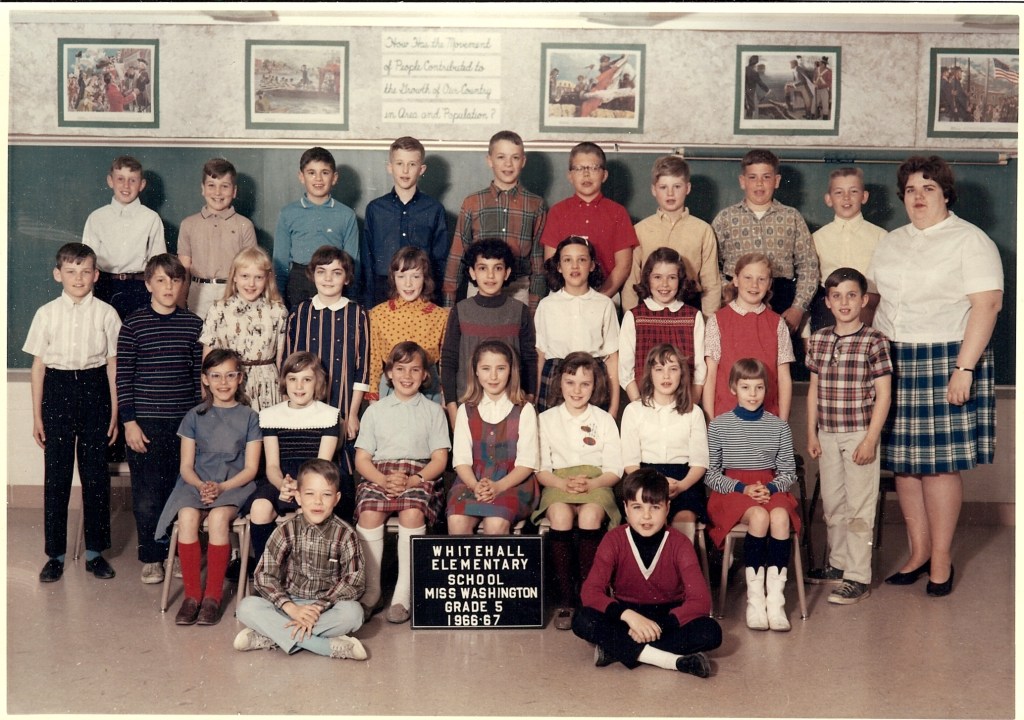
I grew up in the National Capital area in the 1960s, attending 12 years of education in the Virginia and Maryland suburbs surrounding Washington. I believe most of you who read this blog page have similar memories of your formative years in school. I also believe most of you understood the rules in those days and what was expected. If your performance wasn’t up to par, there were consequences. Parents, largely absent today, were closely involved. There were always exceptions – broken homes, divorce, single parents who had to work and raise a family.

Education is different today. I am a late in life parent. We adopted our son in mid-life. He is 16. People used to migrate to California for jobs, neighborhoods, and the best schools. It was where everyone wanted to be who had grown tired of rain and snow. I live on the high desert north of Los Angeles in the sunshine wondering what has happened to education. It is appalling.

Supplies that used to be provided by the school system have to be purchased by teachers or parents. All this chatter about more money for education isn’t true and it only gets worse. Budgets have been slashed leaving little or nothing for school building maintenance and adequate teacher salaries. Facilities are in ill repair, with trash carelessly tossed and never picked up. Restrooms with graffiti on the mirrors and walls, stall doors secured with pencils because the latches are broken, and fixtures that haven’t been scrubbed in years.

This is what my son faces every day. Because he’s never known any different, he doesn’t understand my dismay with the high school he attends. Kids are allowed to vape in class and stare at their cell phones. I’ve even heard of students smoking weed in class. And we were afraid of being caught smoking cigarettes in the restrooms.

Are you kidding me? Our generation is no stranger to marijuana – but in class? I am a progressive thinker but not when it comes to education. The classroom is for learning, not socializing. Teachers are no longer permitted to maintain control in the classroom fearful of being sued by parents. There’s no such thing as a home suspension anymore because it adversely affects funding. They now have “in-school” suspension where discipline means hanging out in classroom for six hours and doing whatever you want.

Where are the consequences I ask?

Teachers are not paid what they are worth, with salaries near the poverty level. Is this what politicians mean when they speak of more money for education? They are not telling us the truth. Every election cycle it’s the same old saw. They always promise more money for schools.

It is not 1965 anymore.

I want Boomer Journey to be a nice escape to our nostalgic past. However, to understand what’s wrong with the present, we have to review the way things were done in the past. We had strict standards for education. That is not what our children and grandchildren are getting today.

It is ironic, I attended school in one of the roughest counties in Maryland. Yet, we had one of the best performing high schools in the state – with performance way above par. Our high school was clean and well maintained with a sizable custodial staff and exceptional mentors. When I look at the state of education today, it leaves me wondering what happened.

Friends – it is not 1965 anymore. However – it can be better.