Boomers May Well Be The Last Car Crazy Generation

Have you noticed a change in the landscape of America’s youth? Video games. Cell phones. Laptops. E-Zombies. “What?” “You talkin’ to me?” “In a minute,,,”

Used to be you could find your teenage son under the hood of a car or your daughter in front of a makeup mirror or gossiping on a Princess phone. A lot has changed in 50 years. When I was 15, I couldn’t wait to get my driver’s license and that first car. It was everything to me to have my new-found freedom. My first car wasn’t much to talk about. It was an Earl Scheib Green 1960 Valiant sedan my mother’s hairdresser gave to me as a gesture of kindness. I learned about how to work on cars tinkering with that little Valiant with its slant six engine and push button transmission. It had its share of mechanical problems. Bad brakes. Transmission woes. An interior that was coming apart. And – a 16 year-old who didn’t have a penny to his name living in hard times on minimum wage.

When the transmission finally gave out in that old Valiant, my father decided it wasn’t worth the expense to get it fixed and had it hauled off to the junk yard. He clearly didn’t understand what the car meant to me nor did he care. He was a product of the Great Depression and didn’t see the point of pouring money into “that old piece of junk…” and that was the end of the discussion.

That’s me, age 16, in the summer of 1972 in my first car – a 1960 Valiant sedan.

When I think of my youth, and the lives of so many of us at that time, I think we were a cruising generation with a whole lot of wanderlust – and perhaps the last to live it. Back home where I grew up in the mid-Atlantic, “cruising the drag” was a way of life. We’d collect at any number of shopping center parking lots and a couple of local parks, swap lies, and compare engine compartments. It was all about who had the nicest ride – or the fastest. There were always the chosen few with new Chevelle muscle cars and fun in the sun convertibles. I wasn’t one of those.

The Valiant generated its share of laughs. However, it would soon be gone. However, my passion for automobiles turned into a career as an automotive journalist spanning more than 40 years. I cultivated an interest in Ford’s sporty Mustang at a young age and became something of a respected Ford historian. It is what I’ve been doing most of my life. I still have my mother’s 1967 Mustang hardtop given to me back in the mid-1970s. I also have a 1961 Plymouth Valiant that came of something of a mid-life crisis and the desire to relive my youth. It was a garage-kept Minnesota car with 38,000 original miles originally purchased new by an elderly lady more than six decades ago.

I am surely of my generation – the first post-war generation that grew up with automobiles where cruising the drag and showing off became a way of life and remains such well into old age. There remains the popular cruising spots in every community and especially in small towns where us old blue hairs gather to relive our memories. Let us never lose this popular pastime.

That said, take heart, relive the youth, and let’s go cruisin’…

We Have Become A Society of Professional Victims

Can anyone explain to me why we’ve become such a hypersensitive society of chronic crybabies? Political correctness is on steroids – with everyone getting their noses jacked out of joint over virtually everything.

We’ve become a society of professional victims.

Think of all the things that have become banned because they offend certain segments of the population. Television programs banned because they offend people. Even the heart felt “A Charlie Brown Christmas” Peanuts holiday special where some want to eliminate Linus’ “That’s what Christmas is all about, Charlie Brown…” speech that still brings the masses to tears nearly 60 years later. How ridiculous is this?! The name of this holiday special is “A Charlie Brown Christmas…” and there are those who want to ban this speech. Go bury your head in a pillow and turn the TV off. I was 9 years old when Charlie Brown originally aired, and it remains a “feel good” special to see on the holidays. Don’t you dare even mess with it.

Things have become so ridiculous to where Tinker Bell has been virtually banned by the Disney company. Since when did a make-believe cartoon character become offensive enough to be banned? What next? Banning Mickey Mouse because he offends rodent lovers? Walt Disney is spinning in his grave. The Wonderful World of Disney – the magic – should never waver. Why? Because children aren’t offended by Tinker Bell nor any other Disney character. The is neurotic adulthood nuttiness. The magic of Disney is all about children now isn’t it? Leave it to attention starved adults, who need to grow up, to be offended. Idiotic adults with an axe to grind. Nosy, busy body “Karens” with nothing better to do.

Go mind your own business and leave the rest of us alone.

How many of us have laughed hysterically at the antics of Ernest T. Bass (actor Howard Morris) in Andy Griffith? Andy Griffith poked fun and humor at rural life and the interesting characters who popped up throughout this classic comedy. The Darlings. Floyd the barber. Barney. The fun girls from Mount Pilot. In those days, America knew how to laugh at itself and our many cultures. You didn’t hear Appalachia getting bent out of shape, demanding it be banned from television.

I think we need to reach down deep inside and find the sense of humor we used to have – the keen ability to laugh at ourselves and enjoy living.

Excuse Me…Did You Say Something?

Dunno ’bout you, but I’ve found it is easier to be all alone than to be alone with a room full of electronics junkies. You see them everywhere – E-Zombies mindlessly staring into cell phones and laptops – hyper focused on a whole lot of nothing if you ask me. I’m talking people – friends, family, and other forms of human protoplasm you sit in a room with who just cannot put their electronic devices down long enough to strike up a conversation.

They just cannot be bothered.

In fact, it has arrived at a point where I believe you could yell “fire!” and that still wouldn’t distract them from their devices. It is like you aren’t even there. I’ve explained to family why it is offensive to me only to receive endless justification and denial. They don’t understand what all the concern is about. It becomes bitter and unpleasant at times. That’s how sick and addictive we’ve become.

E-Zombies don’t like distraction.

We’ve become so addicted to our cell phones to where blind panic sets in whenever we cannot find them. It’s like a pacifier a baby loses out of a crib. Makes them crazy. Our entire lives have become wrapped up in handheld devices. And – if we’re wrapped up in social media venues like Facebook or X, it is upsetting to us when we don’t get a prompt response or a “Like” right away. I’ve had people text me in less than five minutes with “Where are you?!”

Are you kidding me?

I am a cell phone/social media addict too. So much time is spent in social media, news and gossip that nothing gets done. Oil changes get missed. The house becomes one hot mess. A friend moves away or dies, and it goes unnoticed. Assignments and important appointments get missed. I become so engrossed I forget to go to the bathroom until bladder discomfort becomes unbearable.

To be honest with you, I’ve become…well…just done with it. If you’re paying attention to the world around you, you begin to see life spiraling out of control because so much has been missed. The house becomes a wreck and the refrigerator becomes bare. This is warped behavior. I sit here in the dawn’s early light of a Saturday morning wondering of the consequences of the neglect caused by the intense and narrow focus of being an E-Zombie.

How many friendships are lost from this reality disconnect? What the divorce rate of E-Zombies? How long is it before it is noticed a buddy walked away or a marital partner because so disenchanted they just quietly walked away and left a note? Scratch the note idea – you’d better text them because they will never see the note.

Respect for Authority and Why It Has Always Been Important

Courtesy NYPD

There has been a lot of chatter in recent times about “Law and Order,” but darned if I see where we are practicing it to any degree. Morale in the nation’s law enforcement has never been lower and do you know why? Because law enforcement isn’t society’s priority anymore. Defund the police. Demonizing the Police in the media. Never painting a good picture of law enforcement when there is so much good going on among the ranks. Is this how we treat those who protect us?

Well, what about that?

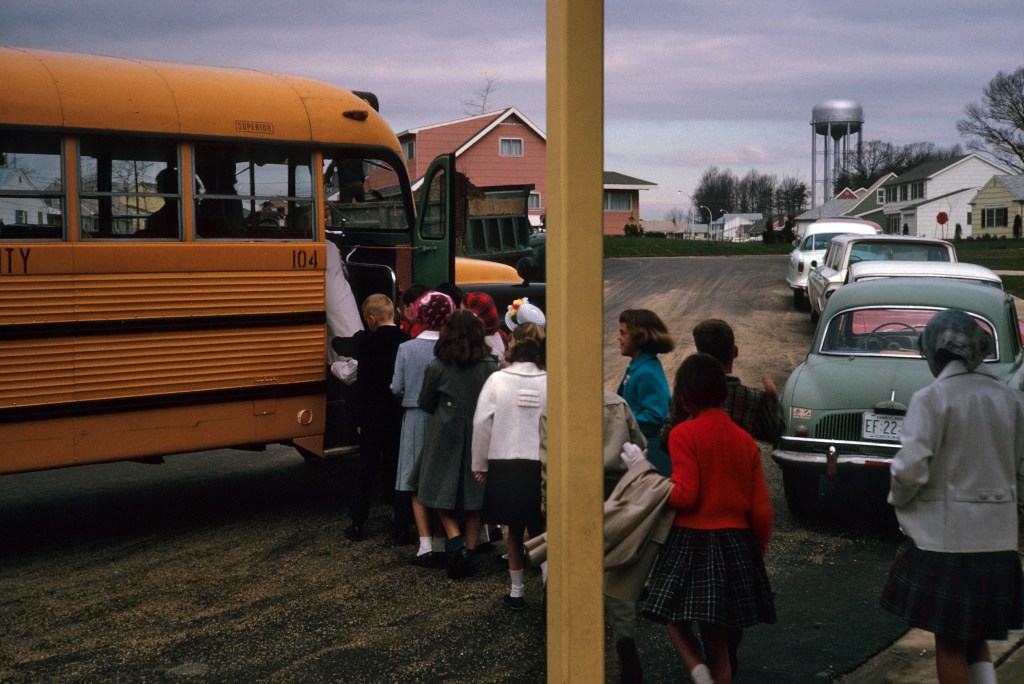
Do you remember when we were being taught the importance of obeying the rules in school? “Single File, Children, Single File…” and keeping your mouth shut in class – not that I ever practiced that. I spent a lot of time in the hallway. Being taught the rules and the enforcement of rules as children was all about preparing us to be responsible civilized adults who would obey the law.

In elementary school, we were introduced to “Officer Bob” the Policeman. We were taught to understand what Officer Bob did and why it was important to do exactly what he told us to do. What we didn’t know as children was just how dangerous Officer Bob’s job was.

Life has become decidedly more dangerous for law enforcement in recent times. Seems few even care. The Police have been getting a bad rap from the media and from society. It has become so bad citizens have become emboldened enough to argue with and even threaten police officers. Officers are being ambushed and murdered gang style even in rural areas.

Why would anyone want to be a cop?

Those enlisted to protect us are getting killed in never-before-seen numbers. I will never condone police brutality – however, I am all for old school police work. What does that mean? It means obey the orders of a police officer or suffer immediate consequences – and we all know what those consequences are. If you don’t obey the orders of a police officer, prepare to be arrested and sit in a jail cell. The streets were safer when there was some level of fear of the Police known as respect. We understood the importance of doing exactly as instructed. We still should.

Law enforcement commands our respect because it has certainly earned it. Why? Because these brave and committed men and women put their lives on the line 24/7/365 for all of us. They’re at the ready around the clock – there every day to maintain order in the community. Order is what keeps the community safe. Got that?

Consider what this means for you.

It means you can call the police at 3 a.m. when you’re in trouble and be able to depend on immediate help. Where I live in Southern California is protected only by the Los Angeles County Sheriff’s Department, they’re so understaffed to where you’re not even sure the police are coming in an emergency. Consider what that means in a home invasion robbery. You want to know the police will be on the block in a matter of minutes when you call.

I will always stand with the Police because they see the very worst of society and come face-to-face with the absolute worst human beings on Earth. The get badly injured, beaten severely, and lose their lives while keeping us safe. Nothing else to think about there.

They show up.

They stand the watch.

Every time a law enforcement officer dies in the line of duty, a lot of us die with them.

We must always stand shoulder-to-shoulder with them.

Courtesy NYPD

It is not difficult to stand with the Police. Whenever I see a cop, be it through car windows or passing them on the sidewalk, I always render kind words and a smile. They need it. Years back, I was in the Carpool Lane on the freeway during Carpool hours. Wasn’t paying attention to the time. The CHP pulled me over and said, “Solo in the Carpool Lane…” and he kept repeating himself expecting an argument from me. I explained that I understood and accepted the consequences.

Courtesy NYPD

The Coming of the 1970s

Have you ever noticed how social trends change as new decades unfold? The Hippie Movement of the 1960s became the “Hangover Movement” of the 1970s. All that free love and “we don’t need money…baby…we got love…” rhetoric of the 1960s became the cold reality of the 1970s. No cash in your pocket meant starvation and a park bench. Free Love became Love Child. It also became sexually transmitted disease for some. We learned the party would not last forever. It had to end.

Despite our love of all things LOVE, we learned love didn’t pay the bills and put food on the table. It didn’t end the wars either. We’d find free love wasn’t free at all. With it came responsibility and emotional issues from which we couldn’t escape. The coming of the 1970s was something of a reality check in terms of responsibility when we were forced to become adults. Some of us never grew up – or became exactly what we detested – The Establishment.

Our maturity didn’t happen overnight, but instead in baby steps as our income and stature in the community grew. We found nothing in life is free – someone always pays. We also discovered real money wasn’t so bad after all. It got us all those things we wanted. The hippies of the 1960s became the yuppies – upwardly mobile, mocha-sipping doctors, lawyers, dentists, psychologists, business executives, day traders, real estate developers, politicians, and a whole lot of widespread narcissistic self-absorption. We believed it was all about us.

We had met the enemy – and the enemy was what we became.

According to those with vast knowledge of the subject, the hippies were a sociological group of primarily young people, now elderly, were associated with the enormous counterculture movement of the 1960s – launched here in the United States. We ditched the suit and tie and donned tie-dyed tee shirts and worn-out jeans. The hippie movement spread like wildfire across the globe.

The hippie movement fueled the Generation Gap.

Wikipedia tells us the word “hippie” evolved from the word “hipster” and was used to describe the beatniks of the early 1960s who moved into New York City’s Greenwich Village as well as San Francisco’s Haight-Ashbury district and Chicago’s “Old Town” community. In fact, the word “hippie” was first used by San Francisco writer Michael Fallon in an effort to popularize use of the term in the media. “Hippie” spread far and wide and remains in use today.

Some say the Hippie movement came of the struggles of the 1950s – the Korean War, McCarthyism, Big Brother, The Cold War, The Draft, the Space Race, and the social pressures of the times. Some chose not to get on board with our parents’ beliefs and the “dog-eat-dog” world we bitterly believed they supported. Instead, we checked out.

To the best of my recollection, the Hippie movement began with the Beatniks – young people who embraced the apparent cultural shifts going on in a post-war America. Young people, opposed to everything The Greatest Generation wanted for us, didn’t want any parts of what the generation that fought for our freedom wanted for us. Young people got into the mental escape of drug use and cults.

It didn’t always go well.

The hippie movement turned drug and cult movement spread across society like a plague. Heroin overdoses became epidemic and a curse that remains with us today. In our quest to escape the miseries of reality, we have continued that “escape” decades later only to find out coming off that high the world hasn’t change one bit. The same can be said for alcohol.

The hippie movement, with fluid precision, faded into relative adulthood in the 1970s. Most hippies became responsible adults, had children of their own, and are now running the country. We face huge obstacles and division that are not going away. Until we learn how to unify as a nation and put our country first, it is only going to get worse. The division we face today is nothing new. Opposing factions were hard at it 50-60 years ago. What’s happening now is only the latest chapter.

Now me – I was born amid the baby boom in 1956 and became part of the post-hippie movement of the 1970s with bellbottoms, platform shoes, The Partridge Family, and boring lackluster economy cars. We were post-hippie dorkenheimers who liked looking cool at the shopping malls and social events. In truth, we were not cool…but decidedly luke warm. We missed the Woodstock chapter completely and had to settle for the mediocrity of the 1970s – and so it went.

The hippies who came before us were forced to grow up and were handed the torch that is the mess that is the America we live in today. Our parents feared what was to become the country run by boomers. Most were glad they were old enough to never see the divided culture we are today.

Boomers and the generations following us have to keep working toward making us a more perfect union.

Gray Divorce – Parting Is Such Sweet Sorrow – Or Is It?

An odd phenomenon is sweeping the nation in 2024 – Gray Divorce.

Boomers and GEN-Xers are calling it quits in numbers these days. Kids and even grandkids are off to college and adult lives – leaving the aged behind, wondering what to do with the rest of their lives.

The answer for some is – to move on…

What makes our generation different is how we have always approached life, I suppose. I guess you could call us the throwaway generation. Whereas our parents and grandparents fixed and kept things, including each other, our generation has traditionally thrown everything away.

For boomers, nearly everything is disposable, including lifelong relationships. It speaks volumes about us as a generation – or does it? A whole lot of us have wound up in comfortable ruts because the unknown – the world out there – is so unnerving. It makes us fearful of radical change.

When we need the courage to move on, it slips right out of our hands. Some of us stay together for financial reasons or that unsettling fear of the unknown. Others part ways because it is just too miserable for them to stay together. As my mother used to say – peace at any price.

Our parents and grandparents were schooled to go the distance – to stay the course despite how troubled and challenging some marriages were. A generation of people who stayed when it might have benefitted them to walk away. I think of my grandparents long ago. They remained together no matter how miserable they made each other.

Divorce was taboo and just not done. For better or worse, and so it went.

Boomers have learned something from watching unhealthy relationships that have come before us – parents who fought all the time and made each other miserable who never found a path to peace. We learned when to call time and jump ship unlike our parents who stuck it out – at times because they had no other choice. Despite that knowledge, many of us have stayed together only to wind up in an unhealthy twilight.

Divorce is a frightening prospect. It means being cast adrift where you are very much alone with no one to shoulder life with. It has often been said divorce is the most traumatic of emotional experiences, ranked even greater than the death of a loved one. With death of a loved one, there’s closure regardless of how painful it is. In divorce, they’re still out there, perhaps with someone else.

We are also living longer than our parents and grandparents. There’s more life beyond 50 than there used to be. More life out there to be discovered. More are asking, “What’s in this for me?”

This is not to say The Greatest Generation didn’t know divorce – it did, perhaps beginning a new trend in marital longevity or the absence of it. My mother divorced in 1957 at age 35 with two children to take care of. Long story short, our father cultivated eyes for someone else, which is typically why couples split up. Other times, couples just grow tired of look at each other’s faces and hearing one another’s voices. Instead of a spirit of compromise and learning how to live with one another’s differences, contempt grows to where a marriage is beyond salvage.

Baby Boomers have approached marriage differently. Maybe it’s that we are more self-absorbed to where we think more about what’s good for our own well-being than what’s good for another. Other times, we pour ourselves into someone and learn our love for someone just isn’t enough. Eventually, our emotional reservoir runs dry with no more to give it. I believe this is what has happened to a lot of people. They’ve become worn down by life and would rather move on.

I’ve personally been shocked by Gray Divorce – with friends who’ve divorced in their sixties and even seventies. Even if it means growing old and dying alone, they’d rather travel that path than continue to be miserable with each other. However, being alone can also mean freedom and the option of choosing a new path to a better life.

The Importance of Family History

How well do you know your family history and how much do you know about your ancestors? Because families tend to be more scattered these days – divorce, unexpected tragedies, estrangement, adoption, cross country relocations, you name it – we’ve become more disconnected from our DNA pasts.

Few stay close to home anymore.

I had the good fortune of being mentored by my grandparents as well as my parents. They taught me important values that have stayed with me all of my life. I am a native Washingtonian and a descendant of The Association of the Oldest Inhabitants of The District, which is one of the oldest civic organizations in the nation originally representing long-term D.C. residents. The Association of the Oldest Inhabitants of the District of Columbia is dedicated to the District’s history and heritage as well as promoting ideas to improve the future of Washington.

I suspect they still have a long way to go.

My paternal grandparents were Lt. Paul W. Proctor and Anne K. Mayhugh-Proctor. My grandfather was a Washington, D.C. native and a Metropolitan police lieutenant who ultimately transferred to The White House Police (Secret Service) in the 1920s – serving under several administrations including Hoover, FDR, and Truman. My grandmother was from “up home” in Greenwich, Virginia in the foothills of the Blue Ridge Mountains. My grandparents were an integral part of our lives early on and a safe harbor during tough times. They made us feel safe and loved.

My grandfather, Paul W. Proctor, in the 1920s with his whole life ahead of him.

I think it is important for kids to know and be raised by their grandparents. It is also important for each of us to know and understand family history for as far back as we can find it. The beauty of http://www.ancestry.com and other websites like it is for baby boomers to get to know their ancestors and where they come from. I’ve been able to trace my family history as far back as the 1600s and Salem, Massachusetts where one ancestor, John Proctor, was hanged for suspicion of witchcraft. Another one of my ancestors signed the Declaration of Independence for the State of Delaware. You just never know who you’ll find tracking the generations.

Anne K. Proctor – my paternal grandmother.

I know my family history because the “old folks” liked chatting about the past, their youths, and those who brought them up. I knew my grandparents, yet never knew my great grandparents. People didn’t live as long at the cusp of the 20th Century due to disease and different forms of exposure that made them vulnerable.

My fraternal grandfather, as one example, was killed at age 30 in an industrial accident in his native Philadelphia. He never lived to see his grandchildren let alone The Great Depression. My fraternal grandmother, Pearl E. Kuhn, was left to care for her four children alone. In those days, employers didn’t feel a responsibility to those harmed and killed on the job with families left behind to fend for themselves. Thank goodness for labor laws that have made employers more accountable.

My paternal grandparents, my sister Cathy, cousin Steve, and me (far right) in 1963 in their Arlington, Virginia apartment. They watched after us and made us feel safe. The relationships kids share with their grandparents is critical to their development and knowledge of family history. They bring so much to the family.

As we all pass into the latter of our lives, it is a good idea to get in touch with our family histories and these ancestorial websites are a good place to start. Get online and see what kind of treasures and terrific stories you can find.

The Kennedy Years – the 1960s

The transition into the 1960s was enormous – as different as night and day. With the election of John F. Kennedy in 1960 came a new decade of promise, hope, and the coming of the Baby Boomers. Kennedy was a young and vibrant leader. Everything changed overnight from what we knew in the 1950s post-war years to a new era where America was on the rise. The young would change the nation’s course. We went from “How do you do?” to “What’s shakin’ man?” From suits and ties and dresses to tie-dyed tee shirts and jeans.

This first thing we notice about the 1960s, especially in television, is how different sitcoms became in a symbolic new age. In the 1950s, you had “Father Knows Best” and the wholesome Anderson family of Springfield, “Ozzie & Harriet” and the entire Nelson family, “I Love Lucy,” “Lassie,” “Disney,” “Ed Sullivan,” and a host of others that never really evolved with the times though Sullivan brought us The Beatles.

I decided to sit through a succession of “The Adventures of Ozzie & Harriett” from 1952 through 1966. This took monumental amounts of self-discipline because I’ve never thought the series was all that terrific to begin with. Mediocre acting, writing, and direction – stuck in the 1950s. More like an early version of reality TV – peering into the Nelson family’s personal lives. In truth, the show was scripted and nothing like their personal lives in the Hollywood hills. You felt like you knew the Nelson family, who pretty much played themselves. We all wanted them for neighbors. Storylines were decidedly dry, and the delivery was enough to put people to sleep.

You’ve got to hand it to Ozzie Nelson. He was a shrewd businessman and showman who cut a lucrative 10-year deal with ABC, which would end in 1966 whether the show aired or not. This meant ten more years of “Ozzie and Harriett” which was not much different than when it started. Rick Nelson’s music career was launched on the show in the course of the 1960s in an effort to gain appeal with Boomers. Tragically, Nelson died on an ill-fated Douglas DC-3 enroute to Dallas for a New Years concert in 1985 due to an in-flight fire.

A quantum leap into the 1960s was “The Dick Van Dyke Show” in 1961 – which promptly thrust prime time television into a new era fresh and alive – with trendy storylines and belly-laughing comedy we still like to see.

Other sitcoms like the Van Dyke Show would surely follow. I’ve always enjoyed “My Favorite Martian” and the witty banter between Tim O’Hara (Bill Bixby) and Uncle Martin (Ray Walston) along with terrific character actors – Pamala Britton, Alan Hewitt, J. Pat O’Malley, Dick Wilson, Bernie Kopell, and a host of other great players who faces we would always remember yet could never remember their names.

I remember wondering when Uncle Martin would become romantically involved with Lorelei Brown who obviously had a crush on him. She was the absent-minded dingy landlord, but in my opinion, white hot gorgeous with an incredible hourglass figure. Her eyes and that lone dimple made men crazy. She was a great screen actress who segued into television without missing a beat.

The 1960s was a period of sitcoms where you had to wonder what kind of bad crack they were smoking in Hollywood and on Madison Avenue. So many ridiculous storylines to where you wondered where the idea came from. A lot of them were fantasy and make believe. A lot of drama, like “Perry Mason” and “Dragnet.”

There were plenty of futuristic experiences like “Time Tunnel,” “Planet of the Apes,” and “Star Trek.” And also – bizarre experiments like “It’s About Time…” and “My Mother the Car.” These fleeting telecasts were where the viewing public spoke with its feet. One season wonders that make you “wonder” how they ever made the small screen. Some never made it a full season.

And then there was “Gilligan’s Island,” and “The Beverly Hillbillies” where it’s a wonder how they ever lasted beyond one season. What’s more, both have huge followings 60 years later. Go figure…

An American Icon Turns 60

Sixty Years is a lifetime.

Some never make it this far.

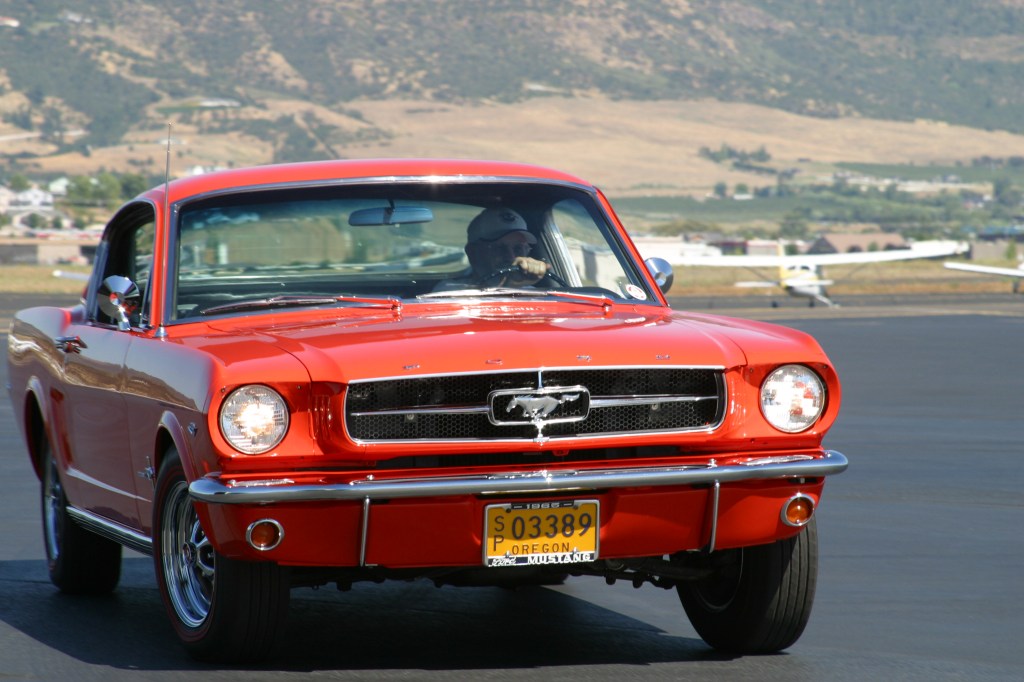
Ford’s iconic sporty Mustang has.

Mustang is 60 this year.

If you were alive at the time of the Mustang’s introduction – April 1964 – it was right up there with the British Invasion – The Beatles, Rolling Stones, Herman’s Hermits, and a host of others from across the pond. Ford Mustang never really lost its momentum. It has remained America’s favorite.

The evening of April 16, 1964, all three television networks aired a battery of commercials where audiences got their first look at a new kind of affordable sporty car with a base sticker price under $2,400.00 sans sales tax and shipping for a standard six-cylinder engine, three-speed stick, white sidewall tires, bucket seats, full carpeting, a padded dash, and full wheel covers.

Mustang was unlike anything mainstream America had ever seen – a sporty design conceived by the Ford Design team of Gale Halderman, Joseph Oros, and Dave Ash. All three are gone now – however, their strong legacy remains. The car was unthinkable – and hundreds of thousands lined up to buy it. Ford anticipated 100,000 units that first year. It sold more than a half million in 18 months.

By March of 1966, Ford had sold one million.

The Mustang’s success didn’t happen by accident. When Ford Presidant Robert McNamara left the company to join the Kennedy Administration, this opened the door for an enterprising young Ford executive, Lee Iacocca, with a strong background in automotive engineering and sales, to infuse adrenaline into the Ford Division, which had a reputation for stodgy utilitarian automobiles.

Iacocca began his efforts by getting Ford back into racing and performance. Galaxie and Falcon got fastback rooflines in the spring of 1963. The Falcon line got a convertible and a sporty Sprint option with V-8 power. Engines became larger and more powerful. The nimble 289ci V-8 got 271 horsepower with a hot cam, mechanical tappets, and cast-iron headers for 6,000 rpm performance.

Amid the improvements to existing carlines came an idea that had been brewing in Iacocca’s mind for quite a while – the Sporty Ford Car Project code named T-5. It was a secret marketing effort that would encompass key Ford product planning players known as “The Fairlane Group” because they would meet at the Fairlane Motel a mile away from the Ford campus. Mustang clearly was a “Skunk Works” project within the company. Few even knew about it.

When Iacocca presented this idea to Henry Ford II, who had fresh memories of the failed Edsel, it was dismissed as high risk, and Mr. Ford wasn’t up for another marketing disaster. Iacocca went back to the team and refined his approach, then, went back to Mr. Ford. Ford approved the project and made it clear – if it flopped, Iacocca would be on the street.

Iacocca presented the three Ford Design studios with a challenge in the summer of 1962 – a design competition between the Ford, Advanced, and Lincoln-Mercury studios. When the three entries were rolled out in the Ford Design courtyard on a hazy August day, one design concept was head and shoulders above the rest. The team of Halderman, Oros, and Ash from the Ford Studio made the cut with the Ford “Cougar” concept. Design boss Joseph Oros loved the name Cougar. Ultimately, the car would be named Mustang after extensive research.

The various departments enlisted with developing Mustang had just 18 months to get this car from concept to assembly line. Job 1 would happen at Ford’s Dearborn, Michigan assembly plant on Monday, March 9, 1964. The team consisting of stylists, product planners, engineers, manufacturing, financial, and management people worked around the clock for nearly two years to meet a grueling schedule that would allow Mustang to be introduced at the New York World’s Fair in April of 1964.

They got it done and we have the memories.

Ford’s sporty Mustang has touched more lives than any other automotive marque besides, perhaps, the Volkswagen Beetle driven to college and to work by untold numbers of boomers. Suffice it to say there were a lot of Mustangs and Beetles in every neighborhood where untold numbers of boomers grew up to embrace the memories we hold dear today.

Cabin Fever and Our Lust for The Great Outdoors

Behold our lust for the great outdoors, which comes with the annual onset of springtime.

The aroma.

The way the air feels.

Being outside for the first time in months.

The Spring thaw…

Welcome to the approach of summer heat and humidity.

Didn’t mean to remind you but it is coming.

Springtime is an emotional awakening that can be challenging to define. I believe it is something different for everyone. When I was growing up in the Mid-Atlantic a lifetime ago, springtime was euphoric for me. After being couped up in the house all winter and chomping at the bit to get outside and play, the air was refreshing and the aroma sweet. Both offered hope and promise as the future awaited. Best we didn’t see the future.

How did springtime affect your youth?

Springtime wasn’t always euphoric for everyone. Schoolyard bullies always managed to surface in spring – on the playground and in gym class. Green pollen dust accumulated all over our cars and patio furniture. It made us sneeze. For some, springtime was a reminder of what was gone or what used to be. At times, it made us grieve for who was no longer with us.

Springtime is the darnedest element now isn’t it?

The change of seasons invokes emotions that come primarily with a change of temperature, the angle of the sun, the timing of sunrise and sunset, and undoubtedly where we are in our journey around the sun. There are elements in the universe that affect our emotions we’re completely unaware of.

With each passing day – the sun’s journey across the sky became either shorter or longer with the change of seasons when we were growing up. Autumn offered an acute sense of finality – the end of another year and the anticipation of a new.

Seems more people die in the fall and winter than in springtime. The experts say January is the deadliest month according to the Centers for Disease Control and Prevention in Atlanta. Too many of us old folks fall down and can’t get up. Other wintertime months like February and March rank second and third. December – the holidays – is fourth.

It is true we tend to get the blues as the sun retreats in autumn, which becomes more apparent in the fall and winter, especially once the holidays pass. According to the American Psychiatric Association, at least five percent of us experience seasonal depression, which I suppose comes from the absence of sunlight and the timing of sunrise and sunset. I know folks who become very depressed in the fall, which is caused by shorter days and coming home in the dark.

Living in Southern California, I am less affected by fall and winter because both are different here in California’s Southland. Changes of season are more subtle here, yet the solar and lunar patterns really stand out on the open desert. In the end, the changes of seasons do affect the way people feel whether it is spring or fall.

Autumn tends to put people in a negative frame of mind, with an adverse effect on appetite and sleep patterns. Autumn makes people want to nap and sleep. If it is cloudy, there’s a strong desire to fall asleep to an old movie or classic sitcom. What’s more, those pesky projects can wait until spring. These are the same projects we said could wait until winter – right?

If you would like to correspond – I have a new email address and would be happy to hear from you: jimsmart.jbjmediagroup@yahoo.com.