Leisure World…What Happened?

For all the idiosyncrasies of boomer life, and it gets mighty complex, we’ve been a generation of work-a-holics.  Time off?  Forget it.  Too much to do at the office.  Most of us have spent our adult lives with our noses to the grindstone.  Like our parents, we’ve been a hard-working generation of worker bees. 

However, our parents knew when to quit at 5 p.m., come home, watch Walter Cronkite, and tune into Gunsmoke or Perry Mason.  They also understood the value of the weekends and vacations—the priorities of downtime and chores around the house. 

We never got that message let alone put it to practice.

Baby Boomers have been compulsive overachievers—mostly in the interest of amassing material goods along with our own self-worth.  We like to pound our chests and show the world what we’ve accomplished.  We’ve done that via McMansions, vacation homes, boats, and more vehicles than we even need. This has long been a measure of who we believe we are. Yet, how much quality time have we spent with our kids and grandkids?

Career has always been important to me.  I fell into journalism purely by dumb luck and chance.  Because I wanted to be aircraft mechanic with the airlines, I enlisted in the United States Air Force, Military Airlift Command (MAC) to both serve my country and get my FAA certification to work on commercial jetliners. 

When I got out of the USAF, the house was full—with plenty of airline mechanics in house and no room for anyone fresh out of the military. To add insult to injury, there was the PATCO strike when President Reagan fired striking air traffic controllers, which effectively grounded the airlines for a time in 1981.  I believed being an airline mechanic was my destiny.  I’d spent four years in the Air Force preparing for it and pursued it with great tenacity. 

The sound of crickets…  It was not meant to be.

I found while working for a regional airline and later a poultry processing company, bending wrenches on jets and heavy trucks wasn’t what I really wanted to do.  I didn’t like working in the heat and cold in all kinds of weather not to mention the challenges of staying awake on grave shift.  In my spare time, I started writing for automotive magazines because I loved cars. 

My future was about to change.  

I knew I loved automobiles and found I loved writing. It became an obsession.  One chilly January morning, I received a call from a Florida based car magazine I had been freelance writing for.  They wanted to offer me a job.  More shocking yet, they offered me the editor’s chair of their flagship magazine because I was Ford Motor Company historian and knew a lot about the subject. 

What the heck did I know about being an editor let alone writing for a living?  This newly founded publisher was the launch pad for a career spanning 40 years.  The job lasted two years when I was fired for perceiving I knew more than my bosses.  I had a lot to learn about publishing and getting along with people.  Unless your name is on the building, you’re not always going to get your way and must find a way to get along or find yourself on the curb.  Career pursuits took me across the continent to Los Angeles where I’ve been ever since.

If you’re like most boomers, change has long been an integral part of your career.  Mergers, poor fit, difficult bosses, impossible working conditions, undesirable transfers, demotions, and a host of other variables have altered our career directions more than once. 

We’ve been there.  We’ve survived. 

And now, it is time to hang up our spurs and get into a new groove called retirement.  Because I am very passionate about writing and photojournalism, I will probably never retire because I love what I do.  However, I’ve had to—for the good of my family and friends—slow down a bit and come out of my office to join humanity.  Like most of you, I’ve no idea how to slow down and smell the roses because this is something I’ve never done.  While I am parked on the sofa watching Andy Griffith or Dick Van Dyke, my mind is abuzz with things I should be doing.  I’ve no idea how to relax.  Call it conditioning…

Retirement communities were conceived and built for the leisure generations—our parents generation – and ours.  Only that didn’t happen.  Baby Boomers are working longer and aging in place due mostly to better healthcare and terrific medical advances.  As a result, we’re burning more midnight oil than our parents did.  Our parents also knew how to save.  We’ve never been a generation of savers, which has forced a lot of us to continue working. If you have to continue working, work at something you love doing.

COVID 19 has created an abundance of jobs employers are having a tough time filling. Young people have become choosy about what they will and won’t do for a living. This means opportunity for aging boomers. We’re reliable. We show up on time. We work hard. This means job security because employers know they can count on us.  

How to slow down and live more with all this time off?  I don’t have an answer for you.  However, we generally do what we want to do.  If you love what you’re doing for a living, never give it up.  Keep on keeping on and make no apologies.  Working and purpose mean survival whether you’re earning a living, doing volunteer work, or taking care of the grandbabies.  Main thing is to keep going.           

Remembering Dr. Martin Luther King’s Immortal Words

It has been more than a half century since Dr. Martin Luther King gave his “I Have A Dream” speech on the steps of the Lincoln Memorial in the hot summer sun before thousands of people. We still hold the dream…to judge people by the content of their character…not the color of their skin. In August of 1963, we had a long way to go.

We still have a long way to go.

We’ve given racism plenty of lip service in six decades.  However, we haven’t done enough collectively to make it a word no one needs to use anymore. What is with racism and why are we struggling? There’s so much in the news that indicates we still have a serious problem with racism. A unarmed black man was ambushed in Brunswick, Georgia by three white men because he was jogging through their neighborhood? Justice was served. Three men are in prison.

That won’t bring a young Ahmaud Arbery back to his loved ones.

We still aren’t practicing mutual respect in the human race. We continue to be unkind to one another. You see it in the media and on the street. Racism and Anti-Semitism, to name two troubling issues, went underground and for a long time.  They just weren’t discussed to any degree. However, both have boiled under the surface like a pan of hot water left on the stove. 

Dr. King’s death at the hands of a white assassin on a hotel balcony in 1968 stunned Americans, but it wasn’t enough to jolt us into real change. It has been through the valiant efforts of the tenacious few there has been any change in nearly 60 years.

I think of Rosa Parks, a lone patriot who exhibited the courage to fight for equality by sitting in the “Whites Only” section of a city bus in Montgomery, Alabama. That one step – an act of non-violent protest and defiance – took monumental guts. Or the gentlemen who sat at a “Whites Only” section of a drug store soda bar in protest took unending courage. He put his own life at risk to drive home a point.

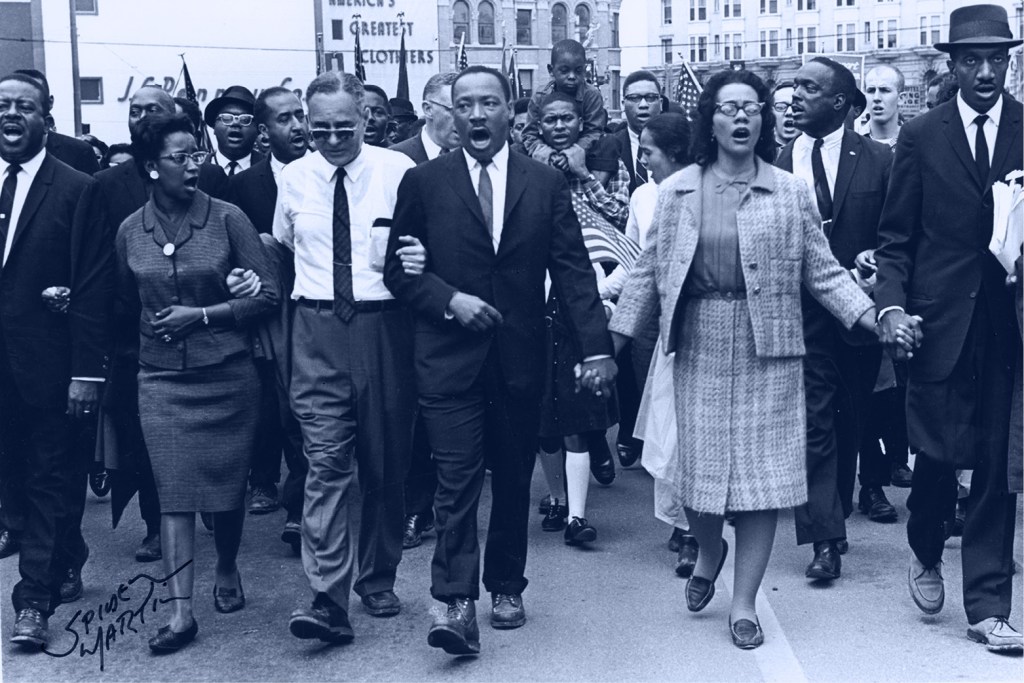
The Selma to Montgomery March in 1965 staged by the late Congressman John Lewis and Dr. King was a turning point toward the Civil Rights Act of 1964 and later the Voting Rights Act of 1965 It was a bloody journey and a turning point for blacks in America. So many hurdles have been overcome since against discrimination, yet it continues to manifest itself across America regardless of the sacrifices made by courageous souls then and now.

There are those in power who wish to reduce or eliminate voting rights for those who struggle getting to poling places. They want to abolish the Voting Rights Act one state at a time and they’re rather bold about it. A number of states are taking it upon themselves to do away with voting rights for all and make it only for a few. This is not who we’re supposed to be, folks. Each and everyone of us in all our colors and beliefs should have access to voting, especially if we are disabled and cannot get to a polling place, and especially if you are poor and don’t have the means to get there.

Do you see the angle here?

Racism remains alive on Capitol Hill in Washington and in select states across the land. Equality remains elusive. We still aren’t there, especially when legislators effort to prevent the people from voting. You can take out mailboxes and make it more challenging to vote. However, you will not stop the masses from voting who are determined to be heard. People with the will are going to find a way to vote.

Freedom has never been free. People have always had to fight for their freedom – and knock down those who would take it away. Millions of lives have been sacrificed in the name of freedom and the elimination of oppression. We were founded on this principle in 1776. That concept remains true today. We have to continue to stand up and fight for Democracy and equality.

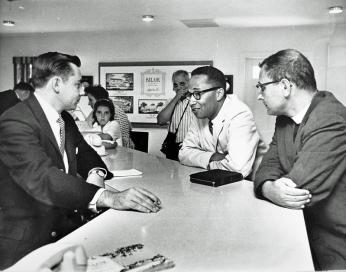
Karl Gregory at the Levitt sales office in Bowie, Maryland in 1963.

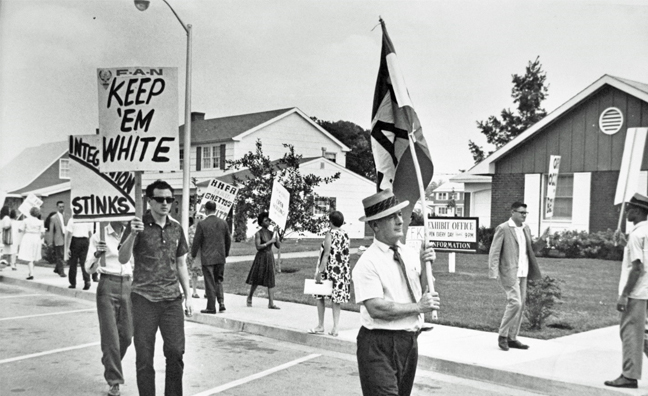
I grew up in the suburban Washington, D.C. community of Bowie, Maryland – which was a hot bed of protests by both whites and blacks in 1963 when a black man—Dr. Karl D. Gregory—tried to buy a new home from developer Levitt & Sons in the “Belair At Bowie” community. He was denied the opportunity.

He and so many others… 

Like Levittown, Pennsylvania, which was a predominately white community with its share of racial tensions, Belair At Bowie was also a “Whites Only” suburban Washington housing development by Levitt & Sons.  Company President Bill Levitt perceived selling to blacks would hurt home resale values and drag the planned community down. He was concerned whites wouldn’t buy in a community where blacks could also buy. His copout to the protests was other developers were doing it too and that was just the way business was done.

How many home sales did Levitt lose choosing to go with the flow?

Protests at the Belair At Bowie sales exhibit in 1963.

It wasn’t until 1967 with the Fair Housing Act that Levitt & Sons, which had been sold to ITT, welcomed blacks to buy new homes in Bowie. Bill Levitt died in 1994 at the age of 86 after the deal he cut with ITT years earlier ultimately rendered him broke.

For some…it was justice.

When we take a snapshot of Bowie, Maryland today, Levitt’s perception of blacks and resale values was a bit askew.  The sky didn’t fall and Belair At Bowie didn’t evolve into a slum.  Instead, it has thrived, with home resale values the highest they’ve ever been. The average Bowie home sells for $500,000+ today in a healthy housing market.  What’s more, they sell right away because people want to live there.  African Americans encompass 56-percent of Bowie’s population today and the community has never been more diverse.

There is peace in the Belair At Bowie community today.

We must shed our dated logic about skin color and religious beliefs to become a true melting pot where we can comfortably blend and become a unified United States of America. We will all be better off.    

The Boomer’s Love Of Classic Cars

Boomers were born to love cars.  We are the post-war generation that grew up in suburbia with the modern automobile.  We love the nostalgic rides designed and produced in the middle of the 20th Century.  Do you remember when showroom windows were papered and we waited in great anticipation of the new models?  We couldn’t wait to crack open mainstream car magazines to see the new models. 

The paper came down and shiny new rides were positioned strategically across the showroom floor under banners and lights. Buyers flocked in by the thousands. Car haulers and dealer back lots were always good for a sneak peek at what was hot off the assembly line.  We’d walk the back lots and take in the rush of Gotta Have It Red.

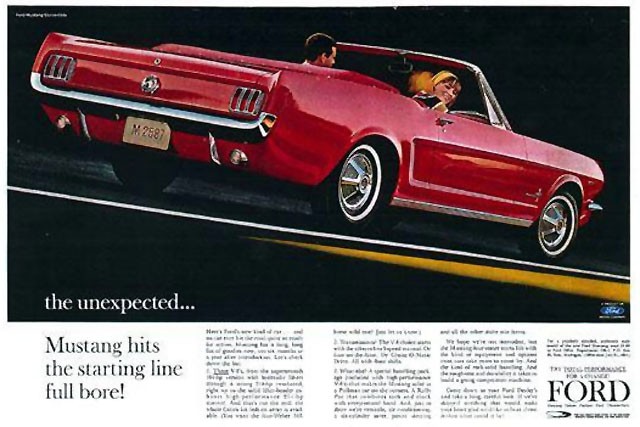
I remember Ford’s sporty Mustang introduction the evening of April 16, 1964 on all three television networks.  A herd of wild horses galloping across the screen with the spirit of the American West followed by those dreamy Walter Mitty commercials.  Buy a Mustang and rewrite your life—and it did!  Mustang was an affordable sporty car priced competitively with Falcon, Comet, Valiant, Barracuda, Chevy II, and Corvair. We got style for less money.

Mustang had the market advantage because it had virtually no competition until the Camaro and Firebird arrived in 1967 three years later.  Barracuda remained little more than a rebodied Valiant in several body styles.  AMC’s Javelin and two-seat AMX sports car were hot competitors for 1968. Despite the competition, Mustang continued to outsell everything in its class.     

There was nothing like Mustang in the marketplace in 1964 with the exception being Studebaker’s high end “Avanti” luxury sport coupe, which was priced way out of reach for most buyers. Few could afford one. Friday, April 17th, Ford dealers rolled out Mustang priced under $2,500. Buyer enthusiasm was unequaled.  There hadn’t been anything like it since the Model A and T. 

People snapped up Mustangs just to have one.  We bought them because we just had to be seen in one. We’d profile in front of downtown store windows just to see ourselves in the window glass driving one. Mustang was a huge rush of euphoria. Ford anticipated 100,000 Mustangs that first year.  It sold nearly 600,000! Demand for Mustangs was so extreme Ford had to tool up two more assembly plants in California and New Jersey to satisfy demand.

Ironically, Iacocca had a tough time selling the “Sporty Ford Car” concept to Henry Ford II, who wasn’t interested in marketing exercises that could potentially cripple the company financially.  Remember, at the time Ford was still recovering from the Edsel fiasco.  Ford ultimately agreed and gave Iacocca the go ahead. 

However—if it flopped, he’d be out the door.

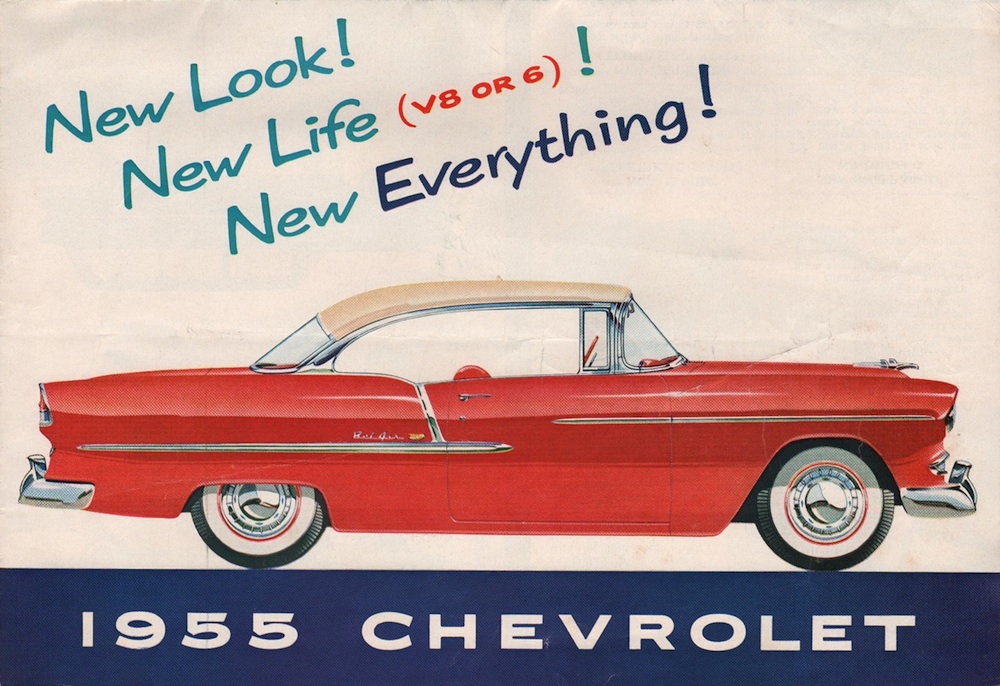
Mustang is but one example of the love we have for automobiles.  The 1955-57 Chevys are iconic automotive love machines.  The same can be said for Camaro, Chevelle and Nova.  Over at Pontiac, GM’s outlaw performance division, there was the brute GTO and luxurious Gran Prix. Olds followed suit with the 4-4-2.  Even Buick, GM’s upscale luxury car division, brought us the high-end Riviera and mid-size GS sport models with powerful Nail Head V-8s. 

Chrysler delivered the most powerful muscle cars from Detroit—all but unbeatable in drag and stock car racing.  Automakers competed in all forms of racing to convey a message of performance.  What won on Sunday sold on Monday.

Cars have been an integral part of boomer lifestyle since we were coming of age in the late 1950s. We just can’t help it because this is who we are. We couldn’t wait to get our driver’s licenses and counted the days. We spawned the cruises and hung out at the drive ins on Friday and Saturday nights. A good many of us cruised the main drags in cities and towns from coast to coast. We ventured out onto Airport Road to see who had the fastest cars. Summer evenings were spent washing and polishing the cars we loved most.

If you’re truly fortunate, you still have your first car and continue to treasure it today. If you’re like the rest of us, you have memories of that first car, which is long gone and but a memory. And with any luck you will find another one just like it.

An Angry Nation’s Lonely Eyes

I was just watching an episode of “Leave It to Beaver” when it struck me how much we’ve changed in 60 years.  When people met one another in those days, it was “How do you do?” as if anyone really cared how you were doing but they asked anyway. If you were troubled and in tough times, people were happy to hear it though they’d never admit it. Misery has always loved company—then and now. 

Human nature hasn’t changed much in nearly 60 years.  However, human conditioning and how we respond to situations has.  We’re not as kind and thoughtful as we were when Wally and the Beav’ were growing up on television.  Punching out a flight crew member was unheard of.  Violent outbursts in supermarkets where people got hurt just didn’t happen.  Talking back to a police officer…are you kidding?  Ambushing the elderly on the sidewalk for their groceries got you disciplined—it was just bad karma and never tolerated.

So, what has happened that we’re so furious with one another?

America has always been compelled to dissect itself.  When there’s a troubling news story from anywhere across the land, we pick it to pieces.  We want to know what could have been done to prevent it.  And honestly, we like bad news—when it happens to others.  It makes us feel better about our own lives. 

Bad news also makes us angry.

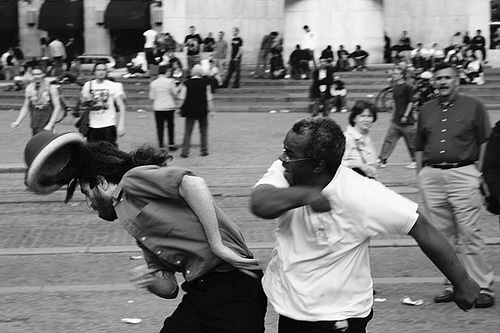
I’ve never seen the political environment any more toxic than it is now.  Political confrontations turn into fist fights, shootings, riots, and other forms of incivility. Left versus Right.  White versus anyone who isn’t. Christians versus the Jewish faith or any religion that isn’t.  Vaxers versus Non-Vaxers.  Mask versus no mask.  Crazy conspiracy theorists versus normal logical thinkers. 

By nature, humans want things to be better.  We all want a better quality of life.  We want leadership genuinely interested in a better America.  Leadership that will unify the nation.  That’s not what we have now on either side of the aisle.  It doesn’t matter which way you lean politically, leadership in government gets a failing grade.  There’s no oversight where there needs to be oversight, and too much oversight where there doesn’t need to be any.    

Corruption in government has never been worse.  The intent is to divide and conquer strips us of our freedoms.  And television?  Purely more and more ways to get into your pocket and deliver less and less.  Commercial interruption has become the biggest insult.  The media doesn’t even demonstrate a tasteful way to segue into the endless stream of really awful commercials. 

If I wasn’t paying for television, I wouldn’t care.  However, I am paying for it—and it angers me.  I can walk away from the TV to a lengthy bathroom break or a snack.  Fifteen minutes later, there’s yet another pharmaceutical lifestyle commercial with happy people enjoying hot air balloons or playing cards. 

Television isn’t about you the viewer—it is about keeping stockholders and fat cat network executives happy and profitable.  They’re happy to give it to you—and without a kiss.  Think about this the next time you’re watching another stale commercial for Eliquis or Liberty Mutual.  Does anyone really understand Liberty’s message?  I don’t…  They’re all making billions—at our expense.  I know wise people who’ve sworn off television. They don’t even own one anymore.

America has become more and more oppressive over time and people are angrier.  The vaccine/mask debate is one large issue.  Those who invite protection and those who refuse.  A science issue—disease prevention—became political and long on conspiracy with abundant misinformation. Those who insist on the vaccine and masks are angry at those who refuse.  Those who see vaccines and masks as a threat to their freedom makes them angry.  It is a deep divide. 

Common sense versus none. 

Anger has become worse in post-2008.  People lost their homes and their careers with the crash in 2008.  Many are living on the street.  Life is generally more unsafe with mass shootings and domestic terror in a place where people used to feel safe. 

Anxiety – and anger – are high. 

Good paying jobs and careers have given way to service wage nothing jobs.  The quality of life in many communities has deteriorated due to uncontrolled immigration and bank-owned investment property.  People have become like caged rats.  They’ve become frustrated, mean, and angry.

Anger is high because things aren’t getting any better.  Failed leadership is why things aren’t getting any better.  We have elected “leaders” interested in but one thing—themselves. Oh sure, there are good solid people in government who care and who want it better for Americans.  And then – there are self-absorbed politicians who are only out only for themselves. 

They will never put America first.

As long as we have government that perceives it is accountable to no one, you will have out of control corruption and the masses will be angry.  People are uptight—fearful—of politicians they cannot trust.  The only power you have is to run for office yourself and change the world—and casting your vote. 

Let no one take away your right to vote.

Better leadership and a better quality of life with opportunity for everyone will cool the anger.  You can count on it.     

Shopping – A Lost Art

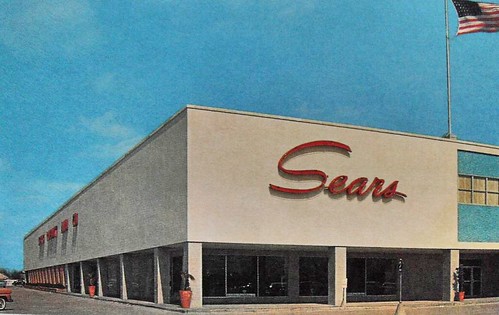
Do you remember the thrill of wandering the aisles and displays in department stores?  Even if you couldn’t afford it, it was exciting and fun to touch it and dream.  One of my most favorite places in the world as a kid was SEARS. 

You name it, SEARS had it.    

Of course, there was the classic SEARS Christmas Wish Book, which accounted for huge sales numbers come the holidays.  We’d explore the Wish Book hot off the press, smell the sweet aroma of fresh ink, then, take our imaginations to SEARS for a closer look at the real thing.  What a rush it was to touch something you saw in the catalog on display for the touching. 

Sometimes, the real thing was disappointing. 

Then, there were always moments when we were distracted by our parents who wanted us to try on shoes.  The darned things were always too tight.  The same could be said for clothing that was either too loose or too tight followed by, “Awe Honey, you will grow into them…” or “I think you will like this…” when you hated it with a passion.  No kid wants to try on clothes.

I believe I was an old soul trapped in a kid’s body.  Most kids looked at toys.  Me—I was always in the home improvement department looking at plumbing fixtures and kitchen cabinets—dreaming of home ownership as a grown up.  I loved anything to do with home improvement.  I got high off the smell of fresh cut lumber.  I also had a thing for lighting, electrical hardware, and Christmas lights.  The colors and types of bulbs were enchanting to me.  In those days, there were so many types.

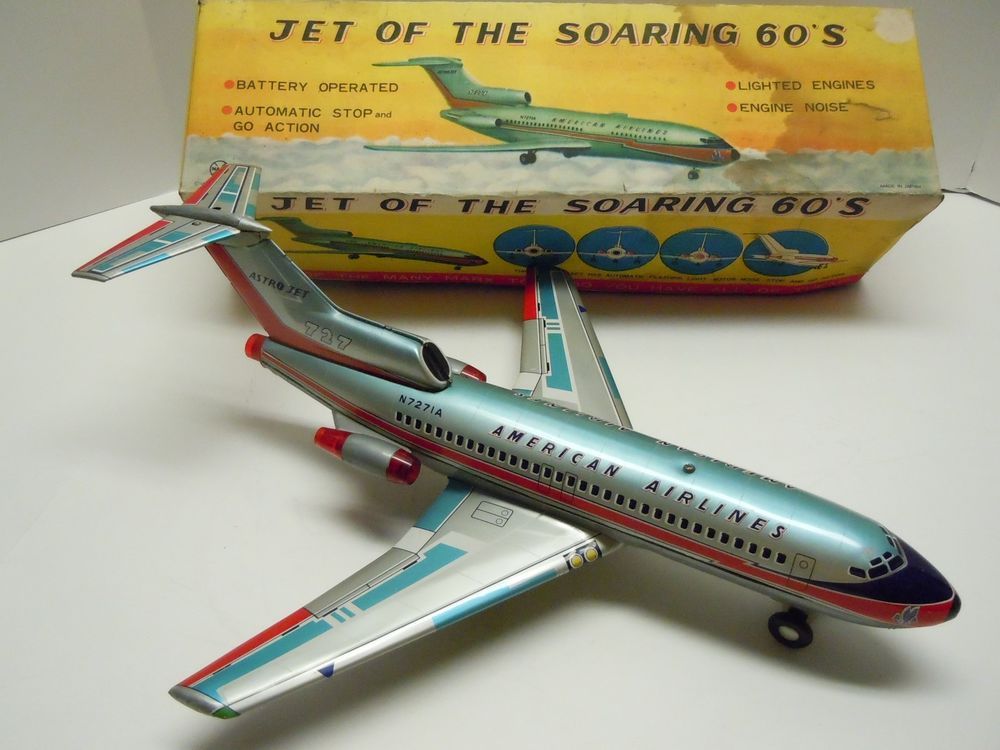
Young people these days want to know how we even survived without video games and electronic media.  I’ve carefully explained to my teenage son in those days we had our imaginations.  We had no idea what a video game was because they didn’t exist.  I did enjoy electric toys.  You flipped a switch and they sprung to action with motion and flashing lights.  I loved those tin battery-operated airliners with lighted cockpits and navigation lights.  There were plastic propellers that whirled around.  They roared around the floor, stopped, loaded and unloaded, and went on their way. 

If you had a dog, motorized toys drove them crazy.

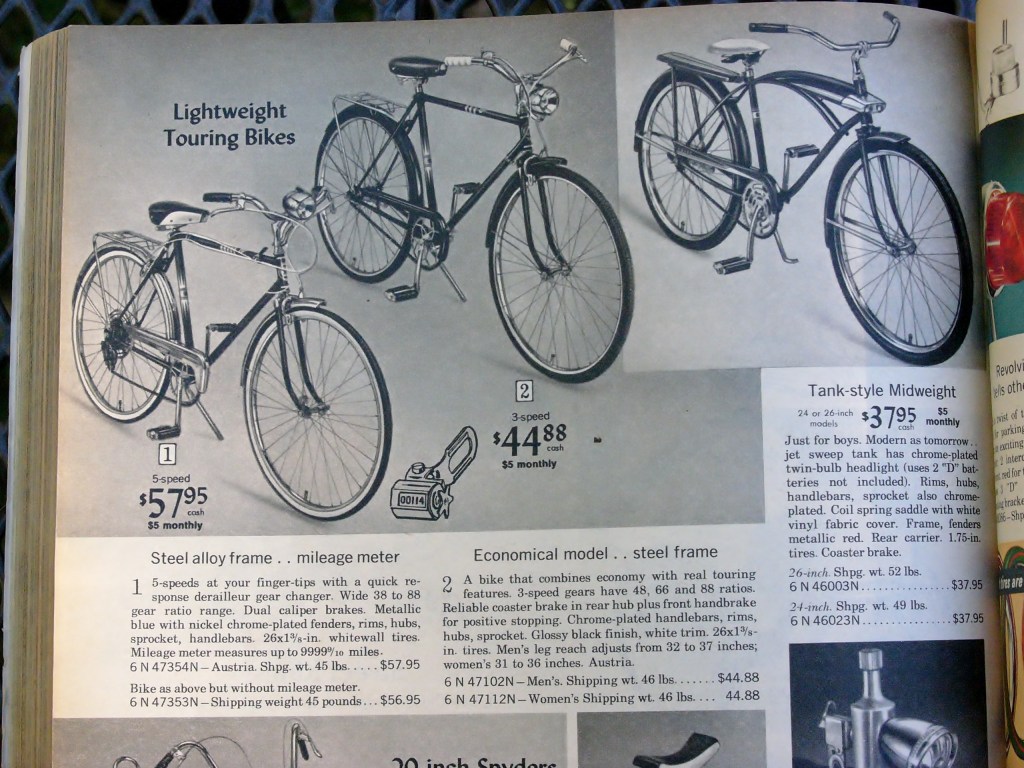
I’d walk into SEARS and head for the bicycles.  I was nine and I wanted one badly.  Christmas Morning 1965, there it was in gleaning red and chrome, leaning on a kickstand amid our living room.  I couldn’t wait to attach it to my backside for a spin around the block.  It had working lights and baskets.  I later added a generator lighting set with a headlight and red taillight for battery-free performance.

Online shopping is certainly convenient as witness the success of Amazon and other online retailers.  SEARS could have been Amazon given vision and the application of technology.  CEO Eddie Lampert didn’t see the point.  SEARS is all but dead.

However – the memories are not.

There’s no substitute for the touch and feel experience of brick-and-mortar shopping.  How many bad online purchases have you experienced because you couldn’t touch and shake it?  The shipping is too expensive to send it back, which leaves you stuck with it.  I say let’s get back to brick and mortar shopping when the stores are quiet and you can see and touch what you’re buying.

If you’re retired, avoid the crowds—take a weekday morning and go browse the stores just for the entertainment value and dream factor.  Chances are good you will find what you’re looking for and experience the thrill of touch—and spending.   

The Miracle of Space Travel

Do you remember how we marveled at space travel growing up?  In the early 1960s, we gathered around the TV to watch the Mercury, Gemini, and Apollo launches in our quest for space supremacy over the Soviet Union (Russia).  In school, we watched together in auditoriums and in classrooms to behold these launches and take in mankind’s first real footsteps in space.  For young impressionable baby boomers, it was awe inspiring.  It was a big deal for us.    

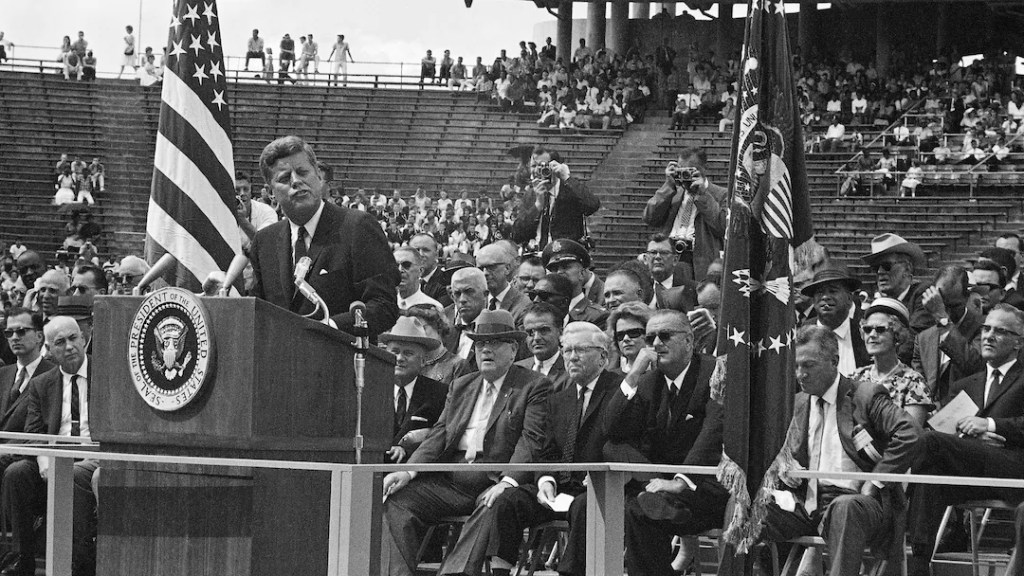
On September 12, 1962, President John F. Kennedy spoke before 35,000 Rice University students – which inspired us to get to the Moon before 1970. When he was assassinated November 22, 1963, it bolstered our determination to get to the Moon.

“We choose to go to the Moon. We choose to go to the Moon…We choose to go to the Moon in this decade and do the other things, not because they are easy, but because they are hard; because that goal will serve to organize and measure the best of our energies and skills, because that challenge is one that we are willing to accept, one we are unwilling to postpone, and one we intend to win, and the others, too.”

John F. Kennedy

Kennedy inspired a Nation.

Space travel, no matter how we choose to minimize its relevance today, remains a dangerous business and not for the faint of heart.  Only a few aeronautical professionals have been in outer space. Yet, if you ask the average American the names of these courageous few, not many even remember their names. This is how routine space travel has become – for those who’ve never been in outer space nor experienced the rigorous and exhaustive training it took to get there.

How many are up there now in the International Space Station? Human lives in space orbiting the Earth 24/7/365 making our world a better place – yet – who notices? They pass overhead largely unnoticed. Once we’d landed on the Moon, Americans lost interest in space.  The Apollo launches went unnoticed until Apollo 11 when it was time to land on and stand on the surface of the Moon.  The entire world chimed in to watch America’s greatest feat.

We’ve gotten careless with our greatness. Sloppy… Have we come so far that leaving the surface of Earth has become no big deal? I think of the Space Shuttle missions, and others, that built the International Space Station enabling us to do extensive research in a zero gravity environment in the life-threatening world of outer space. Missions in space have brought us technology we’ve come to take for granted. Every time you pick up your cell phone, sit down to a PC, or use your GPS, the space program contributed to these conveniences.

In the entire history of space travel, the United States has lost 20 astronauts, which is remarkable when you consider the very dangerous nature of space travel over more than 60 years of leaving the surly bonds of Earth. How many of you can identify these lost astronauts by name and mission?

I thought so…

I cannot name all of them either.

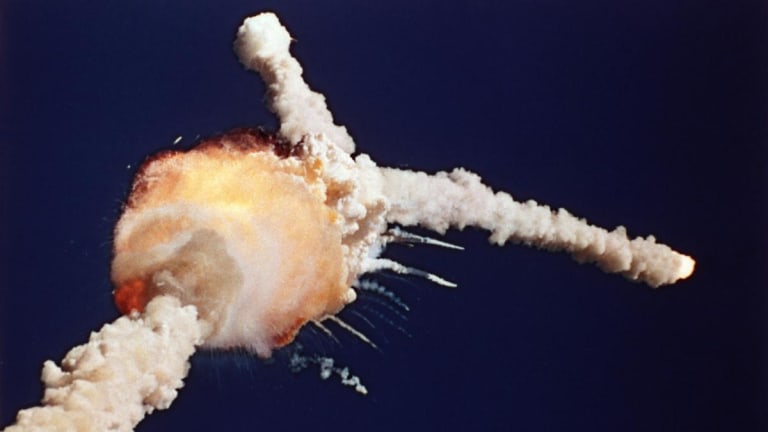
Shuttle Challenger disaster in January 1986 where seven were lost. Shuttle Columbia, the first in space, was lost years later in a reentry accident where another seven astronauts died.

I think of those lost in our space program who risked their lives for the advancement of mankind. The greatest risk was to space pioneers like John Glenn and Alan Shepard who took great risks into the unknowns of outer space. These men survived to see space again and again. Others, such as the Challenger Seven, weren’t so fortunate who never even made it into space when failed SRB seals ignited the shuttle’s main fuel tank at 60,000 feet. All were lost. Shuttle Columbia years later would fail upon reentry due to missing tiles, killing the seven souls on board.

Apollo 1 crew White, Grissom, and Chaffee.

Apollo 1 in 1967 with astronauts Gus Grissom, Ed White, and Roger Chaffee never made it into space. During a systems test, there was a short circuit in a 100-percent oxygen environment that touched off an immediate flash fire killing the three.

My son, just 13, has no interest in watching a rocket launch. He’s never known a world where we had not yet been in space. He’s never experienced the thrill of a rocket launch into the mysteries and unknowns of space. Baby Boomers, on the other hand, watched with great fascination as we ventured into space for the first time. We were hyper focused on that journey to the Moon and couldn’t wait.

It is high time we get young people interested in space travel and make this a mandatory part of their education. They need to get excited about space as we head for Mars and back to the Moon. The journey must continue.

Practicing Gratitude on Thanksgiving

A buddy of mine of many years, the late Marvin McAfee, who passed at age 87, said no matter how bad things might look at the time, they can always get worse.  I think what Marvin meant was – when it seems bad, take heart, and embrace the devil you know.  In his own way, he was trying to tell this young buck to count my blessings. 

True…things can always get worse. 

I am also of the belief they can get better. 

It is important to take an accounting of your blessings no matter how rough things are.  Give thanks for the good blessings you’ve been handed no matter how small and work on making things better.  Do your best to be strong and overcome the struggles no matter how overwhelming they seem. 

Never, ever give up. 

Whenever I ask myself how I may help others, paying it forward, the blessings open up and I feel more optimistic about life. I’ve found I get exactly what I project.  If I perceive things are going to get worse—the universe “hears” my pessimism and rewards me accordingly. 

Things get worse. 

By contrast, project the positive and believe in better things and you will learn the value—the energy—of positive thoughts and beliefs.

You will be rewarded.

Thanksgiving is an opportunity to give thanks for our good blessings.  Never miss the chance to give thanks, clasp hands, and open your mind to the miracles all around us.  They really do happen every day all around the world—they just don’t always happen for everyone.  I am not a religious man.  However, I do believe in “God” and the endless energy of that belief—the power of belief and faith. 

This is not about religion.  I speak of the universe that gave each of us life.  We didn’t just happen.  I don’t believe we come from nothing and I don’t believe we just die and that’s it.  We are all an integral part of a greater energy than we will ever understand because we are not supposed to understand why we are here.  

This is why faith in our creator is so important.

Each morning, I awaken and say— “Thank You, Father…”  It is my way of thanking the cosmos for the life I’ve been handed.  Behold the sunrise, the sweet aroma in the cool air, the dog licking my face, my son telling me he loves me, a friend reaching out to check on me—endless reminders that I am alive and loved.  Still alive to give back and to help others—the grand opportunity to pay it forward. 

If you are feeling emotional or physical pain, it is a reminder you are still alive to feel.  By the same token, you are also alive to feel the euphoria—the pleasure.  When you’re amid the pain, it is impossible to feel optimistic about anything.  You then need to slowly vector toward the pleasure in baby steps.  Find reasons to keep on keeping on.  Pay attention to the love you have from others.  Count on setbacks—those bad days where it’s hard to even want to be alive. 

Fake it until you make it—and you will get it. 

Walk the walk of optimism and avoid the pessimists.  Close your ears to anything that’s going to drag you down.  I speak from experiences because I was raised in perpetual doom and gloom—“Oh my goodness, I don’t know what you’re ever going to do…”  Optimism and gratitude take work—real work—where you must keep pressing toward the mark regardless of how tough things are.  If you’re suffering from a terminal illness or have lost a loved one, you have to find the means to keep going—and remember there are those who love and need you.  They need you to be positive and alive.    

As we crest yet another Thanksgiving holiday, rejoice in the loved one’s around you.  If you are feeling very much alone, go where people are and be a part of it.  Ask what you can do to give back and marvel at what will come back to you.    

Did Boomers Screw It Up?

Baby Boomers like to blame millennials and even our parents for the mess we are in today.  We perceived our parents as “The Establishment” and gave them a hard time when they were trying to keep us straight and level. We perceived them oppressive when they didn’t give in to what we wanted.  That’s sure something coming from the generation that has gotten whatever it wanted. 

I wonder if we’ve ever paused to thank them for their sacrifices. 

Boomers have a lot to answer for. The Greatest Generation handed us a healthy stable economy—in fact the healthiest in modern history.  They made it easier for us than they had it growing up.  They knew how to do more with less considering The Great Depression and World War II.  They handed us a debt free government.  They were quick to remind us they had it rougher than we did and wanted us to have it better than they did.  These were good lessons for impressionable young boomers from a responsible generation who raised us to do the same.  However, I’m not always sure we put much of it to practice.

We’ve been careless with what was handed to us.

Boomers like to blame millennials for the state of the nation and the decay of society. However, not so fast.  Who raised millennials?  We did.  What kind of example have we collectively set for millennials and what kind of a mess are we handing them?  We’ve always wanted what we want when we want, which is why we have more debt than our parents had—and millennials have. 

Millennials, watching us struggle under a mountain of debt, repossessions and foreclosures, do not want to travel down that path.  Banks, of course, are baiting millennials with easy money.  Easy to borrow.  Easier to get into debt. 

Bad logic…

Smart millennials aren’t taking the bait.  The banks be damned.

Baby Boomers inherited a healthy economy rich in jobs and careers.  However, we’ve taken advantage of what’s been handed to us.  As politicians, we’ve slashed taxes and continued to put the country deeper into debt without grasping the consequences of fiscal irresponsibility.  As a result, millennials are inheriting a huge fiscal mess not to mention social unrest. 

We’ve continued to put off critical infrastructure upkeep over the past five decades to where we will never catch up on what needs to be fixed.  Roads and highways continue to decay.  Water systems and electrical grids are falling apart.  The bridge collapse in Minneapolis years back is a good example of the repair work we haven’t been mindful of. People died in that collapse. Flint, Michigan’s water system is yet another example of our recklessness. It is believed there is at least $4 trillion worth of infrastructure repair and upgrade out there to be accomplished.

President Joe Biden’s “Build Back Better” campaign doesn’t even begin to touch it, but it is at least a start. We have a lot of work ahead of us. The state of education in this country is disturbing when educators are grossly underpaid, must purchase their own school supplies, and even have to pay out of pocket for substitute teachers to fill in for them when they need time off.  School systems don’t have the budget. 

How absurd is that? 

College should be easier to get for young people to get.  Instead, it has become beyond reach for most. Young people are refusing to get into student loan debt.  School administrators are paid outrageous sums of money while teachers and their families go hungry.  We’ve left young people to fend for themselves. 

And we have the audacity to be critical of millennials.

Boomer and GEN X politicians have been reckless with out-of-control spending and little accountability for where the money goes.  Billions just thrown to the winds—void of any accountability.  We buy our friendships around the world. I have to believe there’s a money trail in that. Those who benefit and those who don’t. 

The U.S. Supreme Court took the cap off campaign contributions sending corruption to new heights. Stunning isn’t it?   How do people of modest means get elected, go to Washington, and retire wealthy while expecting the rest of us to do without?  They forget what they were sent to Washington to do.  It isn’t about the country anymore or and element of duty, it is about their own lives and careers.  It is entirely about catering to the dark money that put them in Washington.

Education, as already stated, has taken a huge hit in the past 50 years because our priorities are misplaced.  Education is what makes a society.  When it falls off a cliff, so does society.  We’ve become Trash TV for the world to see.  We’ve forgotten how to act.  No wonder the world—and millennials—have little faith in us. 

Despite the negatives just mentioned, Boomers have also worked tenaciously to make the world a better place. We’ve taken a long look at racism and racial injustices. We still have a long way to go when it comes to addressing our differences. Climate Control has become a paramount issue. We’ve made great strides in healthcare and disease control.

Being a baby boomer has been a lengthy learning curve of knowing what works and what doesn’t. We’re constantly evaluating our mistakes and failings – determined not to make the same mistakes again.

Boomers have one last shot at making the world a better place before we collectively file off this apple.  What about that?

The Precious Gift of Laughter

There’s no equal to the love of a great friend. They know all your secrets and would never tell a soul. They hang with you with no expectations outside of just being in your company. A true friend is someone you live to spend time with. Life has blessed me with a wealth of great friends and acquaintances—loyal committed friends and family I value beyond words.

I just received word from back home a lifelong buddy and cohort in mischief passed from heart failure. I read his son Johnathan’s words in a text and sat there and cried.

Raymond Francis Hinson and I met in a junior high school Social Studies class in 1968.  Our meeting had to have been pure destiny—extraordinary chemistry like no other at the time.  We had a mutual mindset—to wreck as much havoc as we possibly could during school hours and act like we knew nothing about it.

We were certifiable stinkers it seems everybody remembers.

Ray and I connected with precision on Day 1.  We made eye contact and it was all over but the crying.  We’d make sounds where no one knew where they were coming from.  Then, it was, “Who’s making that noise?!”  from our Social Studies teacher.  Ray and I would trade glances and try to hold back the laughter.

When we were seated in quads with two other poor slobs, we always managed to get the entire table in trouble. Seasoned educators saw us walk into a classroom and knew it was going to be the worst day of their lives.  Teachers would catch on to our antics and promptly separate us.  I’d be in front of the class and Ray would be relocated to the back. Sometimes, we were told to go stand in the hall.

That didn’t work. 

I’d hear Ray giggling 30 feet away and get a fit of the giggles.  I just couldn’t stop laughing. Of course, we never meant any harm with our mischief yet always did as much damage as possible.  One of our most favorite places was the school lunchroom.  And – you had better be wearing a raincoat at lunchtime whenever we were in attendance in front of the cafeteria.

Vegetable soup was always good for entertainment, especially wet soggy carrot chunks placed in a soup spoon used as a launch pad for these projectiles.  Ray would place the carrot chunk strategically in the spoon and launch it with great accuracy toward a table full of young ladies. This strategy was always good for drama.  The corresponding scream meant Ray’s carrot hit the target. 

I would innocently ask Ray why they called the side salad a “tossed” salad and he would calmly reach over and toss it all over the lunch table.  You couldn’t bowl on a league with Ray with any precision because he’d make a hysterical comment, flatulate, or belch in the middle of your delivery to break your concentration.     

After school when the building was empty, we’d find a nice quiet restroom in which to continue mischief.  Ray’s goal was to stop up all the toilets and urinals to overwhelm the floor drain.  Sometimes, the flush valve would stick and it was time to run like hell because the flow of water was not going to stop.  In a room full of Sloan Quiet Flush valves, there was always at least one that decided to stick. 

I am quite sure there were custodians at Samuel Ogle Junior High School who hated us with a passion because we always left them a huge mess to clean up.  While in summer school in 1969, we decided to stop up all the toilets including one where someone had been decidedly ill where its contents ran all over the floor.  Two custodians marched in and we were cold busted.  We were nearly expelled from summer school and managed to flunk 7th grade at the same time.  It was rough explaining to the principal why we chose this path of visible and destructive vandalism. 

Even tougher to explain to the parents. 

Son Johnathan, wife Cindy, and Ray on the right.

Ray and I repeated the 7th grade together and nearly flunked a second time!  And—and how did we manage to survive Vice Principal Arthur Lakin?  Lakin came out of the District of Columbia school system and was a U.S. Marine.  We watched him bounce students off the walls in utter astonishment wondering why we were still alive or not severely maimed ourselves. 

Ray and I moved on to high school in our hometown of Bowie, Maryland.  As time passed, Ray and I finally grew up and apart.  In time, we lost track of one another.  Ray moved way down into Virginia’s hill country, met and married his lovely good-hearted Cindy, and raised a family.  I went in the United States Air Force and migrated to Oklahoma.  After that, my career efforts took me far and wide all over the United States.

In time, I began to wonder whatever happened to Ray.  I’d ask around.  No one knew where he was.  On a lark, I decided to look up his siblings in Facebook.  I found his baby sister, Debbie.  She remembered me from long ago and connected me with Ray.  When Ray and I hooked up after decades of wondering where each of us was, it swiftly became one of those relationships where we picked up right where we left off in the 1970s.  That was the kind of friendship we had.    

Just such a friendship is as rare as the Hope Diamond.  Ray and I were diamonds in the rough to be sure.  Our very nature was to make each other laugh and marvel at the mischief we always knew how to get into.  Throughout our long-distance discussions, we spoke of having a reunion at our junior high school but were never able to get together.  Between my living in California and Ray in a very remote part of Southwest Virginia a continent away, we were never able to get together.  And, Ray, suffering from heart disease, struggled to travel anywhere as his health deteriorated. 

At 3 am on a Saturday morning, Ray, with just 20-percent heart capacity, passed as his son Johnathan, tried to revive him.  No one deserved a better send-off than Ray.  He passed from this world surrounded by the love and affection of a great family.  What I know about Ray is, he possessed a huge heart and worked very hard all his life.  He took good care of his family and friends, and always knew how to make people laugh.  He delivered a great sense of humor and managed to keep a smile on his face despite adversity. 

Raymond Francis Hinson—you, my friend and soulmate—will be forever missed.            

Do You Have Pauresis? (Toilet Phobia)

I was toilet trained at age 2.  At that age, I found toilets to be decidedly creepy.  At age that age, I was short—with my face located down close to a toilet bowl to where it looked ominous and life threatening.  My mother would hit the lever and matter in the bowl (poop, pee, and toilet paper) would whirl around the bowl and vanish down a passageway never to be seen again. 

That scared me.

No use explaining to a two-year-old how sewers worked and where poop and pee went. All I knew at that age was it was all gone forever in a matter of seconds.  Some toilets were user-friendly in my little mind while others were intimidating.  Darned if I was going to place my posterior on a creepy, intimidating toilet. 

Would you? 

American Standard’s Water Saving Cadet toilet long before “Low-Flush” was so popular.

Do you have toilet phobia? If so, you’re in good company.  Some forms of this emotional phenomenon are well publicized and typically not far from our own homes. Oftentimes they’ve existed in our homes, with a child who won’t go to the bathroom anywhere but home. Perhaps you’re married to such a person.  Archie Bunker of “All in The Family” fame didn’t like using a “strange” bathroom.  His wife, Edith, with all the wonderful innocence of a child, shared that with us and because she never knew when to keep her mouth shut.

“Private – Edith – private…”  

I have a neighbor who admitted he had an anxiety about using any toilet besides the three in his home.  I was rather surprised when he shared that because it is such an embarrassing subject people never talk about.  When asked why he had such a phobia, he didn’t have an answer.  Toilet use is such a personal thing. 

The man-eating Kohler Bolton toilet.

For me, it was the creepy dynamics of the way toilets were designed back in the day.  The trapway was intimidating to me.  It consumed what we flushed away—gone…  Trapways have always had a variety of strange shapes, which begs the question who designs toilets? I mean – who actually grows up thinking, “I want to design toilets?” Where do they school in such a subject? 

I’ve never met a toilet engineer or stylist in my whole life.  I have, however, known a Kohler toilet tester from Wisconsin.  His job was to—well—test toilets. Imagine a job testing toilets. What would you use as a medium for flush testing?  I don’t think they use the real thing – do they? I suspect my friend is one of those people who forgets to flush the toilet at home.  

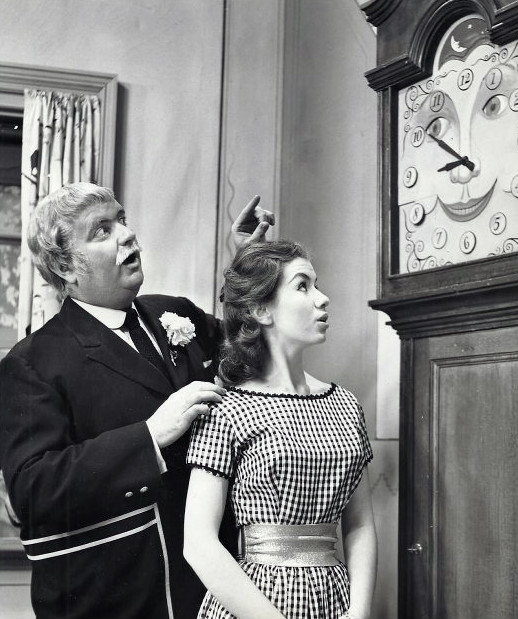
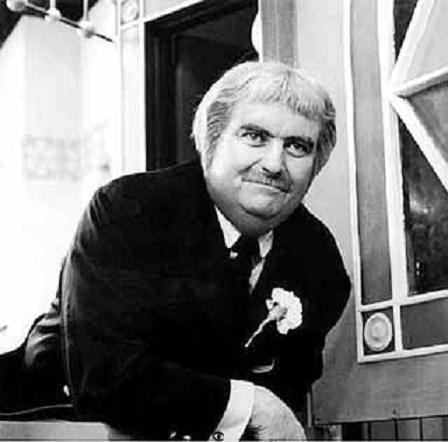
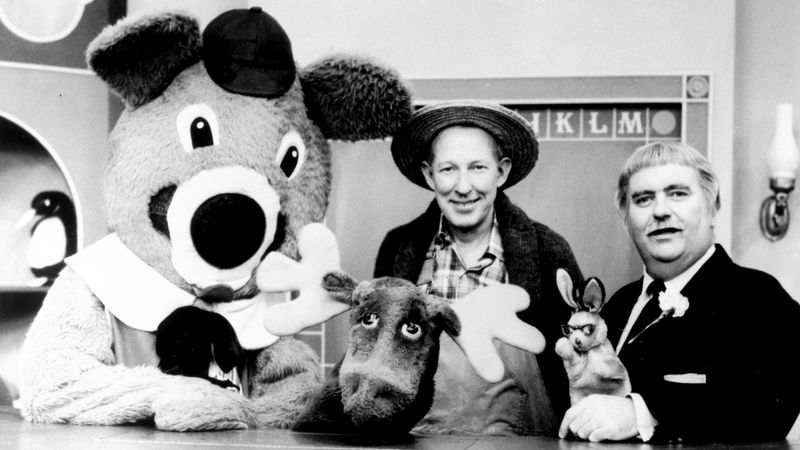
In some Kohler and American Standard ads, they like showing all of us just how many ping-pong balls you can flush down their latest 1.28gpf (gallons per flush) toilet.  That would have gone over big in Captain Kangaroo’s Treasure House where ping-pong balls were popular with Bunny Rabbit, who liked raining ping-pong balls on The Captain, making kids laugh hysterically from coast-to-coast.  The best to you each morning—right after a nutritious Kellogg’s breakfast. 

Right, Kids? 

The high-end American Standard Luxor Quiet-Flush low-rise squatty potty.

Why do some low-flush modern hoppers have such an efficient flush with good bowl rinse while others just horribly lack?  You have to flush the darned things twice.

How am I saving water flushing a 1.28gpf toilet twice? 

Kohler’s classic monster mash budget “Bolton” toilet was a simple reverse trap design found in thousands of homes, apartments, and businesses when we were kids.  You could flush a grapefruit down the Bolton with its huge 2 5/8-inch trapway and five gallons of water. The darned thing was a beast. Washdown toilets, with their traps toward the front of the bowl, were outlawed in the United States in the mid-1960s because fecal material would stick to the front of the bowl. It was unsanitary for there to be remaining poop stuck to the bowl.

I get that…    

Low Rise “Quiet-Flush” high-end toilets, by contrast, have never employed a great flush.  Their flushes are sluggish and quite lame considering what the wealthy pay for them.  American Standard’s Luxor “squatty-potty” is one example.

The best toilets were inefficient and consumed large sums of water, however, you didn’t have to flush them twice.  I see them for sale in the online auctions all the time.  Old school American Standard “Cadet” and “Compact” toilets of the fifties and sixties were attractive and they were thorough. The Kohler Wellworth and Eljer Orlando were also good examples.

As a child, the deal breaker for me with toilets was the “creepy” factor.  Did a toilet give me the creeps or was it something I felt comfortable strapping to my backside? 

Sometimes, I just had to hold it until I got home.