Really Awful Sitcoms We’d Like To Forget

God save us from really awful sitcoms – experiments in primetime television gone bad – some so bad they were canceled before the annual springtime wrap-up. There were more really bad sitcoms than we have room for here – but always worthy of mention. When I think of really awful sitcoms, I think of one-season wonders like “It’s About Time” and “My Mother The Car.”

Both were about as absurd as it gets.

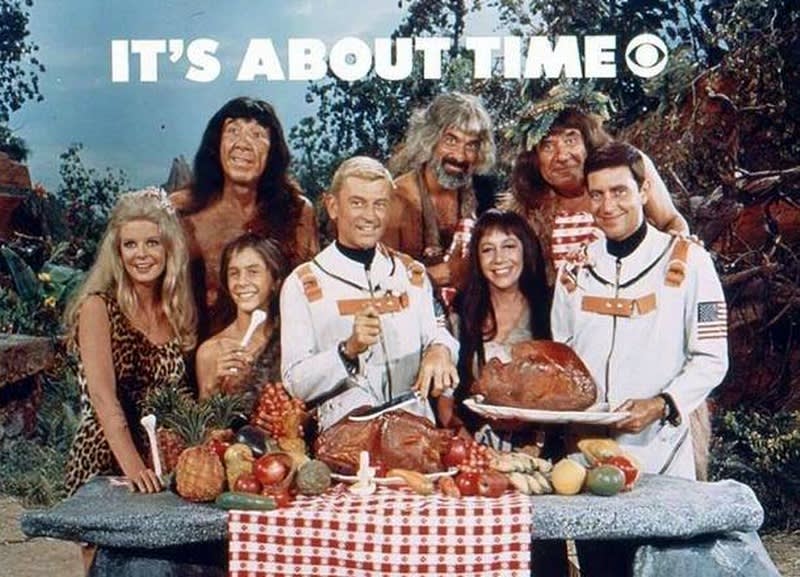
It’s About Time” was a wacky American sitcom that aired on CBS for a single season, consisting of 26 episodes in 1966–67. It got off to a good start in the ratings but quickly plummeted as the storylines became more ridiculous. Viewers quickly tired of two men in the strangest place.

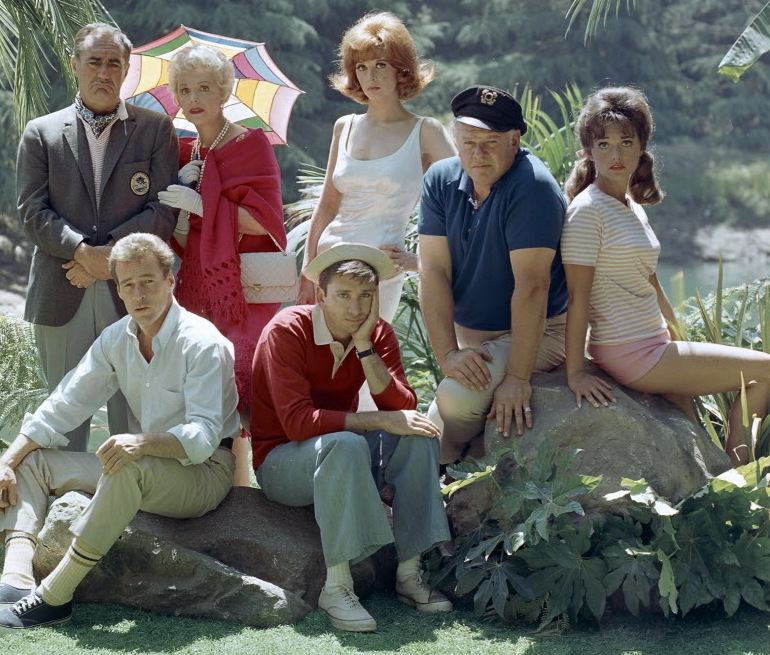
Sherwood Schwartz, who had a vivid imagination, created “It’s About Time…” who also birthed “Gilligan’s Island” and “The Brady Bunch.” As silly as the latter two sitcoms were, they were very successful and have a huge following even today. Boomers spend their retirements watching these shows, repeating every line word for word. We eat this stuff up regardless of how ridiculous it seems.

Sherwood Schwartz was a brain trust of wacky sitcoms, such as “Gilligan’s Island,” that boomers still follow today in retirement between pharm’ and life insurance commercials.

Early on, there was “Mister Ed” about a talking horse and buddy, Wilbur Post. Like many sitcoms, Mister Ed was a secret known only to one person. Ironically, Mister Ed aired for five seasons, an unheard of success story on CBS’ Filmways division, the same division that aired “The Beverly Hillbillies” sitcom, that ran from 1962-70. There’s no explaining what has made boomers obsess with these sitcoms aside from the memories they yield today.

Mister Ed show was derived from long before short stories from the 1930s written by author Walter R. Brooks, which conceived The Talking Horse in Liberty Magazine. Producer Arthur Lubin‘s secretary, Sonia Chernus, introduced Lubin to the Brooks stories, which wound up being the “Mister Ed” television series.

Lubin had a challenging time selling Mister Ed to the networks, which led him to syndication. It was the magic and humor of Alan Young that led Lubin to success with CBS. Mister Ed ran from 1961-66 – an incredible track record for something as silly as a talking horse. Someone would walk into the barn and ask who Wilbur was talking to – which was always an awkward moment for Post.

I suppose we’ve all had these moments where we’ve been talking to ourselves and been caught doing so, which makes it easy to relate to Wilbur’s conversations with Mister Ed, and someone would walk in, and Wilbur, red-faced, had to quickly pretend he was singing or reciting a speech.

How Did We Get Here So Quickly?

I remember June of 1975 – free at last…

Or so I thought…

It was the last day of school in my senior year. I roared out the parking lot in my Mustang and headed off to the future. Graduation would be June 15th at Cole Field House at the University of Maryland in College Park. Mid-June would prove to be hot and humid, and Cole Field House was not air-conditioned in those days. I was sweaty and we all were miserable. We were in our caps and gowns in a very regimented environment and there were more than 900 of us. It would prove to be a long day.

WTOP (WUSA) News Anchor, Gordon Peterson, spoke at our graduation, offering inspiring words most of us probably never heard. We were eager to get our diplomas and get out of the heat. Although it seemed a very liberating time, it was but the beginning of the rigors of adult life. Each of us had a lot to learn.

I sure did…

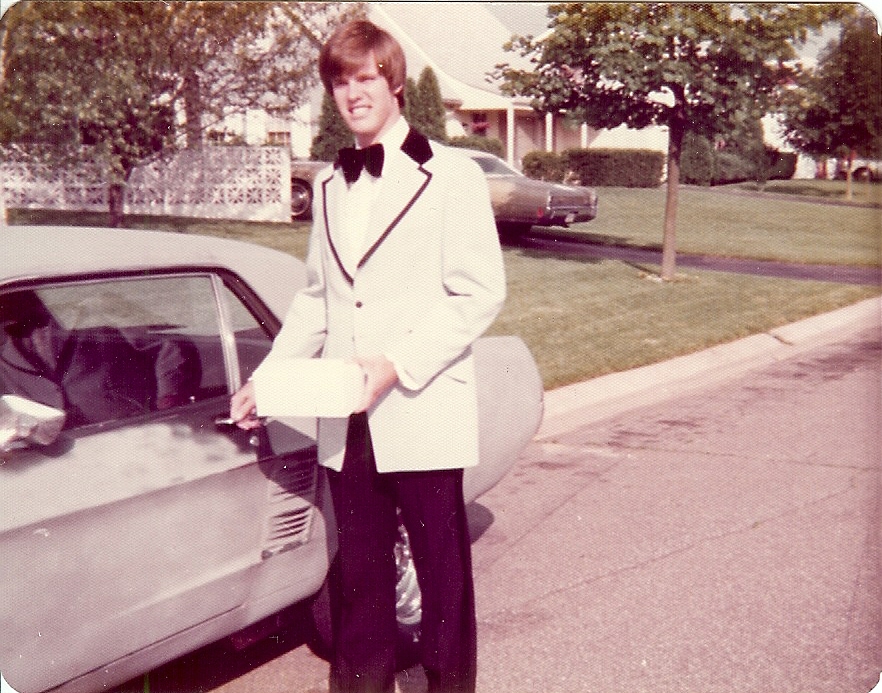
Headed to my Senior Prom in 1974…

Had I been able to see the future, I would have been terrified and paralyzed as a result. God doesn’t allow us to see the future. Seems unfair now doesn’t it. However, had we been able to see the future, we would have done something even stupider. At 19, I thought I had become a man. In the eyes of the law, sure… In reality, not a chance. There were plenty of mistakes and foolishness ahead at the University of Hard Knocks. There would be job losses, failed marriages, kids, car crashes, illnesses, losses, and a few things I haven’t thought of that it would be best to forget.

There are also the blessings, no matter how small, we should embrace and treasure, though we tend to forget to do that in the chaos of daily life.

So here we are at the other end of life, which seemed way off in the future some 50-60 years ago, wondering how to live out the rest of our lives. Maybe you are right where you want to be, surrounded by the love of family and friends. If you are like most of us, you have your share of regrets. Opportunities missed. Friends who are gone that you wish you’d spent more time with. Maybe you’re fighting health issues, wishing you were younger – wondering what it would feel like if you were 21 again.

Mankind has been humming the same tune for generations – oh to be young again. It’s the same old saw – searching for the elusive fountain of youth. All that said, I will say this – I am okay where I am in life. I’ve had a good run and enjoyed the love of family and friends – in fact, more than I’ve had a right to have. I’ve been butt stupid and have left my share of rubble in the rear-view mirror. Thoughtless and selfish would be an even better way to describe it. I could elaborate, but why?

All we have is our memories of our pasts and a vision of what we’d like our future to be. So, what about that? Unless you are facing a terminal illness, with very little time left, carve out your dream for the future and endeavor to work a plan. Doesn’t have to be all at once – but in baby steps toward the goal.

I’ve always viewed Life as a book with chapters – with each symbolic of a moment in time. Some good. Some not so good. Best we look at Life that way. As we head into the twilight, it is best to bask in the good memories and do our best to abandon the bad. The present is all we have. Best to live in the moment.

Saluting A Genuine American Hero

What is it about Ohio and NASA astronauts? The Buckeye State has spawned its share of great aerospace pioneers – super heroes who’ve left the surly bonds of Earth and ventured into the heavens while those of us void of courage have sat on the sofa in front of our televisions and marveled at the testosterone.

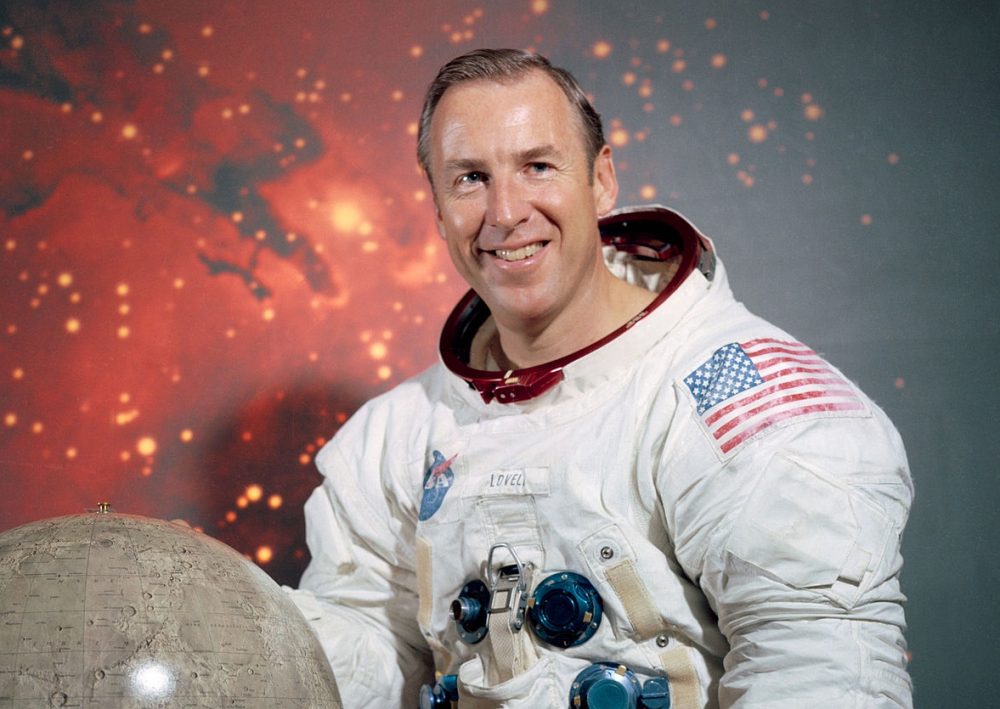
Ohio really is the heart of it all – with a plethora of hard-core aviators who’ve wanted to venture into space – John Glenn, Neil Armstrong, Judy Resnick, Gregory H. Johnson, Donald A. Thompson, Mary Ellen Weber, Nancy J. Currie-Gregg, Sunita Williams, Terrence T. Henricks, Donn F. Eisele, Kathryn D. Sullivan, Robert F. Overmyer, Thomas J, Hennen, Robert M. Sega, Michael T. Good, Michael L. Gernhardt, Mark M. Brown, Kenneth D. Cameron, Ronald Parise, Charles Bassett, Michael Foreman – and astronaut Jim Lovell who commanded Gemini and Apollo missions throughout the 1960s. Lovell was selected in 1962 from a second prestige group of select astronauts who would pilot the Gemini and Apollo missions.

Jim Lovell was chosen from a second grouping of astronauts who entered the qualification process to be among the first astronauts to go into space. A three-person panel of Mercury Seven astronauts, Alan Shepard, Deke Slayton, and one NASA test pilot, Warren J. North scaled the group down to 32 astronauts who were recruited for extensive medical exams that would determine who made the cut. Lovell was one of them. He would go on to pilot Gemini and Apollo missions on our journey to the lunar surface. It was a lofty goal that had to be met.

Who can forget Apollo 8 on Christmas Eve 1968 with astronauts Jim Lovell, Frank Borman, and Bill Anders. Apollo 8 was the first manned spacecraft ever to leave the Earth’s gravitational pull – the first to leave Earth orbit. With that journey was the risk they might never return to Earth. It was time for a bit of reflection.

A very real moment began with Anders with words from the Book of Genesis:

“In the beginning God created the heaven and the earth.
And the earth was without form, and void; and darkness was upon the face of the deep. And the Spirit of God moved upon the face of the waters.
And God said, Let there be light: and there was light.
And God saw the light, that it was good: and God divided the light from the darkness.

Lovell ran with:

And God called the light Day, and the darkness he called Night. And the evening and the morning were the first day.
And God said, Let there be a firmament in the midst of the waters, and let it divide the waters from the waters.
And God made the firmament and divided the waters which were under the firmament from the waters which were above the firmament: and it was so.
And God called the firmament Heaven. And the evening and the morning were the second day.

Lovell handed it off to Borman:

And God said, Let the waters under the heaven be gathered together unto one place, and let the dry land appear: and it was so.
And God called the dry land Earth; and the gathering together of the waters called he Seas: and God saw that it was good.

And from the crew of Apollo 8, we close with good night, good luck, a Merry Christmas – and God bless all of you, all of you on the good Earth.

Billions watched in awe around the world because it was something that had never been done before – and Lovell was there to live the experience…in space. Ohio-born Jim Lovell was admired by millions for his accomplishments in the U.S. Navy and with NASA away from the Earth. He passed on August 7, 2025 at age 97 and will forever be missed and long recognized for what he did for the space program, the United States, and humanity.


Why We Still Watch The Beaver

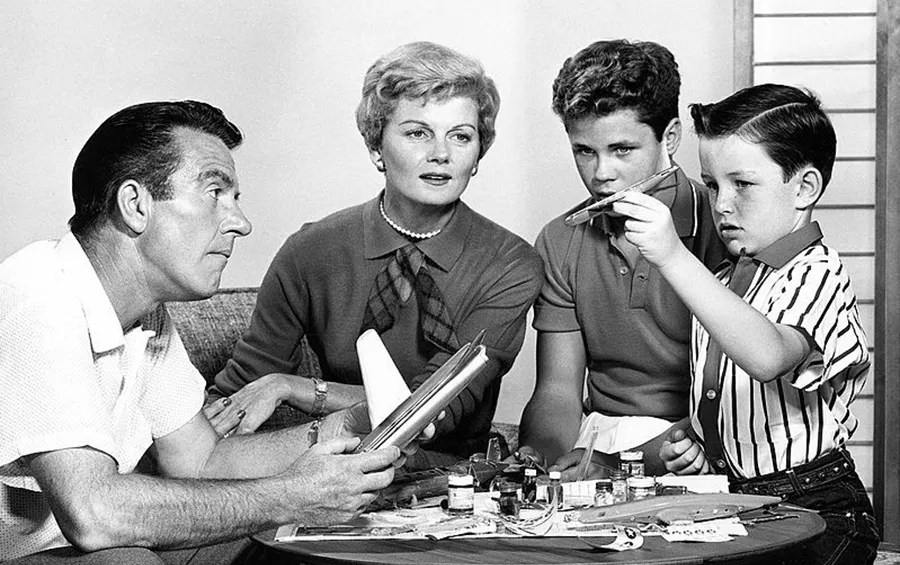
What is it about Leave It To Beaver that keeps us tuning in year after year? I’ve been on a “Beaver” binge for weeks now, beginning with Season 1, Episode 1. I watch when I am bored and as I fall asleep at night. There’s something comforting about listening to Beaver when I am dozing off. It is also comforting to Beave’ binge as I nibble on a slice of pizza as an escape from the troubling news of our times.

I turn the News off and switch The Beaver on.

Those early episodes in 1957 began with a Hugh Beaumont narrative establishing the storyline. It set the stage for what Leave It To Beaver was and would be. These tiresome narratives ended after the first season. The first two seasons were shot on the backlot and in the sound stages of Republic Studios and wound up at Universal for seasons three through five.

I never cared much for the Cleaver house those first two seasons, but there was certainly something familiar about the neighborhood, which had turned up in untold movies and television shows, including My Three Sons.

Leave It to Beaver offered a moral to every story – perhaps as an important message for kids and parents alike. There were times when Ward learned a lesson from his own misunderstanding of a situation with Beaver, much as Sheriff Andy Taylor did with son Opie at times. Each parent misjudged their kid, donning a slice of humble pie when they realized the error of their judgment. I can relate to that one. I cannot count the number of times I’ve blamed our son for things he didn’t do, naturally assuming he’d done it, only to discover I’d done it myself.

Sigh…

Like a lot of us when we were kids, Beaver was always influenced by his closest friends. Troubles began with Larry Mondelo, who always managed to talk The Beave’ into doing what he was instructed never to do. No matter how much the two tried to cover up the misdeed, they always managed to get caught.

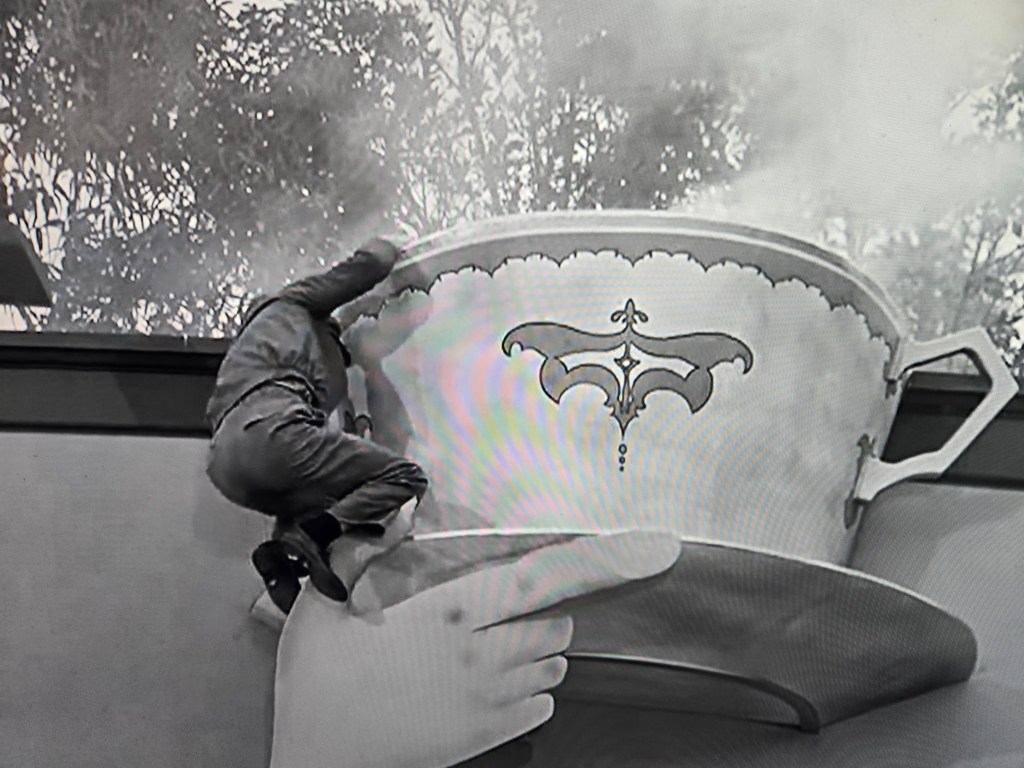
Then came Gilbert, Whitey, and Richard, who always managed to lead Beaver down an ill-gotten path. Easily the most memorable moment was the soup bowl billboard where Beaver and Whitey wondered if the bowl was actually filled with soup. With Whitey’s encouragement, Beaver climbed up there and fell in, discovering the bowl was nothing more than a prop with a smoke machine inside. The fire department came and there was no way to hide Beaver’s foolishness. The Zesto Soup billboard episode was the most expensive episode of Beaver ever done at $40,000.

Another moment was Ward’s autographed baseball Larry managed to talk Beaver into having a catch with. Larry aggressively threw the ball, which headed into the street and was run over by a garbage truck.

Leave It To Beaver is a reminder of our own childhoods and the times in which we lived and came of age. We watched Wally and The Beaver grow up on our television screens in an imaginary place called Mayfield. With the sweet combination of writing and direction under the supervision of producers Joe Connelly and Bob Mosher and a great creative team, they managed to make Mayfield a believable place, with realistic storylines and hilarious moments we could all relate to.

The Monkees – Boy Band Invented

“The Monkees” – a fictional rock band series that aired on NBC for two seasons from 1966-68 – was a short-lived, yet very successful look at the youth-crazed, fan-based phenomenon. My sister had it bad for Davy Jones – with posters all over the bedroom and a “must-see” demeanor on Monday nights.

The timing could not have been better for NBC and Screen Gems.

The Monkees debuted on a Monday night, September 12, 1966, as part of NBC’s fall lineup. It followed the wacky adventures of a struggling rock band in pursuit of fame and fortune. The series managed to take two Emmy Awards in 1967, including “Outstanding Comedy Series.” I personally believe drummer and singer Micky Dolenz was the funniest with his gift of wit and charm.

It can be safely said The Monkees invented the music video made popular by MTV beginning in the 1980s, which remains a hot spot to this day. Although The Monkees was canceled after just two seasons, it enjoyed great success in syndication on both CBS and ABC, along with a rebirth more recently as Monkees band members have passed on one by one. The only surviving band member is Micky Dolenz.

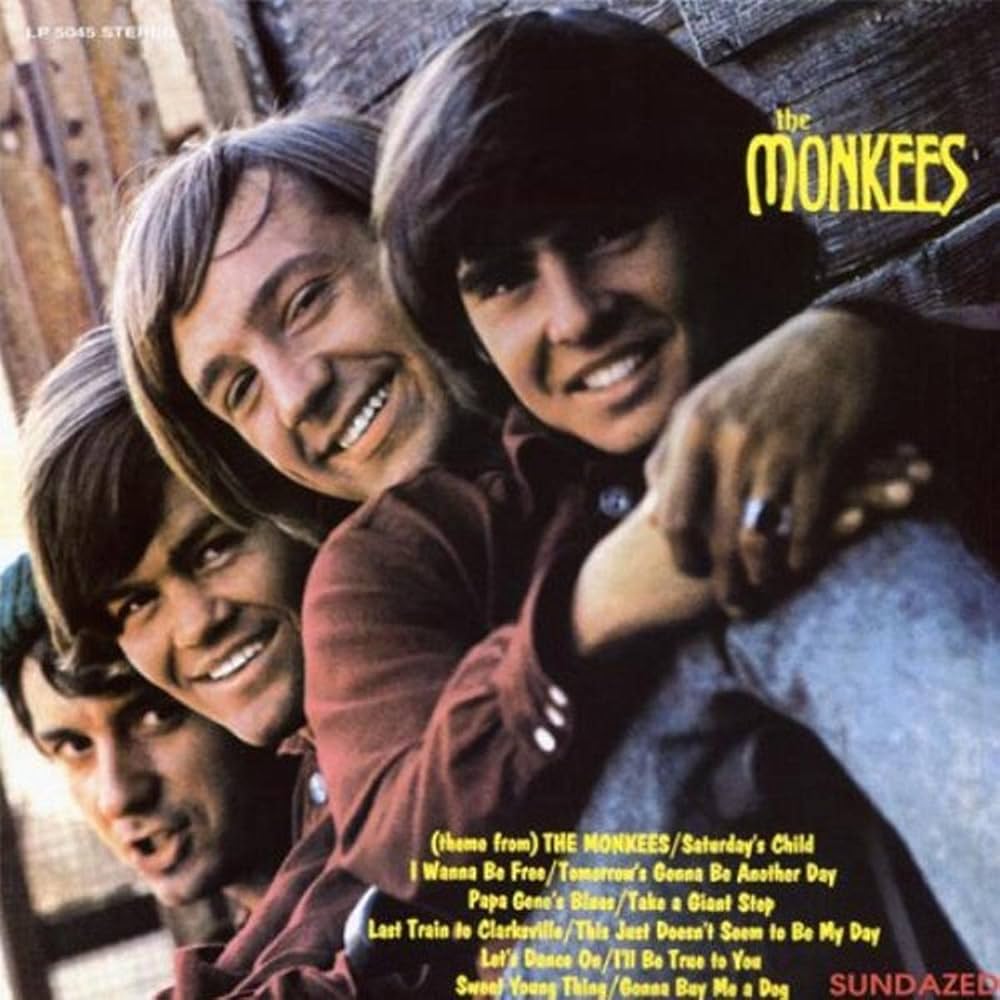
The Monkees debut record album on the Colgems label in 1966.

The Monkees was born of filmmakers Bob Rafelson and Bert Schneider of Raybert Productions, who observed the great success of The Beatles films and believed they had a winning idea – yet there was virtually no interest from Hollywood. Raybert pitched the idea successfully to Columbia Pictures’ Screen Gems division in 1965. Word hit the streets – and hundreds of promising (and not so promising) actors/singers showed up to try out for four prime time television parts.

Micky Dolenz, whose father was actor George Dolenz, had child acting experience. Davy Jones, who ironically was a former jockey, had enjoyed some success as an actor in his native Britain. Long, tall Texan Michael Nesmith, whose mother invented Liquid Paper, tried out for one of the four parts. These four gentlemen were clear winners – especially if you’ve ever seen the screen tests. They had a natural chemistry and had impeccable timing.

It has been said Nesmith arrived at the audition with a laundry bag in hand. His wool hat, which was his trademark, kept hair out of his eyes while riding his motorcycle. Native Washingtonian (D.C.), Peter Tork, was a natural for his part. He had acting and singing ability. He was a born cutup.

Making The Monkees a huge success was never easy. It needed natural improv, quick cuts, and smooth, easy narratives. Every episode had at least one music video, which made it appealing to young people. Each Monkees actor played themselves, with good creative influence from director James Frawley (not related to William Frawley).

The Monkees was a terrific Monday night escape from life, regardless of how old you were. We watched with great consistency, as did our parents. It became a family ritual for two seasons while dining on Swanson TV dinners.

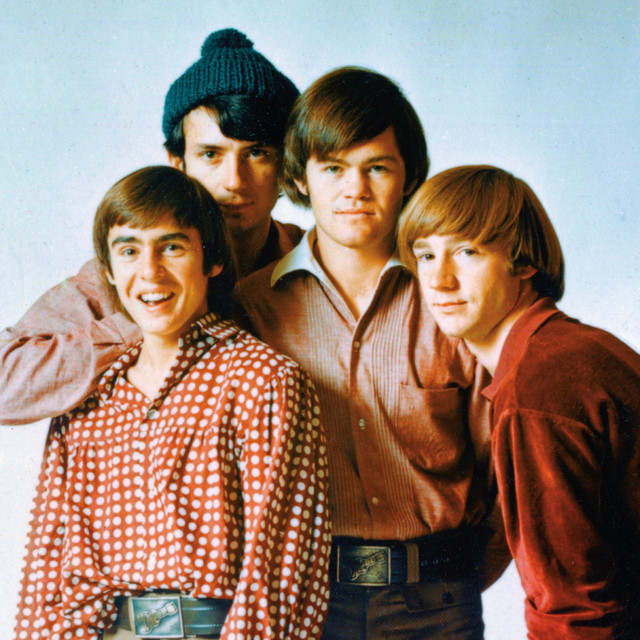
The Monkees” years back – from left Mike Nesmith, Mickey Dolenz, Peter Tork, and Davy Jones. All are gone now except Mickey, who continues to make fans laugh some 60 years later.

The Remarkable Herb Alpert

It was a crisp autumn afternoon in my native Maryland. With the rustle of leaves, we arrived home from a shopping trip as the holidays approached. My mother placed a new vinyl record album onto the turntable, featuring a refreshing sound known as “Latin Jazz” by Herb Alpert and The Tijuana Brass (TJB).

In an entertainment venue dominated by popular vocalists such as Andy Williams, Johnny Mathis, Tony Bennett, Matt Monroe, and Frank Sinatra, a fresh and exciting sound emerged from a young man from East Los Angeles, accompanied by musical talent that rocked the entertainment world.

Together, they were inspiring. They made us lust for more.

Herb Alpert teamed up with the late Jerry Moss to conceive A&M Records in 1962, located in the old Charles Chaplin Studios on Le Brea Boulevard in Hollywood, California. Together, they created a recording phenomenon to be reckoned with. Alpert and Moss (A&M) struck a deal with a handshake and a verbal agreement. That’s all they needed. They never had a signed contract but instead became brothers in arms in the decades to follow. It was a business relationship and friendship built on trust. They never wavered from their commitment.

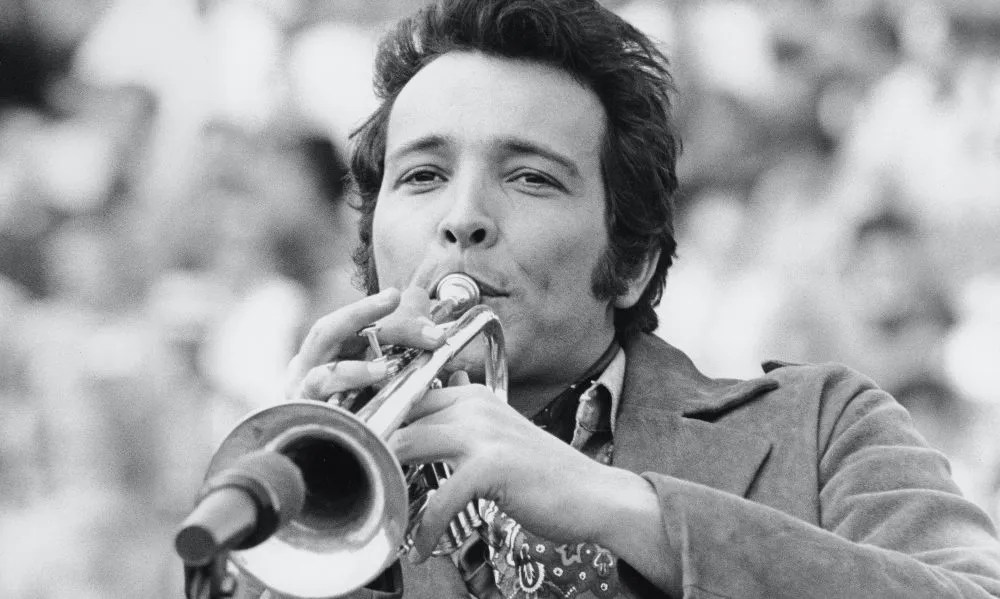
I was just 10 that Saturday afternoon when my mother put the TJB’s “What Now My Love” album on a World War II vintage console photograph. “What Now My Love” was not Alpert’s first recording effort, but only his latest. His work inspired me to play the trumpet. I would listen to his work and try to emulate it on my Bundy trumpet, which to the discontent of my family. That passion for trumpet playing would surrender to a love of automobiles in the 1970s.

That didn’t minimize my love for the TJB.

Herb Alpert’s success was equal to his passion for music. In his career spanning 60 years, he has recorded 28 albums that have appeared on the U.S. Billboard 200 chart of which five have reached Number 1 status. Add to those 14 platinum albums and 15 gold awards. What’s more, Alpert is the sole musician ever to have reached Number 1 on the U.S. Billboard Hot 100 as both a vocalist and an instrumentalist.

He could sing too…

Wikipedia tells us Alpert has sold an estimated 72 million albums worldwide, which includes a Tony Award and eight Grammy Awards. The list of great achievements goes on – including a Grammy Lifetime Achievement Award, Rock & Roll Hall of Fame, and the National Medal of Arts Award from President Barack Obama.

Herb Alpert was born in the Boyle Heights part of East Los Angeles. His parents were Jewish immigrants from Ukraine and Romania (then Radomyshl). His father was a tailor and a mandolin player. His mother, also a musician, taught violin. His older brother, David, was a drummer. He had an older sister, Mimi, who played piano.

At age eight, Alpert applied his breath and lips to the trumpet. By 10th grade, he was well on his way to stardom. When he entered college at USC, he joined the Trojan Marching Band, followed by a stint in the U.S. Army in the 6th Army Band.

At the cusp of the 1960s, Alpert launched his recording career with RCA Records as Dore Alpert. Herb Alpert and Jerry Moss swiftly launched A&M Records to create a recording empire, and the rest is history.

Alpert’s Tijuana Brass was born of a bullfight he attended in Tijuana, Mexico, which inspired the TJB. He heard the crowd roar along with traditional Mariachi music, and it clicked. That experience inspired a musical phenomenon.

That first TJB album, “The Lonely Bull,” spawned decades of great music. A hallmark of Alpert’s style was “overdubbing,” where he accompanied himself slightly off key. “The Lonely Bull” immediately hit Number 6 on the Billboard chart.

“The Lonely Bull” paved the way to “Whipped Cream & Other Delights,” which became Number 1 in 1966. “Going Places” and “What Now My Love” followed. Alpert’s work could be heard everywhere. You couldn’t walk through a shopping center or a medical building and not hear the TJB.

Turn on any number of game shows or TV commercials and you’d hear the TJB. Even “The Brady Bunch” had moments of the TJB, which accompanied composer Frank De Vol’s composing and conducting efforts.

The pressure of Alpert’s own success led to something of a breakdown in 1969 when he had to take a break from music and disband the TJB. He decided to reach out to Carmine Caruso, a music teacher who had never played a trumpet. He would come to find that the real energy in the trumpet was his own skills and passion.

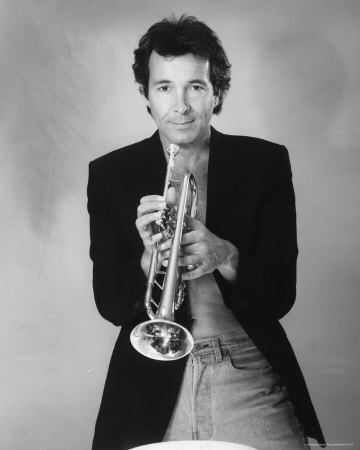
He returned to the trumpet in the 1970s and has been playing successfully ever since. He was just too good to flounder and fade away. Alpert returned to the spotlight at the cusp of the 1980s with “Rise,” which hit Number 1 on the Billboard charts. His success and notoriety led to a succession of hits in the years to follow, including “Steppin’ Out” in 2013. He and his wife, singer Lani Hall, have been entertaining audiences around the globe in the years since.

To see them live is soul stirring.

In 2024, Alpert formed a new Tijuana Brass and has been performing in 2025. Known as “Herb Alpert & the Tijuana Brass & Other Delights,” they have been delighting audiences from coast to coast.

At age 90 this year, Alpert and his wife Lani of 50+ years, continue to amaze.

From Dope & Fabric to The Jet Age!

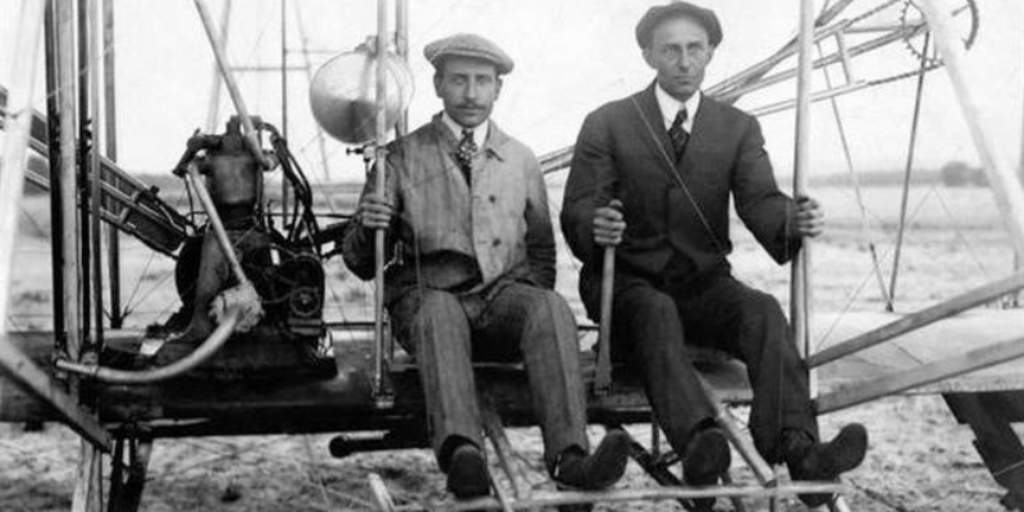
It is remarkable how mankind evolved from the Wright Brothers’ first flight in 1903 with their dope and fabric fixed-wing “Wright Flyer” biplane to jet travel across the Atlantic in less than 60 years.

Taking to the skies took raw guts and vision, followed by the desire to go farther and farther. Those with a fear of heights need not apply. Man has never been content with the here and now. We’ve always had great wanderlust, seeking to know what’s out there, whether it was the “New World” of the North American continent an ocean away, the surface of the Moon, or the vast expanse of the cosmos.

Next stop – Mars.

Our mantra has always been “Road Trip!!!”

The desire to fly was nothing new in 1903. Man had wanted to fly for centuries – doing what the birds did. I am pretty sure the Wright Brothers weren’t the very first aviators to take to the skies – only the latest. Because man didn’t completely understand flight, it took a while to get a controllable craft into the air.

The Wright Brothers worked feverishly on a flying machine for years before the Wright Flyer took to the skies on the Carolina coast. On December 17, 1903, the Wright Flyer became airborne, flying a short distance and claiming its place in the aeronautical history books.

My grandfather, Lt. Paul W. Proctor, a White House policeman and native Washingtonian, walked over to Ft. Myer, Virginia as a young man to see the Wright Flyer, which was a remarkable sight for his time, considering no one had ever really flown a fixed wing craft when he was born in 1894. He wouldn’t live to see a man on the Moon – however, he lived to see the Jet Age before he passed in 1966.

My grandmother – born in 1892 – lived to see Neil Armstrong and Buzz Aldrin step onto the lunar surface. She lived to see all of the Apollo missions before these NASA missions before she passed in 1976.

The Wright Brothers – Orville and Wilbur – in their homebuilt Wright Flyer.

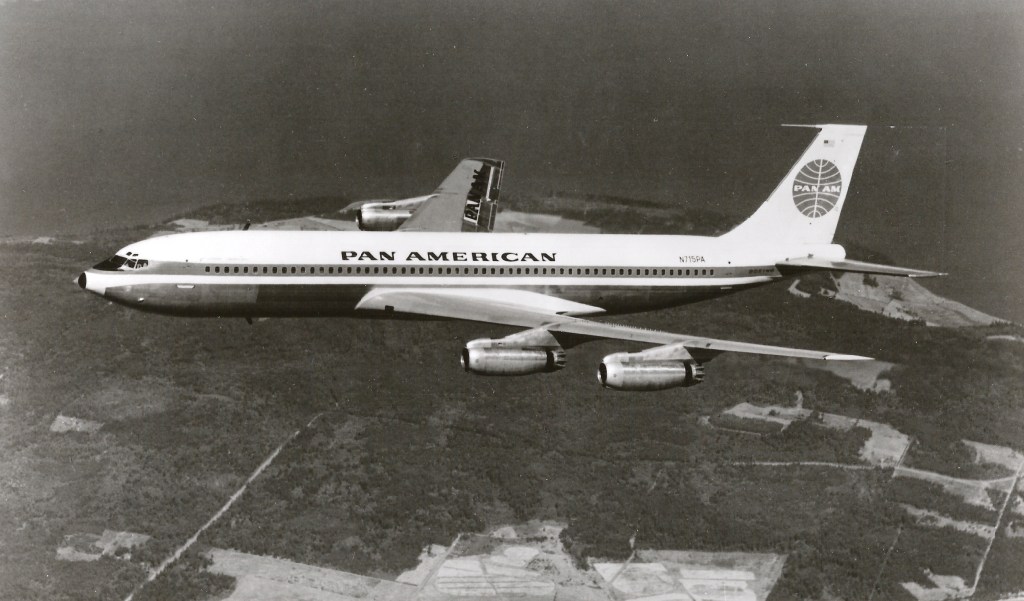
Pan American World Airways, one of many great aviation pioneers, had the audacity of vision. What began as a modest effort by two U.S. Army Air Corps majors to get air mail between Key West and Havana grew into a world-class commercial airline.

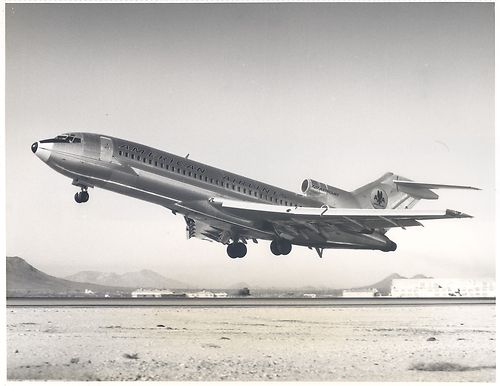
In the 1930s under the leadership of legendary Juan Trippe, Pan Am experienced phenomenal growth, crossing the oceans and hemispheres. Trippe’s vision connected the world, first with the Boeing flying boats known as “Clippers” then ultimately enormous Douglas piston liners, then jet travel in the 1950s. Trippe launched Pan Am’s own jet age with orders for Douglas DC-8s and Boeing 707s. Trippe ultimately chose the 707 for his massive growth plan, selling most of the DC-8s to United.

Pan American took airline travel to a stratospheric level of service with a seasoned professional staff with high standards and the best of amenities, with real “pie-in-the-sky” service. By the 1970s, Pan Am had transported 11 million passengers to 86 countries on all the world’s continents with the exception being Antarctica. Trippe’s goal was supersonic transportation to anywhere in the world. Increasing concern for the environment and Boeing’s increasing interest in volume market subsonic wide-body jet service sidelined Trippe’s plan, which also included space travel.

Any time Boeing Chairman Bill Allen heard from Trippe, it had to have put Allen on a diet of anxiety medication because he understood what hearing from Trippe meant. Trippe didn’t just dream – he dreamed big. At the cusp of the 1950s, Trippe wanted jets. Allen bet the entire worth of Boeing to develop the Jet Demonstrator – the 367-80, a four-engine jet transport known as the Boeing 707. Boeing used the “367-80” for its 707 designation to keep the jet demonstrator a secret.

Pan American launched Boeing 707 jet service across the Atlantic, the vast Pacific, and to South America as the 1960s unfolded, becoming “The World’s Most Experienced Airline,” and so it went.

Pan Am to the world.

A decade later, Trippe summoned Bill Allen for drinks and dinner. He advised Allen he wanted a really big plane with a capacity of 450 passengers that would cross oceans and do it great numbers. He also wanted it right away. Allen returned to Boeing with a plan he presented to Boeing product planners, engineers, and workers. These seasoned Boeing professionals became known as “The Incredibles.”

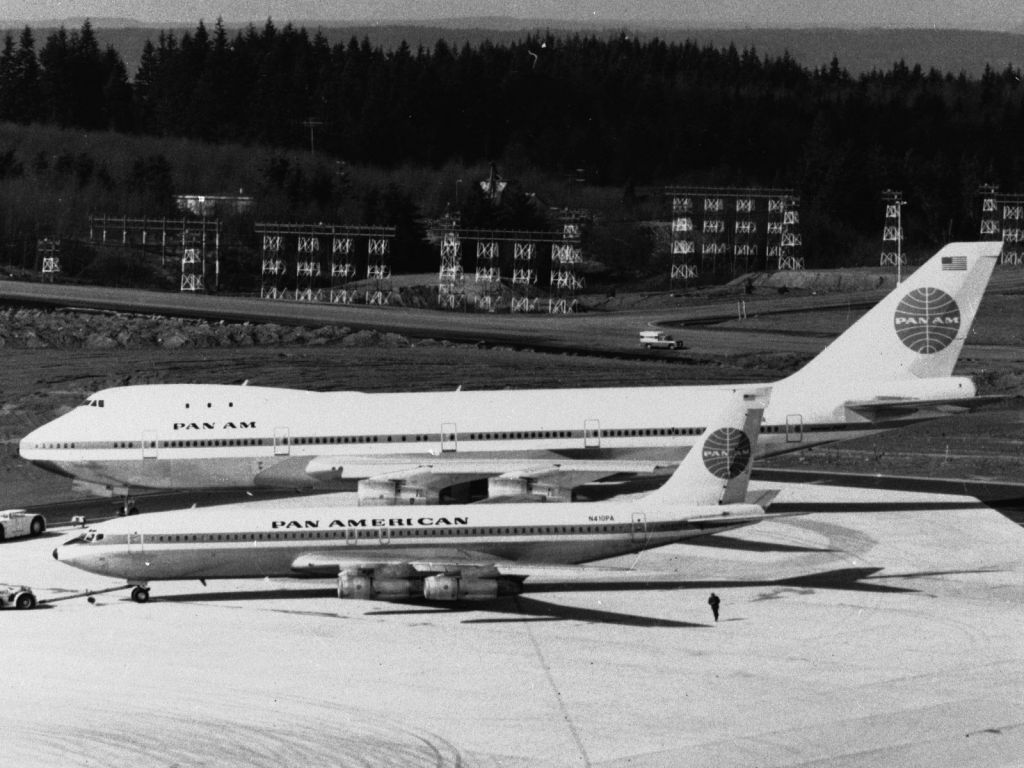
Boeing acquired massive acreage northeast of Seattle, Washington, at Everett and erected the largest building in the world under one roof to build its new double-decker, twin aisle, jumbo jet 747. The 747 prototype, Ship 1, was assembled in a building that was not yet completed.

Boeing’s new 747 “Jumbo Jet” alongside the Jet Clipper 707.

Pan American made the world smaller with its fleet of 707 and 747 jets. It merged with National Airlines in 1980, picking up National’s domestic routes to feed its international route map. It seemed the perfect marriage.

Time was not kind to Pan Am despite the National Airlines merger. Airline deregulation, coupled with the tragic Christmastime bombing of Pan Am 103 over Lockerbie, Scotland, doomed Pan Am to extinction in 1991. It could not overcome the financial losses. However, Pan Am paved the way to a smaller world and travel we could have only dreamed of 100 years ago.

The Lure Of The American Highway

American culture is best exemplified by the lure of the road – that wanderlust that inspires us to get behind the wheel. And – what a great place to wander. There isn’t one part of America that doesn’t inspire – well, maybe – there are some places that are just no place to be.

I believe there was a song from the late 1970s with the lyrics “Augusta, Georgia is just no place to be…” which doesn’t speak well of this Georgia peach though I think the songwriter didn’t quite mean it that way. I believe they closed their eyes and pointed at a map – or got a speeding ticket in Augusta and spent a night in jail.

When we were young, we had the energy and passion for travel. We were going to get the hell out of Dodge one way or the other and see the world. Gordon Lightfoot’s “Carefree Highway” presents this in music –

Carefree highway
Let me slip away on you
Carefree highway
You’ve seen better days
The morning after blues
From my head down to my shoes
Carefree highway
Let me slip away, slip away on you

The fictional “Carefree Highway” was, in essence, a metaphor – an escape – from the emotional pain of a lost love, a shattered dream, and leaving one’s discontent behind. The American highway was a means to escape – to slip away – with no idea where it would take you. It could also be considered the highway of hope.

People from around the world have aspired to come to America to see our vastness. We have some of the most incredible National Parks in the world. I’ve stood on the Southern rim of the Grand Canyon, and I’ve marveled at Monument Valley. Colorado and Wyoming offer a wealth of places that only the Rocky Mountains can offer.

I have been to Yellowstone and watched “Old Faithful” erupt, and I have stood on both coasts and watched both the sunrise and the sunset. I’ve driven out of Idaho west of Boise into Washington, heading toward the Tri-Cities, and been stunned at what I could see coming out of the mountains of Eastern Washington.

As mundane as the Midwest seems to a lot of people, it remains my most favorite place in the entire world. You can stand in Eastern Kansas and Nebraska and look across the flat lands as the sun sets and the storms coming. The Great Plains say so much because they are such an authentic part of America. The Great Plains yield a vastness unequaled.

There’s nothing quite like coming out of the high plains of Eastern Colorado and Western Kansas and being able to see for at least 100 miles to the horizon. Watching thunderstorms pop up on the horizon inspires us to observe the wonder of nature and the power of lightning.

There was a time when Americans didn’t have the wherewithal to travel great distances and have remained in their hometowns – never leaving the county. And would you believe I still know people who have never left where they grew up? They have never traveled and never had a desire to leave where they have been all of their lives. I cannot relate to how that must feel.

I’ve been in 49 out of 50 states. Thus far, North Dakota has had to do without me.

Soul Stirring Harry Chapin

When I was coming of age in the 1970s, a voice I so loved and still remember today is the late great vocalist Harry Chapin. His word invoked tears – humbling, sad – yet inspiring. You could call Chapin a beautiful soul. He was a singer, songwriter, a philanthropist, and a hunger activist. His work began to shine in the 1970s when a lot of us were coming of age. His words – his voice – moved us to tears.

Especially moving was a summer day in 1981 when we learned he was killed – rear-ended by a semi-truck when he was stopped on the Long Island Expressway. Concerned for his safety, he had turned on the emergency flashers and made a fateful lane change. He was struck violently from behind and did not survive.

A nation – a society – was driven to tears.

Chapin brought us 11 albums in the 1970s and continued recording until he passed. Some 14 of his singles became hits – with “Taxi” and “Cat’s In The Cradle” topping the charts. Soul-stirring music we listen to even today.

We listen. We cry.

Harry was a remarkable performer – yet he was so much more. He fought tirelessly to end world hunger – creating the Presidential Commission to end World Hunger back in 1977 – and was awarded the Congressional Gold Medal for his efforts. Most of his travels were efforts to end world hunger.

Chapin was a native New Yorker from Brooklyn Heights who came from a family of musicians. He began performing with his siblings and his father in his teens. He went on to achieve greater levels of education in the years to follow. It is my belief Chapin endlessly pursued efforts to make the world a better place.

As the 1970s unfolded, Chapin found himself in great demand – signing a multi-million deal with Elektra Records, which was considered one of the greatest recording deals of his time. His albums and singles rocked the charts with “Taxi” as a 25 Billboard Hot 100. Chpain became a force to be reckoned with worldwide. It is said top radio personality Jim Connors promoted this song, which kept it high in the charts for some 16 weeks.

When Chapin appeared on The Tonight Show with Johnny Carson, the phones at NBC rang off the hook, inspiring the show’s producers to have him back for a second night in a row. His music career took flight.

Because “Taxi” sounded like a true story, Chapin was asked if it was based on truth, he said, “It is emotionally true, if not literally…” Apparently, Chapin was at a low spot in his career when he heard a former girlfriend had gotten married. She wanted to become an actress but instead got married and went in a different direction. That’s when he spun that story into “Taxi” about a guy driving a taxi in San Francisco who picked up his former girlfriend as a fare. The message in the lyrics was they had both sold out their dreams. She was going to become an actress, and he was going to learn to fly. That led to “How are you, Harry?” and “How are you, Sue?” Immortal words that remain with each of us to this day. It evokes a mental picture we just can’t shake.

Harry Chapin touched so many lives in his brief period of fame. The same can be said for the late Jim Croce with “Time In A Bottle.” Both men left such deep impressions on so many. Whenever I hear their words, I weep.

Behold The Sunrise – And Another Day…

Many of us over the age of 60 lament the onset of old age. We complain about health issues and everyday aches and pains that come with the turf. We joke about old age, yet under the surface, we are afraid of the inevitable – the end of life.

However, consider this – you are still here to witness the sunrise.

I am reminded every day of my blessings. Yet – decidedly bummed over dreams lost. I suspect a lot of us feel this way. We have our regrets and lost dreams. This doesn’t mean we haven’t lived. Our everyday experiences – the pleasures and the pain – mean we have lived and very much alive to feel. It doesn’t mean you’ve gotten what you’ve wanted. It means you’ve been here to experience.

The late John Lennon once sang the words, “Life is what happens to you while you’re busy making other plans…” made famous in 1981 with “Beautiful Boy” (Darling Boy) in 1981. He spoke the truth. Day-to-day life gets in the way.

I’ve always viewed life as a series of chapters – phases. Each phase has been a story. Some good. Some not so good. When we were young, life stretched out ahead of us, with old age way off in the future. Had I known what was ahead of me, it would have scared the hell out of me. Life had a lot more in store. It would prove a toughening-up process. I would be unemployed, divorced, and an overnight father – wondering how to feed my children. However, I was handed a blessing – fatherhood.

Tough times made me stronger. I became a more responsible person.

I’ve lived through and survived frightening stages in life where the pain was so bad, and I didn’t have a friend in the world. Betrayed. Beaten. Scared. Alone. There was a time when I didn’t think I would survive – and didn’t care if I did. I was lying on a bathroom floor in the dark, searching for a way out. I heard my infant son cry in the next room and understood with great certainty that my destiny was to care for my son – no matter what. There was no other option but to care for my family.

That was 37 years ago.

Here’s what I learned from living through the lowest point in memory. You’re stronger than you think. You will survive if you are determined to survive, and especially if you have others who depend on you.

Survival is best taken in baby steps. It has been said you cannot eat an entire elephant in one sitting. It is best taken in manageable bites. When you’re at rock bottom and overwhelmed, you don’t even know how you will find your way back.

Are you listening?

Plan your work – and work your plan. Be prepared for missteps and poor judgment. You’re going to make mistakes and will probably have to work the plan all over again. Fake it until you make it – and then you will get it.

It is okay to flounder – but don’t make a habit of it. This is Earth School, not a dress rehearsal. We were born into this world to experience, learn, feel, and gain valuable knowledge for a higher purpose. We are not expected to understand that purpose.

The late great satirist, George Carlin, said we are part of a greater wisdom than we will ever understand. He couldn’t have been more correct. The man went through many ups and downs in his life. He was funny and entertaining. He stood back and took a broad brush look at humanity. However, Carlin was a humble man who took life seriously. He struggled with depression. He spoke of his wayward father with tears in his eyes and a lump in his throat.

The man who made us laugh understood pain.

If you are loved by someone – anyone – count your blessings. It means someone cares enough about you to feel love for you. You don’t need a huge circle of people – just one. Someone’s heart.

We do a lot of soul searching at this age. Is there still time to achieve our dreams and find happiness? When you are 60+, you begin thinking about your own mortality. Friends become ill and pass. Others die suddenly. These thoughts are nothing new. Mankind has been pondering its existence for thousands of years.

The joy of our advanced age is the wisdom and the good memories we have. We get together with friends and family in our age group and reflect on another day and time. We had our hopes and dreams – much as we still do today.