Paul Harvey…When We Listened

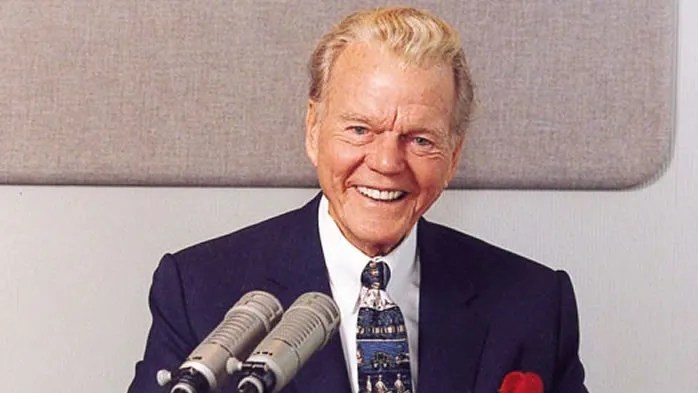
Although I am bound to get arguments on this one, I believe there has never been a better commentator than the late Paul Harvey. His powerful voice could be heard on radio and television from coast to coast for the better part of six decades.

We couldn’t wait to listen.

Harvey was a valuable source for workplace and living room discussions. His “News and Comment” broadcast on weekdays and Saturdays reached 24 million listeners on 1,200 radio stations from 1951 to 2008. His broadcasts were heard on 400 American Forces Networks radio stations aired to millions of service members. If that wasn’t enough and you didn’t have a radio, you could read his words in 300 newspapers across the land.

Tulsa, Oklahoma born Paul Harvey Aurandt arrived on the planet September 4, 1918 – born with a God-given voice for broadcasting. It got our attention. We just couldn’t stop listening – even when we didn’t agree with him. Harvey was a true conservative, yet he observed all sides of a story.

He never played sides.

“Stand By For News!” and “The Rest of The Story…”

Harvey’s interest in broadcasting began with building radio receivers as a young teen. One of his high school teachers was so inspired by his powerful voice that she suggested he pursue a career in broadcasting. His first job was building maintenance custodian at KVOO radio in his native Tulsa in 1933. He watched what good broadcasters did and honed his broadcasting skills accordingly. Harvey’s launch pad was filling in for broadcasters who couldn’t get to a microphone. He had a natural ability to speak with great clarity and perfect diction. He knew how to keep us hanging on his every word with the extended pregnant pause.

Harvey’s journey with KVOO continued while he was in college at the University of Tulsa. He became program director at KVOO before moving on to KFBI (later KFDI) in Wichita, with a broad reach across the vast prairie. Harvey’s career path became swift, landing him at KOMA in Oklahoma City, and later KXOK in St. Louis by the end of the 1930s. He learned the ropes of radio broadcasting at these stations where his mentors molded him for a lifetime of broadcasting.

As World War II unfolded in two theatres a world apart, Harvey found himself on Oahu in the Pacific in the wake of Japan’s attack on Pearl Harbor to cover news and events of the vast Pacific. Harvey enlisted in the United States Army, serving a short time in 1943-44 before getting a medical discharge and a return to civilian life.

Harvey’s post-war career took him to Chicago and WENR, an ABC radio affiliate. At WENR, he hosted “Jobs For G.I. Joe,” which was a valuable service for Veterans who had served, only to come out of the military to unemployment lines and no place to live. His voice was reassuring for those who were struggling with the culture shock of post-war life. Harvey’s “The Rest of The Story…” was a natural addition to news stories that required additional clarification.

Harvey remained with ABC Radio through the 1940s and ’50s, cutting his teeth as a respected broadcaster. Sometimes, opportunities arise where we never expected to find them. Harvey filled in for veteran broadcaster H.R. Baukhage’s daily news round-up. ABC immediately replaced him with Paul Harvey on the daily broadcast.

In April of 1951, ABC News changed Baukhage’s “Daily News Round-Up” broadcast name to “Paul Harvey News and Comment,” and the world of radio broadcasting changed overnight. Harvey found himself on television by November of the following year where he gained his momentum.

Harvey’s success would endure for decades. He continued without interruption until his passing in 2009. In later years, Harvey did his broadcasts with help from his son, Paul Harvey, Jr. Harvey began to suffer from health issues that kept his voice off the air intermittently in the 2000s.

ABC News, so inspired by the great success of Harvey’s broadcasts, signed a 10-year, $100 million contract to remain on its networks. When Harvey couldn’t regularly deliver broadcasts, he looked to credible people who could deliver his message – Senator Fred Thompson (also an actor), his son, Harvey, and other notable celebrities filled in when he couldn’t speak. When Harvey passed in 2009. ABC News canceled his program. No one could fill his enormous shoes.

It can be safely said Harvey was inspired by great broadcasters. He’d listen to radio and television news and molded his style after the best storytellers. His intoxicating style kept us all in front of the radio when radio’s time had long passed.

For The Love of Grandchildren

Boomers like to wax nostalgic about the good old days. We had our youth and dreamed of the future.

We didn’t have our grandchildren…

It isn’t often I like to write about my own life because few really want to hear about it. I’ve had good fortune. I have also lived through tough times where I never thought I’d make it. I was weak when I needed to be strong. Yet – I’ve grown stronger from tough times and used these experiences to help others. It feels good to be supportive of others through tough times so they may become stronger – knowing someone cared. Makes the heart happy.

Among my blessings are my children – all grown – and my grandchildren. I’ve navigated tough times with my grown children through effective communication and forgiveness, with forgiveness being a key component. I am also a late-in-life parent with an adopted son coming of age in high school. He arrived when I was 52.

I’ve never been a great father, but I’ve learned a lot from poor judgment and decisions I’d like a second shot at again. Hindsight is always 20/20. I have a lot to answer for – and yet my family stands by me to this day.

This is what love is.

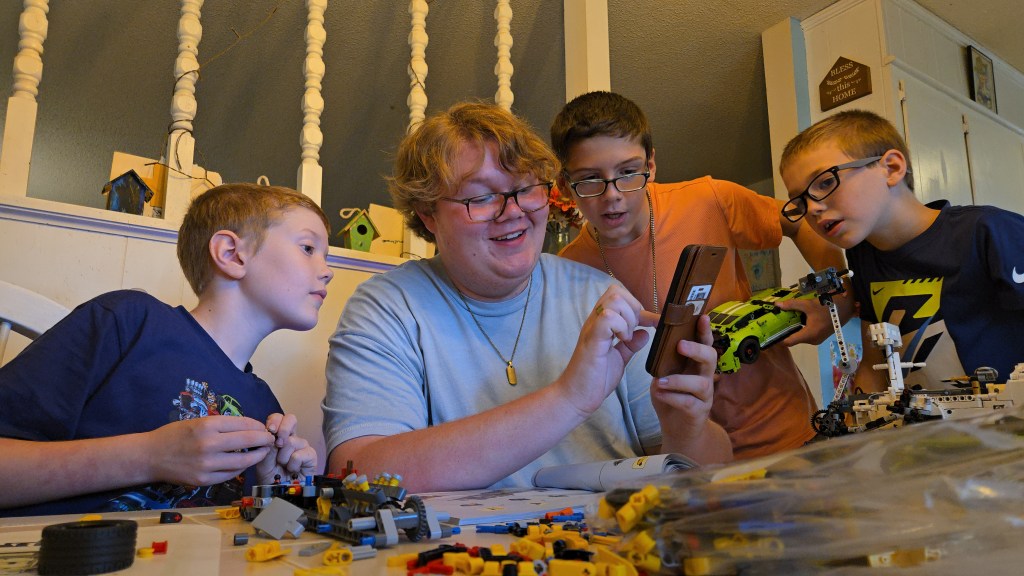
Grandsons Everett, Braden, Elton, and Avery during a recent visit to Tennessee. LEGOs remote control toys, and video games. The things boys are made of.

The toughest part about raising children and grandchildren is – they don’t stay this way for very long. With the fluid precision of time, they grow up, become independent, evolve into adults, and move on. They start families and get on with their lives. If you are very blessed, they stick around and still want your company.

As parents, we tend to forget our primary purpose – to care for, mentor, and raise responsible human beings and to bolster them with love. I believe children should never have to worry.

They must come first.

My mother was an excellent example of how to help a child feel safe. My grandfather – her father – set the same example. He was a retired law enforcement officer who understood consequences. He showed us love and security. However, when he glared at you across a room, you’d better walk away clean. He never spanked us once. One look was all it took.

I was raised by good people who knew how to set a proper example. They practiced what they preached, even when it was no fun. Being a good parent is doing the things you’d rather not do. It also means tough love – allowing your children to suffer the consequences of their decisions so they don’t have to go through worse later on.

The hard part about tough love is what it does to you deep inside. Every time I’ve ever had to really punish my kids, watched their tears, listened to their words, it has always allowed me to examine my own judgment. Was it too harsh? Will it have long-term consequences? Are they going to hate me?

Oh yes – they are always going to hate us but will hopefully thank us in time.

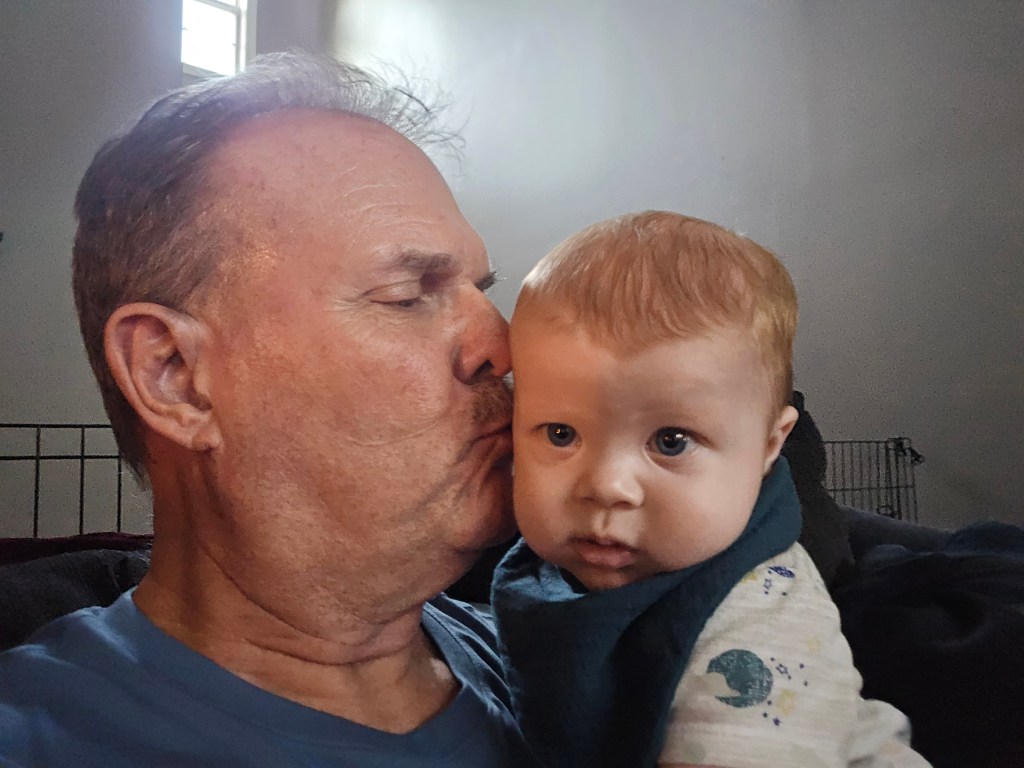
Grandson, Truitt, born in March. Remarkable how much he resembles his father (my son, Brendan), my mother, my grandfather, and my late uncle.

Saturday Night Fever – Why We Still Watch

It is impossible to reflect upon the 1970s without thinking of the short-lived disco era. People either loved it or had no use for it. In the mid-1970s, I had no opinion. I walked into an old-fashioned, small-town Oklahoma movie theatre and watched.

More recently, I sat down and watched “Saturday Night Fever” before writing this week’s Boomer Journey to gain inspiration. “Saturday Night Fever” was challenging to watch, if not sickening. It was that bad.

Although “Saturday Night Fever” was a phenomenal hit, earning over $85 million at the box office, with 40 million copies of the Bee Gees soundtrack sold, with a Grammy for “Album of the Year,” it never did it for me.

There are so many really bad Brooklyn cliches throughout that it becomes nauseating to watch. So many exaggerated Brooklyn accents from proven actors that it becomes nearly impossible to watch. None of these talented actors captures the Brooklyn accent authentically. No one in Brooklyn speaks that way.

The “pussy finger” comment from Travolta – at best – was tacky.

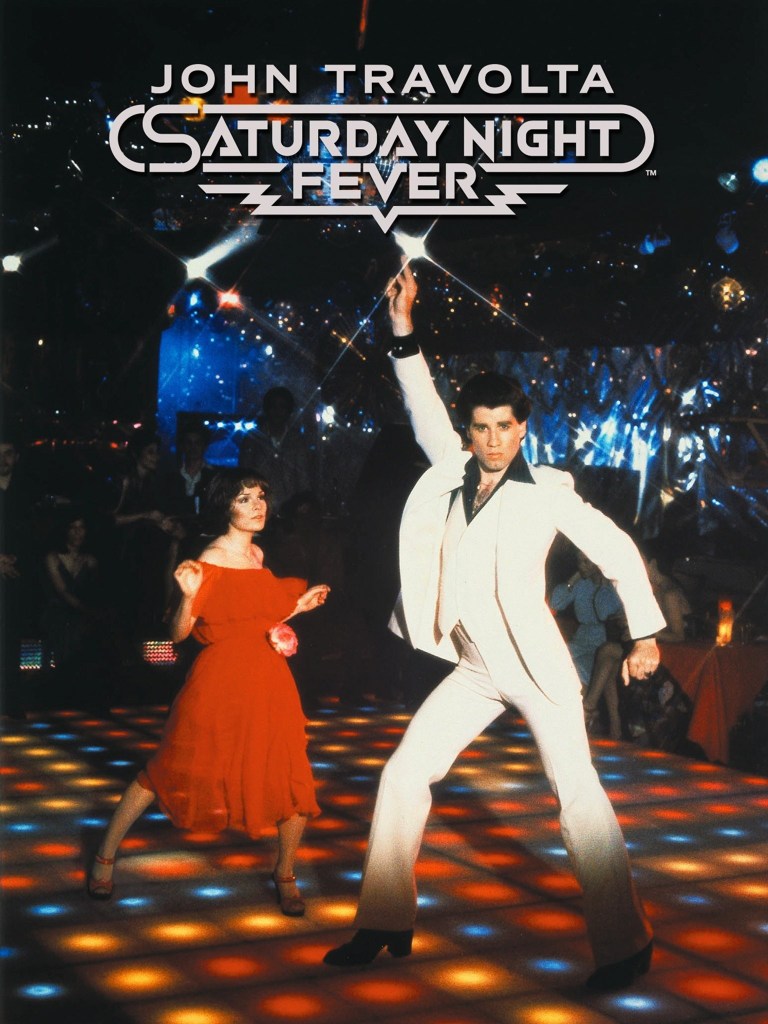
Despite the obvious issues, “Saturday Night Fever” put Sweat Hog John Travolta (Welcome Back Kotter) on the map, though his portrayal of a Texas shit kicker oil roughneck in “Urban Cowboy” in 1980 did its share of damage. “I luv ya Sissy….I know I’m prideful…” OMG!!!

Makes you want vomit in a bowl of Texas Chilly.

“Urban Cowboy” countered the great success of “Saturday Night…” though it didn’t do much damage to Travolta’s acting career. “Urban Cowboy” was to country music line dancing what “Saturday Night” was to disco. Although Travolta’s Tony Manero character in “Fever” was a bit overdone, it worked, and it put him in the spotlight as a rising actor. “Saturday Night Fever” was a launch pad for a promising young actor who got an Academy Award Nomination.

Englewood, New Jersey-born Travolta knew how to be Tony Manero. He became the character, embodying the very soul of a young buck coming of age in Brooklyn. He appeared soulless yet cared for his friends. He didn’t soft soap anything. He was to the point and told it like it was. He’d take a punch for any of them. His love-struck sidekick, Annette, (Donna Pescow) was someone he looked out for. He protected her and had the opportunity to take advantage of her in the back seat of a ’64 Chevy hardtop – yet didn’t take the bait. His friends were not that kind.

A lot of us can relate to Tony Manero and his circle of buddies. Tony was searching for purpose and a future. There wasn’t much promise in the future as these working-class people gazed across the East River at the promise of Manhattan. The skyscrapers of Manhattan shadowed by the twin towers of the World Trade Center were where a promising future was. Tony wanted that badly.

“Saturday Night Fever” didn’t sidestep social issues of the times then or now. There was racism, sexual assault, and economic recession a lot of us can relate to. If you’re reading this column, you grew up in those times and can understand the theme of what would otherwise be a boring dance film.

That said, what made “Saturday Night Fever” so successful?

It has been said the Bee Gees’ soundtrack epitomized the disco era – symbolic of this fleeting media phenomenon. The disco era came and went – swiftly, yet we remember it vividly.

I would lay a wager that this soundtrack album still sells.

I personally think the Bee Gees soundtrack contributed greatly to the film’s success. It was also a recipe of the things that make a movie successful – John Travolta’s performance, the musical pinnacle of the disco era, and the future of young people coming of age in an oppressive Brooklyn. Hope and dreams that didn’t appear would ever be realized. So many wound up working stiffs with a half-century of the urban grind ahead of them. It was a storyline a lot of us could relate to.

The good news for rising actor, John Travolta, was – this film thrust the native New Yorker into stardom (despite “Urban Cowboy”) and a string of successful flicks to follow. Travolta honed his craft and became a phenomenal actor. Other stars, like Donna Pescow, Karen Lynn Gorney, Barry Miller, Joseph Cali, Martin Shaker, and a host of others got their start in “Saturday Night Fever” and moved on to other venues in the years to follow. “Stayin’ Alive” was a logical follow-up to “Saturday Night,” but the concept had pretty much passed its prime.

If you’re like a lot of us, you remember the time quite well, no matter where you grew up and came of age at the time. “Saturday Night Fever” enabled us to watch, absorb, and take a look at our own lives.

Class Reunions – And Mixed Emotions

Class reunions are the darnedest thing, as are our memories of high school a half-century ago. I graduated from high school 50 years ago. I will admit to you that I was a terrible student. How I graduated from high school remains a mystery, especially when I examine my report card from 1975. I think they gave me a pass just to get rid of me – or maybe it was out of sympathy (or fear) because holding me back for another year of education was unthinkable.

I was one of those awkward kids who didn’t fit in. There was the “in” crowd – the jocks and the cheerleaders – and those who appeared on “It’s Academic,” a local high school whiz kid quiz game show. I was the face you couldn’t find in the crowd. I was among the dorks and geeks who mingled together alone in the lunchroom whose names would never be remembered. I don’t know where any of my high school buddies are today. We hung together for a time following high school, then – one by one – went our separate ways.

My 50th high school reunion just passed. Nothing against anyone, please understand. However, I learned early on at my 10th high school reunion that I had very little in common with anyone I attended high school with. I approached the 50th reunion with the same mindset. I wasn’t likely to have anything in common with anyone then either. Were it not for name tags, I wouldn’t recognize anyone.

We have changed a lot in 50 years.

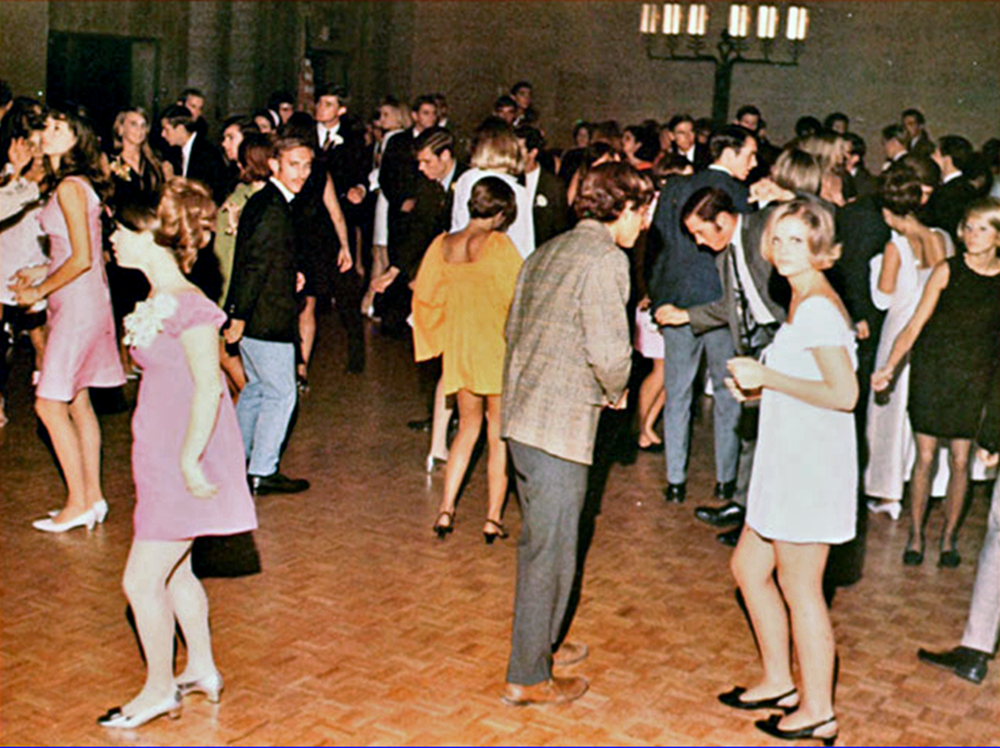
I do have some observations from some of the reunions I’ve seen in recent times. What’s with pom-poms and cheerleaders who never left high school? They still perceive they are pom poms. I will add there is appropriate attire for a class reunion, and there are outfits best left in the closet. As you age, avoid wearing the clothing you wore in high school. Ladies, leave your sleeveless articles at home. And remember, short skirts and open shoulders just don’t work visually when you are approaching 70.

And gentlemen – don’t come to a class reunion in a worn and faded Jimi Hendrix or Grateful Dead tee shirt and rip-torn jeans. Don’t embarrass your significant other by looking like you just walked out of an auto repair shop or a tractor pull.

Got it, everyone?

Dress appropriately for the occasion and remember – you are not 18 anymore.

Then comes the awkward issue of what to talk about 50 years later. If you haven’t seen anyone since the Bicentennial, what on earth do you talk about? Worse yet, there’s always the schmuck who won’t wear a name tag and that uncomfortable moment when the person walks up and says, “Hey, Jimbo – been a long time!” and you haven’t the faintest idea who they are. Politics is best avoided, considering the divided nature of our country right now. You could wind up with a high school cafeteria-style fist fight just like old times.

Reunions can be a wonderful thing, reuniting old friends and acquaintances we haven’t seen in a long time. They also have to be put into perspective. We’ve all been on life’s journey for a long time.

We have each experienced life-changing events. Bask in the moment and embrace the memories and each other – and keep on keeping on.

Facing Our Own Mortality

Do you remember when life stretched out infinitely ahead of us – when old age was way off in the future – not even worth thinking about?

There would be time.

Time passes with fluid precision without prejudice. Never take it personally.

It just is…

I suppose time is an element of our own minds. It owns us. Is there really such a thing as time? Time is a man-made invention that’s more mental than physical. The earth turns. We orbit the sun. The sun and our solar system make their way through the galaxy. The galaxy makes its way through the universe. We are constantly in motion through the cosmos. We’re always on the move, so why be concerned about time? Enjoy the ride aboard the good ship Earth until God comes calling and then consider how far we’ve traveled since we were young.

Bask in the wisdom we have gained.

I think the speed of time is mental. It is all in our heads. Does a day pass any faster for you than it does for me? I believe the busier we are, the faster time goes. And, when we are idle, time drags on.

When we were sitting in class 50-60 years ago, bored, listening to our educators, watching a Simplex clock journey through a school day one minute at a time, time passed slowly. I remember those older Simplex clocks when the minute hand leaped from one minute to the next. Do you remember that?

What’s more – we looked at the calendar…with days and weeks yet to come.

When we were young, we wished time away with reckless abandon. If only we had thought for a moment that time moved with or without our attention to time-keeping devices. Each day gone was a day closer to our own mortality.

Throughout our lives, we’ve watched others pass and wondered of our own mortality. Every funeral or celebration of life of a loved one has been a lesson in our own mortality. We’ve quietly thought about what it is like to die, gazing into a silent casket or a photograph, wondering when it will be our turn in the box.

Admit it. You’ve thought of it.

For decades, I feared my mother’s passing. She was my lifeline and emotional support system. When she did eventually pass at the age of 84 from a long journey through dementia, I felt a sense of relief, knowing she was finally at peace.

I’ve missed her terribly.

Dunno about you, but as I’ve grown older, I’ve become less and less concerned about my eventual passing. Please understand, I don’t want to die right now. I have plenty left to live for. However, I am unafraid of dying. Reason being, everyone who walks this earth will become a memory – a void – in time, so how bad can it be?

Your birth certificate ensures your death certificate.

The best advice I can offer anyone is to make the most of the life you’ve been handed and have left. Choose life. And ask yourself how you can best serve others. When you serve others, it manifests itself as a sense of inner peace – knowing you’ve made a difference that is felt and could be felt for generations to follow.

The Way We Were…

Every once in a while, I like to salute the great actors and film producers of our time. “The Way We Were” is an excellent example, though it doesn’t get much attention these days. “The Way We Were” was a highly acclaimed romantic drama about two conflicting personalities who fell deeply in love with each other but couldn’t live together in peace.

Sound familiar?

“The Way We Were” was an adaptation of a screenplay from Arthur Laurents’ 1972 novel, which reflected upon his college years and political issues of the times. This novel and screenplay became one of the greatest love stories of our time. I suspect a few of us can relate to it because “The Way We Were” was a reflection of ourselves – our loves, our successes, and our failures.

Boomers are surely the divorce generation, with so many of us in second and third marriages. We made it “okay” to divorce when it just wasn’t working out. By contrast, the Greatest Generation before us stayed together despite their differences and the unpopular decision to divorce.

Divorce just wasn’t discussed or done.

“The Way We Were” was a box office success, moving quite a few of us to tears as we walked out of movie theatres around the world more than 50 years ago. It was nominated for and won several Academy Awards for Best Original Dramatic Score and Best Original Song for the theme “The Way We Were,” sung by Barbra Streisand and heard around the world. “The Way We Were” was easily one of the greatest romantic films of our time. I would wager nearly every one of you has the 45 or record album in your vinyl collection.

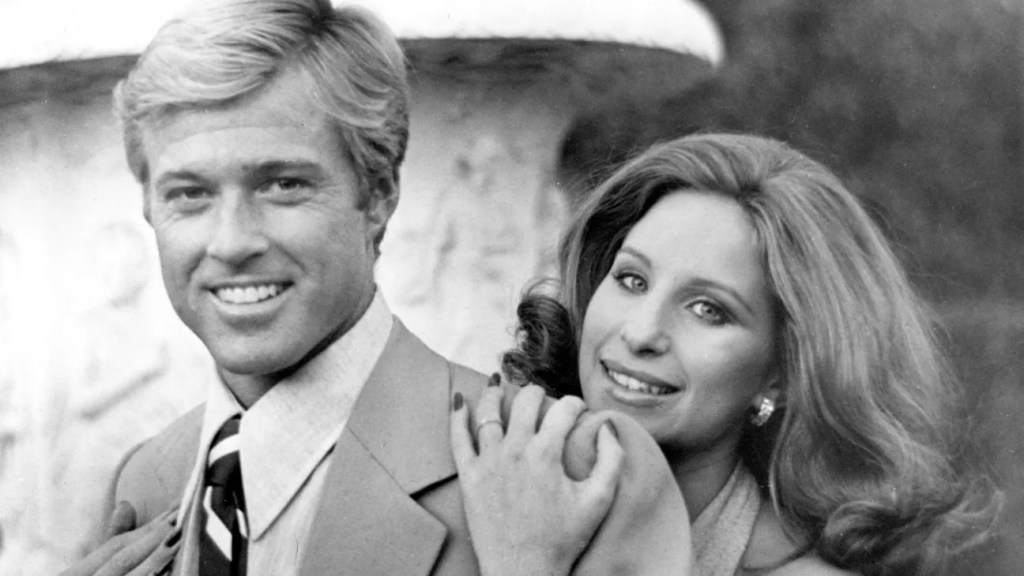
The story begins at a college rally at the cusp of the 1930s. Katie Morosky (Barbra Streisand) caught Hubbell Gardiner’s (Robert Redford) eye with her persona and her passionate words. College ended, and both Katie and Hubbell moved into adult lives and a world war. Katie and Hubbell were both diametrically opposed – dramatically different people who lived a life of conflict from the time they met. He was conservative and carefree, and she was liberal and both serious and passionate about everything. Her life was her causes.

Hubbell was a WASPY guy who never took life too seriously – and Katie, who took everything seriously. The joy of “The Way We Were” was the authenticity. It captured the very essence of the 1930s and ’40s – the music, society, and the times. You get so lost in the plot that you forget it is 2025.

Years later, Katie rediscovers Hubbell at a New York nightclub and is immediately drawn to him. Because Katie was very forthright, she walked up to a sleeping Hubbell Gardiner, carefully balanced on a bar stool in full Navy full dress, and gently corrected his hair. This was who Katie was. She worked tirelessly to fix things she perceived as needing correction – even when they didn’t need correcting. She wanted him to care the way she did and be as passionate as she was. Her expectations of Hubbell and his circle of friends were never realistic.

The story follows their lives to Hollywood and a very different and certainly affluent lifestyle. While Hubbell finds comfort in a Hollywood lifestyle, Katie believes his enormous talent is being wasted in film. As the 1950s and McCarthyism unfolded and began to adversely affect their lives, her political activism returned, endangering his career. When Katie and others began confronting Washington over free speech, it began straining their marriage – which wound up in divorce.

Although fiction, perhaps Katie and Hubbell can serve as a lesson for a lot of us. As we journey through life, we learn something important about ourselves – and more importantly, the person we’ve chosen to spend life with.

Like life, “The Way We Were” wasn’t a perfect love story.

A Day At The Airport…

Do you remember the cure for boredom when we were growing up?

A day at the airport…

Such was the case for most of us. It gave parents a break and gave us something to do to while away the time. That never happened when I was growing up. The airport was for the departure and arrival of my father when he traveled internationally during his 35-year career with the National Security Agency (NSA). He traveled the Northern hemisphere, and we were always there for the sendoff and return – sometimes in the wee hours of the morning.

Seems airports have become departure and arrival only places, especially since the 9/11 attacks of 2001. If you’re not flying, they don’t want you in the building. Perhaps I am being cynical, but I think we’ve gone overboard with airport security in the years since. Going to the airport has become such a drag. The reason being Britain never allowed terrorism to deter them from tradition. Brits line fences and populate air parks next to airports where patrons can listen to ATC chatter and document airframes – and they’re mighty good at it.

The British have been notoriously passionate about rail transportation and aviation, and they’ve never wavered. Go to nearly any major airport in Britain and you will see dozens with binoculars and camaras capturing the action. Law enforcement is always there to keep a close eye on enthusiasts and would-be troublemakers, should anyone exhibit life-threatening behavior. They turn out in good weather and bad, enjoying the freedoms they currently have.

Whatever happened to this pastime in the US?

We’ve lost the freedom to do it.

September 11th – The Unthinkable…

My high school sweetheart, Robin Kramer, and I were at the Riverdale Theatre in suburban Maryland outside of D.C., taking in Irwin Allen’s “The Towering Inferno” in the winter of 1974-75. I was so obsessed with this action/adventure movie that we went to see it 11 times! I became obsessed with skyscrapers of all kinds and had a curiosity about fire in a skyscraper – everyone’s worst nightmare. The enormity of tall buildings and what it took to design and build them was awe-inspiring to me.

Growing up in Washington, D.C., I had to see something taller than a 30-story high-rise, even though we had the Washington Monument, 26 miles away on the National Mall, at 555 feet in height. Ironically, I had never been to the top of the Washington Monument. It just didn’t seem like a skyscraper.

In the summer of 1975, Robin and I hit the road for New York to see some really big buildings. We were on our way to New Hampshire to visit my cousin and just happened to be passing through New York. I looked down the Hudson River to the south as we were crossing the George Washington Bridge, and there they were – twin towers of 110 stories each in glistening stainless steel.

On our way back through New York, I decided to exit I-95 at the Hudson just short of the GW and head down the West Side to the towers. They loomed big on the horizon and were larger than life. When Robin and I pulled up in front of Tower 1, it reached to the heavens a quarter of a mile into the sky like I had never seen. I wanted so badly to know what it felt like to be on top, close to the clouds.

The following summer, I’d find out.

The Observation Deck on top of Tower 2 opened to the public in the summer of 1976. The pamphlet said, “It’s Hard To Be Down When You’re Up – The Observation Deck at the World Trade Center…” Robin and I and a friend of hers flew to New York and beat a path to the towers from Midtown. We boarded the elevator, which was larger than any room in my home, and rode this high-speed vertical transporter to 107 at a 23 mph clip in one minute. It was so fast it made your ears pop.

Escalators took you to the rooftop observation deck, which was startling because Tower 1 seemed so far away on the ground and was very imposing when you were on top of Tower 2. On 107, you could look straight down in any direction. On top, you could see for miles. They told us that on a clear winter day, you could see the Poconos 80 miles away in Pennsylvania. I still wonder if that was true. Nonetheless, it was the first time I’d ever stood on top of a building one quarter of a mile in the sky. I recall seeing a Boeing 727 climbing out of JFK so close you felt like you could touch it.

What made the World Trade Center distinctive was its “twin tower” status. Appropriately spaced and positioned diagonally, they could be seen for miles. When we were heading north on the New Jersey Turnpike, you could see them way down to the south of Newark. With the GW Bridge dead ahead, you just couldn’t take your eyes off of them. They were majestic in scope and dominated the skyline. Although New Yorkers despised them, they gradually grew to love them, especially in the wake of the 1993 bombing, when New Yorkers almost lost them.

Years before September 11th, I was half-heartedly listening to a newscast while making a sandwich when it was said terrorists were planning to fly jetliners into the World Trade Center. My heart skipped several beats at the idea. I had to believe that was not possible. We were the United States, and no one would dare.

I was naive…

There’s always an enemy out there with a little more determination who could pull it off. Nineteen very committed hijackers did – much to the shock of the world in a Trojan horse moment with the power of four commercial jetliners. It was a quiet Tuesday morning when the phone rang. I was instructed to turn on the TV. We turned on the TV to a billowing Tower 1 in flames. At first, it was thought to be an accident. When a United Airlines 767 slammed into Tower 2, it was then a proven terrorist act – something I never would have believed possible.

When American Airlines Flight 11, a Boeing 767, left Boston’s Logan Airport headed for Los Angeles and vanished from the radar and headed off course for New York, the authorities sprang into action. At first, there was a lot of fumbling and confusion. The various agencies involved thought it was a drill and didn’t take it seriously. Amid the confusion, the American 767, at the hands of hijackers, was making its way south to New York. In minutes, it roared over the buildings of New York at over 400 mph and slammed into Tower 1.

Our world changed forever in seconds.

Minutes later, United Airlines Flight 175 came around from over the Jersey shore and crashed into Tower 2, stunning New Yorkers who looked skyward in utter shock. Within minutes, American Airlines Flight 77, after taking off from Dulles Airport, roared across Northern Virginia to the Pentagon, clipping light poles and startling employees in the parking lot, killing 168 people at the Department of Defense. United Airlines Flight 93, with gutsy, determined and informed passengers on board, erupted into chaos – with three passengers storming the cockpit and halting the 757’s planned journey to Washington, saving the US Capitol from total destruction and huge losses of life. These courageous human beings saved Washington that day.

We’ve never been the same despite the post 9/11 unity at the time.

When we were growing up in the 1960s, could you have ever imagined September 11, 2001? We grew up in fear of a nuclear attack with “duck and cover” in our classrooms, coupled with the Cuban Missile Crisis. Careful negotiations prevented what could have become a nuclear Armagedón in 1962.

With that knowledge, and the winning of World War II in two theatres with help from our allies, life seemed pretty secure for a time. What September 11th taught us was – anything can happen at any moment and did, teaching us to never take anything for granted. Not completely certain we learned anything.

Really Awful Sitcoms We’d Like To Forget

God save us from really awful sitcoms – experiments in primetime television gone bad – some so bad they were canceled before the annual springtime wrap-up. There were more really bad sitcoms than we have room for here – but always worthy of mention. When I think of really awful sitcoms, I think of one-season wonders like “It’s About Time” and “My Mother The Car.”

Both were about as absurd as it gets.

It’s About Time” was a wacky American sitcom that aired on CBS for a single season, consisting of 26 episodes in 1966–67. It got off to a good start in the ratings but quickly plummeted as the storylines became more ridiculous. Viewers quickly tired of two men in the strangest place.

Sherwood Schwartz, who had a vivid imagination, created “It’s About Time…” who also birthed “Gilligan’s Island” and “The Brady Bunch.” As silly as the latter two sitcoms were, they were very successful and have a huge following even today. Boomers spend their retirements watching these shows, repeating every line word for word. We eat this stuff up regardless of how ridiculous it seems.

Sherwood Schwartz was a brain trust of wacky sitcoms, such as “Gilligan’s Island,” that boomers still follow today in retirement between pharm’ and life insurance commercials.

Early on, there was “Mister Ed” about a talking horse and buddy, Wilbur Post. Like many sitcoms, Mister Ed was a secret known only to one person. Ironically, Mister Ed aired for five seasons, an unheard of success story on CBS’ Filmways division, the same division that aired “The Beverly Hillbillies” sitcom, that ran from 1962-70. There’s no explaining what has made boomers obsess with these sitcoms aside from the memories they yield today.

Mister Ed show was derived from long before short stories from the 1930s written by author Walter R. Brooks, which conceived The Talking Horse in Liberty Magazine. Producer Arthur Lubin‘s secretary, Sonia Chernus, introduced Lubin to the Brooks stories, which wound up being the “Mister Ed” television series.

Lubin had a challenging time selling Mister Ed to the networks, which led him to syndication. It was the magic and humor of Alan Young that led Lubin to success with CBS. Mister Ed ran from 1961-66 – an incredible track record for something as silly as a talking horse. Someone would walk into the barn and ask who Wilbur was talking to – which was always an awkward moment for Post.

I suppose we’ve all had these moments where we’ve been talking to ourselves and been caught doing so, which makes it easy to relate to Wilbur’s conversations with Mister Ed, and someone would walk in, and Wilbur, red-faced, had to quickly pretend he was singing or reciting a speech.

How Did We Get Here So Quickly?

I remember June of 1975 – free at last…

Or so I thought…

It was the last day of school in my senior year. I roared out the parking lot in my Mustang and headed off to the future. Graduation would be June 15th at Cole Field House at the University of Maryland in College Park. Mid-June would prove to be hot and humid, and Cole Field House was not air-conditioned in those days. I was sweaty and we all were miserable. We were in our caps and gowns in a very regimented environment and there were more than 900 of us. It would prove to be a long day.

WTOP (WUSA) News Anchor, Gordon Peterson, spoke at our graduation, offering inspiring words most of us probably never heard. We were eager to get our diplomas and get out of the heat. Although it seemed a very liberating time, it was but the beginning of the rigors of adult life. Each of us had a lot to learn.

I sure did…

Headed to my Senior Prom in 1974…

Had I been able to see the future, I would have been terrified and paralyzed as a result. God doesn’t allow us to see the future. Seems unfair now doesn’t it. However, had we been able to see the future, we would have done something even stupider. At 19, I thought I had become a man. In the eyes of the law, sure… In reality, not a chance. There were plenty of mistakes and foolishness ahead at the University of Hard Knocks. There would be job losses, failed marriages, kids, car crashes, illnesses, losses, and a few things I haven’t thought of that it would be best to forget.

There are also the blessings, no matter how small, we should embrace and treasure, though we tend to forget to do that in the chaos of daily life.

So here we are at the other end of life, which seemed way off in the future some 50-60 years ago, wondering how to live out the rest of our lives. Maybe you are right where you want to be, surrounded by the love of family and friends. If you are like most of us, you have your share of regrets. Opportunities missed. Friends who are gone that you wish you’d spent more time with. Maybe you’re fighting health issues, wishing you were younger – wondering what it would feel like if you were 21 again.

Mankind has been humming the same tune for generations – oh to be young again. It’s the same old saw – searching for the elusive fountain of youth. All that said, I will say this – I am okay where I am in life. I’ve had a good run and enjoyed the love of family and friends – in fact, more than I’ve had a right to have. I’ve been butt stupid and have left my share of rubble in the rear-view mirror. Thoughtless and selfish would be an even better way to describe it. I could elaborate, but why?

All we have is our memories of our pasts and a vision of what we’d like our future to be. So, what about that? Unless you are facing a terminal illness, with very little time left, carve out your dream for the future and endeavor to work a plan. Doesn’t have to be all at once – but in baby steps toward the goal.

I’ve always viewed Life as a book with chapters – with each symbolic of a moment in time. Some good. Some not so good. Best we look at Life that way. As we head into the twilight, it is best to bask in the good memories and do our best to abandon the bad. The present is all we have. Best to live in the moment.