How The Hell Did I Wind Up in L.A.?

Do you recall being young and naive – emphatically stating that there were things you were never going to do – ever? Then, found yourself doing these things? That’s my story, and I am sticking to it—wondering what happened.

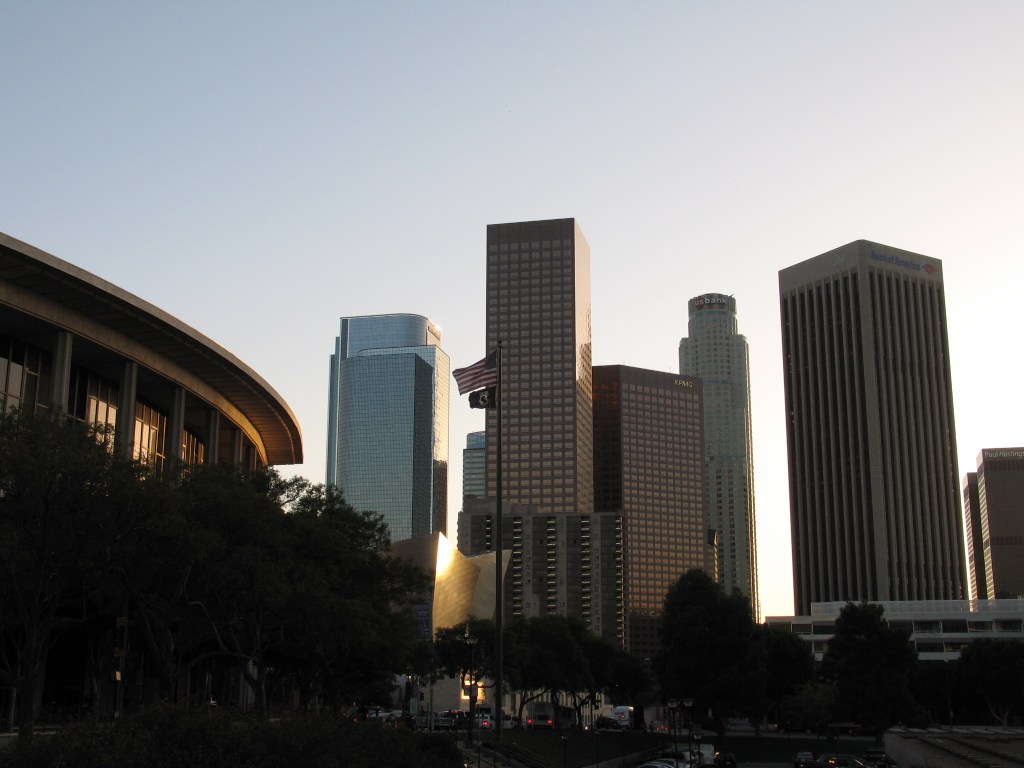
I’ve been on Planet Los Angeles in sunny Southern California for 31 years. I still do not understand this place. “Big L.A.” was a place where I was never going to live – ever – not because I didn’t like the place, but because I did not know the place.

Being an East Coast boy with a lot of time spent in the American Heartland, I suppose I never will understand L.A. Los Angeles is not like the rest of the world, and that’s not necessarily bad. Why does L.A. have to be like the rest of the world?

Being from the East Coast and Midwest, my DNA is of these places. I love the Midwest for its genuine charm and incredible people. Watching the farm reports in Oklahoma, Kansas, and Missouri – and seeing weather reports and news stories with clearly pregnant newscasters in Illinois and Tennessee.

These folks, no matter their celebrity, are your neighbors and friends who become extended family. You help them move to their new house and run into them at the county fair. They are real and not too full of themselves. Having grown up in Washington, D.C., the news was always about politics and “Today on Capitol Hill…” And – like L.A. – D.C. has always been about gossip, scandal, and narcissism.

Having lived in many places and having visited 49 out of 50 states, I’ve pretty much seen it all – yet I really haven’t seen diddly. My career as an automotive journalist brought me to Los Angeles more than three decades ago. I arrived for the first time in 1990 as a feature editor with Car Craft Magazine. I worked in the old Screen Actors Guild building, a mid-century modern box on stilts along Sunset Boulevard. This dusty old building was “as built” in the 1950s, with old, wrinkled, dirty, stained carpeting and completely original black and white tiled restrooms with black open-front toilet seats. I’d sit on the mid-century “Standard” toilet thinking, “Ronald Reagan actually sat here…” Ditto for urinals that lined the tiled walls – thinking of the hordes of male celebrities who’d stood there.

Walking into that building and working on Sunset in Hollywood was culture shock for a young buck like me. It was a far cry from the American Heartland and East Coast I’d long been accustomed to. I was suddenly having lunch with editorial celebrities I’d read about in Hot Rod, Car Craft, and Motor Trend. We would sit down to breakfast nearby with Candid Camera’s Alan Funt. It was a dreamy, yet disorienting experience. I felt completely out of place.

How on Earth did I get here?!

I didn’t know it then – but I was here for the rest of my life. I had a five-year plan – to get the experience I needed, then return to the heartland, secure an editorial job, and live out my life. The Midwest was where my dreams were. However, Life had other plans for me. It isn’t that L.A. is a bad place or one big freeway, it is the difference in culture I witnessed at the time that – somehow – became the norm.

I must remember to add North Dakota to my bucket list.

I’ll have my guy call your guy and we will do something – “later…”

Life Launch – What a Great Idea

What have we taught our young – our kids, grand kids, and even great grand kids? I’d really like to know. We judge young people for their patterns, trends, and priorities – but what have we really taught them anything?

Anything?

I blame parents and I blame education. How much time have you ever spent teaching your kids how to launch and how to survive? Baby Boomers have a lot to answer for here because too many young people don’t know how to fill out a job application, write a check, put a stamp on an envelope, or check oil in a car.

There’s a legitimate reason for this.

Boomers birthed the latch-key generation – which came as a result of working couples being gone most of the day. Dual incomes, two cars, vacation homes, day trading, gourmet ice cream, five bedrooms and three baths, luxury cruises, and a whole lot else – stuff we didn’t really need.

The Greatest Generation not only handed us the benefits of a prospering economy and a free society, but they also made us hunger for more. We’ve just had to have it all – meaning we haven’t lived within our means. We are the credit generation, drowning in perpetual debt.

I believe our parents and mentors wanted us to have it better than they did. But did they also inspire us to want more? Maybe they gave us a little too much.

I also know they taught us how to survive as did education. We were taught how to write in cursive, fill out a check and manage a bank account, how to fill out an application, clean up after a meal, empty the trash, and how to operate a clothes washer. We entered the adult world ready. Not all of us have scored well.

Why do so many young people today not know how to go forth and survive? They don’t understand what is needed to survive and be successful – stuff we take for granted in ourselves because we were taught these skills as we came of age. Most of us automatically know how to write a check, clean up the kitchen and scrub a toilet, fill out a job application, apply a postage stamp to a letter, take medication, vote in an election, and know to lock a door when we leave the house.

Education was a broader spectrum in those days – teaching the trades, home economics, math skills, auto shop, physical education, art class, history in much greater detail, sociology, and how to clean up after ourselves. Leaving a mess behind was never acceptable and there were real consequences if we did. When it was time to learn how to drive, there was Driver’s Education – and consequences if we broke the law and got a ticket.

Accountability…

Does anyone born beyond the 1980s know anything about World War II, Korea, or Vietnam? What about the assassinations of the 1960s – JFK, RFK and Dr. King? What about the music sensations of our time – The Beatles, Herb Alpert, Tony Bennett, Andy Williams, Elton John, James Taylor, or The Rolling Stones? It is remarkable how much we haven’t shared with our young.

I firmly believe electronics and social media have created a disconnect we will likely never emerge from. We are all caught up in it. Everywhere you go, there’s someone immersed in a cell phone or tablet. This, in and of itself, has spawned a disconnect that has both connected and divided society.

America On the Edge in 1962

Never has the nation been more on edge than it was in October of 1962 when we were the closest we have ever been to nuclear war. The Cold War between the Soviet Union and the United States had never been colder than when the two countries took part in a 13-day standoff sparked by the US placement of nuclear missiles in Italy and Turkey, and the Soviet response with planned nuclear missile placements in Cuba.

It was a decidedly complicated mess spurred the placement of Jupiter nuclear missiles in Italy and Turkey by the US along with an effort to overthrow Cuba. The effort to overthrow Cuba was an ongoing effort where tensions continued to be high and Cuba needed support.

The Soviet Union, concerned most about Cuba forming an alliance with China, began focusing more and more on Cuba. This led to a meeting between Soviet Prime Minister Nikita Khruschev and Fidel Castro in the summer of 1962. They agreed to position nuclear missiles on Cuba to fend off a potential US invasion.

Though it appeared to be a mutual agreement between Khrushchev and Castro, it is also true Fidel didn’t want Soviet nuclear missiles on Cuban soil. It was increasing pressure from Khrushchev that led to this agreement and concern over consequences from the United States.

When the Kennedy Administration caught wind of the missile placement, a meeting occurred between President Kennedy and his National Security Council along with members of his cabinet. A decision was made to attack Cuba from the air followed by an invasion to cripple Soviet missile placements.

This plan was not going to be.

President Kennedy instead chose a safer more conservation decision – staging a naval blockade in the Atlantic to prevent missiles from reaching the Cuban mainland. The Cuban Missile Crisis ensued that October, which ultimately led to the Soviet Union removing its weapons from Cuba. By the same token, the United States agreed to remove nuclear weapons from Italy and Turkey.

The Cuban Missile Crisis was a lesson in compromise, which prevented all-out nuclear war – something we’d do well to try today. During the 13-day standoff with the Soviet Union and Cuba, Americans suffered from nervous stomach, wondering what was next.

My father was a career cryptologist and a US Navy Veteran with the National Security Agency at the time. He went to work and didn’t come home for nearly two weeks with not a word, which made my mother nervous.

I was but five years old at the time so I must admit I didn’t know much about it. All I knew was he didn’t come home for two weeks, assuming he was on a business trip. In truth, he was out at NSA’s headquarters at Fort Meade, Maryland – unable to communicate with the outside world.

Sometimes, the tension was closer than we thought.

What most didn’t know amid the embarrassment for Khrushchev was a secret deal between both Kennedy and Khrushchev where the Soviet Union agreed to pull back from Cuba from the effort they had created. This led to Khrushchev’s eventual fall from power as a result of this embarrassing turn of events. Khrushchev blundered in this agreement with the United States and came out with egg on its face.

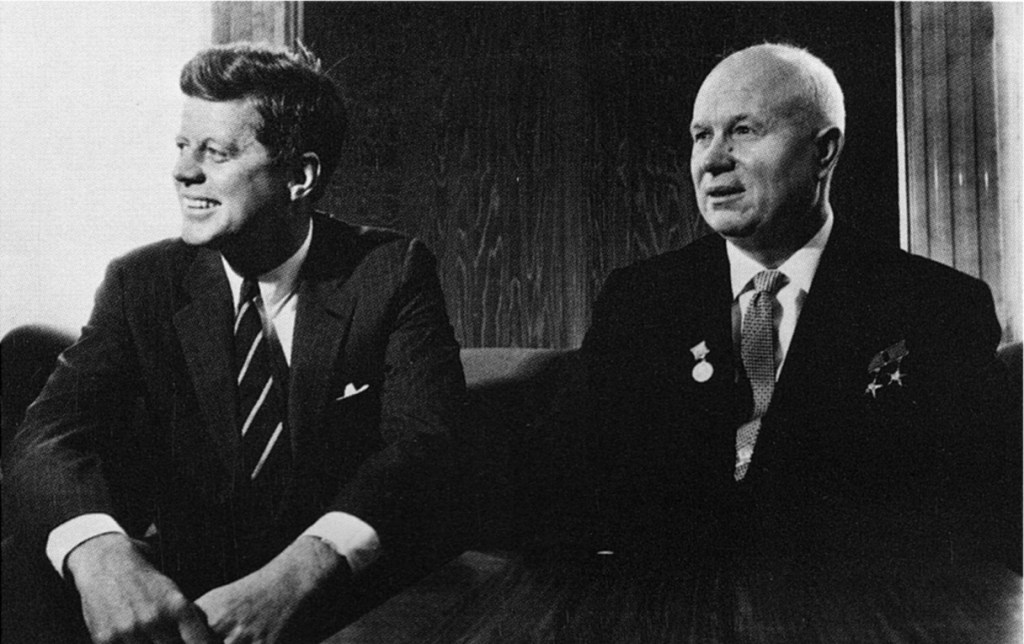
US President John F. Kennedy and Soviet Prime Minister Nikita Khruschev

The good news in all of this was improved communications and negotiations between the US and the Soviets in the years to follow. Though Khrushchev saw Kennedy as weak as a result of the failed Bay of Pigs invasion, Kennedy came out on top in time. Ultimately, the US and the Soviet Union found a fragile path to peace though the threat never went away.

The Cuban Missile Crisis reminds us of just how fragile our freedom and liberty are and that we must never take these elements for granted. We learn from this just how important clear and concise communications is between the world’s superpowers. The Cuban Missile Crisis – and others – show us how easy it is to misunderstand intent versus what the other guy is actually thinking.

An Accurate Portrayal of American Life?

The American Way in the 1950s….

How we perceive our past through dozens of mid-century documentaries and their portrayal of American life in the 1950s and ’60s is enlightening. We watch, record them, and reflect fondly upon another time.

Most of these films were “Chamber of Commerce” productions made in an effort to sell “the American way…” or to promote a product or service. Defense contractors have always been big on documentaries. However, what was the “American Way” exactly? I suppose it depends on who you speak with and what they remember.

As boomers in our twilight, we don’t always remember history as it actually was. Times were good for a lot of us—but not all of us.

During the post-war boom, the only way was up. We were rising from rough times, aiming for space dominance and the Moon. With help from our allies, we’d won a world war in two theatres a vast distance apart. We had achieved an impossible task – with thousands of war wounded and dead. It was time to heal.

In retrospect, I have to wonder how we did it.

We did it because we decided to do it. It was a collective undertaking, and it was everything to save the world from tyranny. Life has always been a battle between good and evil. Sometimes, good and evil become blurred.

As boomers growing up in the ‘burbs, we didn’t have to face the issues our parents and mentors did. Our parents had endured the Great Depression and World War II. The post-war years were no picnic either, despite what our world might have looked like through a camera lens and a narrator.

I believe we had more class in those days before travelers started wearing torn blue jeans and tee shirts on airliners and in trains. I credit boomers for making society too casual. This happened during the hippie movement in the 1960s. Formal attire got sidelined for clothing that had been lying on the closet floor for a week.

Maybe I sound really old, but I don’t get young people traveling in pajamas. That’s the latest trend I see everywhere. It implies the absence of motivation. I won’t even get into body piercings and some really tasteless tattoos.

War Vets must look at us and wonder what they were fighting for. Forgotten Vietnam War Vets hear “Thank You for Your Service…” everywhere they go, yet where is the love, man? The most forgotten segment of our society is war Veterans, wondering where they fit in and where true gratitude is.

We are big flag-wavers, but not much on substance. Vets need real action.

I will always tend to wonder who we really are as a nation and a society. The late comedian and satirist, George Carlin, said it best when he said “America is about the marketing and distribution of bullshit…” We have some of the best marketing people in the world who’ve always been good at selling the “American Way” worldwide.

America has become tarnished, narcissistic, and disconnected. Yet, I see hope in some factions genuinely interested in putting us back together. I believe in America. I also believe we are a work in progress, much as we have been for 249 years.

The Waltons and The Literary Genius of Earl Hamner

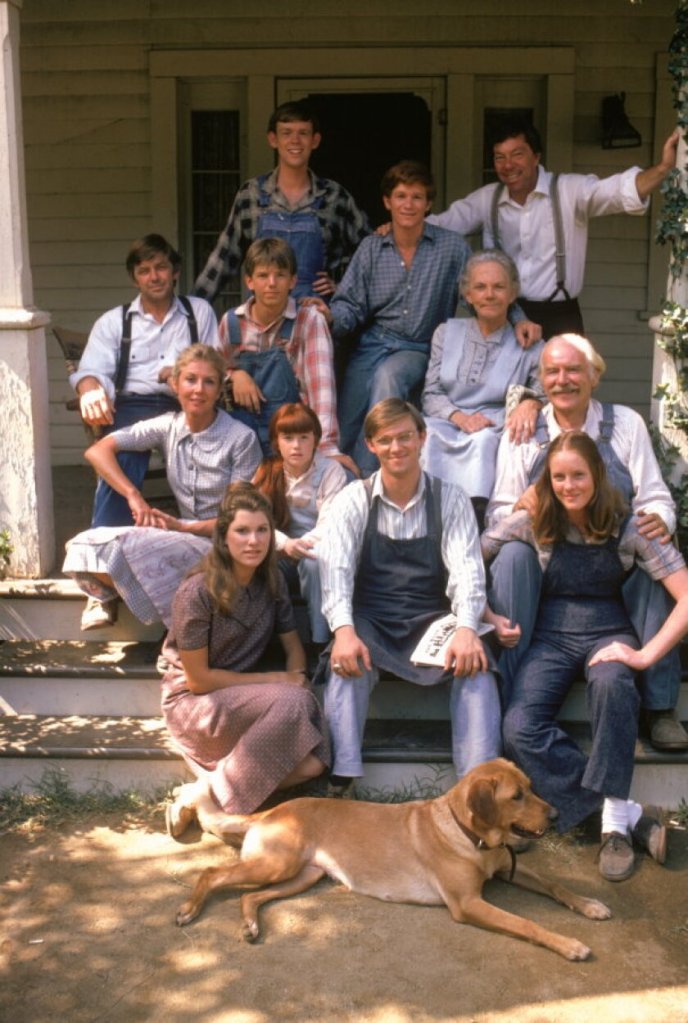
There’s a reason why Earl Hamner’s “The Waltons” television series endures today. It is an accurate portrayal of American life a century ago amid the Great Depression and the unfolding of a World War. “The Waltons” touched our hearts with an in-depth look at Appalachian life in a fictitious Jefferson County, Virginia.

“The Waltons,” produced by Lorimar Television and Warner Brothers in Southern California invited us back into our living rooms for a heartwarming slice of rural American history for nine seasons on CBS. There had never been anything like it before nor has there been anything like it since.

We just couldn’t get enough of it.

“The Waltons” offered up a great cast of characters, actors, direction, and Earl Hamner’s exceptional screenwriting. We were invited to come sit around the table with the family and follow each of them through their lives and experiences. Emotionally, it could be a tough watch at times. Sometimes, it made us cry.

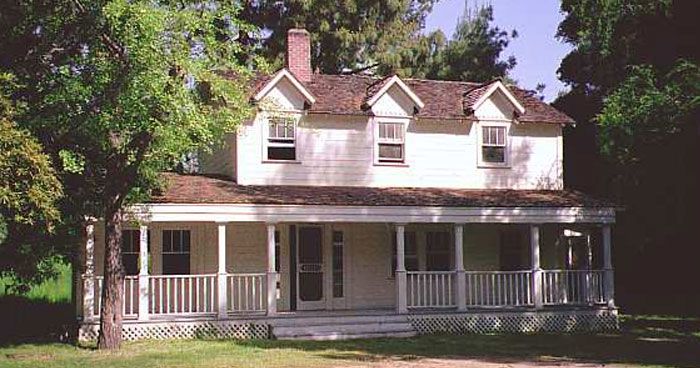
Those of us who are familiar with rural Virginia know the topography of “The Waltons” just was not our Appalachia. It just wasn’t green enough. Walton’s Mountain was akin to Hamner’s childhood and early life. In truth, the Walton home on our television screens was nothing more than a facade on a Warner Brothers studio backlot.

Hamner’s stories each week were a reflection of his childhood, which added authenticity to the series. We romanticize “The Waltons” for its “down-home” quality primarily because it provided insight into people from another time. We’d heard about the Great Depression and World War II from our elders and watched our share of documentaries in junior high school. “The Waltons” was an accurate presentation of the times through the eyes and memories of book author and screenwriter Earl Hamner. There has never been a better storyteller.

Hamner would set the story in his most genuine formal Virginia dialect and explained to us what we were about to see – offering a conclusion to each episode along with a sweet harmonica wrap-up.

It calmed the soul.

“The Waltons” was born of Hamner’s 1961 novel “Spencer’s Mountain” and later the movie “Spencer’s Mountain” in 1963. The book and the movie became “The Waltons” in September of 1972. “The Homecoming – A Christmas Story” aired in December of 1971, which set the stage for “The Waltons” a year later. We just couldn’t get enough of the Walton family, with a couple of made-for-TV movies airing in the decade to follow. We weren’t about to miss it.

The Walton “home” was little more than a Burbank, California studio backlot facade. There was nothing inside except platforms and stairs. It has appeared in numerous television shows and movies through the years.

The show’s closing sequence featured the family saying “goodnight” to one another before going to sleep for the night when the one remaining lighted window would go dark. The “Goodnight John-Boy…” routine became cliche throughout American culture. We all said it.

We fantasize about “The Waltons” because it exhibited the unconditional love so many of us have desired in our own lives. It was a nice escape from the struggles of the 1970s and remains such today.

“Goodnight Everyone…”

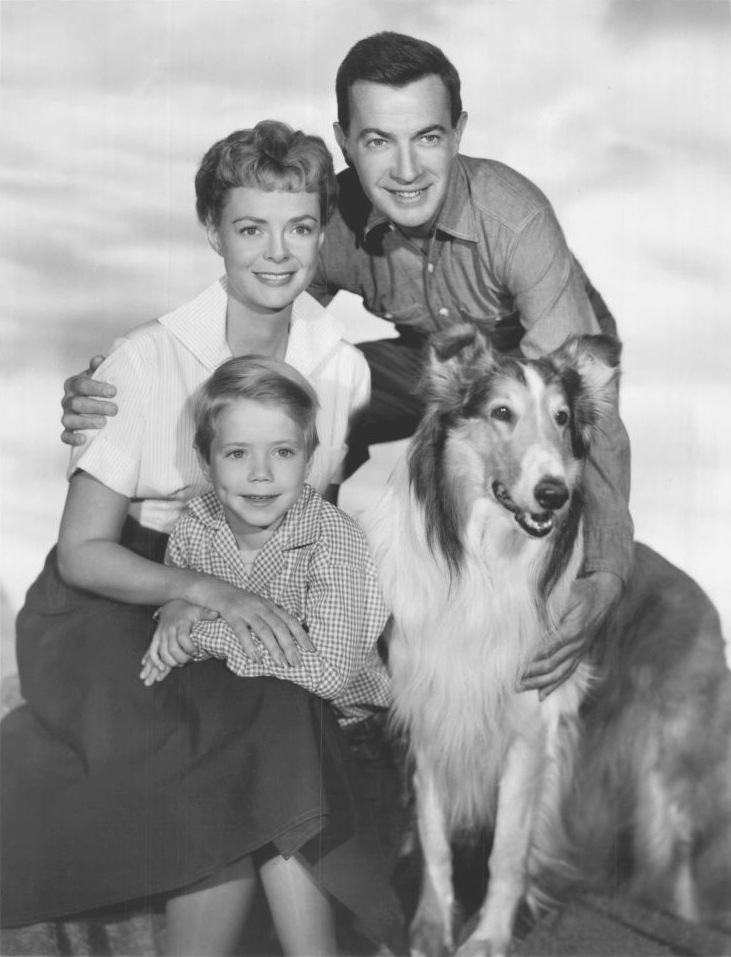
Lassie!!!

Not many of us can forget “Lassie” – the popular television series that aired on CBS every Sunday evening for 17 seasons before it had finally run its course. The last two seasons were syndicated.

Lassie” had to have been one of the longest-running TV series of its time, and you can bet they had run out of ideas by 1974 when the show wrapped. I mean – how many times could Timmy fall down a well?

In truth, Timmy never had to be saved from the well. But that didn’t stop Lassie from her appointed rounds.

Lassie was a male “Rough Collie” long on adventure – sharing “her” life-saving skills with animals and with people. Few ever got that Lassie was a boy dog. I mean, you never saw any indication that Lassie was a male. I never did.

The Lassie concept was born of the genius of television producer Robert Maxwell and animal trainer Rudd Weatherwax, who developed the series into something long on love and hope. Children and adults alike loved the series.

Always a happy ending.

I remember when this popular black and white television series segued into color in 1965. We didn’t have a color TV at the time, but my friends did. “Lassie” was among many addictive animal shows like “Flipper”, “Daktari”, “Gentle Ben,” “Mister Ed” and a host of others that kept us entertained and out of trouble.

Well…not always in my house…

What we remember most was the “Lassie” theme, which evolved into different versions with time but was essentially the same. The launch theme “The Secret of the Silent Hills,” composed by Willaim Lava, was employed for both the opening and closing credits. Later on, Raoul Karushaar, who was the musical director for “Lassie, has long been recognized as the theme’s composer. Most of us remember the Muzzy Marcellino “whistled” version of the “Lassie” theme, which first ran in the show’s fifth season where we first came to know the Martin family.

The Martin years were what I remember most. We’d visit my cousins over in Wheaton, Maryland on a Sunday and become very familiar with Ed Sullivan, Disney, and of course, Lassie on a Sunday evening before it was time to head home.

I suppose “Lassie” could easily be considered right for the time and in a new medium known as television. Always a moral to be learned from television in those days. “Lassie” was surely all American in a society that had a lot to learn at the time – and we surely had a lot to learn.

Old Age and That Dreaded Hospital Stay

Well – Friends – I feel officially old on a chilly April morning in 2025 – and that’s okay. It indicates my status as a survivor. Just had neck fusion surgery and have regained the mobility I’ve long needed on my left side. There hasn’t been much pain, but more a numbness and tingling in my left arm and hand that led to this surgery.

I’ve enjoyed the best healthcare I’ve ever had here on Southern California’s high desert north of Los Angeles, where I have lived for 25 years. The best surgeon and surgical team, and the best recovery professionals I’ve ever had practice their professions at the Palmdale Regional Medical Center.

I never had to want for anything.

I’ve had neck issues dating back to the USAF in 1981 when I managed to injure my neck working on the rotund C-5 Galaxy and C-141 Starlifter cargo jets. I’ve nursed this issue along for more than 40 years with PT and steroid shots. It then became a problem I couldn’t ignore.

My message to you folks here is simple. You may be older – but take the time to embrace life. If you’re miserable – change it. If you’re happy and content, hang on tight and make the most of the blessings you’ve been handed.

I am a survivor as are you if you’re able to read this editorial. I am one year from 70, when a lot of our fellow Hoosiers have passed. That isn’t a badge of honor, but instead an admission of humility. I am aware we’ve just so much time on this apple. We are all human beings, wondering how much time we have left. I think we do that for most of our lives especially when someone close to us dies.

“Do I have one day left or do I have 30 years?” It is always just under the surface.

I am sad for those who have passed. Sadder – still – for their families and friends who grieve. Losing those you love and have needed is especially emotional, especially if you’ve loved, admired, and have needed them over a a lifetime.

There’s such a fine line between life and death – a very fine line.

High Desert Sunrise – life anew…

When they were wheeling me to the operation room (OR) , I wondered what it was like to die. “Is this my last day?” as the ceiling rolled by overhead. That was my last thought, and in a nanosecond, I was waking up in my room, stuffed in a neck collar, wondering where I had been for three hours.

My anesthesiologist was a remarkable man – soulful, professional – clearly a deep thinker. He asked me all the questions important to a man who had my life in his hands. He explained it all in detail – including the importance of wearing my CPAP mask. He respectfully explained the strain sleep apnea places on the heart. This was where the fine line between life and death was apparent. In his many years of putting people under, he’d seen it all – watched people die – and watched people live under his care. He understood just how important my answers were.

The moments when we go under the knife give us pause because every surgery poses some risk – a reaction to the anesthesia, a bleed out, surgical error, and more. Despite every effort at caution and professionalism from surgical staff, people go into an operating room and die from an assortment of issues. This has crossed my mind every time I’ve been put under.

Throughout this hospital stay, I’ve been reminded of how much I love my family and how much they have loved and needed me. I never forget, nor do I ever take them for granted. Family life has its challenges. However, not everyone has it.

That said, treasure every moment you have in life and never take those who love you for granted because tomorrow is never guaranteed – unless you have a tax audit.

Do You Remember Family Vacations?

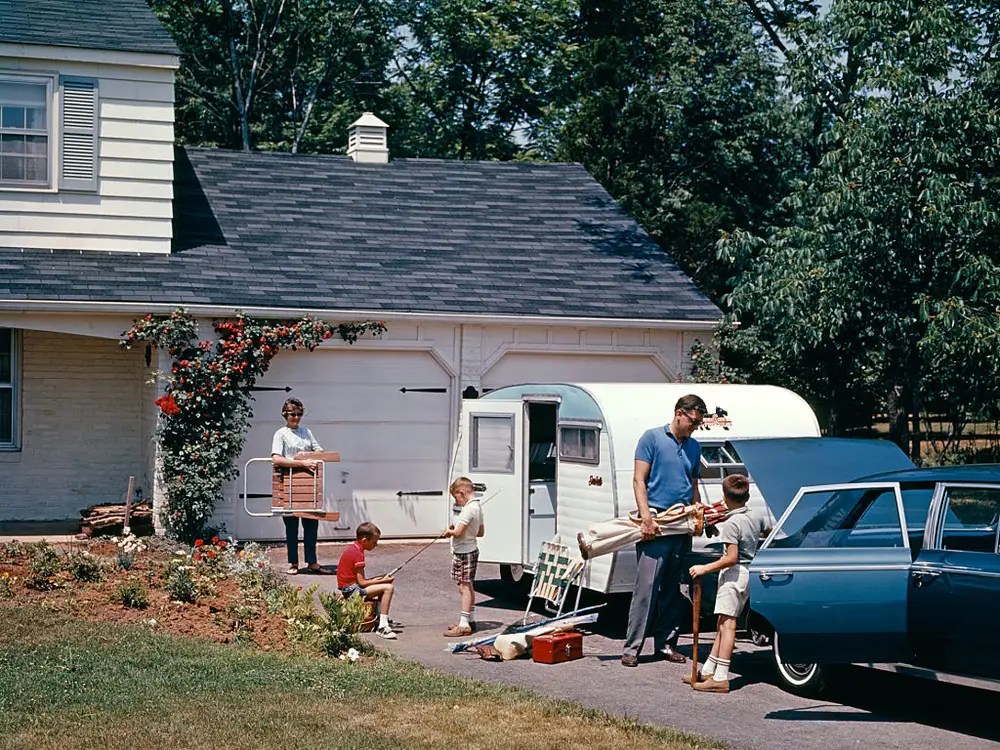
My goodness how the world has changed. Consider the humble family vacation for instance back in the day. In the post-war years and the growth of America at the time, there was such an atmosphere of freedom – to go anywhere we wanted when we wanted. The American highway was ours for the taking. The ol’ man had worked hard, summer was arriving, and it was time to enjoy our freedom.

Eisenhower’s growing interstate highway system, Disneyland – and Disney East known as Disney World in hot sticky Central Florida. California here we came! The Poconos! Wild and wonderful West Virginia. Aspen! Seattle’s new Space Needle! A host of amusement attractions across the country.

Seems every region had some sort of amusement attraction. We had ours not far away in the D.C. area – mostly in Virginia. In the Southeast there was the Great Smokeys and Six Flags. In the Mid-Atlantic we had a host of huge amusement parks – most of which are gone today. There were literally hundreds of thousands of entertainment venues everywhere. California and Texas had the majority of them. St. Louis and Kansas City had the Ozarks. Chicago had seemingly dozens of amusement attractions. New York had the World’s Fair.

Regardless of where the parents decided to take you, most trips involved a lengthy ride in the “Are we there yet?” family car – often hundreds, sometimes thousands of miles away. Air conditioning in a car was considered a luxury in those days. We sat in the back seat and roasted (and perspired) in the summer sun at 65 mph. If we acted up, there was the dreaded roadside spanking and the constant “If I have to pull this car over!” and “I’m going to get my belt!” to keep us in line. Failing that, the ol’ man could clock all of us with one swipe.

I was never jealous of my cousin’s summer vacations nor those home movies at Thanksgiving and Christmastime. I just couldn’t relate to them. We never took summer vacations. One, we could not afford them. Two, my father never would have been up for one. He was a homebody who enjoyed his mystery novels and watching the “O’s” play on a portable Hitachi 19-inch TV with a can of Bud’ in his hand.

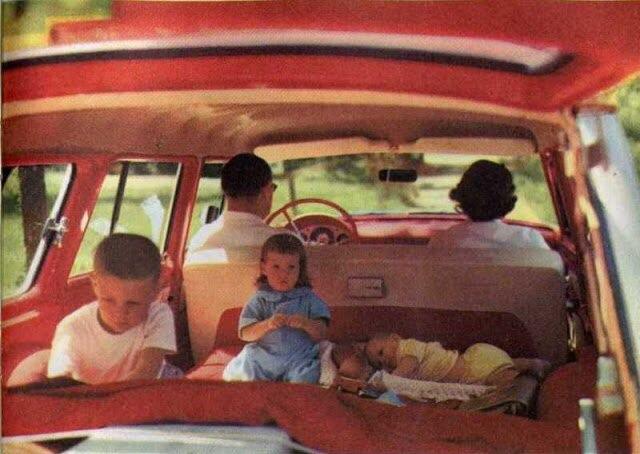
Summer vacations were something we watched others take. They’d head off in their Chevy station wagons and return tanned and blonde from the sun right before it was time to go back to school. At times, I wondered what I’d missed growing up.

I found myself content with playing in the yard, cruising the neighborhood on my bike, and retreating to my room in a world of imagination.

How did you spend your summer vacations?

Why Do We Watch Old Sitcoms?

Why do we watch old television sitcoms? Because the memories make us feel good. We were kids, so what did we really know? The raw beauty of being a child in the 1960s was our innocence depending upon where and how we lived.

In truth, the 1960s were a turbulent time of change, the Vietnam War, three political assassinations, riots and protests, the Apollo 1 accident, and a lot of political upheaval. Two assassinations and the war prompted political turmoil, leaving us all wondering how different the world might have been had the Kennedy brothers lived.

The situation comedies of the 1960s were a nice escape – often fantasies – some truly awful – but no less an escape. They enabled us to escape the troubled times beyond our doors. Many of these sitcoms were short-lived really awful programs like “My Mother the Car,” “He & She,” “Good Morning World,” “It’s About Time,” “Rango,” “The Hathaways,” “McHale’s Navy,” “Occasional Wife,” and a host of other forgettable situation comedies we’d like to forget.

Some sitcoms got a lot of criticism – like “My Favorite Martian.” What I love most about this show is its witty banter and great on-screen chemistry among the actors, writers, and directors. It has been said the cast and crew had a wonderful time working together. There were no bad apples in this cast of characters.

Admittedly, “My Favorite Martian” struggled in the ratings because it was a really absurd idea, especially when we knew very little about Mars. What kept us tuned in was the sophisticated nature of this sitcom. Newspaper reporter Tim O’Hara (Bill Bixby) wound up in situations he could not explain to anyone, especially with a vanishing Uncle Martin and a spaceship parked in the garage. No one could have carried that role better than Bill Bixby who had a natural gift for comedy. Ray Walston, a terrific actor in his own right, allowed us to look at ourselves as Earthlings. I watch “Martian” to escape the times we are currently in.

“My Favorite Martian” was a sophisticated sitcom that aired for three seasons on two networks through 1966 when it had finally run its course. The third season, produced by MGM (the first two by Desilu) was a bit of a reach. It had lost its charm and its core audience.

There were the goofy sitcoms we still watch like “The Brady Bunch” and “Gilligan’s Island” produced by the late Sherwood Schwartz. Seven stranded castaways? Two lonely souls somehow formed a family? Who would have thought these sitcoms would have such notoriety 50-60 years later? The popularity transcends Boomers and GEN Xers. Younger generations behind us have embraced these classic sitcoms, which illustrates how timeless they were.

The resurgence of classic sitcoms and streaming channels indicates just how popular these programs are. As boomers retire and settle into quiet lives, these old shows keep us entertained. And honestly, today’s sitcoms don’t hold our attention the way the classics did. But that’s another subject for another day.

The Passing of Common Decency…

Most of you remember “The Captain”…Captain Kangaroo…“The Best to You Each Morning…” sponsored by Kellogg’s, on CBS each weekday morning before school.

The late Bob Keeshan, the Captain himself, was the ultimate grandfather or favorite uncle. We loved his warm and gentle style and the values he taught us.

Keeshan was The Captain and The Captain was Keeshan.

With a risky roll of the dice by the network, Keeshan came on the air in 1955 amid the growing baby boom with an agenda of entertaining children and teaching them about life. Captain Kangaroo was a smash hit – embraced by millions of children across the country. He covered every subject imaginable – including how to treat one another. We saw in “The Captain” who Keeshan was – an advocate for children and a mentor for all of us. I still find myself practicing what Keeshan taught us.

Surely, we had to have learned something from him.

That said, it is remarkable what we’ve lost over the decades. The Captain taught us Common Decency – the art of treating one another respectfully, whether we agreed or not. This begs the question, whatever happened to respectful disagreement – a day when people could disagree with civility?

As the Captain and our adult mentors taught us long ago – we don’t have to agree on the issues – but please be respectful in our disagreements. If things got unpleasant in a classroom, we were told to go stand in the hallway or in a corner of the classroom.

Disrespect was not tolerated.

Why is it tolerated and even fashionable today to be rude and insulting? Where did this pattern of ugliness begin? It has been said fecal material rolls downhill and it does. Never have we seen it this bad and on this level. It begins at the top and in government by those who should know better. These are the people we elect to run the country, our communities, our states, and the private sector.

It is high time we took a long look at ourselves in a full-length mirror. Common Decency begins in our homes and in our families and neighborhoods. Seems we’ve taken the governor off of our mouths – that filter presented to us by our parents and teachers a lifetime ago. Where is that mouth filter we need so badly?

The path to civility begins in ourselves. What about that?