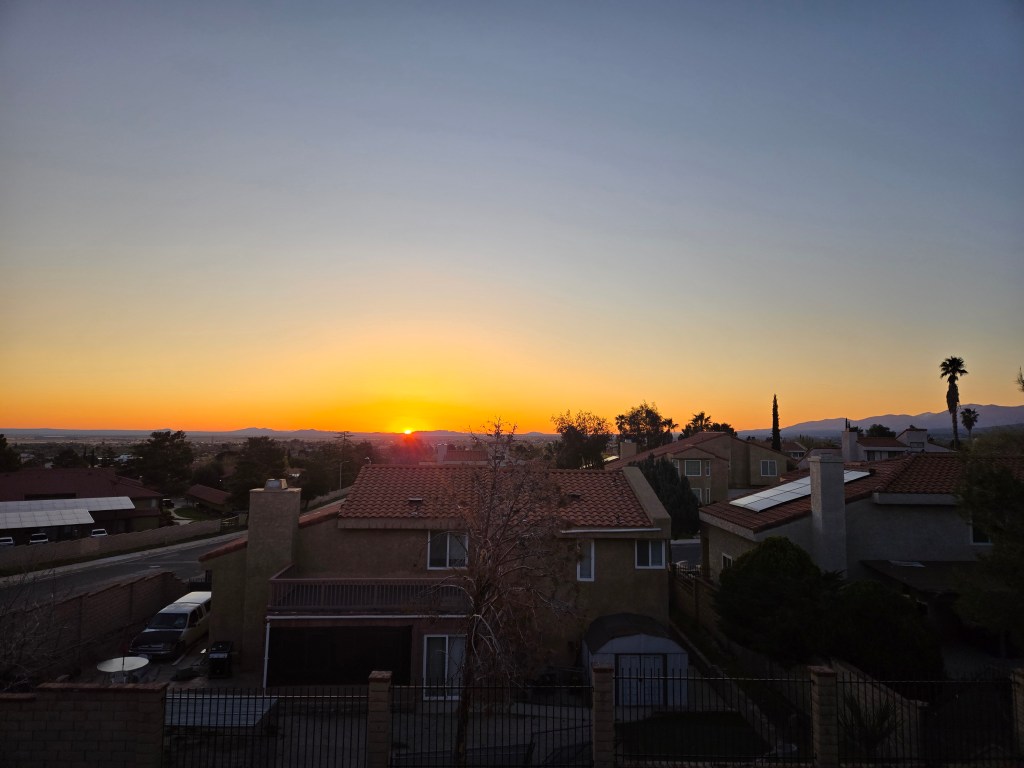
The Northern Hemisphere is waking up. It is springtime…for some of us. I remember the sounds and the aroma of springtime from a lifetime ago. Maryland and the Mid-Atlantic were an awakening in spring. The sweet scent of clover and honeysuckle brought about an overwhelming level of euphoria – knowing we were witnessing a rebirth and that everything was going to be okay.
That was then – this is now.
We are all significantly older these days, however, the memories remain sweet and wonderful. I live in the California desert and our springtime is noticeably different than the springtime of my youth.
California’s climate is decidedly different than what you find in the north and east. Our four seasons here don’t follow the same path as the rest of the country. The same can be said for Arizona, Nevada, New Mexico, and even segments of Colorado and Utah. The weather here in the west just isn’t what you find in the north and east.
How many of you grew up east of the Rockies and have migrated west to get away from the cold and dampness of winter? Perhaps you migrated west for a job. I have a buddy here in LA who was born and raised in New Jersey. We were having lunch at a Burbank deli, reflecting on our respective lives when the conversation turned to climate. He said…“I miss weather…”
I knew exactly what he meant.
Springtime signaled the onset of summer – freedom for a kid…
California weather differs between up North and down to the Southland. Northern California gets the rain we don’t always see in So’ Cal’. Sometimes, they get too much rain. Would you folks in the Bay Area and Mount Shasta send us some of your rain?
Despite California’s sunshine, I long for weather east of the Mountain West. Those you who live in the East think of the desert West and think “Well, must be nice…” In the perceived paradise of California, we awaken to the blazing morning sun and think, “I wish it would rain…”
Conflict and chaos are the darnedest human elements. They keep people at odds. Some thrive on conflict and chaos. They live for it. However, if you desire peace and some level of smooth, understand what you have control over and what you do not. Self-control is dicey at best because we don’t always have control over our own emotions and actions. You have no control over others.
It is true that when you have humans and other living creatures, you’re going to have conflict. In the animal kingdom, it becomes well-defined. There are no misunderstandings. Animals communicate effectively and quickly – and often in violent terms when the weakest in the disagreement walks away with scar tissue and its tail between its legs. Message received.
Not everyone has the same approach or priorities, which fuels conflict. What’s important to you might not be important to someone else. This is especially true in the workplace and in our homes. Conflict exists in friendships, with work associates, in marriage, with our kids, an annoying neighbor, or anywhere there is politics.
Politics is little more than perception – what people believe and want. We apply the word “politics” to elected officials who earn a living and operate in the public trust – the politicians we loth. They will fight like hell to keep political power. Yet politics is the process of working through decision making in a group or groups involved in making important decisions that affect our lives. Ideally, you have a group of decision makers with the same vision operating for the greater good. Rarely does this work in reality. People generally want what they want when they want.
It is true conflict makes people uncomfortable. Few things fuel anxiety more than disagreement and conflict. It is challenging at best. Experts on this subject offer the following advice. It is human nature to take your marbles and go home rather than tangle with a difficult personality. The question is – do you confront a person seeking compromise or do you hit them in the head with a mallet? Seems everyone wants their own way – but life rarely works out that way.
One thing I learned the hard way is to practice cognitive thinking – how I respond to a situation. My very nature is to react instead of proacting. I can tell you that never works. When you’re dealing with an impossible jackass, reach inside and evaluate what is upsetting you and regroup. There are people you will reach compromise with – and impossible people to negotiate with. They want it all.
Sometimes, you have to cut your losses and move on.
Life is all about compromise if you want to get along with others. It is about human dynamics and whether you naturally dovetail or not. If you enjoy a good connection with an associate, it is easier to work through decisions with a spirit of compromise. The most important part of interaction is the ability to listen and really listen – something I’ve never been good at. Resist the urge to speak and instead – listen.
When you listen, you understand another’s point of view. When you understand, you develop empathy and begin to understand. With understanding, you develop a strong connection – and without conflict. You’re not always going to agree on the issues but understanding leads to respect and empathy. Without empathy and mutual respect, it doesn’t work, which is when you have to decide what’s next.
When my dad passed in 2001, it was the first time I’d ever heard the word “dementia.” I didn’t know what the word “dementia” meant, but I would learn how profoundly it would affect my mother in the years following my father’s death.
It was in the latter part of the 1980s when I began wondering what was going on with my mother, who was 66 at the time. She lived 800 miles away from me on the East Coast. We talked on the phone a couple of times a month and wrote letters. I still have many of her letters all these years later, which keeps me connected to her.
It was the little things my mother would say to me that didn’t always add up. She repeated herself a lot, which is normal when we pass 60. Other nuances of her demeanor and the way she sounded concerned me. My mother had always been a strong, sharp articulate woman long on wisdom. She’d been through a lot – divorce and alone with two kids for a time who knew instinctively how to run a household and raise kids. She taught us proper values and kept a close eye on us.
She was my conscience, my mentor, and my greatest friend.
I didn’t understand what was happening to my mom early on. She was slowly slipping away right under our noses. She seemed disconnected when we had always been close. We grew further and further apart.
In time, we became strangers.
On the rare occasion I had contact with my siblings, they voiced frustration with our mother. My belief was, “Well, that’s just Mom…” I wasn’t there daily to see what was happening. When I visited my folks, I saw nothing alarming – but she was clearly different. She was always glad to see me. In time, our visits became fewer and her awareness more distant. At times, I felt like I was chatting with a stranger.
When my father’s health deteriorated from kidney failure and heart disease, she detached from him. She became more recluse – isolated from everyone. Eventually, she wouldn’t leave her bedroom. Frustration in the family abounded because no one understood what was happening to her.
My dad passed and my mother went into assisted living. Her focus was The Weather Channel – the only program she watched. I think it was the consistency of The Weather Channel she found comforting. It was familiar and it never changed.
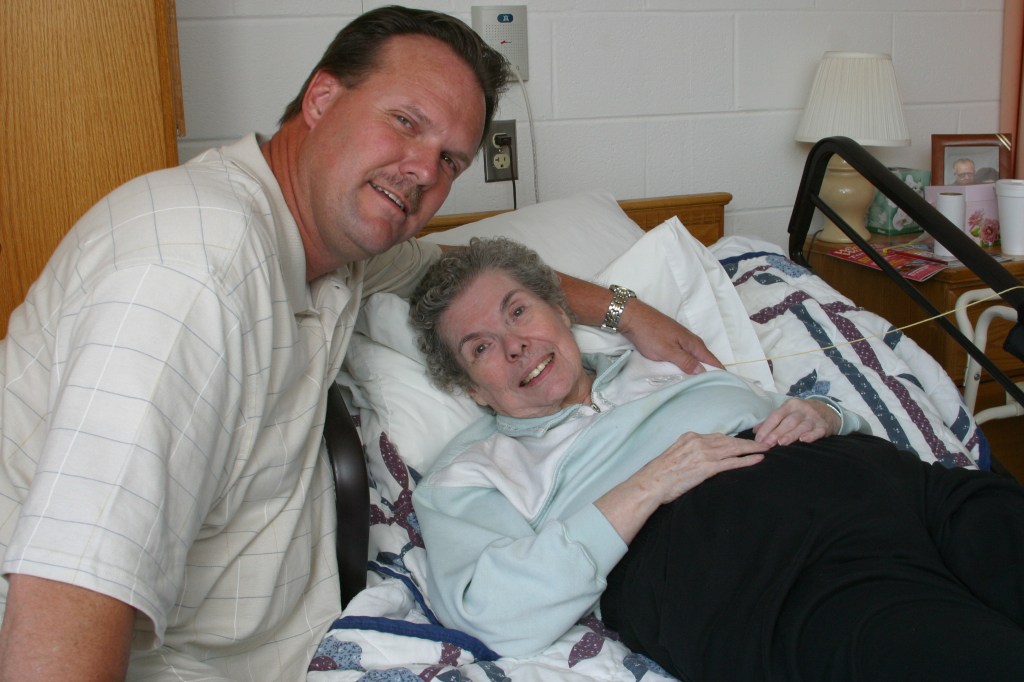
When I visited her in assisted living, she was quite formal. She had no idea who I was. Twenty minutes into our visit, she shouted “JAMIE!!!” and knew who I was. As our visit ensued, she didn’t know who I was. I’d listen to her stories and her fears. Her awareness of who I was changed from minute to minute. Her mental health deteriorated further and she was moved to a nursing home. It wasn’t what anyone wanted for her, but it was unavoidable. She would pass in 2008 at age 84.
The Alzheimer’s Association tells us Dementia is not a single disease, but instead an overall term to describe a collection of symptoms that one may experience if they are living with a variety of diseases – including Alzheimer’s disease.
It adds – diseases grouped under the general term “Dementia” are caused by abnormal changes to the brain – symptoms – that trigger a decline in thinking skills – also known as “cognitive” abilities – severe enough to impair daily life and independent function. They also affect behavior, feelings, and relationships.
I can tell you firsthand dementia adversely affects families, marriages, and friendships. It causes family disagreements on what to do with the affected family member. I can tell you dementia isn’t a disease you can handle alone.
It is said Alzheimer’s disease accounts for 60-80 percent of dementia diseases according to the association. There is “Vascular Dementia,” which happens due to microscopic bleeding and blood vessel blockage in the brain – which is the second most common cause of dementia. The Association goes on to say those who experience the brain changes of multiple types of dementia simultaneously can have what’s known as “Mixed Dementia.” It also adds many other conditions can cause cognitive impairment that are not dementia including some that are reversible, such as thyroid problems and vitamin deficiencies.
I’ve known those who have personally experienced Dementia. I watched a close buddy, age 87, slip away in months from dementia. He never got out of bed and would not leave his home. His family was intolerant of his condition and there was abuse. More recently, another close friend of mine watched his mother decline and pass in six months from a rapid form of Dementia. He was devastated.
I will add dementia is not unique to the elderly. It can happen at any age. What’s more – not enough is known about this disease presently but it has become more common as the aging population grows.
If your family is affected by dementia in a loved one, practice tolerance, get professional help, and do not go it alone. It is important to understand victims of dementia cannot help their condition or their behavior.
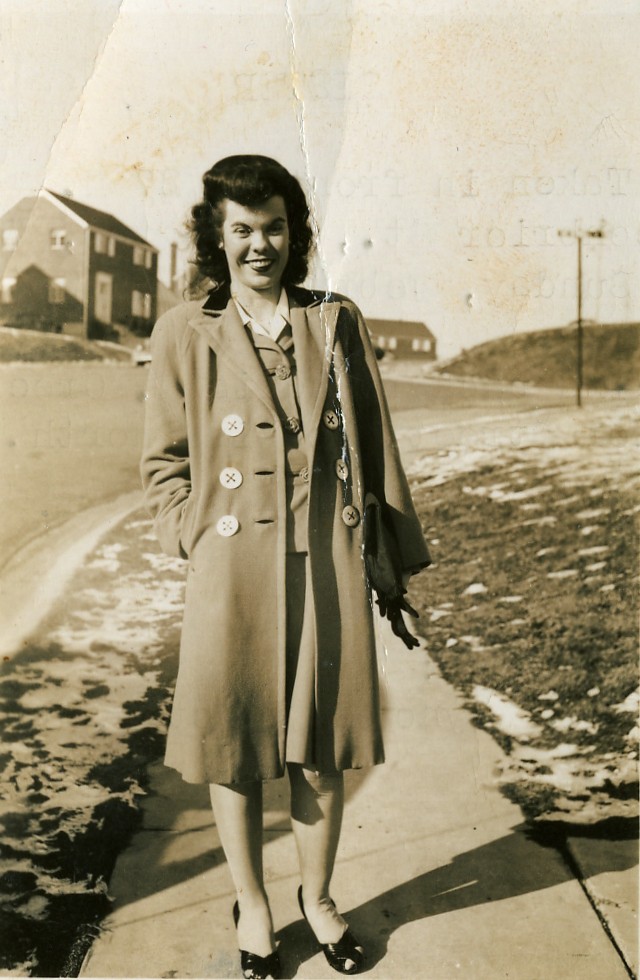
Lillian Proctor, my mom, circa 1944, age 20, Arlington Forest, Virginia coming of age. She was a fiercely independent Washington girl who had to grow up quickly when her brother – my uncle – headed off to World War II in the Pacific.
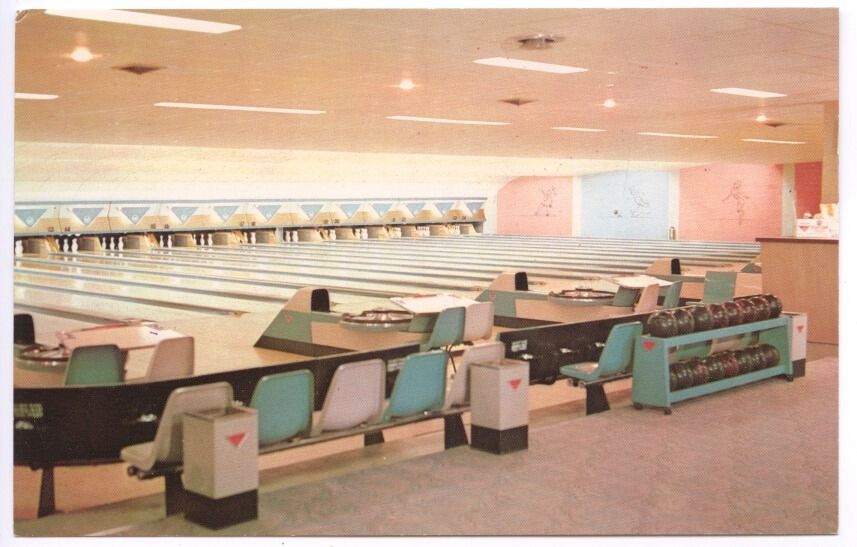
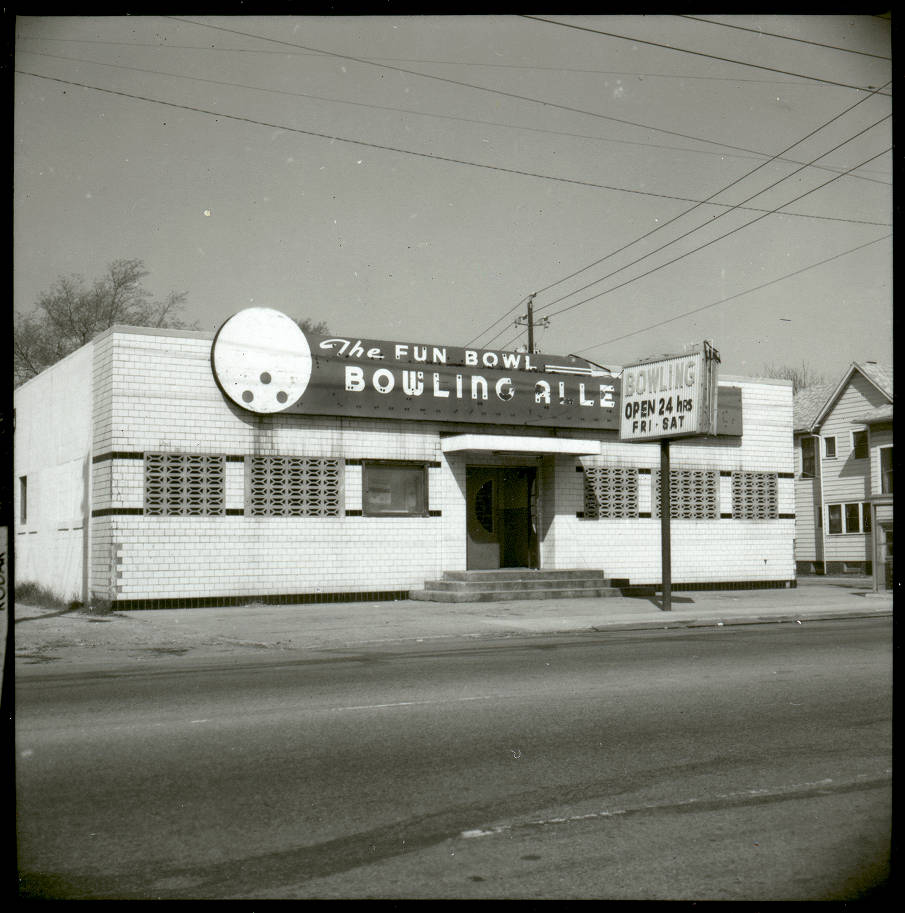
Do you remember when bowling was something millions of us did? The Bowling Boom? Baby Boomers? Millions of us? It kept us off the streets. It was easy, fun, and accessible to nearly everyone. Prior to the automation of bowling in the 1950s, bowling was a more limited pastime with the demeanor of a pool hall. You didn’t have the pin-setting speed you had with the automatics. Pin boys took a lot more time – and they required tips.
Before automation, bowling alleys had pin boys at the end of each lane or a pair of lanes requiring them to move quickly between lanes to keep up with the game. Some houses had one pin boy for four lanes. The job required hours of jumping into the pit to gather pins and return bowling balls for low pay and resetting pins quickly while dodging the obvious hazards like stray bowling ball from disgruntled impatient bowlers if they weren’t fast enough. Being a pin boy was considered a dangerous occupation with broken bones and bruises. My father was a pin boy in Kansas City during the Great Depression and had curved index fingers to prove it.
In the 1940s, a gentleman by the name of Gottfried Schmidt designed and built a prototype automatic pinsetter – which ultimately became the AMF 82-30 pinspotter introduced in 1948. The 82-30 was a clunky, yet pretty reliable pin setting machine, which wound up in bowling centers around the globe. The 82-30 gave way to the more advanced 82-70 and 82-90XL later on, which were clearly better machines.
AMF got the jump on Brunswick Corporation early in the 1950s – which rolled out its original A-Model automatic pinsetter in 1956. Brunswick’s pinsetter was mechanically complex and required extreme expertise in its service with a belt-driven gearbox and a clutch that engaged when a bowling ball hit the pit cushion. Brunswick’s machines had the precision of a Swiss watch.
Although the Brunswick A and A-2 machines were fiercely reliable, they also had issues early in the going. It took time to get them perfected. Originally developed and manufactured by Otis Elevator, which had extensive experience with manufacturing systems, the first 25,000 Brunswick pinsetters were built by Otis.
Bowling was so popular in Japan that Brunswick pinsetters were built there under license to keep up with the demand. By contrast, the AMF 82-30 was a simple all-electric machine with three motors and an electromechanical control unit with a cam, switches, relays and a host of other types of electronic gadgetry to get the timing right.
With the advent of automation, the bowling industry needed a fresh image. Bowling centers popped up nationwide with a fresh “family entertainment” image to maintain. They were new and exciting and became overwhelmed with welcomed business. I vividly remember the post-war bowling boom when established bowling alleys were renovated along with a bumper crop of new centers from coast to coast. My dad was an avid league bowler who maintained a 185 average in sanctioned league play. We were at nearly every grand opening of a new bowling center at the cusp of the 1960s around suburban Washington, D.C.
The passion for bowling was so fierce, and league play so common, that you didn’t have a prayer of finding open lanes between 5 and 10 p.m. any night of the week. The waiting lists were so long that closing time arrived and you never got the lane you waited two hours for.
Did you know there were some 9 million league bowlers in the 1970s with 10,000 bowling centers? Today – at best – 1.3 million with at least 70 percent of that 10,000 gone. How do you explain such a decline? The bowling boom worldwide can be defined as no less than phenomenal. What has happened to the game since the 1960s could also be considered phenomenal.
That said, how could something so popular be so gone a half-century later?
The answer can be found in changing social patterns, work schedules, commitments, and alternate entertainment venues. The internet has created alternate forms of entertainment where people don’t have to leave their homes anymore. There’s even virtual bowling you can do in your living room. I think I will pass on virtual bowling. I prefer a bowling ball and the aroma of lane conditioner, beer, and a snack bar.
I started bowling at age 11 and grew up around bowling. The changes to bowling in my lifetime have been remarkable. I remember the excitement of the game and the atmosphere of my favorite houses. I recall walking into “Bowl America” up on the hill above Odenton, Maryland in the 1960s. The place was quiet with people chatting in anticipation of youth league play on a Saturday morning. We took up 12 lanes in a 34-lane house. The manager would come on the PA system, flip 12 switches, and we’d marvel at the sound of Brunswick A model machines coming to life followed by the symphony of pinfall. It was a magical time to be a kid growing up in the ‘burbs.
Back in the day, bowling centers weren’t just about bowling or shooting pool. They were community gathering spots where friends gathered, ordered burgers, beer, and hotdogs while swapping lies and sharing war stories. Sixty years later, we socialize via cell phones and the internet. Some call this progress.
Do you remember learning to drive and that first driver’s license?
Most of us received our “how to read a calendar” training in the months prior to driver’s education, our first driving test, and that first drive all by ourselves. Alone – with an AM radio blaring – with the freedom to sing to ourselves as loudly as we wanted and go pick up a friend or two. Oh sure, it was the family’s second car but – by golly – we were going to have our own car – some day…
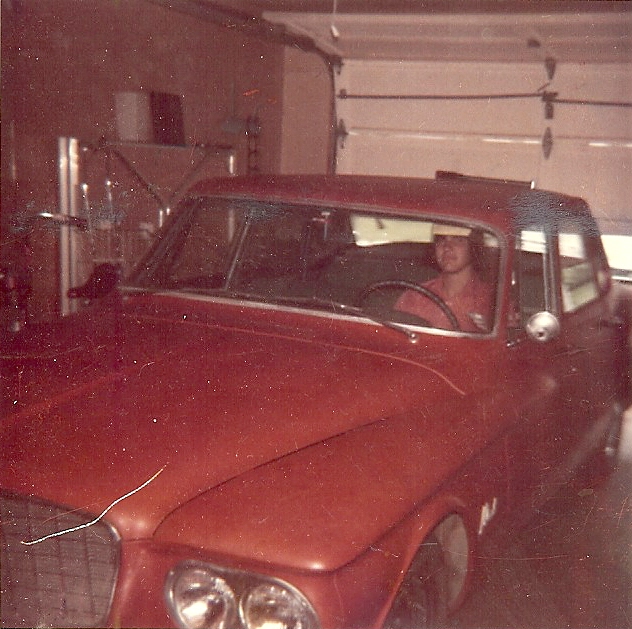
I suppose I was lucky. My mother’s hairdresser gave me her worn-out 1960 Valiant sedan, which sat in the garage for nearly a year before I could drive it. I had this car all to myself. My education in automotive technology began with that car and its humble little slant six. I’d sit in the Valiant, turn on the tube AM radio, and wait for the sound.
Yeah, a car radio with tubes – seriously.
I’d listen to Elton John, The Eagles, Gilbert O’Sullivan, The Beatles, and a host of others. We laughed when Eric Carmen and The Raspberriessang “Go All The Way…” and we’d speculate if they actually did it. The Starland Vocal Band with “Afternoon Delight…” was another sexual revolution pop hit that got our motors running.
My first car – a 1960 Valiant given to me by my mother’s hairdresser in 1972. I would become a licensed driver that September. The Valiant was my freedom at 16 – however, it was in no way a girl catcher though I would have appreciated the girlfriend. It was hauled off to the junkyard the following year when the transmission failed on a cold winter morning headed to school.
At my high school, there were the chosen few – those whose parents put them into new cars to the envy of us all. There were those with new muscle cars – one guy with a ’67 Shelby and another with a Chevelle SS. There were others if I think about it long enough. I wasn’t one of those nor were any of my friends. We were the poor and huddled masses who drove old clunkers or the family car.
How very uncool.
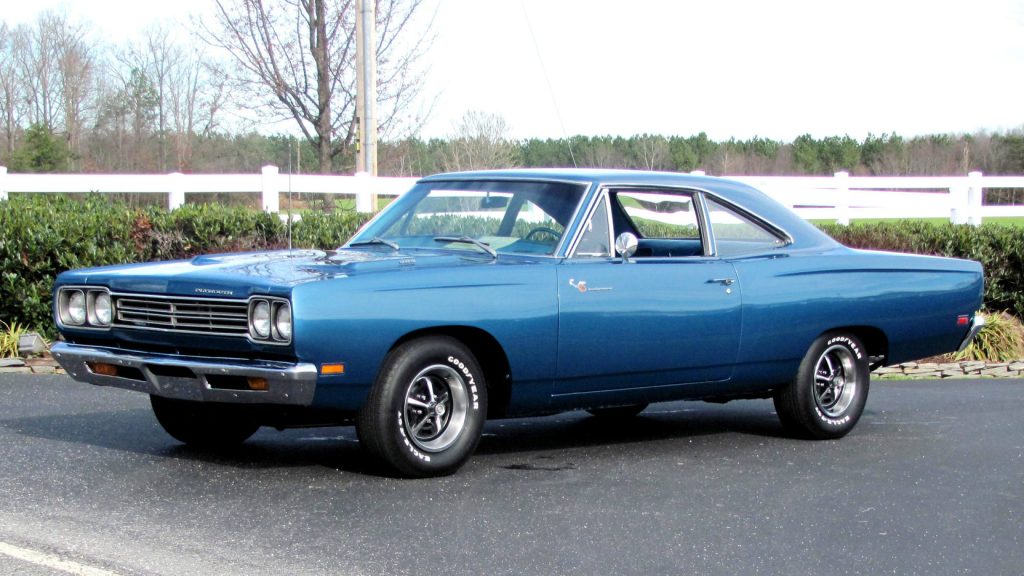
The cool kids drove muscle cars like this Plymouth Roadrunner when I was in high school.
What I find remarkable today is young people with no desire to have a driver’s license – their own little declaration of independence. They’d rather use Uber or Lyft than grab the wheel and go it alone. We are late-in-life parents with a 16-year-old son. Ironically, he couldn’t wait to get his license and get behind the wheel. He drives a 2022 Kia Sportage, which is the perfect ride for him and a whole lot nicer (and safer!) than anything I had at 16.
When we were young, we went cruising, hung out, and visited with our friends in person. We didn’t have cell phones and personal computers. Where I grew up there was the Hilltop Plaza parking lot and Foxhill Park in my native Bowie, Maryland. We’d hang at Hilltop, examine each other’s cars, cruise over to Foxhill Park or Freestate Mall, chat for a while, tell war stories, and head back to Hilltop for pizza. We’d do that until 11 or so and head home before the parents came looking for us.
Kids today hang out online, watch YouTube together, and game until all hours of the night. I’ve found young people hang out like we did a lifetime ago – only in a different way in our ever-connected world. And me, I like face-to-face time where doable, and not some sort of electronic device.
Breathing the same air while visiting in the same air space has become a lost art.
Do you remember high school dances and proms, your first love, and when you looked at your date and said, “they’re playing our song…” Coming of age in the 20th century was an exciting time of youth and discovery. There was so much to experience, and we were just getting started – with our whole lives ahead of us. We were the youth generation that was never going to grow old.
A popular rant was “Never trust anyone over 30…”
Well – 30 came and went a long time ago and we’re looking mortality in the eye much as our parents did a half-century ago, yet we’re still convinced we will never grow old or die. Well, you might as well hang on and enjoy the ride for as long as you can until we have to jump off this apple. Nostalgia satellite radio or Google Home plays our favorite music, and we get to relive our youth all over again. We weep for what was – that moment when we first heard “Color My World” by Chicago and it grabbed us emotionally by the throat when we fell in love for the first time.
The lust – the sweet embrace. The anticipation… Making out in the back seat of your first car or the family’s second car. Perhaps you married your high school sweetheart and the emotions still remain 50-60 years later. You look at each other and become overwhelmed with raw emotion – euphoria. Or you still feel the achy memory of a lost love from long ago.
I often think of the rock group Chicago and reflect upon my youth. Such innocence and sweet memories of the incredible music of our time. I focus on Chicago because their music impacted me back in the day. Chicago memories go way back to 1967 when it was formed as The Big Thing with Terry Kath on the guitar, Robert Lamm as vocalist, Danny Seraphine on drums, Walter Parazaider on sax, Lee Loughnane on trumpet, James Pankow – trombonist, and Peter Cetera’s unforgettable buttery smooth voice. I believe Cetera was on bass at the time.
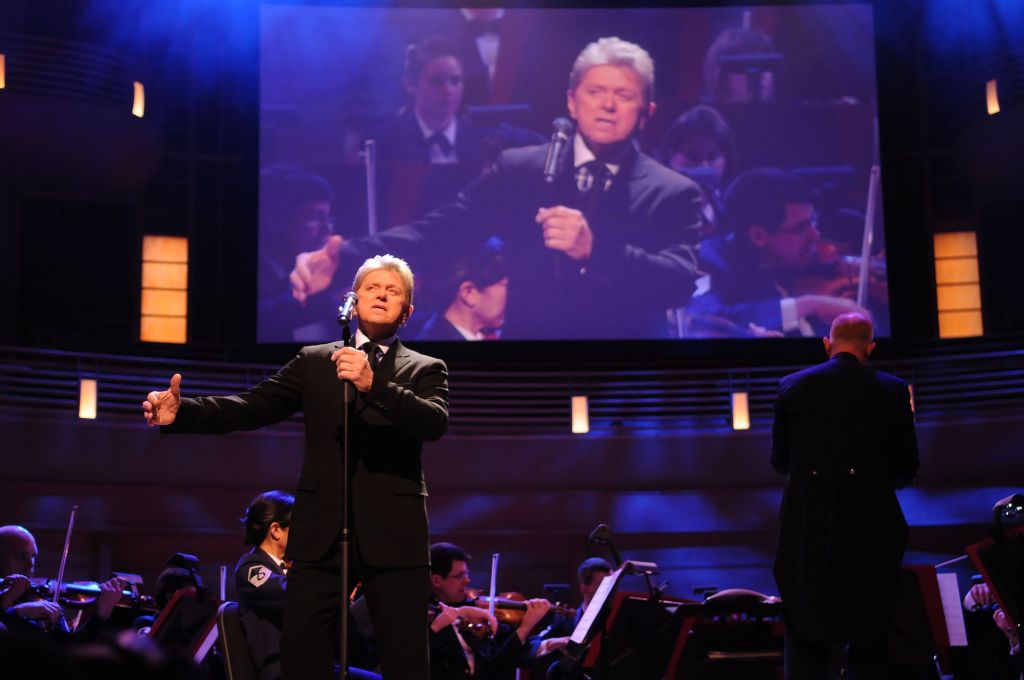
Cetera performing with the U.S. Air Force Band
Chicago has provided us with the incredible talent that has brought us the memories. These guys have rattled the speakers of car radios and disc jockey electronics for decades. Whenever I hear their work, the tumblers in the corridors of my mind fall into place where I remember the exact moment when I first heard their work. They became the Chicago Transit Authority before becoming just “Chicago” in 1969.
Chicago was a unique chapter in American music history like no other. They described themselves as a rock and roll band – with horns – a most unique combination of jazz, classical music, rhythm and blues, and pop music. They spent a lot of time at the top of the charts.
Peter Cetera has filled our hearts and our memories with such incredible Top 40 singles including “Glory of Love” and “The Next Time I Fall” in the 1980s. “Glory of Love” is a personal favorite. “If You Leave Me Now,” written by Cetera, captured our attention in the 1970s. Cetera’s work has also aired in numerous motion pictures.
Laudir de Oliveira joined Chicago in 1974 as an additional percussionist. Drummer Terry Kath took his own life in 1978, which shook the band to its core. The band replaced Kath with Donnie Dacus shortly thereafter. Davus left the band in 1980 and was replaced by Chris Pinnack. The many changes to follow only served to refine the great sound of Chicago. Peter Cetera would leave the band in 1985 and go solo.
Chicago wasn’t your conventional rock group. It was the power of brass, coupled with incredible vocalists and instrumentalists that supercharged the windy city’s most memorable rock group.
They not only rocked the city – they also rocked the world.
Chicago continues to marvel audiences and listeners around the world more than a half-century later, yet baby boomers remember these guys most from our youth in the sixties and seventies.
I was parked on a side street waiting for my teenage son to say goodnight to his girlfriend just after the stroke of Midnight, January 1, 2025, when the Paul McCartney hit “Band On The Run…” from the mid-1970s was played on satellite radio.
I thought to myself, “My God, I feel old this morning…”
Has this ever happened to you? Those familiar vintage hits that were once Top 40 on FM radio stations across the nation? As “Band On The Run” unfolded, I began to feel those old feelings associated with springtime that evoke both euphoria and profound sadness. Euphoria for the aroma of spring clover and sweet honeysuckle along with balmy temperatures, the chorus of birds, and the anticipation of summertime. Sadness over a lost love – especially a love lost to someone else.
A few of us understand how that feels.
Two of the quickest connections to our pasts are our sense of smell and music.
It is remarkable what our minds retain from a lifetime ago. Raising a glass to the terrific era in which we grew up. Have a terrific weekend, everyone…
I’ve been living in Los Angeles for 31 years. L.A. isn’t just a great big freeway – it has long been a passionate car culture bent on being seen in traffic…in style… Cruising downtown – profiling in front of store windows watching yourself go by. L.A. is an enormous ego trip if you’re driving something cool. Then – there’s the rest of the mundane masses driving nothing to be seen in.
Today, Los Angeles is a sea of uninspiring imports and domestic economy cars, which has been the trend since the 1970s. The vastness of Los Angeles calls for economical transportation, especially since the fuel shortages of the seventies. These econoboxes line the streets and driveways of the L.A. Megalopolis from North Los Angeles County to the Tijuana border.
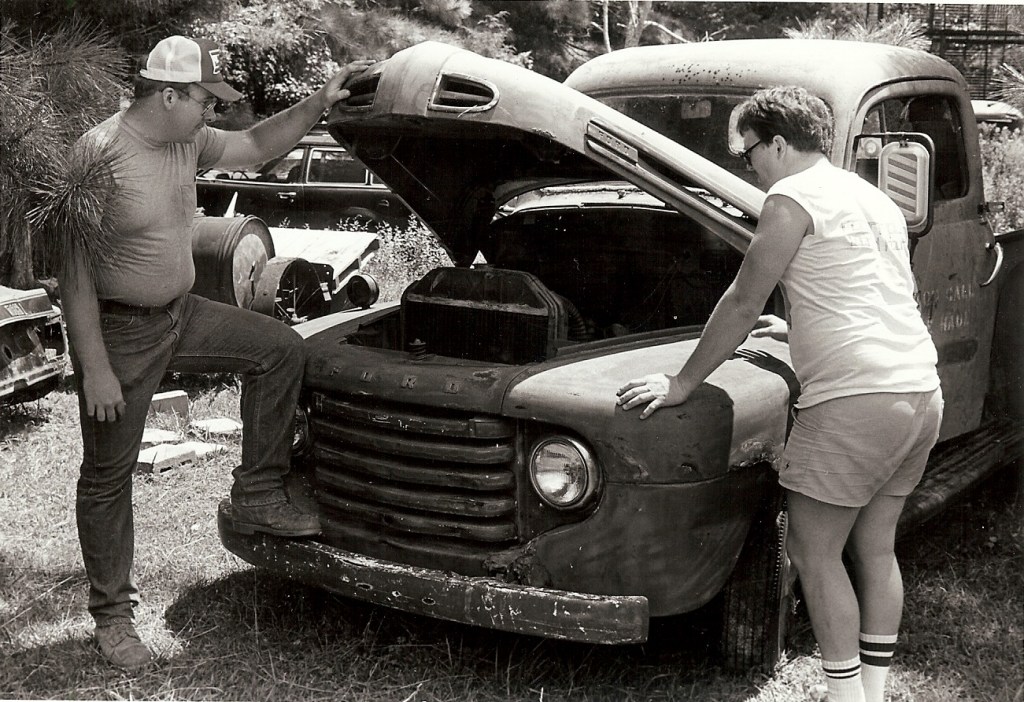
Los Angeles has changed a lot since the post-war years. Stylish Detroit rides of steel have become mundane boilerplate boring transportation. Can’t tell one brand or model from the other. I’ve been a car enthusiast all of my life and have earned a living writing about automobiles, and how to fix and restore them. Yet, I cannot tell them apart in traffic except for their emblems and markings. Pickup trucks have become so common where I cannot tell a Chevy from a Ford from a Ram.
How pathetic is that?
Trucks used to be distinctive to each brand name. Dodge RAM trucks, especially, were standalone with an unmatched masculinity. Do you remember the 1990s when Dodge trucks underwent a massive redesign to where they resembled a Mack truck? That brute styling remained with RAM for a long time. The latest offering blends right in with every other truck out there.
With very few exceptions, automotive styling has become mundane though I am bound to get arguments on that one – especially if you just bought a new car or truck. Creature comforts have vastly improved though I wonder what happened to the driving experience – actually driving a motor vehicle and enjoying the excitement it yields. Buyers want the comforts of home during the morning commute – features that also distract and cause accidents. To protect drivers from themselves, automakers have had to dial in safety features – like automatic braking, perimeter protection alerts, steering correction, flashing brake lights, and the rest of it to prevent accidents.
Whatever happened to personal responsibility?
We’ve gotten so far away from the human factor of driving and vehicle personalization that the driving experience is not enjoyable anymore. What about that? Not sure automakers or society will opt for this – but what about the distinctive nature of automotive styling we could actually recognize? Styling has become so homogenized that it reminds me of NASCAR where everything has to be the same right down to the body, chassis, and powertrain. Whatever happened to competitiveness where “you run what you brung…” and may the best man win? We need that on the freeway.
Those of you who read Boomer Journey remember a different time on the American road. Some of you have opted to continue driving your classic car while others have chosen to roll with the flow.
Boomers grew up in an amazing time in history. America was on the grow and education standards were high. In the wake of the Great Depression and World War II, the only way was up. I had the good fortune of great mentors growing up – terrific teachers and administrators – who showed me the way and managed to infuse some level of wisdom into my stupid head.
When I entered 5th grade in September of 1966, I was living in the fastest growing city in the United States – Bowie, Maryland – some 26 miles outside of Washington, D.C. At the time, the Prince George’s County School system worked feverishly to keep up Bowie’s growth. Homebuilder William Levitt (Levitt & Sons) brought his community building resources to what was a rural area of the county at the cusp of the 1960s. The quiet little hamlet of Bowie, Maryland was about to change.
Bowie was a wide spot in the road on Defense Highway (MD 50/450) between Washington and Annapolis, Maryland. Levitt arrived in Maryland at just the right time. In those days, Bowie was in a triad region between Washington, Annapolis, and Baltimore. It was on the way to everywhere. US Route 50 became a freeway between Washington and Annapolis, with Route 3 North to Baltimore.
In the fall of 1966, I met the greatest teacher I would ever have—Miss Nancy Washington, 26, fresh out of college. She wasn’t your traditional “Single File, Class…” educator. She was very down to earth, a true friend who made learning fun. She made education an adventure. In fact, she was so good I’ve never been able to forget her profound effect on my life.
At Bowie Senior High School in the 1970s, we had Vice Principal Anthony “Tony” Verge who was raised in his native West Virginia. Mr. Verge was not your average administrator. He yielded a firm hand, yet we never felt he was the heavy. If you were cutting class and hoping to get out of the Bowie High parking lot unnoticed, Anthony Verge would be waiting, then pop out from behind a car and comment, “Where you supposed to be?” He didn’t drop the hammer – he reminded us to examine our conscience. We knew where we were supposed to be.
I’ve had the good fortune of knowing Tony Verge since the 1970s. I lost track of him for decades, then found him and his lovely wife and educator, Arlene, recently – long retired in West Virginia. We’ve had a wonderful enduring journey together in recent years getting to know each other intimately in the peace and quiet of their rural community. They are stellar people to spend time with. The Verges have dedicated their lives to service to humanity and are still at it in their eighties.
John Filardo is another terrific mentor and educator – very laid back and easygoing. He managed to educate me in Consumer Math 50 years ago when it was virtually impossible to educate me. I was a terrible student and challenging to teach. I used to go to his house and tune his cars, which was how we bonded and have remained great friends for a lifetime. A committed golfer, John Filardo retired from teaching years back – focusing on what made him happy. He has never wavered. I call him and he will answer, “I’m about to tee off, call me later.”
Truly committed educators are those who spend their lives making the world a better place before they hand us to the world. Sadly, I missed out on Nancy Washington, who I lost track of after elementary school ended in 1968. She passed in 2000. I regret missing out on her and thanking her through the years. I will never forget her.
John Filardo and The Verges continue to educate me with their wit, humor, and continuing commitment to educating me a half-century later.
Every year end, I post something philosophical to reflect and wrap up the year. We are in turbulent times with a lot of unrest going on around us. We’re headed into uncharted waters with no idea how this will all shake out.
A lot of us are scared.
I promise no politics – but politics is surely affecting our lives both nationally and on personal levels. New laws. Big changes. Hope and shattered hope. Disillusionment and euphoria. We all have our biased feelings – just never forget to put country, family, friends and your faith first. You don’t have to agree on everything. Just remember to practice mutual respect.
Be nice…
I am a born pessimist – born to this mindset. It has been challenging for me to be optimistic. It is how I am hardwired and how I was formed growing up. I was taught good values by great mentors, and I know I was loved growing up.
Call it genetics and conditioning.
Despite all that – I’ve learned how to laugh at myself. It’s a good practice. To get through life – you must have a sense of humor – the ability to laugh it off and find a way to move forward.
I count my blessings every day and give thanks to the Higher Authority who handed me life some 69 years ago. Grateful for a tight wonderful circle of supportive friends and family who’ve stood by me through a whole lot over a lifetime. Enduring friends – you know who you are.
Thank You for your never-ending belief in me.
As we enter 2025, it is best to look at the future with a sense of euphoria and wonderment. It is out there waiting for us even as we face our twilight years.
Old age doesn’t mean dead. Chart your course and never stop dreaming.
Baby Boomers and GEN Xers are arriving at old age and a lot of us don’t like it. It was where our parents and mentors were a lifetime ago. However – there’s a lot to be said for not having a choice. You are growing old and that’s hard to accept. However, growing old means you are still alive – a tough survivor who has weathered the storms and flown out stronger for the tough times when a lot of us are gone from this world. You are still here to know both love and pain. Pain – tough as it is – means you’re still alive. And – when you pass may you have few regrets and know love.
And remember…All Will Be Well…
And finally – I am going to say something that will ruffle a few feathers – but please know it is important. We’ve become too dependent on social media and electronics – both of which I am practicing here. Way too dependent. As we hold our cell phones, tablets, and laptops – we’re missing out on a whole lot. We are missing out in each other. Time passes. So does life.
That said, put down your cell phones, tablets, and laptops and take the time to spend time face-to-face with a friend, loved one, a sibling, or an associate whom you value. You never know when today will be their last – or yours…
Again, my thanks for your love and friendships. Be safe and may you know happiness and good health in 2025. No one knows what’s next – so enjoy every moment. Never forget to say “I Love You.” Hug them and let them know what they mean to you.