Late summer brings with it such a mix of emotions for a child. The sound of katydids roaring in the trees. Latent heat and humidity. Smells in the air. Limp faded green tree leaves. The rumble of thunder in the distance.
We experienced all of these dynamics as children.
Fall is a season of transition and also happens to be my personal favorite. The anticipation of autumn is a personal high. The sweet aroma of woodsmoke in the air. Leaves rustling in the trees. The sun growing ever lazier and lower in the sky. Fall and winter are a time of rest and settling into a good book or an old movie. As I write this, autumn is but a memory because temperatures remain in the triple digits – still – in the hottest summer we’ve seen in decades.
Nature knows best, however…which is why we have the change of seasons. The animal world hibernates. It goes to sleep…dormant. You never see a housefly in winter unless it was trapped inside as the leaves fell. Autumn is a time of winding down into the relative quiet of winter. For me, autumn is a time to sit outside, take in the air, and just dreaming. Take heart friends – fall and winter are coming…and then we will be complaining about the cold, time change, and having to rake leaves.
I was just chatting with a buddy I hadn’t seen since the 1970s. We reconnected via Facebook like a whole lot of us have. The 8-Track Generation meets the World Wide Web. Steve and I were high school buddies from the Class of 1975 a long time ago – both of us staring at 70 right around the corner. Like a lot of you, we were lamenting our ages, aches and pains, and the “joys” of growing older. Remember….we were the generation that was never going to grow old and didn’t trust anyone over 30.
Remember that?
How did we get here so fast? Isn’t that what a lot of us are saying? In truth, we got here at the same pace as our ancestors – one day at a time along with a host of life experiences. We’ve raised our kids, are babysitting our grandkids, and endeavoring to get used to retirement. For some of us, retirement has been easy.
For others, a huge adjustment.
I think it’s important to enter retirement with continuing purpose. Without purpose, we tend to fade away. So – what about that? Purpose can be chasing a lifelong dream – what some would call the “Bucket List” or you can focus on your dreams. Some call this our “twilight” or “sunset.”
Are you kidding me?
No reason why this can’t be a sunrise – a new chapter where we reinvent ourselves and make old age a new adventure. I used to have a neighbor who lived under the oppression of her husband. He passed and she started living. She traveled the world, reconnected with her friends, and blossomed like she hadn’t in decades. She was in her late seventies and rediscovered her dreams.
She started living.
Being a senior citizen isn’t a death sentence. It is an invitation to start living. You are free to explore new horizons with nothing holding you back. Can’t afford it? What about employment aboard a cruise ship or being a tour guide? How about taking care of others in assisted living or a nursing home. Morbid, you say? Nah… You’re caring for others you can relate to with similar memories. Some of the best conversations I’ve ever had have been with old people.
What about serving war vets – a remarkable way to give back to those who have served us? Vets don’t have to be old either. Because our nation is so good as this war thing, there are badly wounded young and middle-aged veterans with beaten spirits who could use a friend – someone to chat with. They could use a hand, a voice, someone to sit close and listen.
Serving a Veteran will help you feel good about yourself – and your renewed purpose.
What about motorsports? Driving a racecar? Grab the shifter, punch the gas and let’s get going! Ever had a dream car where you get to drive the hot car of your youth? You couldn’t afford it at 18 but perhaps you can afford it now. Check out the auctions and go shopping. News flash…expensive collector cars are becoming more affordable because – as much as I push old age optimism, there are also those of us in ill health who have been forced to sell their classic cars. Entire collections are being sold off because younger family members don’t want the responsibility.
They want the cash…
My message here is simple. Despite our tendency to complain about old age – we are still here – very much alive to feel and to live when a lot of our fellow “Hoosiers” are gone – never to experience life on the far end. The late Pete Pesterre, editor of Popular Hotrodding, always said “Never Lift” as good advice for a lot of us. Pete never lifted. At 33-years old, Pete was killed in a motorcycle accident in 1993 at the El Mirage Dry Lake bed near Victorville, California. Pete didn’t survive to see old age. He was gone very young.
Pete’s “Never Lift” philosophy was something I’ve never forgotten. Pete never lifted and neither should you. It is okay to feel bummed over growing old. We all have our days. Just remember a lot of us didn’t survive to know the experience of growing old.
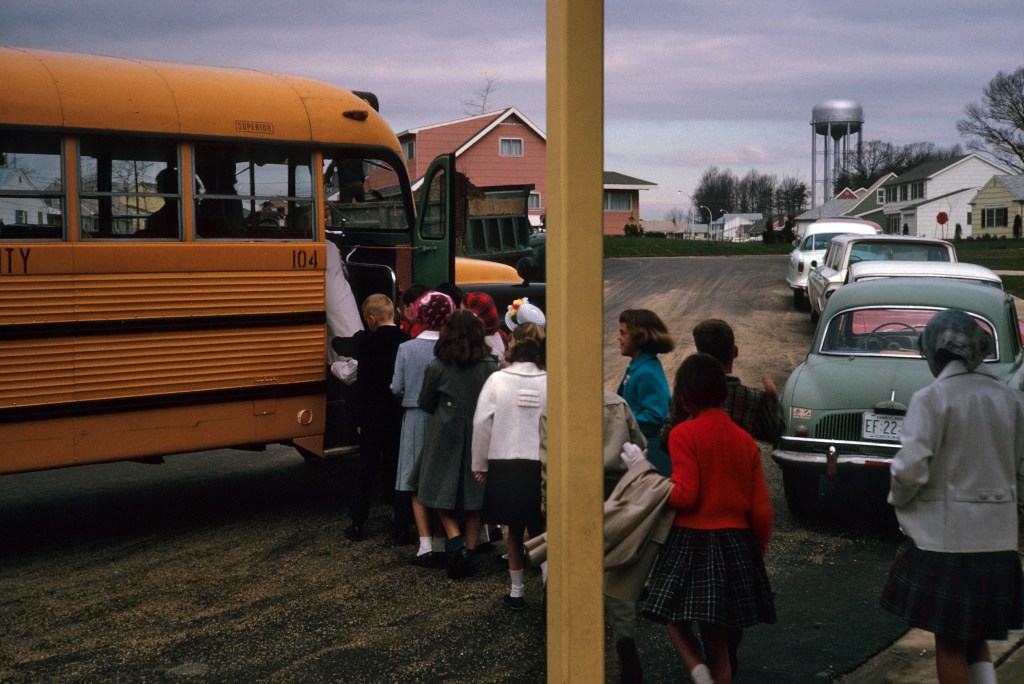
When we were mid-century boomer kids, summertime meant carefree days, picnics, swimming, bike riding, kickball, and a host of other activities we enjoyed during that brief hiatus from education. For me, it always meant summer school because I was a lousy student. For the rest of you, it meant goofing off and taking in a little downtime before getting back to the grind.
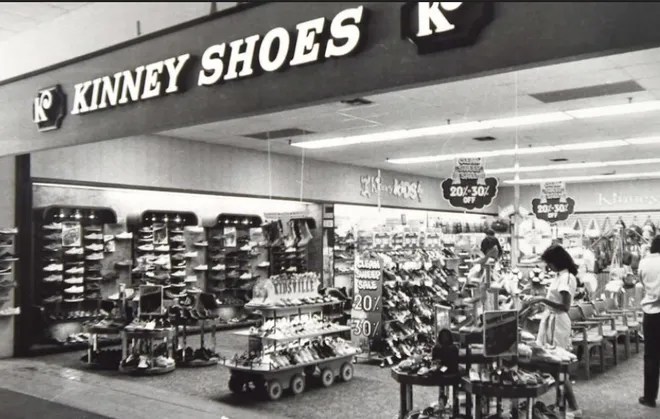
“Back To School” advertising was as predictable as the roar of late summer locusts in the dog days of summer. It was the annual fiscal cash cow for merchants of school clothes, tight shoes, and school supplies. For kids, it was the tiresome ritual of trying on clothes and shoes, and my mother telling me, “Oh, you will be fine, your new shoes will loosen up…” when she was told repeatedly they were too tight and hurt like stink. I think of her insistence every time I take my shoes off to be greeted with hammer toes and ingrown toenails 60 years later.
A half century ago, parents never listened to what kids wanted. You were told you were going to like it – and like it! Otherwise, there would be hell to pay when you got home. God bless my mom. I suppose she meant well but it was always, “If you embarrass me…I am going to embarrass you…” which was incentive never to act up or argue over those stupid penny loafers I hated and were forced to wear.
Whenever I watch “A Christmas Story…” I am reminded of the emotional scar tissue I still have from childhood. Those who say children are resilient have never been children. They emerged from the womb and promptly became stupid, clueless adults. They never experienced childhood.
Poor Randy, Ralphie’s little brother, was in a full body snow suit buried in nylon, silk, cotton, and thick foam and could not put his arms down. His mother tried in vain to hold his arms down. Frustrated, she said, “You can put your arms down when you get to school…” That was something my mother would say, leading to all kinds of frustration and utter contempt because no kid wants to be miserable on the way to school. I can still hear, “your shoes are fine, they just have to wear in…”
Sure Mom…
Those first days back to school right after Labor Day were spent in hot, humid classrooms where it was miserable, making it challenging for a kid with Attention Deficit to focus on school work. We didn’t have air conditioning in those days either. We were never permitted to use a pen. It was always a #2 pencil where I grew up. I went through a lot of erasers,
These days, children are allowed excessive latitude in the classroom – cell phones, vaping, and the freedom to run their mouths. Their demeanor with authority is laughable much as it is with the police dealing with defiant, obnoxious adults. Where I went to school in Maryland, you respected authority or else. I spent a lot of time in the hallways because I just couldn’t keep my mouth shut. Boredom always got the best of me. I respected authority – I just had no self-control.
We had a vice principal at my junior high school, a former marine, who taught us zero tolerance and what it meant. He would bounce defiant youths off the walls, which was a very effective means of communication. It would happen only once. Today, he would be arrested and the school system sued for the emotional trauma inflicted upon little Johnny Be Good. I will never condone physical violence from an administrator; however, it put an end to behavioral issues.
When we were born to this apple a half-century ago, the world was so different from what it is today.
I think of my own life and The Jet Age. When I was born in 1956 on a snowy March evening in Washington, D.C., most people were not yet familiar with jet travel. Although the British DeHavilland Comet jetliner had flown and served travelers around the world, it had suffered from a series of fatal accidents and was grounded, never to achieve real commercial success again.
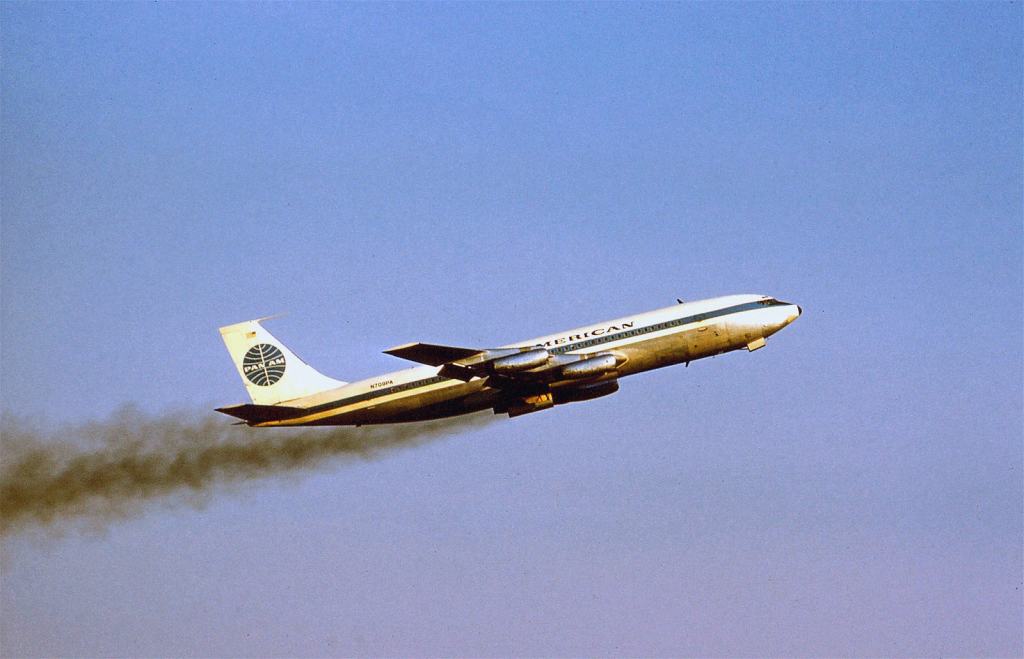
Boeing’s 707 jet transport was two years away from scheduled service – launched by Pan American World Airways in October of 1958 with that first trans-Atlantic passenger flight from New York to Paris. The Douglas DC-8 and Convair 880 would swiftly follow in the race against time. The Convair 880 was a rocket ship at speeds pushing 700 mph. The darned thing was fast!
Coast-to-Coast air travel in four hours was upon us.
In due course – it was “Pie in the Sky” and jet service to Los Angeles and San Francisco was four hours at 600 mph in sweet smooth comfort. You could be standing knee deep in snow and ice in New York and be in the warm California sun by afternoon ready to do business – and then – sit on the beach before heading to the airport the next morning. You could always catch a red eye and be in the office bright and early the next morning.
It was an incredible time to be alive.
We take a lot for granted today. It wasn’t always this easy. Today, you can jump on a Boeing 777 or Airbus A350 and fly nonstop to Australia, New Zealand, and South America and be there in hours. You couldn’t do that in 1960. Despite the advent of jet travel, jets didn’t have the benefit of range. To travel halfway around the world, you had to hopscotch from refueling stop to refueling stop and from plane to plane. It was a grueling journey for a lot of people.
Jets made it faster.
I flew for the first time at age 5 from Baltimore’s Friendship International Airport (now BWI) to Kansas City Municipal on a United Boeing 720, a stubby version of the 707. We were on our way to Hawaii. There would be another 720 to San Francisco – then a Pan Am 707 to Honolulu. I remember the futuristic starburst side panels and the whistle of Pratt & Whitney turbojets. I never knew any differently. I’d never flown on a rumbly, rattly, noisy Douglas DC-6 or Lockheed Constellation, which were state-of-the-art for their time.
All I knew were jets.
At the dawn of the Jet Age, flying was so unlike what we experience today. Even in Coach, you were fed a meal with real silverware and glistening china complemented with a drink or coffee. It’s a wonder these classic jetliners ever got off the ground considering the weight carried in the galleys. People dressed up to go fly – in suits and ties, dresses, clean cut. The age of tee shirts and torn up jeans had not yet arrived. There were no fights in the cabin. People understood how to behave.
I can sit here and bemoan what we don’t have in the sky anymore, however, it is a tradeoff. Despite the cattle car approach to flying, we’re got it good. We can get there nonstop in all-jet service without the deafening hum of propellers, however, forget the continental breakfast and hot towels. Domestic airlines have put profits and stockholders ahead of customer service.
Flying is also a lot more affordable in 2024 than it was in 1960. Deregulation of the airline industry in 1978 got us cheaper fares and service to more and more destinations. However, economics has gotten us to where we are now. Airlines are in business to turn a profit. We are endlessly reminded of this while listening to our stomachs growling at cruise altitude.
The friendly skies aren’t so friendly anymore. Common decency in society expired ages ago. The flying public has forgotten how to be nice.
Tolerance has taken a vacation.
It has been said by journalists around the world Americans are being screwed by commerce and government. We put up with a lot more crap than the rest of the world, which would never put up with it. It would speak with its feet. Nowhere is this more prevalent then in the airline industry – only to be outdone by cable and satellite companies, which manage to find their way into our pockets more and more these days. There’s no real sense of fair play anymore. We really are getting the short end, and we choose to allow it.
Despite the state of our world these days, boomers have the benefit of great memories growing up in an age of jet travel and the magic of our youth so long ago. Gives us something nice to think about – and dream about – as we are falling asleep warm in our beds.
No matter what you believe at Fifty-Something, how you view life in your Sixties will change significantly. It won’t happen overnight – but it will happen. I was born in the middle of the Baby Boom – 1956. By the time I was born, the first boomers were 10. By the time I reached 10, they were well on their way to adulthood and becoming the very generation they detested.
It’s easy to feel disoriented these days. We are all 60+ now. We’ve become the generation we didn’t trust at 25. Remember that? Never trust anyone over 30. Didn’t we say that a lifetime ago? And, consider this… The eldest of the boomers are cresting 80.
How’s that for sobering?
And – like the generation before us, we do not understand the generation behind us. They don’t understand us either. In fact, they cannot stand us – wishing boomers would shut the hell up.
Yet…they love our music.
My 16 year-old son, GEN Z I believe they call it, plays our music while he is showering. I can hear it through the floor. Sometimes, he plays our music on his clarinet and sax. Our music has endured – yet our legacy of change has not. We have a lot to answer for.
Feeling disoriented?
Of course…
It’s the same old saw. It is Generation Gap 2.0 and we are living it now. I don’t believe today’s generation gap is as wide as the one we had with our parents. The Generation Gap of the mid-20th century was significant and the world that came before us was quite conservative. Perhaps a little too conservative and not ready for our rewrite of the world. We were born into a generation that was never going to understand us. Seems the gap arrived with Rock & Roll. It was very controversial.
Why?
Because we were so very different and decided we’d be different and make no apologies for it. It was the oppressiveness of our parents’ generation that inspired us to rise. Sex has always been the 800-pound gorilla in the living room no one talked about. Seems everyone – including our parents and teachers – thought about it or we wouldn’t be here.
The Greatest Generation believed rock and roll, as one example, was too promiscuous. It was “dirty” and unacceptable. Beneath the surface, they envied it. As one journalist recently put it, “Sexual Suggestiveness: The rhythmic, energetic nature of rock and roll music was seen as sexually suggestive, especially the way artists like Elvis Presley would move their hips while performing. This was considered inappropriate and immoral, especially for young audiences.”
You mean The Greatest Generation never thought about sex?
Nah…it just wasn’t discussed.
It was also said, “Association with African-American Culture: Much of the early rock and roll music was influenced by African-American musical styles like rhythm and blues, which were not widely accepted in mainstream white culture at the time. There was a racial stigma attached to this association.” Our racist culture was right out in the open for everyone to see. It never left.
They went on to say “Perceived Threat to Traditional Values: The raw, rebellious nature of rock and roll was seen as a threat to traditional values and social norms, especially among older, more conservative members of society. The music was viewed as encouraging juvenile delinquency and challenging established social order.”
I suppose it was. We’ve never been the same since.
Thank Goodness…
Rock and Roll was considered a morale sickness. It was seen as a terrible sociological illness that was corrupting the nation’s youth – which could lead to immoral behavior. Perhaps we’ve taken it a bit too far the other way. Watch “NYPD Blue” reruns and tell me I am mistaken.
Baby Boomers changed the world and our conservative culture. The irony is, as baby boomers have advanced into senior citizens, we’ve become more conservative. Ironic considering the way we changed the world some five decades ago, and in the years since. Stay tuned, there’s plenty of change yet to come.
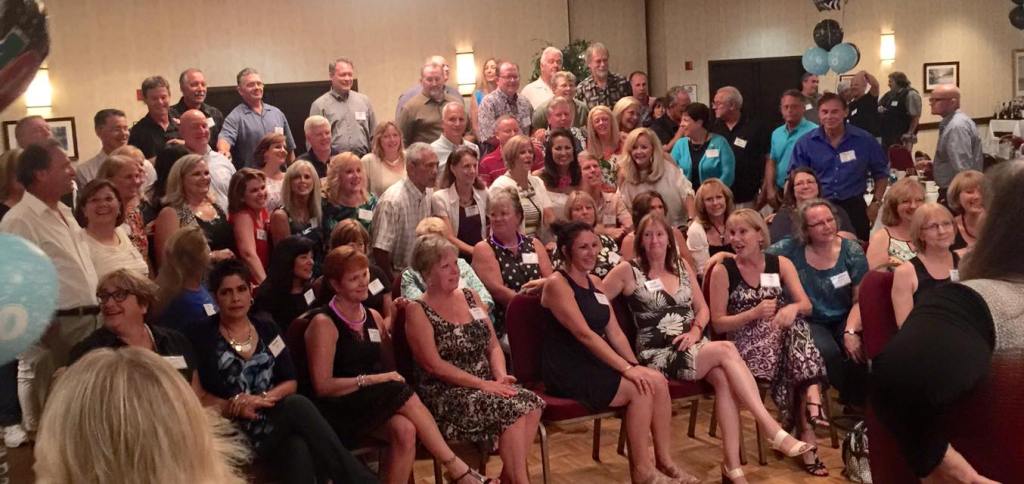
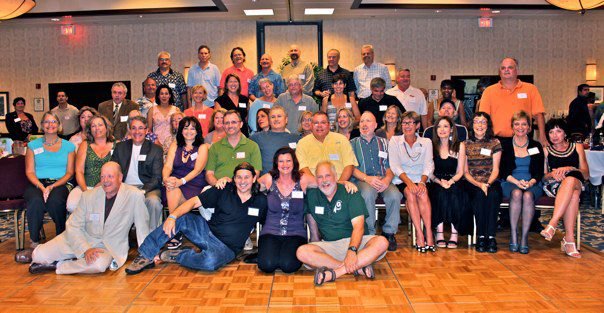
If you are like most of us, you’re getting invitations to class reunions. Question is – what to do with those invitations a half century later? If you were born before 1955, you’ve already experienced the trauma and bewilderment of your 50th reunion and not knowing who anyone is.
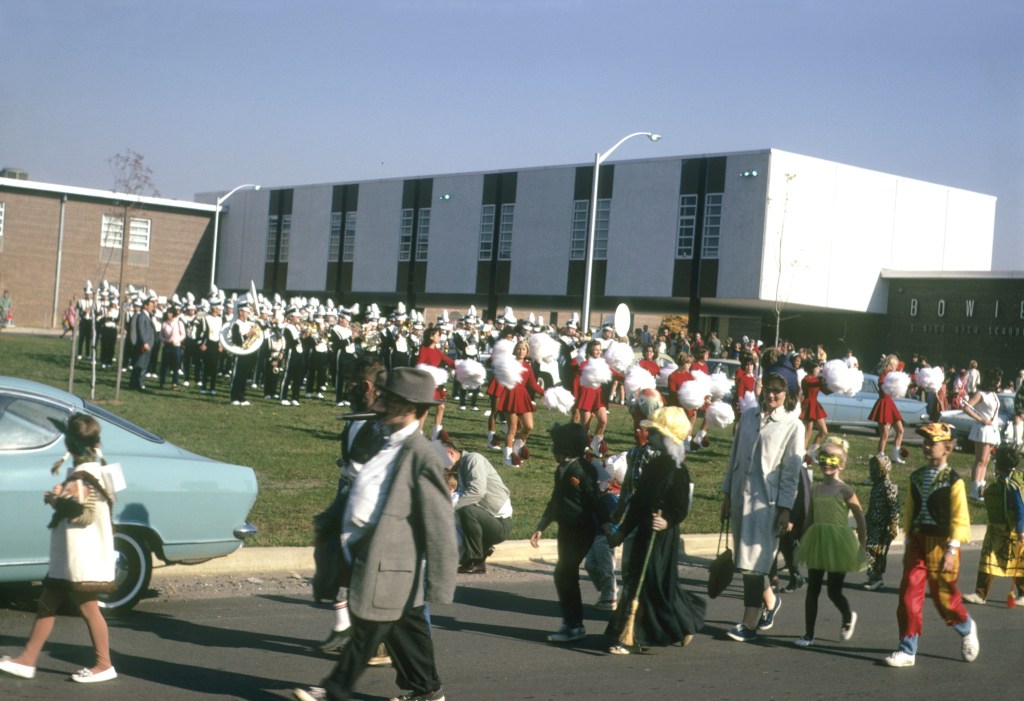
The last class reunion I attended was my 10th in 1985. I would walk around Bowie Senior High’s Class of 1975 (Bowie, Maryland) and recognize most of my classmates. We were still young and quite identifiable. No one had to glance at a name tag. My reunion included a formal dinner at the Capital Centre (gone now) and a picnic the next day at Allen Pond Park in a more relaxed atmosphere with families and friends, which included the same cliques who hung out together in high school who also hung out together at the park a decade later.
That was 40 years ago.
There were the elitists of my graduating class – the cheerleaders and super jocks who didn’t have time for the rest of us. And then – there were the rest of us – the “untouchables” who hung out together in a different world entirely.
Ironically, most of the “in-crowd” at my high school never made headlines after graduation. At least I haven’t seen evidence of it. They don’t even come up on our radar a lifetime later because we are all living in different worlds. At times, I can’t even remember their names.
There were the “seldom seen” dork types like me who lacked self-confidence, were uncool, whose mothers dressed us who came of age and vanished from the area. We moved on. A lot of us in the huddled masses wanted more for our lives. It took a while for some of us. We’ve raised our kids and grandkids, enjoyed fruitful careers, and have something to show for it as we enter retirement. Not all of us did. A lot of us fell into hard times with failing health, financial woes, or loss of a loved one.
And consider this – quite a few aren’t here anymore to complain about aches and pains – a reminder to stop complaining and start living. You’re not dead yet.
I believe the “in-crowd” didn’t know what do after graduation. They were “on top” in high school, very popular, yet were completely lost after graduation when no one was watching anymore. They just didn’t know what to do. Some stories are rather tragic where some got into drugs or alcoholism, got into trouble with the law, or just never went any further with their lives.
There are also the success stories – those who landed on top and have achieved greatness in their adult lives. Kathy Lee Gifford is one such success story from my high school. She was Class of 1971 and graduated with my sister. When she and Rick Sellers were on the Bowie Senior High stage performing the musical “South Pacific,” we felt they were going somewhere because they were very good at their craft. No idea where Rick is today but most of us understand what Kathy became – quite visible in television for decades now. She was a cohost of NBC’s “Today” show and became an integral part of the respected NBC News fraternity.
There is also Abby Phillip, a Bowie High graduate who hosts NewsNight with Abby Phillip on CNN and has made quite a name for herself as a Washington reporter and news anchor.
If ever you’ve attended a class reunion, you understand the bewildering nature of seeing people you hung out with in high school whom you do not recognize today. The generation that didn’t trust anyone over 30 is now in its sixties and seventies. Genetics is the darnedest thing. Some of us have aged very well and are clearly recognizable. Others of us suffer from wrinkles, gray hair, crow’s feet, and the rest of it. This is when it becomes, “Who did you say you were again?”
Whether or not you attend your class reunion is a personal decision. If you’re like me, you have very little in common with your classmates though you spent every day together before graduation. You learn quickly you’ve been 18 and you are sixty-something and 18 was a long time ago.
As boomers cruise into the twilight, we find ourselves longing for the place where we grew up and came of age. Some of us never left “back home” while others of us have moved far and wide. I am an East Coast boy who grew up in the Washington, D.C. area in Maryland and Virginia. I was born in Northwest D.C., which makes me a native Washingtonian. My family history in Washington goes back generations to an organization known as “The Oldest Inhabitants of the District.”
I’ve called Arlington and Fairfax counties in Virginia home as well as Prince George’s and Wicomico counties in Maryland. I’ve lived in Los Angeles for over 30 years – yet Southern California has never really been home for me. It is just too different for me. You can take the East Coast boy out of the East Coast yet you will never take the East Coast out of the boy.
I never observed anything normal about Los Angeles much less the California surrounding it. This isn’t a criticism, but more an observation. It is very different from my native mid-Atlantic. If you desire a perfect climate and incredible destinations within driving distance, then California is the place to be.
I have lived all over these United States – Florida, Missouri, Illinois, Tennessee, and Michigan in an effort to land in a more permanent spot to call home. I suppose I found that “spot” in suburban Los Angeles on the high desert some 60 miles north of this vast metropolis. Los Angeles was never really in the plan because my most favorite place in the world is the American heartland. Career brought me to Big L.A. in the early 1990s and I never left. Los Angeles is something of a “Hotel California” where you can check in, but you can never leave. Los Angeles is a huge vacuum that sucks you in and the next thing you know, you’ve been here for three decades.
Maybe your story is similar to my own. I live a continent away from where I grew up. I’ve spoken with those of you who’ve moved a half a world away in places like Australia and New Zealand, or Brazil, South Africa, or Europe. I have a friend who moved to France right after high school and never returned. He loves it there.
My classmates are all over the globe.
It is true you can never go home again because “home” is just never the same. I have returned to the D.C. area dozens of times in the past 45 years. Landing at Baltimore’s BWI Airport is like seeing an old friend again whenever the wheels grease the runway. About 26 miles south of BWI is my hometown of Bowie, Maryland at the juncture of U.S. Route 50 and Maryland’s Route 3/301.
Every time I’ve come home to Maryland, it is so very familiar, and yet so different from what it was growing up in the 1960s. What was once very rural meadowland is developed and populated. My old haunts are either gone or so very different from what they were a half century ago. A good rule to follow is when you suffer from wanderlust to back to where you came from, take heart in knowing it won’t be the same and adapt to what it is now. Next thing you know, it will be like you never left.
The recent assassination attempt on former President Donald Trump is a reminder of our long-standing history of assassinations and assassination attempts. What happened on a sunny afternoon in Butler, Pennsylvania on July 13th is a reminder of the unpredictable nature of human behavior.
The alleged shooter was a young man – 20 – and a registered Republican. Go figure. A reminder of the unpredictable nature of the human mind. It remains to be seen what will be learned next.
In the decades since the two Kennedy assassinations as well as Dr. Martin Luther King in 1968, there have been failed assassination attempts. July 13th was a little too close for comfort. Donald Trump dodged death by one inch. Had he not turned his head, he would have been assassinated – which would have been an enormous tragedy for the nation and one for the history books.
Another miserable scar in our 248-year history.
For the record, I am a centrist – both conservative and liberal. I think what happened to former President Trump was a near miss. Too close for comfort. I also believe we each need the freedom of be who we are regardless of what others believe. If you are gay/lesbian, be who you are and make no apologies for it. Live the life you want to live. Conservative? Liberal? I don’t care. Believe as you wish to believe as long as you don’t harm others. And, for the record, I am not happy with either candidate. We need and should expect better.
What happened on a Saturday afternoon in the heart of Pennsylvania is a reminder of how dangerous the world has always been. Safety is an illusion. We are sailing through a vast cosmos at mind-boggling speed. We’re never in the same place from one second to the next. We orbit the sun. Our solar system sails through the galaxy. Our galaxy is always on the move.
Safety is but an illusion.
Human nature is the want for absolute safety. We’re taught to believe this from the time we are very young. We want absolute safety – yet we will never have it – not in life and not even in our own bodies. We are soft tissue creatures – vulnerable to the elements. Nowhere is this more true than in automobiles. Air bags, crush zones, seat belts, side impact protection – yet a sudden stop at 80 mph is still a sudden stop. Our aorta bursts, soft tissue ruptures, organs cease to function – and life ends.
Know what I believe? All will be well in any case. Our ride on this planet is a passing journey no matter how much we want to believe life will never end. Because each and every one of us eventually dies – how bad can it be?
Remember…All will be well…
Life is a matter of what we call fate. “Well….it just wasn’t his time…” Maybe… The physical world has its share of risks – more than we wish to acknowledge. As has often been said, you won’t get off this apple alive. No truer words have been said.
Back to the subject of assassinations and attempts. No matter how much security and recon’ we put into and expect from government and law enforcement, there will be killings and attempted killings. Always someone out there a little smarter than law enforcement. Pennsylvania is a reminder of how dangerous the world is and will always be. The Secret Service did its best to protect Donald Trump. However, it appears the bullets intended for Trump killed one spectator and wounded two others. It remains to be seen how the Secret Service missed a young man on a rooftop. There are questions to be answered and lessons to be learned.
We remain a work in progress in The Great Society.
Have you noticed a change in the landscape of America’s youth? Video games. Cell phones. Laptops. E-Zombies. “What?” “You talkin’ to me?” “In a minute,,,”
Used to be you could find your teenage son under the hood of a car or your daughter in front of a makeup mirror or gossiping on a Princess phone. A lot has changed in 50 years. When I was 15, I couldn’t wait to get my driver’s license and that first car. It was everything to me to have my new-found freedom. My first car wasn’t much to talk about. It was an Earl Scheib Green 1960 Valiant sedan my mother’s hairdresser gave to me as a gesture of kindness. I learned about how to work on cars tinkering with that little Valiant with its slant six engine and push button transmission. It had its share of mechanical problems. Bad brakes. Transmission woes. An interior that was coming apart. And – a 16 year-old who didn’t have a penny to his name living in hard times on minimum wage.
When the transmission finally gave out in that old Valiant, my father decided it wasn’t worth the expense to get it fixed and had it hauled off to the junk yard. He clearly didn’t understand what the car meant to me nor did he care. He was a product of the Great Depression and didn’t see the point of pouring money into “that old piece of junk…” and that was the end of the discussion.
That’s me, age 16, in the summer of 1972 in my first car – a 1960 Valiant sedan.
When I think of my youth, and the lives of so many of us at that time, I think we were a cruising generation with a whole lot of wanderlust – and perhaps the last to live it. Back home where I grew up in the mid-Atlantic, “cruising the drag” was a way of life. We’d collect at any number of shopping center parking lots and a couple of local parks, swap lies, and compare engine compartments. It was all about who had the nicest ride – or the fastest. There were always the chosen few with new Chevelle muscle cars and fun in the sun convertibles. I wasn’t one of those.
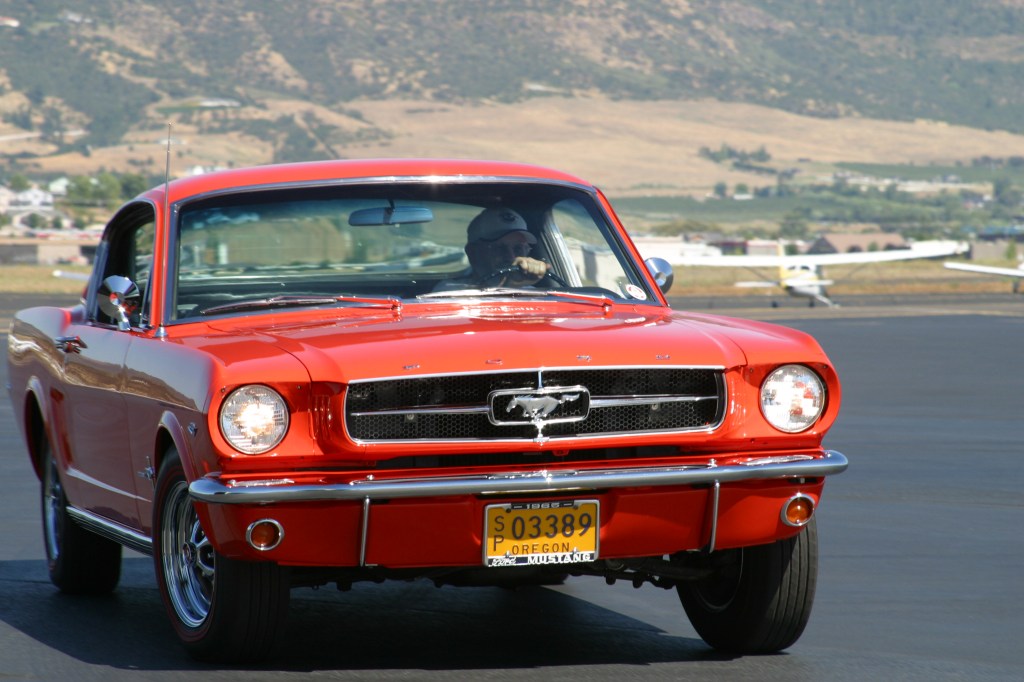
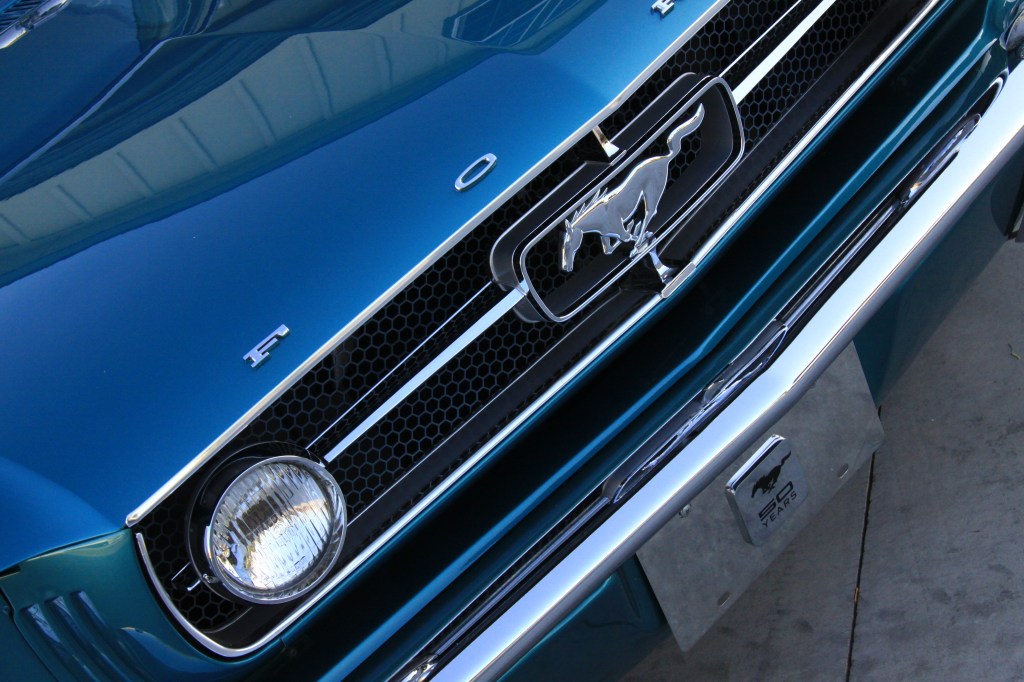
The Valiant generated its share of laughs. However, it would soon be gone. However, my passion for automobiles turned into a career as an automotive journalist spanning more than 40 years. I cultivated an interest in Ford’s sporty Mustang at a young age and became something of a respected Ford historian. It is what I’ve been doing most of my life. I still have my mother’s 1967 Mustang hardtop given to me back in the mid-1970s. I also have a 1961 Plymouth Valiant that came of something of a mid-life crisis and the desire to relive my youth. It was a garage-kept Minnesota car with 38,000 original miles originally purchased new by an elderly lady more than six decades ago.
I am surely of my generation – the first post-war generation that grew up with automobiles where cruising the drag and showing off became a way of life and remains such well into old age. There remains the popular cruising spots in every community and especially in small towns where us old blue hairs gather to relive our memories. Let us never lose this popular pastime.
That said, take heart, relive the youth, and let’s go cruisin’…
Can anyone explain to me why we’ve become such a hypersensitive society of chronic crybabies? Political correctness is on steroids – with everyone getting their noses jacked out of joint over virtually everything.
We’ve become a society of professional victims.
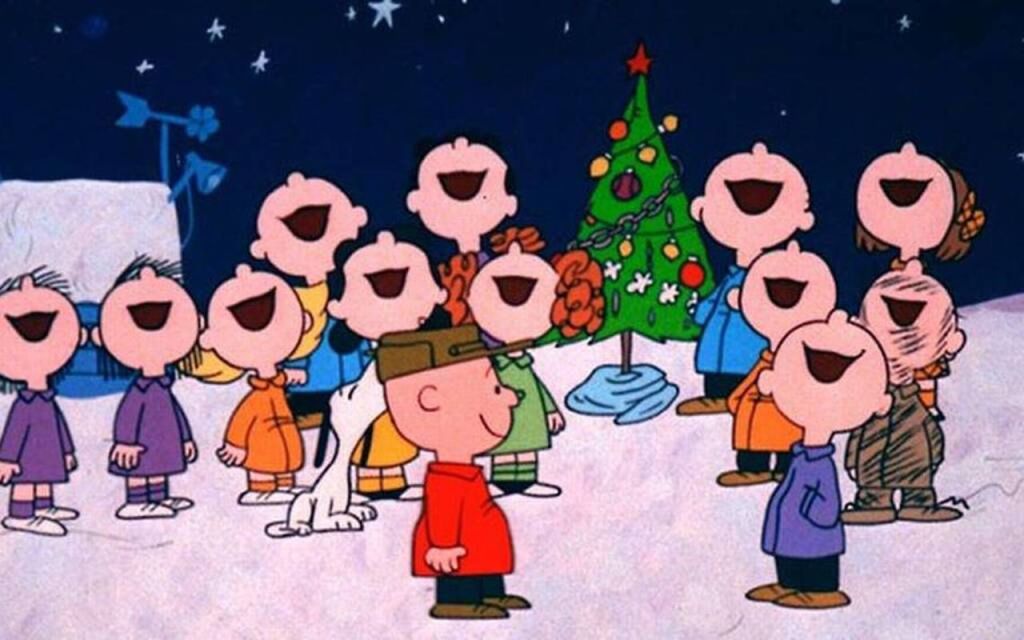
Think of all the things that have become banned because they offend certain segments of the population. Television programs banned because they offend people. Even the heart felt “A Charlie Brown Christmas” Peanuts holiday special where some want to eliminate Linus’ “That’s what Christmas is all about, Charlie Brown…” speech that still brings the masses to tears nearly 60 years later. How ridiculous is this?! The name of this holiday special is “A Charlie Brown Christmas…” and there are those who want to ban this speech. Go bury your head in a pillow and turn the TV off. I was 9 years old when Charlie Brown originally aired, and it remains a “feel good” special to see on the holidays. Don’t you dare even mess with it.
Things have become so ridiculous to where Tinker Bell has been virtually banned by the Disney company. Since when did a make-believe cartoon character become offensive enough to be banned? What next? Banning Mickey Mouse because he offends rodent lovers? Walt Disney is spinning in his grave. The Wonderful World of Disney – the magic – should never waver. Why? Because children aren’t offended by Tinker Bell nor any other Disney character. The is neurotic adulthood nuttiness. The magic of Disney is all about children now isn’t it? Leave it to attention starved adults, who need to grow up, to be offended. Idiotic adults with an axe to grind. Nosy, busy body “Karens” with nothing better to do.
Go mind your own business and leave the rest of us alone.
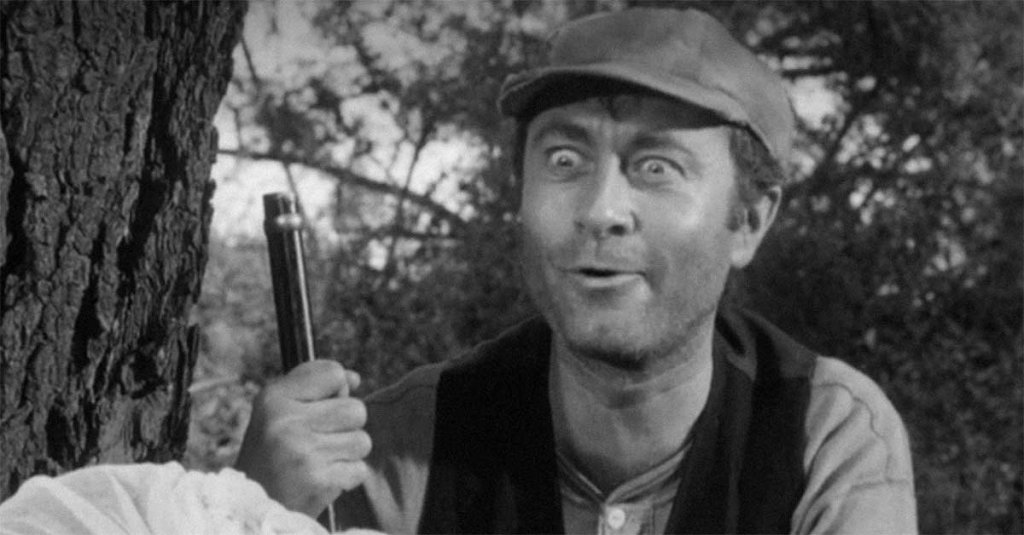
How many of us have laughed hysterically at the antics of Ernest T. Bass (actor Howard Morris) in Andy Griffith? Andy Griffith poked fun and humor at rural life and the interesting characters who popped up throughout this classic comedy. The Darlings. Floyd the barber. Barney. The fun girls from Mount Pilot. In those days, America knew how to laugh at itself and our many cultures. You didn’t hear Appalachia getting bent out of shape, demanding it be banned from television.
I think we need to reach down deep inside and find the sense of humor we used to have – the keen ability to laugh at ourselves and enjoy living.













 Boomer Journey...