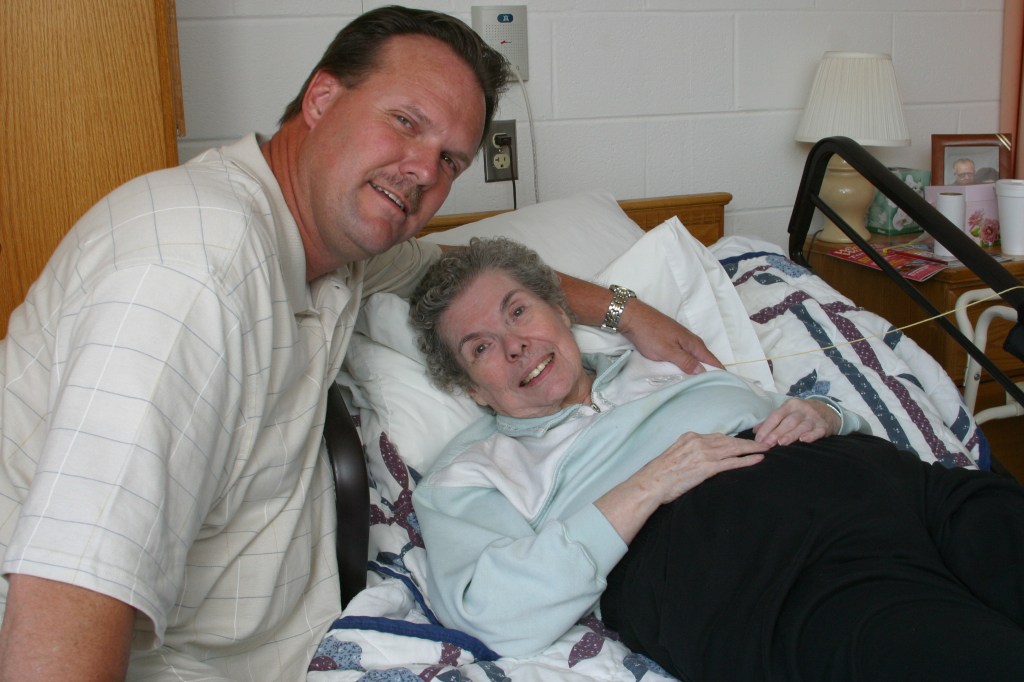
When my dad passed in 2001, it was the first time I’d ever heard the word “dementia.” I didn’t know what the word “dementia” meant, but I would learn how profoundly it would affect my mother in the years following my father’s death.
It was in the latter part of the 1980s when I began wondering what was going on with my mother, who was 66 at the time. She lived 800 miles away from me on the East Coast. We talked on the phone a couple of times a month and wrote letters. I still have many of her letters all these years later, which keeps me connected to her.
It was the little things my mother would say to me that didn’t always add up. She repeated herself a lot, which is normal when we pass 60. Other nuances of her demeanor and the way she sounded concerned me. My mother had always been a strong, sharp articulate woman long on wisdom. She’d been through a lot – divorce and alone with two kids for a time who knew instinctively how to run a household and raise kids. She taught us proper values and kept a close eye on us.
She was my conscience, my mentor, and my greatest friend.
I didn’t understand what was happening to my mom early on. She was slowly slipping away right under our noses. She seemed disconnected when we had always been close. We grew further and further apart.
In time, we became strangers.
On the rare occasion I had contact with my siblings, they voiced frustration with our mother. My belief was, “Well, that’s just Mom…” I wasn’t there daily to see what was happening. When I visited my folks, I saw nothing alarming – but she was clearly different. She was always glad to see me. In time, our visits became fewer and her awareness more distant. At times, I felt like I was chatting with a stranger.
When my father’s health deteriorated from kidney failure and heart disease, she detached from him. She became more recluse – isolated from everyone. Eventually, she wouldn’t leave her bedroom. Frustration in the family abounded because no one understood what was happening to her.
My dad passed and my mother went into assisted living. Her focus was The Weather Channel – the only program she watched. I think it was the consistency of The Weather Channel she found comforting. It was familiar and it never changed.
When I visited her in assisted living, she was quite formal. She had no idea who I was. Twenty minutes into our visit, she shouted “JAMIE!!!” and knew who I was. As our visit ensued, she didn’t know who I was. I’d listen to her stories and her fears. Her awareness of who I was changed from minute to minute. Her mental health deteriorated further and she was moved to a nursing home. It wasn’t what anyone wanted for her, but it was unavoidable. She would pass in 2008 at age 84.
The Alzheimer’s Association tells us Dementia is not a single disease, but instead an overall term to describe a collection of symptoms that one may experience if they are living with a variety of diseases – including Alzheimer’s disease.
It adds – diseases grouped under the general term “Dementia” are caused by abnormal changes to the brain – symptoms – that trigger a decline in thinking skills – also known as “cognitive” abilities – severe enough to impair daily life and independent function. They also affect behavior, feelings, and relationships.
I can tell you firsthand dementia adversely affects families, marriages, and friendships. It causes family disagreements on what to do with the affected family member. I can tell you dementia isn’t a disease you can handle alone.
It is said Alzheimer’s disease accounts for 60-80 percent of dementia diseases according to the association. There is “Vascular Dementia,” which happens due to microscopic bleeding and blood vessel blockage in the brain – which is the second most common cause of dementia. The Association goes on to say those who experience the brain changes of multiple types of dementia simultaneously can have what’s known as “Mixed Dementia.” It also adds many other conditions can cause cognitive impairment that are not dementia including some that are reversible, such as thyroid problems and vitamin deficiencies.
I’ve known those who have personally experienced Dementia. I watched a close buddy, age 87, slip away in months from dementia. He never got out of bed and would not leave his home. His family was intolerant of his condition and there was abuse. More recently, another close friend of mine watched his mother decline and pass in six months from a rapid form of Dementia. He was devastated.
I will add dementia is not unique to the elderly. It can happen at any age. What’s more – not enough is known about this disease presently but it has become more common as the aging population grows.
If your family is affected by dementia in a loved one, practice tolerance, get professional help, and do not go it alone. It is important to understand victims of dementia cannot help their condition or their behavior.
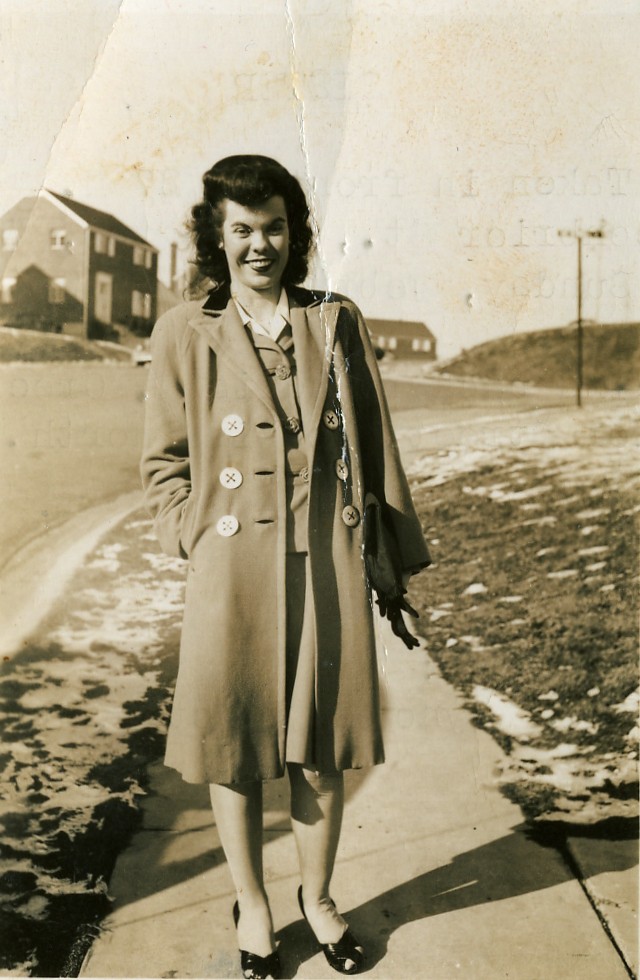
Lillian Proctor, my mom, circa 1944, age 20, Arlington Forest, Virginia coming of age. She was a fiercely independent Washington girl who had to grow up quickly when her brother – my uncle – headed off to World War II in the Pacific.
 Boomer Journey...
My wifes mother suffered from it. I played in a band for 20 years, 2000-2020 with the same four men. We were all close friends. Two of the surviving members, drummer and bass player are suffering from Dementia, my friend Jordan, our drummer is the worst. It’s a horrible condition and heartbreaking to see your family and friends suffer.
LikeLike
Prayers are with all of you. Devastation….
LikeLiked by 1 person
Hi Jim
Your article on Alzheimer’s reminded me so much of what we saw with my father-in-law. Dad was an incredibly intelligent man, very active and was a spokesman for senior health enhancement via exercise. We watched as Terry’s dad slipped away slowly day by day. Like most people with this terrible illness he had some lucid moments. The one that touched my heart was when Terry’s mom, Terry and I were visiting dad at the care home. Mom said to dad, “Art, do you remember Terry’s wife,Mona”? Dad was silent in his little Alzheimer’s world then suddenly he turned to me with bright eyes and a smile and uttered one word “nice”, then faded back into his private world. It still breaks my heart knowing how his failing memory in the beginning haunted him. I remember telling Terry years ago that “I look forward to the day when dad can’t remember that he can’t remember”.
Big hugs to you and your family Mona
LikeLike
Awe Mona – you’ve brightened my day because I am crazy about you guys. Seems dementia is touching more and more lives these days. Both my mother and my birth father had dementia. Both lived well into their 80s. Watching her slip away was heartbreaking and it was a 20-year journey. I don’t think my mother ever forgave my stepdad for getting sick. She retreated away from him and his health issues. Longer story there of course. Your story is so typical of the on-and-off world of dementia. They remember you and they don’t know you – and then….they are gone.
One CBS reporter – his name escapes me – was married to the love of his life. She slipped away into Alzheimer’s. She saw his as her friend – not her husband – after years together. It seems so cruel – for both.
Mona – would love to see you and Terry.
LikeLike