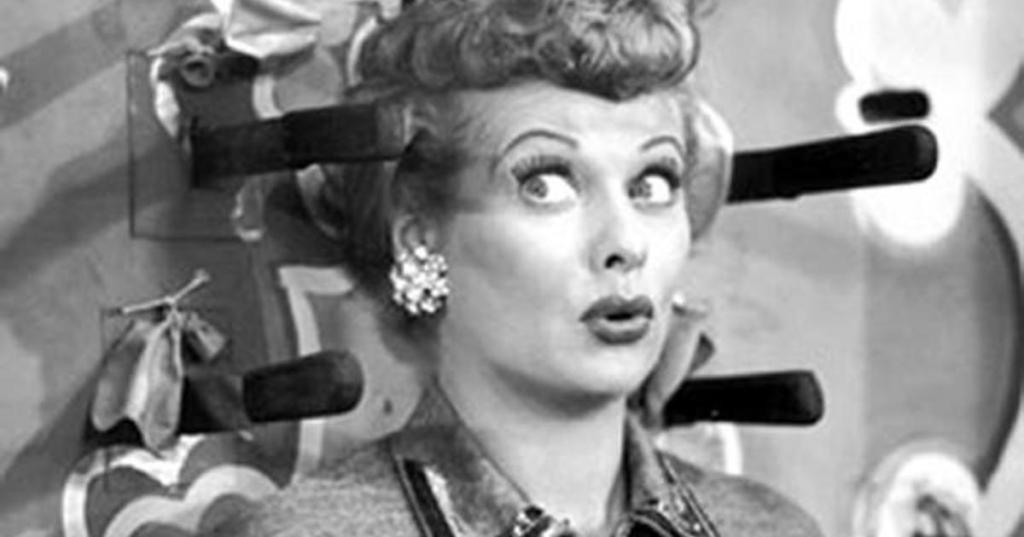
We just can’t get enough of Lucy. “I Love Lucy” has been a global phenomenon for nearly 75 years. It has been on the air continuously for three-quarters of a century without pause ever since she dethroned Milton Berle as the king of prime-time television in 1951.
“I Love Lucy” aired on CBS from October 15, 1951, until May 6, 1957, when it segued into “The Lucy-Desi Comedy Hour” as one-hour specials from 1957 to 1960, with a lineup of familiar guest stars who wanted to be seen. It returned during the 1960s as a series of one-hour summer special reruns that aired in CBS prime time.
Regardless of how many times I watch “I Love Lucy,” I can’t quit laughing. I am not always sure the generations following us feel the same way about Lucy. Those of us who grew up with “I Love Lucy” understand the humor. My grandfather, born in 1894, hated “I Love Lucy.” I suspect he didn’t care for the humble housewife getting the best of her husband. Yet, Lucy and Ricky (husband Desi Arnaz) were a “Spy-vs-Spy” adventure because she always got caught and Ricky responded with, “You got some splainin’ to do…”
It was a great battle of the sexes and a timeless situation comedy.
Though Lucy remained high in the ratings, it began to slide as the show’s producers attempted to make the series more viewable. By the fifth season, with a brief stint in Hollywood, extended trips to Europe and Japan, and a move to Connecticut, it had become decidedly stale and had run its course.
What made “I Love Lucy” so successful was the extraordinary combination of great comedic acting, writing, direction, and Desi’s three-camera approach to filming. With the three edited together, this approach worked with fluid precision.
“I Love Lucy” displaced Milton Berle as the most-watched television show in the United States during its network run in the 1950s. It remained on top of the Nielson ratings for four of its six seasons. What’s more, “I Love Lucy” has been syndicated in multiple languages around the world. It remains popular, especially with boomers, to the tune of 40 million viewers every year.
This popular sitcom was the first scripted TV show burned on 35mm film in front of a studio audience. It won five Emmy awards as a result. Audience poles have often said “I Love Lucy” is the best show of all time. No matter how we are feeling, rain or shine, “I Love Lucy” remains the go-to sitcom when we are bored out of our minds and sick of the news.
The show’s producers did “Lucy” so well that we fell into believing we were looking at a New York tenement apartment when, in reality, “I Love Lucy” was shot on a modest sound stage on Cahuenga Blvd (Desilu-Cahuenga) at the north end of Hollywood. It was aired live on TV while also being recorded on 35mm film. Desi’s approach to business kept the Lucy phenomenon rolling for decades. It continues to pay dividends 70 years later. Audience response enhanced the viewing experience. The “Uh-Oh” response you hear periodically throughout the episodes was Lucille Ball’s mother seated in the audience.
Lucy’s segue into the early 1960s with “The Lucy Show” and “Here’s Lucy” later on in 1967 enjoyed healthy ratings, though it seemed a lot of Americans had had their fill of Lucy. I believe what made Lucy successful in the 1960s was a balance of great comedic actors and America’s neurotic need for more Lucy. The storylines just didn’t compare with “I Love Lucy” in the 1950s. They were just out of ideas.
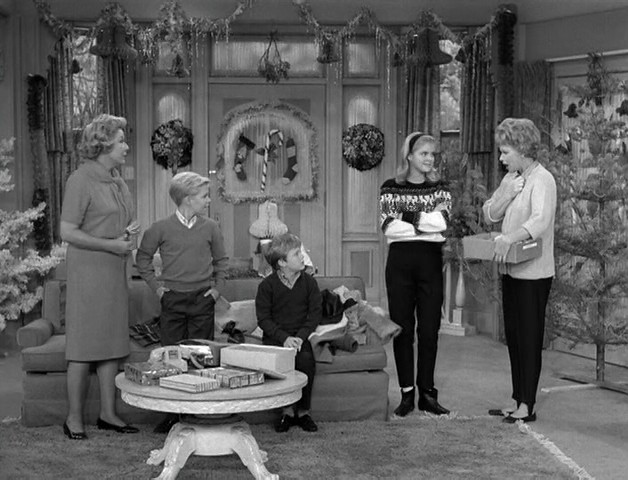
“The Lucy Show” in the early 1960s.
Though I am not a psychologist, it is my belief Lucille Ball just could get enough of the spotlight. She embraced it and pushed the limits of stardom. When “The Lucy Show” wore out its welcome, they resorted to nepotism, bringing in daughter Lucy and son Desi along with the great talents of Gale Gordon. It was Gordon’s great comedic abilities that made these rather lame episodes sizzle.
If I had the chance to reinvent Lucy after “I Love Lucy,” I would not have had Lucy as Lucille Carmichael and Vivian as Vivian Bagley. That approach was weak right from the start with widowed women with children. I would have recast Lucy and Vivian as Lucy Ricardo and Ethyl Mertz – in a new post-Ricky and Fred sitcom as either divorced or widowed women. Because divorce was taboo at the time, being widowed would have been the best option. William Frawley went on to star in “My Three Sons” as “Bub” in 1960. Lucy and Desi had divorced, which swiftly eliminated the “I Love Lucy” option. Desi stayed on as producer, replaced by her second husband, Gary Morton in the 1960s.
What made “The Lucy Show” a knockout was comedic actor Gale Gordon as her boss Mr. Mooney. As you might imagine, Lucy drove Mooney crazy, much as she did Ricky in “I Love Lucy.”
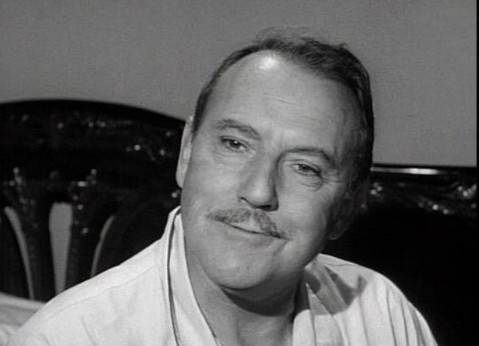
Great Comedic Actor, Gale Gordon.
The storylines, direction, and acting lost momentum in the absence of fresh ideas, making “The Lucy Show” a crashing bore, yet with enviable ratings. “The Lucy Show” continued until 1967 when Lucy was reinvented with “Here’s Lucy.” I am convinced the real success of a re-invented Lucy was the support of great comedic actors who made these shows worth watching. The list of great character actors was endless.
When the entire Lucy phenomenon had passed, Hollywood returned with “Life With Lucy” in the 1980s alongside time-proven Gale Gordon, who still made us laugh. He was still on top of his game some 13 years after “Here’s Lucy” wrapped. Lucille Ball’s last hurrah was the made-for-TV movie “Stone Pillow” where her acting ability was put to the test. Her performance was remarkable.
Despite all of the feelings we have about Lucille Ball, she still makes us laugh and will continue to do so for decades to come.
 Boomer Journey...
It’s been said Desi invented television as we know it. Between the two of them and Desilu it’s a fair statement. Today shows run out of tropes and keep going forever with one foot in the grave until the next generation of the same shadow with a different name an$ younger actors fills in. Bonanza and Star Trek are the same thing with different costumes. Lucy was about people in absurd situations, not just plug and play actors in this week’s situation, and that’s what set it apart. Look how long vaudeville survived on tv through the variety shows. Show one of those to your grandkids. They don’t get it. Not that o seek out Lucy reruns, but I recall what they were before sitcoms dulled them out. You never knew what the heck Lucy was going to get up to and how Desi was going to deadpan it.
LikeLike
Hey Phil – thanks always for your thoughts. I agree with you. Lucy and Desi were an amazing team. Desi – ever the businessman and creative juice. His 3 camera/editing approach created modern television. Desilu had a style you could pick up on immediately. “Our Miss Brooks” is a great example with Eve Arden and Gale Gordon. Hysterical… Focuses on human weaknesses and neuroticism. Eve’s sarcasm was unequalled and cutting. How true about Bonanza and Star Trek.
Today’s sitcoms tend to be stupid foolishness. Mike & Molly, Raymond, Roseanne, are pretty good sitcoms with huge followings. Roseanne was rather tacky at times. Two And A Half Men – a why bother. When Charlie Sheen made a comment about his testicles sticking to his but crack, I turned it off. I am in no way a prude. But in prime time with children watching – and listening – really inappropriate. Did we have to go that low?
I Love Lucy and other period sitcoms were true sophisticated comedies. The 1960s brought forth some really stupid comedies. I Dream of Jeannie showcased Larry Hagman and Bill Daly’s comedic qualities. Mister Ed was butt stupid. My Favorite Martian was great spoof comedy. My Mother The Car was an insult as was It’s About Time. Even The Brady Bunch and Gilligan’s Island were silly stupid – but harbor great followings.
Young people today are way beyond these classic sitcoms. That worries me…
Phil – we are the end of several generations who got it.
LikeLiked by 1 person
Raymond Burr said that the Kennedy Assassination changed everything. America lost its innocence. What used to work didn’t, networks scrambled to become more ‘relevant’ and ‘topical’ with shows that had been decent entertainment and filling in the gaps with idiotic formula escapism. They tried everything and all that stuck with any power was based solely on cheesecake or star power, not content. No one watched I Dream of Jeannie for content.
LikeLike
Viewers watched I Dream of Jeannie for entertainment. Stupid silly entertainment and escapism. All those sitcoms where one or two people knew the secret. Sophistication was lost… Over the decades – sitcoms have become more silly. Feelings I wish I knew how to put into words. Reba – as one example. Her first sitcom encompassed a lot of yelling and fighting. I’d have it on while going to sleep and all you could here was yelling, fighting, and arguing. I turned it off. “Happy’s Place” seems another Reba. The biggest insult is actors trying to sound like Southerners. That phony twang. Whuat?
I don’t like programming that is an insult to my intelligence.
LikeLike
Big fan of the original 1950s shows, and the one in the sixites wasn’t too bad at times. Both were still better than anything on TV today. There were a few in the 70s that were ok, All In The Family and The Jeffersons, then nothing but crap after that. I don’t watch regular TV except for the nice lies that the news gives us, then it’s all streaming on Amazon and Apple. Although, I watched Jeannie, just for her and the same with Bewitched, for the great looking women. I think we all had the Hubba-Hubba’s for Jeannie.
LikeLike
Agreed… Sitcoms became silly stupid. We watched Jeannie to see the sexual tension between her and Tony Nelson. Ditto for Samantha Stevens. I was in adolescence whe Jeannie was on – oh my the imagination… All In The Family and The Jeffersons were breakthrough sitcoms. They opened the door…
LikeLiked by 1 person
Barbera Eden was in a movie with Elvis, and she was stunning. I still think E should have married Ann Margret.
LikeLike