Do you recall sitting in the car as a child waiting for Mom in the grocery store and hearing the telltale “click!” of a car clock – signaling the passage of time? Back in the day, car clocks maintained the steady ticking of a wind-up Big Ben alarm clock on the nightstand, yet we never had to rewind the car clock.
If you came of age in the digital era, read no further – you will never understand.
Digital car clocks with their rolling, flipping numbers came along in the 1970s with the AMC Gremlin, Chevy Vega, and Ford’s Mustang II. These artificial timekeepers did not deliver the drama and anticipation of the self-winding analog car clock.
“Self Winding?” you ask?
Yes – self winding…
Okay – so how does a car clock self-wind? Via the genius of inventor William Thompson, who secured seven patents between 1912 and 1915 for electrically wound car clocks. He co-founded the Thompson Electric Clock Company Memphis, Tennessee and began manufacturing clocks in 1915.
A succession of inventors and manufacturers followed.
We’re all familiar with bedside and kitchen wall electric clocks. Their small electric motors make the rounds via a gearset, with the second hand making a full sweep every minute. There’s that annoying 60 cycle alternating current “buzz” when it’s time to rise in the morning. I always liked the lighted dial illuminating the night.
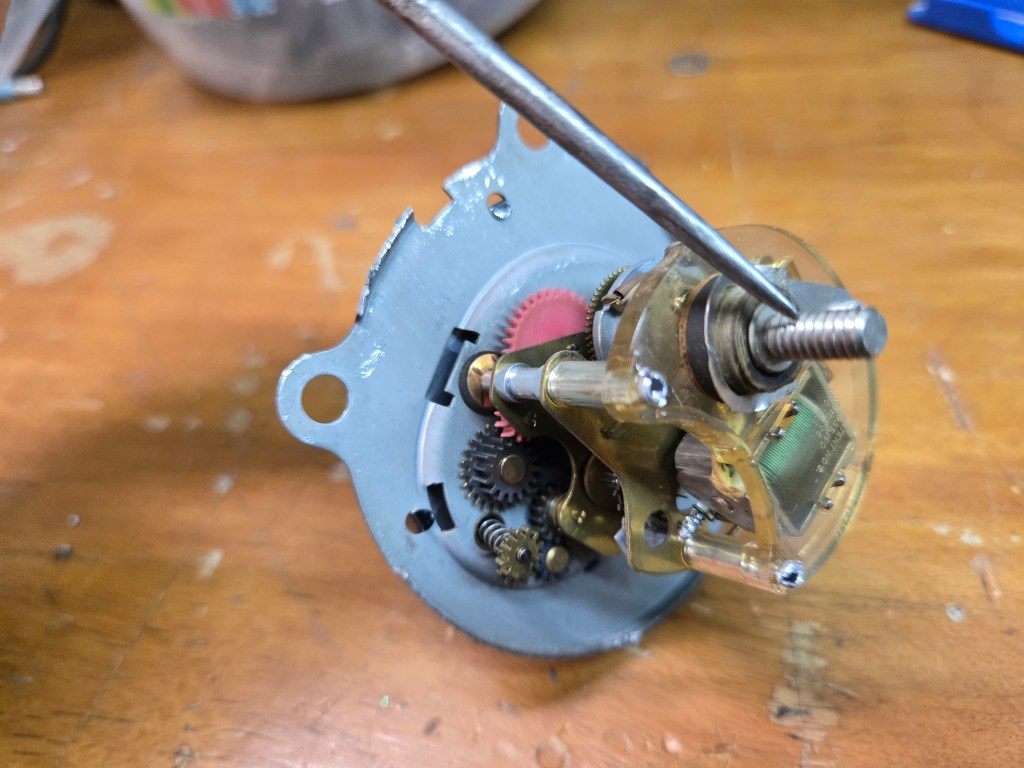
The classic self-winding car clock is an electromechanical timekeeper. It employs a traditional wind-up clock movement, with a main spring and a balance wheel. As long as the main spring was kept wound and the balance wheel continued to rock back and forth, it kept time. Your car’s battery had to remain charged too. If the battery ran down, the clock would wind down and stop keeping time. When we reconnected a charged-up battery, there would be that telltale “click” and the clock would self wind.
The main spring is tied to an arm with contact points (a switch) that come together as the main spring winds down. That is the “tick-tick-tick” you hear as the balance wheel rocks back and forth and keeps time. When the contact points touch, electric current travels to a solenoid (electromagnet) that causes the main spring arm to rebound – winding the main spring back up to keep the clock ticking. The rewind is that “click” you hear every so often (typically every 30 or 60 seconds).
Now, do you understand the “click!”?

