Are You An Electronics Widow (Widower)?

I don’t know about you, but I am lonely.

Are you lonely?

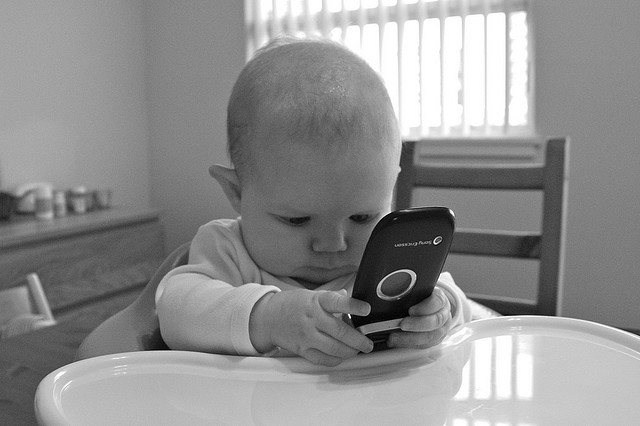
In a world with endless forms of communication ranging from the humble telephone to email to messaging to the PC to the mobile phone, we are so disconnected.

How can we be so connected – yet so disconnected?

Cell phones, tablets, and laptops have become a global obsession. We just can’t put them down in our quest to be entertained around the clock. In fact, it is remarkable how psychotic we become when we lose track of our cell phones or the internet is down. We get panicky like coffee drinkers get when the coffee maker breaks down.

It just cramps our style.

Ever since Alexander Graham Bell said, “Mr. Watson! Come Here! I need to see you!” from the next room back in 1876, the speaking world has never been the same. Scottish born Bell changed the world with the first words ever uttered over a telephone. Bell’s invention began with an effort to transmit pulsing telegraph signals as a form of communication and so it went. His telegraph idea went from pulsing to real words.

Bell began to wonder if his telegraph invention could be used to transmit the sound of human voice. In due course, it led to his immortal words. Watson heard every word even though there was distortion. It wasn’t perfect by any means, but it was a start. It makes you wonder who the first person was to burp or flatulate into a telephone receiver (I know you are laughing).

It took a long time for the telephone to take hold, but when it did, this amazing invention spread like wildfire to ultimately being found in every home. In the beginning, homes generally had one telephone located in a hallway or on a table. Builders began featuring telephone cubbyholes with jacks in hallways and on staircases. By the 1960s, every home had at least two or more. The dial phone led to Touch-Tone in 1968, which was the norm by the 1980s.

Wikipedia tells us Western Electric experimented with the push button telephone as early as 1941 with methods of using mechanically activated reeds to produce two tones for each of the ten digits and by the late 1940s such technology was field-tested in a Number 5 Crossbar Switching System.  Technology at the time proved unreliable and it was not until after the invention of the transistor in the late 1940s that push-button dialing technology became practical.

Wikipedia goes on to say on 18 November 1963, after approximately three years of consumer testing, the Bell System in the United States officially introduced DTMF technology under its registered trademark “Touch Tone.” It was a remarkable invention that became the norm.  

There was a day when a mobile phone was for the very affluent. We remember television shows and movies where private investigators and the very wealthy donned their mobile phones at the wheel for a chat. It all began with a handheld mobile radio telephone, which was envisioned in the early stages of radio development in the 20th century.

Finnish inventor Eric Tigerstedt filed a patent for a pocket-size folding telephone with a very thin carbon microphone. Does this sound similar to what you have in your pocket? The effort to invent a portable telephone dawned after World War II. The Bell System was very instrumental in making it happen.

As the 1990s unfolded, cellular mobile telephones became more and more common and our trek toward loneliness began. Although the cellular telephone in all its forms has connected us like never before, it has also isolated us to the point of obsession. I see couples in restaurants where both are engrossed in their cells and laptops. People text one another in their own homes just rooms apart. Flip phones have evolved into Smart Phones with video capability to where you’re never far apart, yet very much isolated from one another. 

Oh…hold on…I have to take this call…

The Coloring of Our World…

When our troops came home from the Pacific and Europe in 1946 in the wake of a world war, they came home to their sweethearts and new-found loves, got married, and made babies – millions of babies. Some 70 million of us were born in the Baby Boom spanning 1946-64 – with GEN X swiftly following from 1965-80. We came out of delivery rooms kicking and screaming and we’ve been doing it ever since.

Boomers have always been about change. We’ve never been satisfied with the status quo. We have been, to some degree, the most diverse generation in American history. Depending upon the year you were born, your adolescent memories may vary. Those of us born immediately after the war remember the fabulous 1950s, the music, the style, and the attitude – cigarette packs rolled up in shirt sleeves, leather jackets, the greaser look, poodle cuts, Pompadours, bobby socks, and the incredible music of the times. It was a uniquely American sound embraced by the world.

Seems every era has brought iconic times – especially the 1950s. It can be safely said the generation gap began developing after World War II. People of all ages were embracing the euphoria of the “American Dream.” Onward and upward. We were on the rise and headed for world dominance. Home ownership. Growing suburban communities. World class education. Plenty of jobs and careers for everyone. Baby boomers came along with the same dreams in mind. We sought opportunities and went after prosperity with a vengeance.

I was born in the middle of the Baby Boom in 1956. I suspect the journey for me was considerably different than those of you who came before me. Most of you born in the early 1960s can probably say the same thing. When I was coming of age, we weren’t listening to Buddy Holly, Elvis, Frank Sinatra, Nat King Cole, and Pat Boone. We were into Elton John, The Beatles, Chicago, Stevie Wonder, Marvin Gay, Led Zeppelin, The Stones, The Bee Gees, Jim Croce, Harry Chapin, and The Eagles. The list of great performers was endless from our AM radios.

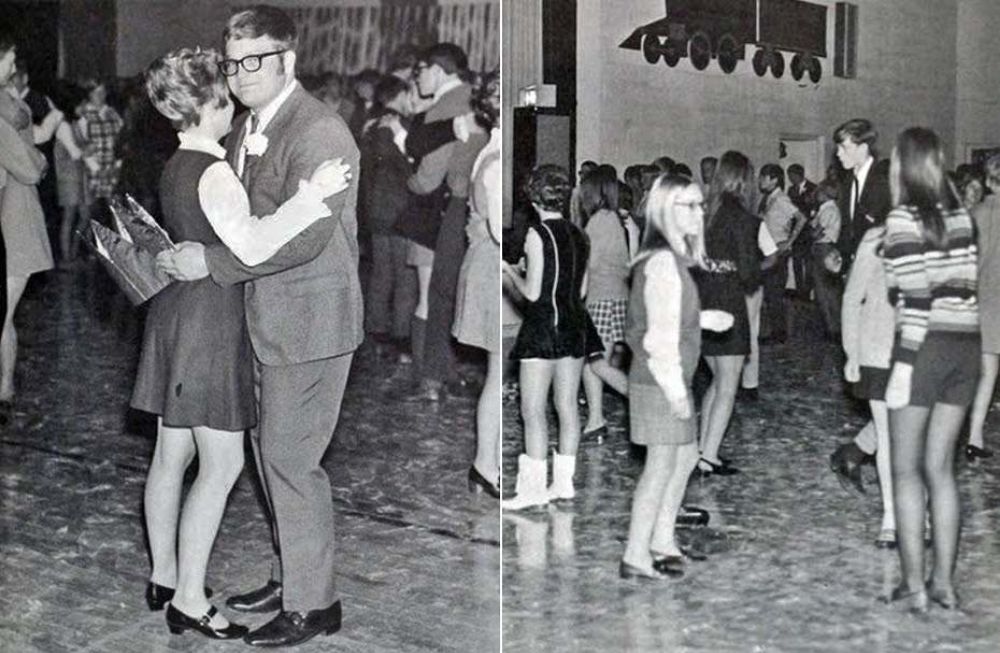
Pop music group “Chicago” seems to stand out most in my mind. Where I grew up in Maryland, we had Teen Club on Friday nights to keep us out of trouble and off the streets. We would collect in school auditoriums around the area where schoolteachers and parents would be standing at the exits to make sure we didn’t leave prematurely. We would dance to the music of the era, swap lies, brag about our cars, and feast on what they had on hand for the hungry masses.

When I think of slow dancing and embracing the opposite sex, I think of “Colour My World” performed by Chicago long about 1970, which was a song written by American musician James Pankow, a founding member of Chicago. The late Terry Kath sang lead vocal while Walter Parazaider performed the buttery smooth and intoxicating flute solo. It was a song perfectly written and performed for young lovers long on testosterone with a lot of memories to make and our whole lives ahead of us. The future was ours to hold.

“Colour My World” was the first really significant hit by Chicago that escaped its patented woodwind and brass sound. The music of Chicago was very much alive and long on energy. It was a notorious slow dance song at high school social events and proms where we all said, “They’re playing our song!!!” Young marrieds played it at weddings and on one-year anniversaries.

Whenever I am listening to Satellite radio and this song comes across the airwaves, I think of those first romantic embraces and the feeling of holding a girl for the first time. I watch my 15 year-old son coming of age and wonder what it is like to be him – 50 years later.,

Okay…I admit It…I am a Habitual Fixer

There are those who cruise through life and leave a trail of destruction and shattered lives in their wake. And then there are the incurables – perhaps like you and me who believe we have to fix the damage. In fact, we genuinely feel at fault for what happened and are convinced we have to fix it even if we had nothing to do with it.

What the heck is that?

We are the ones who need a team of psychologists – professionally paid “fixers” who are enlisted to fix the fixers. I, like my late mother, was born feeling guilty about anything and everything. She and I always believed we had to rescue everyone.

How do you fix terminally ill empaths?

Beats me, buddy…

My best friend, Karl, a Maryland native farm boy of German descent on the Eastern Shore defines this deeply engrained genetic trait that always leaves us in an emotional tailspin. He identifies himself as an “empath…” which was where I first learned this word, and so it goes. Karl has spent his lifetime serving others. That’s what he is and has always been. He is a professional farmer who has spent his life feeding others. He has worked in law enforcement serving and protecting others. If you’re in trouble and need rescuing, Karl will give you the shirt off of his back and the britches off his backside.

This is an element the man was born with.

Empathy is something we are either born with or haven’t a clue what it means. What happens to others always hurts worse than what happens to us. If we could transfer the pain others suffer to ourselves – we would. It is just too much to bear watching what happens to others.

I think the best place for an empath is volunteer work for those in need, which sports its own share of hazards because we’re always quick to rescue – oftentimes at our own expense. The good news is the gift of giving and doing for others. Makes you feel good deep inside.

Counting One’s Blessings…

As the sun rises on Thanksgiving Morning, remember to count your blessings no matter how dark things may seem.

If you have even one friend to lean on – that’s a blessing.

If you’ve made a difference in even one single life…not only is it a blessing for someone else who has the good fortune of knowing you – it is a blessing for how good it makes you feel.

If you enjoy a Thanksgiving meal today – even if you’re alone in a restaurant – you are blessed to know a warm meal.

If you hear the heater come on and can listen to the rain outside – you have a roof over your head and can bundle under the covers for a good night’s sleep and an old sitcom on the TV.

No matter how tough it may seem on this day – there’s always someone out there who has it tougher.

Count Your Blessings – no matter how small they may seem.

My greatest single blessing is the love of family and a circle of great friends. I never take any of it for granted.

May you all know Peace this Thanksgiving Weekend.

Things I Just Don’t Understand About California

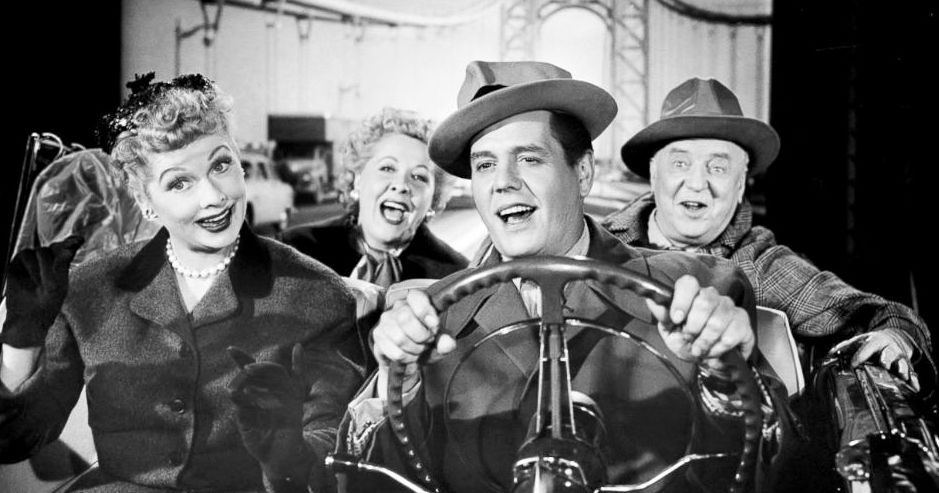
Do you remember when the Ricardo’s and the Mertz’s headed off to California in a ’55 Pontiac convertible singing “California Here I Come…” for a new adventure and the launch of Ricky’s movie career?

Ah – the Golden State, the mass migration West, and our endless national obsession with this place.

I am an East Coast boy lost in a place called Los Angeles. There are things I will never understand about California and I’ve been here 30 years. I am still adjusting to the place.

I am a native-born Washingtonian birthed in our Nation’s Capital during a rare March blizzard in 1956. I heard about my birth and the big snowstorm dozens of times from my mother. Not a darned thing I could do about the weather and my premature arrival. I was supposed to be a spring baby.

I’ve been in 49 out of 50 states and I’ve lived in eight of them. Now that’s a lot of moving.

I’ve had the good fortune of traveling from coast to coast and experiencing the many different cultures there are across the vastness of our United States. The only state I haven’t visited is North Dakota, which I intend to visit soon. Head for Minnesota and turn left.

I have lived in Florida and swatted mosquitoes, gnats, and love bugs. I do remember Oklahoma’s tornado warnings and stunning hailstorms. I’ve shoveled snow and scraped ice off car windows in Detroit. I’ve also lived in the South and attempted to understand that “queeeeit!!!” means “quit!!!”

I will never understand California.

Of all the places I’ve been, I’ve found California to be most unique – more different than any place I’ve ever been. Unique in a good way – and also quite unique in a not-so-good way. California was once a vast paradise until World War II ended and our troops came home from the Pacific. They were on their way home to thousands of destinations where it rained and snowed and was either butt cold or steamy hot. They stepped off ships and planes here in Los Angeles and up north in San Francisco, and found California was the place they wanted to be.

What was not to like about this place? In the post-war years, California was a great place to grow up and grow old. California’s great climate and many incredible destinations within a day’s drive or a short plane ride made people flock here by the thousands. Plenty of jobs and careers were waiting. Aerospace and manufacturing were humming. New communities sprung up all over. Education was state-of-the-art. People felt safe in their neighborhoods. Officers Reed and Malloy (Adam 12) were cruising the streets and arresting the bad guys. There were block parties all over and people knew each other. Overall, people were nice to one another.

California has suffered from exploitation and misguided government if nothing else, which has contributed to its deterioration. Millions have come here – both legally and illegally – and used the place up. A once thriving California has succumbed to the oppression of overwhelming government, high taxes, and an outrageous cost of living. No one can afford to live here anymore. As a result, the masses are leaving California in droves for destinations like Idaho, Utah, Texas, Tennessee, Florida and the Carolinas bringing most of California’s social woes with them. Californians relocate to these places and lament the absence of elements they had in California.

In-N-Out Burger has responded to the exodus from California by erecting restaurants in Idaho, Texas, Tennessee, and others under consideration. It has responded to thousands of requests from transplants who miss a great burger, fries, and a shake for under ten bucks.

Now there’s a California trend we can live with.

The Day Kennedy Died…

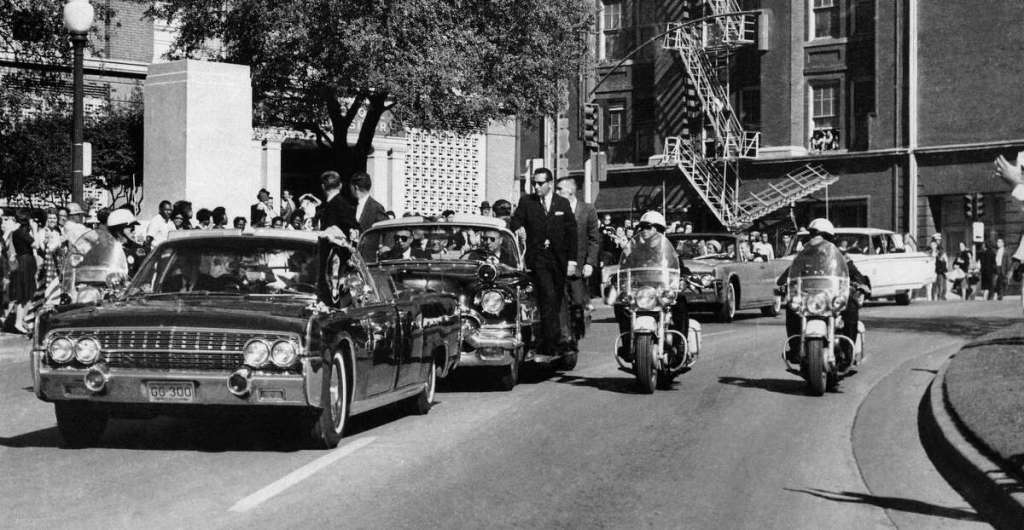
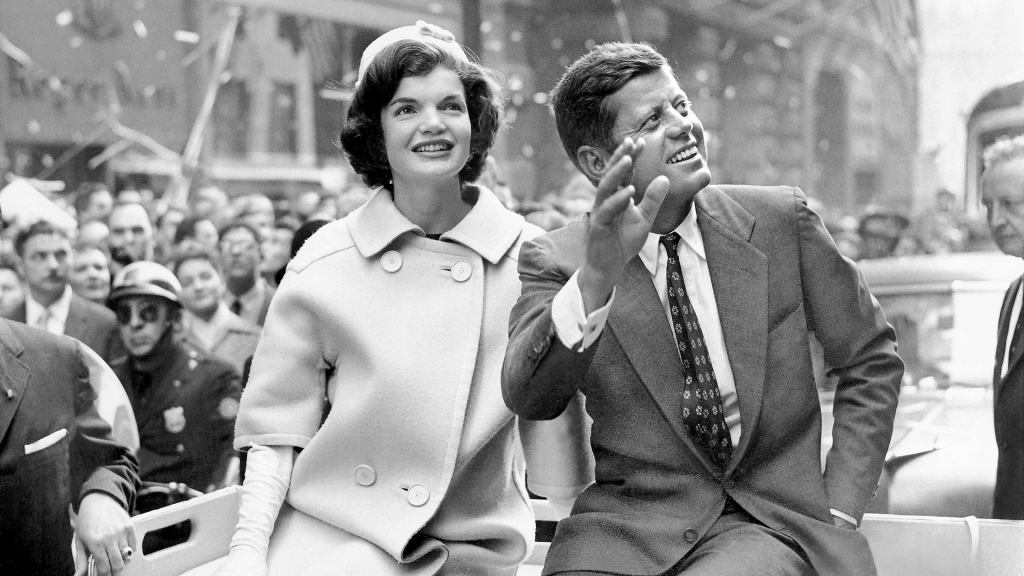
Today marks the 60th Anniversary of the assassination of our 35th president – John F. Kennedy.

Baby Boomers vividly remember the Kennedy Assassination – November 22, 1963 – a Friday. It was the most defining moment of our time. My family and I had just moved to Laurel, Maryland and I was in the Second Grade. At the impressionable age of 7, I had little concept of government and what government did. My first memories of a presidency were John F. Kennedy, his inauguration, and The White House in 1961.

At the time, I didn’t even understand my grandfather had been a White House police lieutenant under several administrations since the 1920s. He was the most solid human being I have ever known. He retired from a heart attack in the mid-1940s right after Harry Truman was sworn in as president.

November 22, 1963, a Friday, was like any other autumn day in the Mid-Atlantic – chilly, the rustle of leaves, and the utter boredom of schoolwork. I was a terrible student. To me, education was pointless and tiresome. I just didn’t understand the importance of it. Early that Friday afternoon, we were let out of school ahead of schedule, which was thrilling for a kid like me.

Time to go home!!!

Busses were lined up in front of the building. I had no idea why. The surreal part of the experience was everyone was crying. I did not understand the tears. On the bus going home, I was told President Kennedy had been shot to death in Dallas. I arrived home to find my mother in tears.

In my naive mind I thought, “how can the president be dead?” JFK, our president, was a young and vibrant leader with the nation’s hopes and dreams in his hands. He was a man with vision who gave us hope and genuine leadership. I’ve often wondered how different our world would have been had he and brother Bobby survived.

At such a young age, I was completely clueless. That weekend, our Philco TV was on around the clock – with investigators and the media attempting to dissect the assassination of an American president. The funeral procession down Pennsylvania Avenue was profound. I didn’t understand just how significant it was at the time. Our world was about to change.

There was our world prior to the Kennedy assassination and the world that would follow. The two were as different as night and day. The 1960s, as much as we romanticize them, was not the decade of sweet memories. What we had going for us as children was our innocence with not a care in the world. We could escape to our bedrooms and playgrounds and the world of imagination.

The social unrest of the 1960s was something we saw on the evening news – Vietnam, the riots, rising crime. Seems the early 1960s was peaceful and we were on the rise as a nation prior to the Kennedy assassination. Kennedy had his challenges – the failed Bay of Pigs invasion and personal issues in his own life. Standing up to the USSR and getting the nukes out of Cuba was a big win for Kennedy. His “dream” speech proposing we send man to the Moon and return him safely to the Earth was a page turner. It inspired. It energized NASA. We were going to the Moon.

Isn’t 60+ Something Your Parents Were?

Dunno about you, but I am noticing a change in the reflection in the mirror these days. I knew I was looking older when a young lady at a fast-food restaurant automatically keyed in SENIOR DISCOUNT when I ordered breakfast.

My goodness…

We are all growing older – and the struggles are as unique as our own thoughts and fingerprints.

Baby Boomers were never going to grow old. Remember that?

Well…some haven’t… They’re gone…never to have witnessed the coming of old age. They never had the chance – gone from this world before reaching old age. I think of high school friends killed in car accidents in our senior year – never to see graduation. At least one passed from terminal cancer before he was 20 – gone at such a very young age before reaching adulthood.

It can get depressing….but consider this… At 60+, you’re a survivor. You are still here.

If you’re 60+ and lamenting the arrival of old age, count your blessings. You are still alive. You are still here to feel and experience. You are still making a difference no matter how small. You have air in your lungs and a backache to boot. If you have people close by who love you, count your blessings even if they drive you crazy. If you don’t, mingle with others where there is the potential for friendship and love. Keep on keeping on. Never give up. You are still very much alive to feel both pain and – more importantly – pleasure.

When we were so very young, we saw the world differently than we do now. We’re not unlike the generations that have passed before us. Consider a saying for the ages, “I’ve been young and I’ve been old…and young was better…”

But, was it?

Consider how short on wisdom (stupid) you were at 20. Further consider your life experiences and what you’ve learned in the decades since. You’re a whole lot smarter than you were when Walter Cronkite was at the news desk and Apollo 11 landed on the Moon.

Further consider the prosperity path – the post-war world handed to us by The Greatest Generation as we crested adulthood. We’ve had it better than any generation before us. It has been what we’ve done with it since that has determined where we are now.

At the cusp of the 1970s, boomers repeatedly said, “Never trust anyone over 30…” I am snickering as I write this because there’s nothing new under the sun. Do you know who allegedly said this first? Jack Weinberg – born April 4, 1940 – is the first person to have reportedly said this. He was 24 at the time and was a young adult.

He’d never been old.

Today, he is 83.

Weinberg was an outspoken American environmental activist best known for his role in the “Free Speech Movement” at the University of California at Berkley in 1964. His immortal words have endured. Weinberg gets the credit for the phrase, “Don’t trust anyone over 30”. Of course, several outspoken activists have copped this phrase over the years. Abbie Hoffman, Jerry Rubin, and a host of others have taken credit for it.

You can bet young people were uttering these timeless words in the 1800s. Through the ages, there have been generation gaps – none larger than Baby Boomers and The Greatest Generation. The Greatest Generation said, “Rock and Roll has got to go!” Boomers said, “Hell No, We Won’t Go!” We paved the way to a new age where the world was never going to be the same again.

Baby Boomers be damned, yet honored, for the changes that have come in our time. We were going to change the world – and did. We’ve done a lot of good. We’ve also done our share of not so good. We’ve been greedy and selfish. Our parents wanted the very best for us – to have it better than they did. As a generation, we’ve collectively never known hardship. Our parents lived through The Great Depression and a world war. They made sacrifices we’ve never had to make.

Of course, we are older and wiser today. We’ve been selfish and we’ve been innovative. We’ve made great contributions to society especially with civil rights and equal opportunity. We surely have our regrets – things we wish we’d done differently. It is important to remember if you can read these words, you remain very much alive to experience and to feel.

As we head into the twilight, it is a good idea to consider these words – “Life is experiential…” Take these months and years ahead and look at life as an adventure. Embrace it – and others – for we shall not pass this way again.

The Passing of the Incandescent Bulb

I’ve always had a fascination with the humble light bulb dating back to when my right forearm was badly burned by a hot bulb at age five. The scar remains a lifetime later. It wasn’t the painful burn that cultivated my interest in these Thomas Edison-inspired envelopes. It has long been my gazing at a white-hot tungsten filament and marveling at the brilliance and how it works.

How could a tiny tungsten coil glow so brightly and not burn up? I didn’t understand the filament was in a vacuum void of oxygen where it was impossible to extinguish itself. I learned as I went too – sticking my finger in a Christmas light socket and getting a jolt and learning never to do it again even though I did it again and again. I wondered what the intense tingle was in my pinky, eventually learning it was the raw power of alternating current.

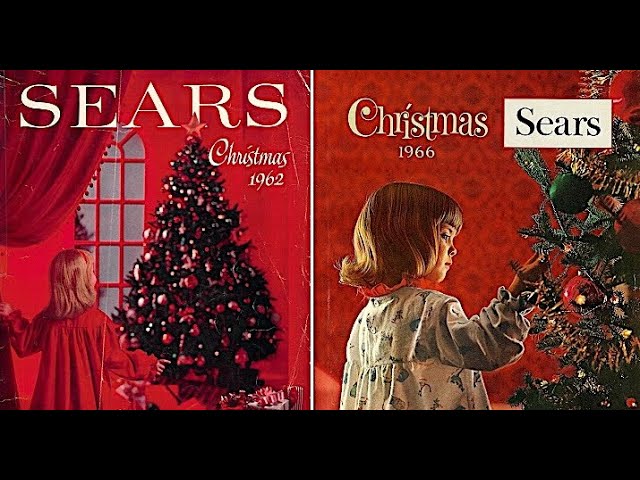
Christmas lights were a favorite in a wide variety of colors. I found offshore imported Christmas light bulbs got much hotter than GE or Westinghouse lamps though they all still got hot. Miniature “twinkle” lights didn’t get hot. GE called them “Merry Midget” lights.

This past summer officially signaled the end of the era. As of August 1, 2023, you can no longer purchase incandescent light bulbs, nor are they manufactured in the United States. This ban also applies to Halogen bulbs and it’s possible – by 2025 – Compact Fluorescent Light bulbs (CFL) will also be phased out under the Biden administration’s new environmental standards.

The time-proven old school light bulb is being phased out in favor of LED (Light Emitting Diode) light bulbs, which use less energy while also lasting longer. The U.S. Department of Energy (DoE) estimates that the switch to LED lamps will save American households an average of $100 per year on energy bills, totaling about $3 billion in energy costs for American consumers across the board.

I struggle to believe any of it. I smell a money trail – especially for investors who have invested heavily in the LED and environmental industries. LED lamps have replaced every form of lighting imaginable. Although I believe in environmental responsibility, I also believe cold hard cash fuels the environmental movement. There’s money in the environment or it wouldn’t be a priority.

LED lights emit a near monochromatic light, which has its advantages and disadvantages. For one thing, many of them nearly blind you with intense light. LEDs have the ability to produce high-quality white light while consuming less electricity according to the Department of Energy (DOE). However, car headlights, which are largely LED now, deliver light so intense that oncoming traffic is blinded by the light. Although they light the road ahead, they also blind others.

This technology offers the highest luminous efficiencies of any light-source technology and prices have dropped significantly since LEDs have hit the marketplace, the DOE tells us. LEDs can also last far longer than old school hot incandescent lightbulbs, with a lifespan of 30,000 to 50,000 hours or even longer compared to just 1,000 hours for incandescent light bulbs. I personally have seen some incandescent light bulbs last years, including those in my hallways and bathrooms. My home is 23 years old and the Hungarian-made light bulbs in some of the builder-provided fixtures are still in use. This is easily longer than 1,000 hours.

Although I believe LED lamps are better than the classic light bulb, there is still room for improvement in terms of color, light distribution, and durability. These LED light strips are notorious for short life. They flicker and they die.

Despite the demise of the humble glass envelope, you can still purchase conventional light bulbs for some applications including black lights, yellow bug bulbs, infrared lights, plant lamps, reflector style lamps remain legal and for sale.

Touring The Model Homes…

Announcing the passing of a great American pastime – the touring of new model homes…

Does anyone do this anymore?

Walking through model homes was on a par with going to an amusement park or a drive to the beach. It was just something we did on the weekends as a family. It allowed us to dream. It was euphoric.

We wondered…what would it be like to live in a new home?

New homes yielded the aroma of oil-based paints along with the gassing off of plastics and new carpet. We didn’t understand then the hazards of what we were breathing in – including asbestos.

Model homes, of course, were never realistic for most of us. They had mid-century modern display furniture and were homes fitted with all of the desirable options people wanted like the best kitchen cabinets and appliances, upscale bathroom counters and ceramic tile, carpeting, high-end light fixtures, and finished basements. These were all elements dreams were made of.

Because developers didn’t want you defecating in their potties, there was plywood installed between the toilet seat and bowl to keep people honest. Developer Levitt & Sons, as one example, placed a rope across the doorways to keep people out of the bedrooms. Levitt also placed a large chunk of Plaster of Paris in the toilets to prevent people from doing the naughty in its bowls.

When I was a kid, touring model homes was the only thing my family ever did together. We never went to the beach or down to D.C. to tour the Smithsonian. We drove to Arlington to see my grandparents or “up home” to Greenwich, Virginia to see the relatives on my mother’s side. That left touring model homes as a nice place to dream and pretend with. It gave us hope.

Today, young people are so wrapped up in electronics to where virtual reality seems to be better than the reality of walking through new homes. What I loved most about new homes in the 1960s was walking through homes under construction to see how houses were constructed. It became a passion for me. I wanted to be an architect. When I discovered I was really bad at math, I had to choose another occupation entirely.

I loved the bones of a house under construction – where the plumbing and electrical went, heating and air conditioning, and guessing at where everything would ultimately go. I grew up in the Belair At Bowie, Maryland community just outside of Washington, D.C. which was Levitt’s first community outside of the Northeast. It was also Maryland’s first Levitt community. It was an amazing place to watch grow out of the rural Maryland soil. And, for nine years, Levitt & Sons built more than 9,000 homes some 26 miles outside of Washington.

When we moved to Belair from Laurel, Maryland in 1965, it was an opportunity to wander the homes under construction. Levitt continued building across the Maryland countryside until it ran out of land. For a kid like me, it was pay dirt because I wanted to know all about home and building construction. Levitt & Sons provided the education.

Aggressive housing construction continued well into the 1970s with baby boomers and Gen Xers coming of age. It was a target rich environment for developers and growing families alike. It was also very competitive. Not all developers would survive, including Levitt & Sons, which was the one to beat in the post-war years. When Bill Levitt sold out to ITT in 1967, this created a downward spiral for the Levitt name and Mr. Levitt himself. Because Levitt took the ITT deal mostly in stock options, he lost his wealth to declining ITT stock.

Levitt was never able to regain traction as a home builder. He died broke in 1994 at age 86. A good many home builders from the mid-20th century did not survive in the decades to follow. Savvy developers found the means and resources to keep going – many of which are still with us today.

The Cars We Had…The Times We Lived

I awakened this morning believing baby boomers are quite literally the last generation that has lived America’s exciting post-war car culture. Today’s car culture isn’t like ours was in the mid-20th century. We loved automobiles for their styling and power because they had a lot of both. We revved our engines and postured proudly for all our friends.

We opened hoods and compared engines. We cruised downtown streets and watched ourselves go by in store windows – which was called “profiling” for a good look at ourselves in those days. We would wrap up our profiling – pulling into local cruising spots, revving the engine and shutting it down in a blast of underburned hydrocarbons.

If you drove a “hand-me-down” clunker, you just didn’t profile. It was bad for image. You didn’t want to be seen in the worn out family sedan or station wagon your parents loaned to you to drive. For some – non car people – it didn’t matter. They drove what we called “hackers” which were old beat-up vehicles no one wanted to be seen in and we didn’t care who sat on the hood.

A buddy of mine – Jim Shanley – brought his father’s ’69 Plymouth Fury III to Hilltop Plaza where we hung out on Friday and Saturday nights to put on a show for all of us. He did donuts all over the parking lot with this huge sedan. How Shanley never struck a light pole is beyond me. And how on earth did he dodge the police?

Today’s young bucks call it “drifting…”

I call it stupid despite being a national pastime.

I imagine Jim’s father wondered why his bias-ply rear tires were always bald. Today, a set of high-end performance tires run at least $1,000-$1,500 a pair. I see this reckless nonsense and I don’t get it. We liked fast cars in our youth, but most of us understood how expensive it was to lay down rubber. The foolishness out there today gets a lot more expensive.

When I watch how young people drive today, I have to wonder – were we this bad?

Oh sure, street racing and exhibitions of speed are nothing new. We would stage street races out on Maryland’s Route 3 or Central Avenue just south of my hometown and hope we didn’t get caught. There were certainly the fatalities and seriously injured like you see across the country today.

Not everyone survived.

In those days, we had drag strips around the area before real estate became too valuable to ignore. Many of our favorite racing haunts are gone today. Enthusiasts in New Jersey grieve the loss of Englishtown and Atco – two legendary tracks that had been around for generations. Local residents complained about the noise and politicians answered the call.

Another point is the value of real estate. As a result, we have an even larger problem problem – epidemic street racing casualties – and the masses concerned about what to do about it. Atco, as well as others in the Mid-Atlantic, had been open for more than a half-century, with most opening right after World War II. These days, enthusiasts have nowhere to race.

Drag racers between Washington, D.C. and Baltimore wonder of the fate of Capitol Drag Raceway, which opened in the early 1950s when it was way out in the middle of nowhere. Today, civilization has come to Capitol and it’s only a matter of time before it will be gone. The same can be said for other extinct drag strips around Washington, Baltimore, and Annapolis.

As boomers and as car enthusiasts, we’ve enjoyed the good fortune of the post-war years, exciting and fast automobiles, and an era long to be remembered for generations to come. It leaves one wondering what the car enthusiasts following us will do when there’s nowhere to race.