What’s All The Noise About?

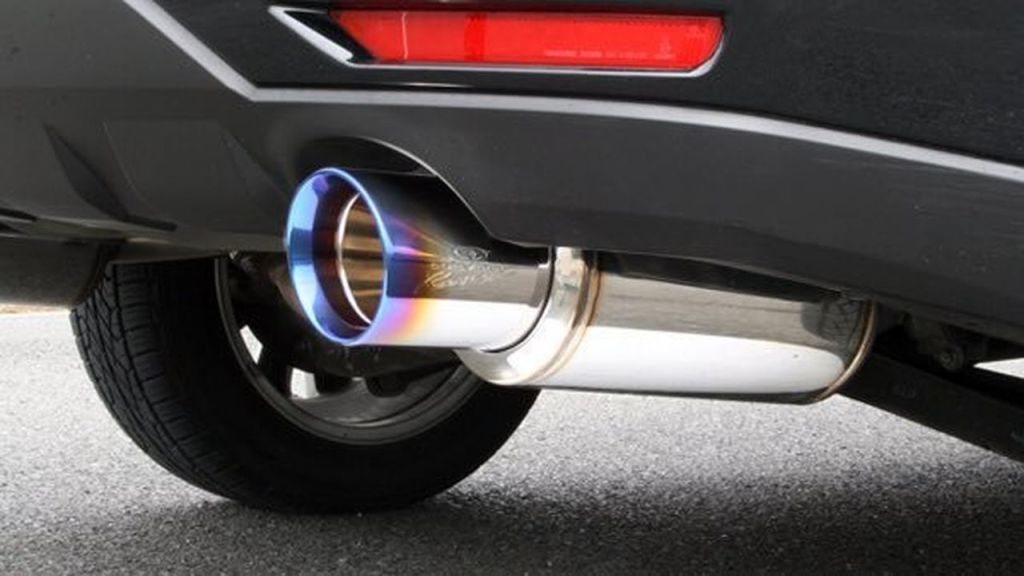
Do you remember the war on noise pollution back in the day?  The big push for a quieter world?  The police used to hand out repair orders for noisy exhausts on hot rods when we were young—so called “Fix-It” tickets.  That’s what I remember most from when we were young and first got our drivers licenses. We were foolish teenagers with glass pack mufflers and loud exhaust pipes. 

Because airport noise was intolerable for airport neighbors, jet engine manufacturers have worked tirelessly to come up with cleaner, quieter engines and they’ve done a good job.  Today’s modern jetliners are considerably quieter than their predecessors of the Jet Age.  Power and fuel efficiency without the noise and smoke.   Airlines and Air Traffic Control have come up with noise abatement procedures for pilots to follow to reduce the spread of noise.    

Virtually every type of consumer product imaginable promotes quiet operation.  I’m talking quieter dishwashers, garbage disposals, oscillating fans, lawnmowers, power saws, sanders, automobiles, motorcycles, snowmobiles, off-road vehicles, hairdryers, bulldozers, semi-trucks, bathroom fans, and a host of others. 

Whatever happened to the war on noise? 

I live on the high desert 60 miles north of Los Angeles.  Twenty years ago, the high desert was a quieter place.  You could open the windows on a summer night and bask in the peace and quiet with a light balmy breeze coming through the window. 

Desert quiet has since given way to outrageously loud exhaust systems and offensive home invading subwoofer sound systems.  You know—these ridiculously powerful $10,000 sound systems installed in worn out beat up $500 sport compacts.  These clowns would rather buy the ten grand sound system than have a vehicle with working brakes and decent tires with tread on them. 

Subwoofers wouldn’t be so bad were the noise confined to the interior of the automobile.  Instead, this low frequency, low octane mentality “boom” is forced onto those forced to live with it throughout the community. There doesn’t seem to be any real effort to stop it.  It is impossible to go anywhere without your bones being rattled at a traffic light.  I consider it an intrusion into my vehicle’s inner world.  There’s no escaping the low IQ racket. 

Some Southern California communities have chosen to outlaw subwoofers.  If you’re pulled over for disturbing the peace with a subwoofer sound system, the police impound your sound system along with a hefty fine.  This approach has been effective in some communities.  Enforcement works.  Unfortunately, few communities enforce noise ordinances because there are not enough cops and the masses are forced to live with it. Defund the police? Are you kidding me?


I was born into the rock and roll era like most of us were.  We have a solid appreciation for loud music and ear-busting live concerts.  That’s why so many of us are stone deaf today and in need of hearing aids.  Our parents warned us about loud music and what it was doing to our hearing.  We weren’t listening and it was no big deal—in 1968.  How naïve were we?  We are paying dearly decades later.  When conversation becomes impossible in a restaurant or on a road trip, we are reminded of our foolishness as young people 50 years ago.  We can no longer hear nor understand human voice.  We are frustrating for the people who live around us.

I speak from experience.  My audiologist defined my hearing loss as “profound…”  “Profound” hits home whenever I listen to period pop music or classical music and it just doesn’t sound the same.  The higher notes cannot be heard and the music goes flat.  The richness and crispness are gone.  I watch young people doing the same stupid stuff we did a half century ago and I want to warn them—but what’s the use?  Like us 50 years ago, it just doesn’t apply to them.

In a high-tech world with noise-canceling headsets and soundproof automobiles, it is remarkable how bad noise pollution has become.  Jets are quieter—Main Street is not.  Young bucks with these buzzy sport compacts, monster trucks, and modern day muscle cars shatter the peace and quiet with their high decibel rides.  I am about a mile from the freeway and I hear them jumping on at wide-open throttle. This is not only annoying – it is dangerous.

I love Harley motorcycles, however, they’re the biggest noise offenders out there with straight pipes and a concussive exhaust tone.  When bikers have a get together, typically to raise funds for good causes, it is an unending roar—sometimes for hours.  It is their legacy as bikers on Harleys.  Unfortunately, they pay with critical hearing loss that cannot be restored.  The rest of us pay with lost sleep and the inability to hear the TV.

Sound is measured in decibels. Sounds 85 decibels will do significant hearing damage. Power lawn mowers, as one example, reach 90 decibels. The roar of traffic on a busy street reaches 90 to 115 decibels.  Those rock concerts baby boomers love so much are 110 to 120 decibels.  Jet engine noise rates even higher still. 

The message here is—protect your hearing while you still can.

What’s more, protecting your hearing is also protecting other parts of your body.  Loud noise causes high anxiety, which leads to high blood pressure, heart disease, lost sleep, and additional stress.  Children exposed to loud noise struggle with all kinds of mental and physical health issues.  And, did you know loud noise can affect your pets the same way mentally and physically? It puts them on edge. 

I don’t know how to solve the issue of noise.  Law enforcement is tapped thin and there just aren’t enough police officers. They have bigger fish to fry – like homicide and other violent crimes.  Noise Pollution doesn’t even come up on the radar when it comes to state and local legislation—and even if it does, it will never be enforced.   
A Real Need For Grace

Baby boomers, depending upon how you were raised and where you grew up, remember common decency—the simple time proven practice of grace—being respectful even if you don’t agree with someone.  Even if you cannot stand them. 

Remember that?

Do you remember the political discussions our parents had back in the day?  They disagreed and they argued.  At times, it got heated.  However, they held their tongues and their tempers.  They didn’t abandon relationships.  They didn’t throw punches. 

They treated one another with dignity. 

My grandparents and parents taught me to respect the dignity of others and that “Greatest Generation” rearing never left me.  I still practice kindness and respect with others because that’s how I was hard wired t begin with. 

Do I always practice these elements?  No…  However, when I am being an ass, at least I understand that I am and render an apology for my reaction.  I tend to become combative when someone is being rude and insulting. An equal and opposite reaction—which is not the way to handle conflict.


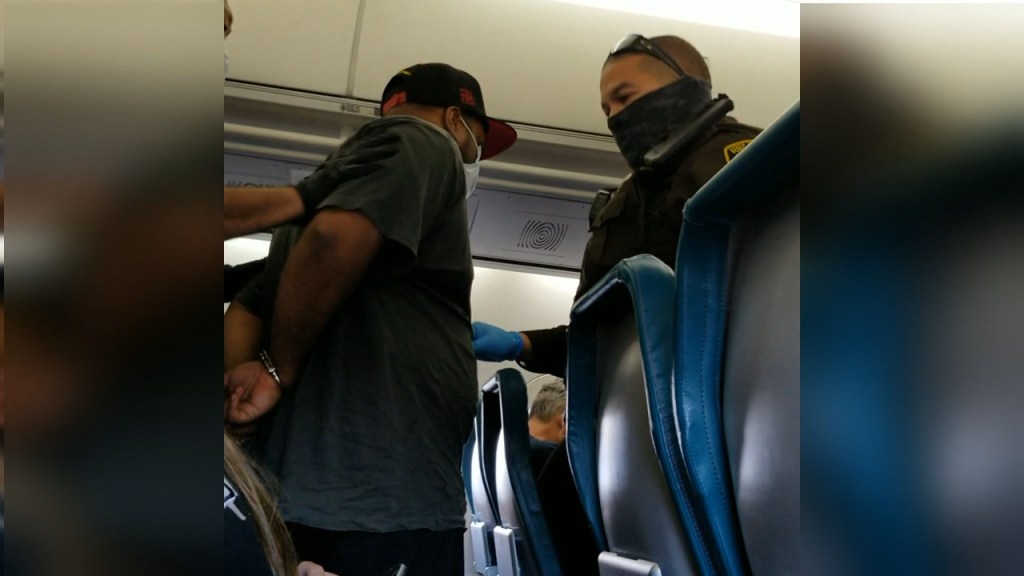
So—what has happened to us?  How did the United States of America become the Divided States of Jerry Springer? The “trashification” of America where The People have become subhuman?  When did we deem it acceptable to be so rude and insulting with one another?  When did it become okay to punch out a flight attendant or belt someone in line at the grocery store? And—since when was it ever acceptable to assault a school teacher, police officer, or an ER nurse?

Whatever happened to common decency? 

It has become socially acceptable to buck authority—to defy the orders of a law enforcement officer, assault an educator, disobey a flight crew member, hit a neighbor, road rage another motorist, and shout obnoxious words to a community leader in a public forum.  Every time I think I’ve heard and seen it all, it gets worse.  The news is never short for shocking stories of what people do to one another.

We are an angry divided society from sea to shining sea. 

Is this what we call freedom?  I call it barbaric.

Former President George H.W. Bush spoke of a “kinder, gentler America” back in 1988.  It remains to be seen just how kind and gentle we are.  We’ve been through a major terror attack and a succession of struggling presidencies and sessions of Congress.  Little has been done by government to improve the quality of life in America. Boils down to priorities. Washington doesn’t care about you. It cares about itself and getting your vote at election time. 

The top 1-percent is living well while the rest of us are at each other’s throats.  I think that’s the way they want it.  Gives them control. “Let Them Eat Cake…” is alive and well in government at all levels. Politics wins out over common sense.  

America’s civil divide is at its worst since the Civil War more than 150 years ago.  The right/left political divide.  The race divide.  The science/politics divide.  And even the divide within the two political parties. The divide today is more complex than it was in 1863.  The Dems can’t seem to get it together despite two pending elections where they stand to lose it all.  The GOP has a quest for absolute power and dictatorship. 

People are on edge and society has become violent. Intolerance has become epidemic. We want what we want when we want.

We’ve lost touch with how to respect a differing opinion in this country.  We don’t know how to listen to what another has to say.  We’re in an atmosphere of complete intolerance.  We apparently don’t know how to shrug it off and just let it go.  Petty superficial situations, such as being asked to wear a mandated mask on an airplane, bring out the worst in people. Flight attendants don’t initiate these policies – government and airlines do. Yet, flight crews get the brunt of it.

The way I figure it is simple.  We don’t have to agree.  I believe I can learn something from someone with whom I disagree even if it’s a tiny grain of useful information.  However, that’s not how the general population thinks today.  It’s either my way or the highway and people walk away.  Long standing friendships have ended over differing political opinion. Are you kidding me?  

This isn’t about simple disagreement – this is an “all or nothing mindset” that causes societies to fall—which should be a powerful message for Americans.  We are the longest standing democracy in modern history.  This should demonstrate just how fragile democracy is.  We’re at a turning point in American history.  We’d better find a way to get along or we will surely fall.            

Refining The Aging Process

Bummed about growing older?  I thought so…  Me too… Boomers are a rather depressed lot.  We’ve long believed we were not going to grow old like our parents and grandparents did.  We were different.  Growing old was something other generations did—but never us.  “You’re not getting older…you’re getting better.”  Remember that?  It was an ad slogan conceived for The Greatest Generation—our parents—by Clairol’s “Loving Care” hair dye brand. 

No one wanted to grow old then either—they just didn’t talk about it.  

More candles on the birthday cake makes us aware of our vulnerability and mortality.  Growing older makes it clear our time in this life—this world—is limited.  We have an arrival date and an expiration date.  However, take heart.  If you’ve lived this long, it means you are a tough survivor.  You’re still here when a lot of friends and family are not.  It means you still have a life to live and a lot still to do.  There are those who depend on you even when you feel like no one notices. 

Each life born to this world touches at least one other life even if it was making your mom and dad happy in but a single moment when you were born.  And truthfully, you’ve touched more lives than you know even if it was but a kind smile offered to someone in the grocery store.  One life always touches others.

And, just imagine if you paid it forward—asking yourself what you can do for another? Doing for others, no matter how small, helps us feel good about ourselves. I’ve always felt good when I’ve been helping another in need.

I’ve long viewed life as a book of chapters.  You’ve had a bunch of them if you’re 50+.  I am 65 and I have compartmentalized my life into chapters.  I put these chapters into rooms—some I have chosen to dead bolt and never to return to.  Others I wish I hadn’t.  I’ve had traumatic times in life.  Been fired.  Divorced—twice.  Had to pack up a truck and move thousands of miles away overnight to take a job and further my career.  Then begins the adjustment to a new chapter.  Big adjustments.  Like most of you, I’ve never been comfortable with change even if it was for something better. 

I’ve also had rewarding times where I was overwhelmed with emotion for the blessings I’ve had right in front of me.  My kids and grandkids.  My family. Closest friends who’ve been by my side for a lifetime.  Unbeatable business associates, publishers who’ve been steadfast through the toughest of times.  The simple beauty observed all over the North American continent.  And—even the goosebumpy thrill of a good healthy sneeze.  Man, that felt good.

Why does a good sneeze give us goosebumps?

Because old age isn’t something we’re likely to avoid without a funeral and a celebration of your life, we have to find a way to embrace it.  You’ve got to find a way to feel good about it.  This doesn’t mean you have to play Shuffleboard or learn to play Bridge.  It means it is time for you to pursue the things you really love doing—those things you’ve wanted to do all of your life.  You’ve done the grind and made sacrifices.  It is time for you and your passions even if it means catching up on Law & Order or Seinfeld episodes.

There has never been a better time to grow old in America.  You’re in good company because there are some 76 million of us doing the same thing across 18 years of baby boom births from 1946-64.  Because some 16 million of us are gone, this changes the demographics a bit.  We are now outnumbered by Millennials and their offspring, which makes us less significant than we were 50 years ago.

What made us significant back in the day was our numbers.  We had buying power and the energy of our vote.  Politicians and Madison Avenue have loved us for our great numbers.  However, in our more vulnerable stage in life—they like to push Medicare, Social Security, pharmaceuticals, and healthcare.  These are popular subjects when it’s time to address baby boomers. 

However, we’re no longer rocket fuel for the economy.  We’ve become more conservative with age.  Spending is down.  The real money and voting power aren’t with us, but instead with the younger set, which have the numbers advantage.  That’s the way it was in the 1960s and that’s the way it remains today. 

The best place to focus your attention at 50+ is to look at what you want for your own life and to hell with the big picture. Watch it. Glean from it. But don’t let it consume your life unless you can affect real change.  To feel a sense of unity and belonging, tighten up your circle of friends and focus on quality instead of quantity—and make a regular routine out of getting together.  Ask yourself what you can do for others, extend a hand, and feel good about yourself.       

There’s a Work Boom

As businesses have opened back up, laid off workers haven’t been coming back leaving a huge labor void and unhappy customers. Young people, primarily, have chosen to not to come back to these jobs, or have come back long enough to know they wanted to quit.  They want more from a job—careers and productive lives. 

There’s work for you in retirement.  Extra cash.  Fulfillment. 

There are employment opportunities for young and old in the wake of the COVID shutdown and reopen.  Granted, most of these jobs are in the service industry—fast food, restaurants, office cleaning, driving, dry cleaners, car washes, convenience stores, box stores like Costco and Sam’s Club, insurance and doctors’ offices, the medical industry (especially if you have a strong medical background), machine shops, electrical and plumbing, carpentry and cabinet making, day care (if you like kids), airline and rail industries, skilled trades, and more. 

Southwest Airlines, as one good example, likes hiring boomers as flight attendants, gate agents, and reservations people because we show up, are on time, and are committed to duty.  What’s more, there are airline travel benefits and you get to become a part of a great team of airline professionals who become family.   

Mom and Pop businesses large and small are among the best to work for along with smaller companies.  You can also start your own business doing what makes you happy along with providing a valuable service. Main thing is to work at something you love, not something you have to do.  You’ve done the daily grind—and now, it is time to do what you love. 

If you love animals, there are kennels, pounds, groomers, and pet sitting.  This is s big, recession proof business.  It may slow in tough economic times, but it never stops. The same can be said for healthcare, which is a growing industry as boomers and GEN Xers grow older and require maintenance. 

If you love working with people – healthcare, age-in-place, and nursing care facilities can use your heart and your talents.  They need boomers with good bedside manner who are people oriented.  Few things are more grand than chatting with the elderly.  Along with their great company you get wisdom you can use to enrich your life.

Because I have contact with a lot of businesses, I’ve found the need for good reliable people who will show up is epidemic.  Companies large and small are having to turn business away because they lack the labor they need from people who will show up on time who won’t quit a week later. If you have a career specialty, a special talent, there’s work for you all over the place. 

Machine shops and automotive repair facilities are hurting for good talent and they don’t care how old you are as long as you can fix cars.  Plumbers, electricians, carpenters, heating and air, siding and flooring companies, painters, and the like need qualified people they can train or put right in the saddle.

Baby Boomers are an experienced commodity with solid work ethic who will show up on time ready for work.  This means you at retirement age have value to commerce and volunteer organizations.  There’s also a lot to be said for volunteer work if you’re flush with retirement income and are seeking purpose.  Purpose is a good way to feel good about yourself. 

Veterans, now more than ever, need your help, experience, support and understanding.  The Iraq and Afghanistan conflicts have taken a lot out of our young and middle aged military professionals alike.  They’ve come home badly injured and traumatized.  They could use a friend and mentor, especially if you’ve walked in their shoes and are a veteran yourself.  There are other forms of volunteer work out there.  The homeless and the hungry could use your compassion.  So could the disabled and the elderly.  

What you need most as a retiree is purpose regardless of what occupation or pastime you choose.  Just make sure it is something you are supercharged and excited to do.  You’ve got to be enthusiastic about what you do or why do it?  Choose wisely and try different occupations on for size.  If you land something you’re not particularly satisfied with, give adequate notice and move on to something more fulfilling. 

Purpose is also about longevity.  Having purpose is also conducive to living longer.  Sitting in front a TV or a PC won’t help you live longer.  You will die in your easy chair.  Helping others and providing a service fuels your mind, body, and soul. 

Think it over and check it out.         

Three Generations…Common Ground?

The Greatest Generation, Baby Boomers, and the Millennials—three generations with very little in common—and yet with everything in common.  When boomers were young, we perceived we could change the world—and did. 

So did The Greatest Generation.  So have Millennials. 

Baby Boomers have changed the world in positive ways.

We’ve also managed to screw it up. 

We have problems Millennials have inherited from us that will have to be addressed if these issues can be solved at all.  Because we tend to be a self-involved generation, we haven’t seriously considered the consequences of our lifestyles.  We’re living with these consequences now.  The news isn’t all bad.  Each generation has brought forth its share of success—and adversity.  Baby Boomers had an idealistic view of what we thought the world should be. 

One half century ago, we had utter contempt for the people who raised us who made it all possible—The Greatest Generation.  Their values just weren’t shared by us when we were young and clueless, frolicking in the tulips, hangin’ out with our friends, toking on a joint around a campfire, cruising for chicks, making love (and babies) instead of war, and just doing our thing (whatever that was). 

I suppose it can be considered ironic baby boomers were big on peace, yet we’ve started more wars than The Greatest Generation.  When we were so very young, we were minimalists.  Didn’t need all those “possessions” our parents had.  We didn’t see the point in luxury cars, large homes, and expensive vacations. 

Yet, baby boomers have been greater consumers than our parents were. Baby Boomers had all these beliefs when we were young because we had nothing—so we invested nothing.  When the masses were cruising to Woodstock in 1969, we did it in old torn up clothing in beat up automobiles and were clad in long hair with painted faces.  Trends would swiftly change and the 1980s would surely arrive—with boomers setting the tone for prosperity in the Reagan years.  All that minimalist chatter went right out the window. 

We just had to have it all.

We were going to have what we wanted when we wanted regardless of how much consumer debt was involved. We landed in big expensive McMansions, bought high dollar SUVs, purchased boats, opted for vacation and retirement properties, put our kids (Millennials) in new cars, covered their college educations, and been obsessed with them and our grandkids ever since.  That foolish excessive logic would come home to roost in the crash of 2008 when boomers lost their homes in great numbers.  Millennials were watching—and wound up along for the miserable ride from a nice comfortable home to an apartment, or worse…the street.     

Watch “The Graduate” from 1967 and the differences between us and The Greatest Generation becomes clear.  Our parents cut their teeth in Great Depression and a world war—something of a baptism by fire.  In “The Graduate,” a very young Ben Braddock (Dustin Hoffman), just home from college floating in a pool to soak up sun, was asked by his father what he intended to do with his life.  Like most of us at that age, Ben was decompressing in the wake of four years of college and just wanted to be left alone.

His father just didn’t see things the same way.        

When you study The Greatest Generation closely, it becomes apparent who grew up in the Great Depression and who managed to dodge the worst of it who had jobs.  Those who lived in the bowels of the Great Depression have furniture and kitchen appliances they purchased after the war.  They still have those faded drapes from 1965 and haven’t seen any point in replacing them. They’ve protected furniture from the period with clear plastic slip covers.  They’ve always been skeptical of investment “opportunities” and tend to be very conservative. They haven’t taken big risks.  They’ve been big savers, which enabled them to retire comfortably. 

A few remain in our childhood homes. 

More tragic yet has been boomers who inherited their childhood homes free and clear who’ve mortgaged them to the limit and managed to lose them to foreclosure after the parents worked hard to pay them off decades ago. It makes you wonder why they trusted us with their greatest lifetime investment.

Those dated Kenmore kitchen appliances have been around since they were new and we were snot-nosed kids. Our parents bought them to last a lifetime.  These possessions went out of style when we were clad in bell bottoms.  Boomers who’ve laid their parents to rest are wondering what to do with all that old stuff.  You see a lot of it on eBay and other online auctions.  We pitch this stuff as “classic” or “antique” to profit from their valuable possessions.

Millennials are wondering what to do with our “stuff” when we reach our expiration dates.  Your grown kids just don’t want your old stuff except for perhaps items of sentimental value.  What’s more, they look at us with utter contempt—just like we did our parents a half century ago.  They see our thinking as dated just like we did our parents. 

What makes us different from both our parents and our kids is we’ve been the credit and second mortgage generation. We like to spend, yet have become more conservative with age.  There are those who mortgaged and lost their homes in the crash of 2008.  We just couldn’t spend enough and it has manifested itself in empty nest eggs. There are those who don’t have enough to retire and survive.

Millennials are more common sense about debt.  That makes them smarter and more conservative with credit.  Many are not interested in even owning an automobile or a house because they understand the consequences of overextending one’s debt load.

They learned that one from us…

When You’re Seeking Hope…

What to do when you’re feeling a great sense of hopelessness and loss?  I’ve found it is best to count my blessings even in the toughest of times.  This way, I am compelled to examine what I have instead of what I have not. 

Easier said than done, especially when things look darkest. 

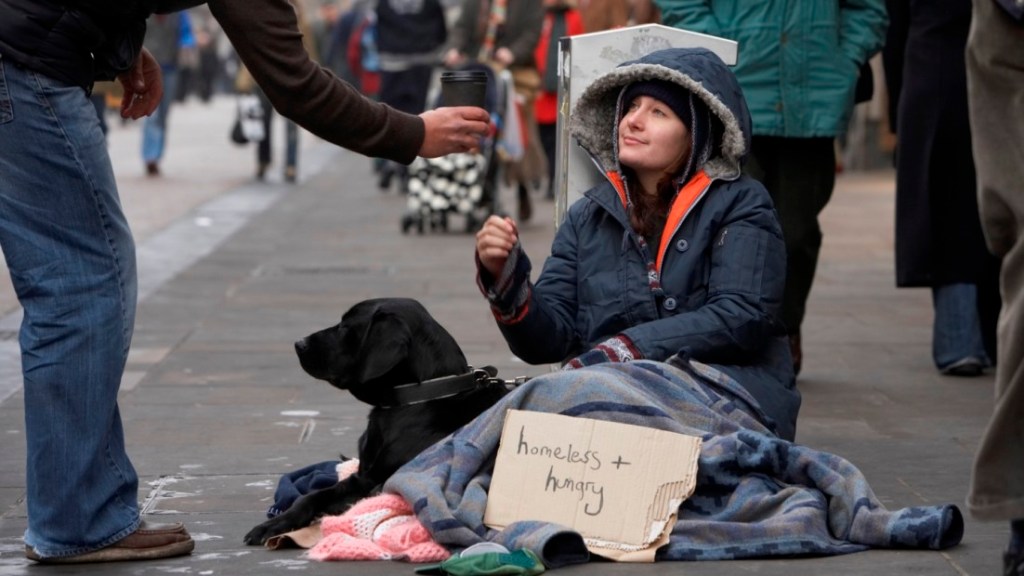
I’ve experienced tough times when it felt like I couldn’t see my way out.  I was young, stone broke, sitting in my car in the dead of winter, homeless, frightened, and feeling very much alone—wondering how I was going to afford my next meal and put gas in the car to stay warm.  Few things are more frightening than being homeless and without money especially when you are alone and seemingly without options.

In the darkest of times, it is impossible to feel like there’s calm and light on the other side of the storm.  Baby Boomers have been through their share of ups and downs. We’re growing old and a lot of us are struggling.  If you’re fortunate, you’ve managed to dodge layoffs, firings, foreclosures, eviction, serious health issues, divorce, natural disasters, and the loss of a loved one. 

If you’re like most of us, your journey has had its share of chuckholes, slippery pavement, being stuck in the mud, and buried under a mountain of snow.  I know people who’ve lost children and spouses.  I personally don’t know how anyone survives the loss of a child or spouse.  You expect to lose a parent.  As nature generally goes, you expect your children to outlive you. It is a life changing shock when they don’t.

When you’re feeling low and without hope the best thing you can do is get involved with others and ask what you can do to help. Purpose is what gives us hope.  Mix it up with good people no matter how embarrassing it may be to reach out.  There are the homeless and destitute who never dreamed they would be there.  They became jobless and then homeless as a result of the economy and COVID.

Never be afraid to ask for help. 

When you’re running a self confidence deficit, likely the last thing you want to do is be with others. Low self esteem cripples.  Despite your deepest internal fears, mingle with good people and do your best to avoid the bad apples.  When you are feeling low, it is easy to get mixed up with the bad ones because they instinctively know to prey on those who are down on their luck—and will take advantage of your weakened emotional state. 

When someone is overly friendly and wants to be your new best friend, exercise caution and take it nice and slow.  Follow a getting to know you process before getting too involved.  Listen to your gut instincts.  Pay close attention to what attentive newfound friends do, not what they say. Actions speak loudest.  If their story sounds outlandish, it probably isn’t true.

There is help for you when you’re in a bad spot.  There are organizations, both private and government, that can help you get back on your feet.  Cold and hungry?  There are food kitchens and places to get warm.  Virtually every city in the nation has a safe harbor for you.  There are also warm beds and bathrooms when you need a safe place to bathe and sleep.  Most importantly, reduce your vulnerability by getting somewhere safe. 

What you need most when you’re destitute is optimism.  Shut out all negative input and focus on what you want from life. Set goals and get focused no matter how many people tell you it will never work. Forge ahead and never lift.  Where do you want to see yourself in six months or a year?  Five years.  Even if you don’t have a skillset, there’s always work for you doing the things most people don’t want to do who feel it is beneath them.  A job of any kind is an opportunity to get back on your feet one step at a time.  There’s a critical shortage of people who will show up and give it their all.  If you are consistent and reliable, you will always have work. 

Baby Boomers have always been consistent and reliable because we were raised by The Greatest Generation.  They understood work ethic and made sure we understood it too.  We began early on mowing lawns and shoveling snow until we could get a work permit.  Then, we pumped gas, swept beauty salons, bussed tables, flipped hamburgers, sold shoes, and fixed lawnmowers until we charted a course for our life’s work.  Some of us never stopped waiting tables or fixing lawnmowers because we enjoyed doing so.

My point is, never stop believing in yourself.  Never ever give up because there’s a place for you no matter where you go.  If there’s no work, catch a bus to where there is work.  Find purpose and you will get on your feet.             

When I was at my very low emotionally, I drove a school bus.  It was purpose, which was what I needed most.  I enjoyed transporting kids to and from school.  I needed a reason to keep going.  In time, I regained lost confidence as a journalist and began canvassing for employment.  I found my calling in Los Angeles with a prominent publisher.  It took time and, one day at a time, I got my footing and got back on the rails.  I was back and it felt good.

When employment cannot be found, immerse yourself in volunteer work helping others and making a difference in society. Volunteer work typically leads to productive contacts and employment. It may seem pointless at first, however, you can make a difference and it will yield a greater benefit in time.  

All you have to do is approach your comeback one day at a time and with great tenacity.  Adjust your expectations and put one foot in front of the other.  Fake it til you make it, and you will get it. In time, you will never know how you did it.   

There’s Help For You…

The Continuum of Care (CoC) program is for homelessness services across the nation. Contact your community’s CoC to learn about access to shelter, housing, and other resources.  Contact the CoC to get in touch with homeless organizations in your area.  A “2-1-1” hotline is available in many communities and offers trained staff around the clock, seven days a week, to help residents access services like shelter, health care, food, and other social services programs.

VETERANS

The National Call Center for Homeless Veterans, from the U.S. Department of Veterans Affairs, offers confidential counseling 24/7 for veterans at risk of homelessness and their families. 

1-877-424-3838

The National Coalition for Homeless Veterans offers a directory of local service providers and general help navigating resources for veterans experiencing homelessness.  

1-800-VET-HELP

The Veterans Crisis Line offers online chat with a mental health clinician around the clock.  Don’t go it alone. 

Call 1-800-273-8255 (Press 1)  Text #838255

YOUNG PEOPLE

The National Runaway Safeline offers services and a confidential 24/7 hotline for young people who are at risk of homelessness. 

1-800-786-2929

Information Courtesy National Alliance To End Homelessness

Remembering The Most Trusted News Man in America

Each evening at the dinner hour, we’d sit in front of our mid-century Philco black and white console or sit around the meal table and take in the news events of the day.  The news was just the news—without opinion and lengthy editorial.  Some broadcasts ended with an editorial opinion for about 60 seconds.  

News broadcasts back in the day were all about telling you what happened—and without political commentary and an exhausting panel of pundits.  In fact, the evening news in the golden age of television began as a 15-minute evening news brief that grew to 30 minutes by the cusp of the 1960s.  Thirty Minutes has been the evening news standard ever since. News has also become big business with abundant advertising dollars for the networks.

The News has become entertainment. 

The most trusted news anchor in the business back in the day was the late Walter Cronkite, who began his career in radio in the 1930s in Oklahoma City, moving on to United Press International (UPI) in 1937.  He was offered a job with CBS and initially accepted until he was offered a raise in pay from UPI. 

Cronkite swiftly became one of the most respected reporters in the business as America entered World War II in 1942.  He covered the war in dangerous places across Europe, North Africa, and Russia.  As a result of his excellent reporting, he was chosen along with seven others by the U.S Army Air Force to fly on board B-17 bombing raids over Germany in certainly the most frightening period in his career in a seasoned group of savvy war reporters known as “The Writing 69th.” 

CBS News Anchor Walter Cronkite reporting the death of President Kennedy.

Cronkite operated in a machine gunner’s position in a B-17 aimed at a German fighter plane to grasp what it was like to be a gunner.  He flew with the 101st Airborne Division over Germany.  He also covered The Battle Of The Bulge in brutal subzero cold.  Few covered the war like Walter Cronkite. It took raw guts and a commitment to real reporting to take such bold steps during the war to get the news to the people.  Cronkite not only covered the war, he brought the action into our living rooms and kept us informed. Cronkite became an all too familiar voice we came to know and trust.

With a wealth of reporting experience, Cronkite joined CBS in 1950 at the invitation of the legendary Edward R. Murrow, serving with WTOP-TV, a CBS affiliate in Washington, D.C. at first.  Cronkite anchored CBS’ “Up To The Minute” broadcast in the 1950s. In the years to follow, he moved up through the ranks covering virtually every major news story imaginable at CBS News, including the assassination of President John F. Kennedy.  Being the quintessential reporter, he choked back his emotions delivering devastating news to the American people that Kennedy had died. 

When it came to the space program, no one reported it, nor got as excited about it like Walter Cronkite.  He followed the Mercury, Gemini, and Apollo missions right up to man on the Moon in 1969.  He was as giddy as a child when The Eagle touched down on the lunar surface and Neil Armstrong made the most legendary announcement of our time.  We all joined in Walter’s raw emotions.    

CBS tried Cronkite on for size with a number of news programs and time slots before awarding him the CBS Evening News anchor chair in 1962, replacing a retiring Douglas Edwards. Cronkite was in great company with other legendary news anchors across the three major networks.  Dan Rather succeeded Cronkite in 1981 in the coveted CBS News anchor chair and kept us all company for 24 years.  Rather began his career rise in Dallas with the Kennedy assassination.  These great pioneers of television news brought us what we needed to hear each evening.  Just the unvarnished facts without editorial.

I’m not a television news expert.  All I can tell you is what I’ve seen as a lifelong news hound. The evening news has been a tradition for me personally since I was a kid growing up in the 1960s.  Television news became more of an entertainment venue during the Clinton scandal in the 1990s— becoming tabloid-style programing in the years to follow.  It became a place for juicy gossip as we entered the new millennium, swiftly followed by the horrifying events of September 11, 2001. 

In due course, television news has become more opinion than being just the news.  CNN, MSNBC and FOX News all put their spin on events, however, there is but one basic truth in any news story.  It boils to interpretation and the politics of a news event.  These news stories turn into a wide variety of opinions enlisted by these news networks and it isn’t always accurate. 

CBS Evening News Anchor and Veteran Reporter Dan Rather

It is unlikely television news will ever be the way it was when we were kids because, these days, it is all about manipulating what you see and hear, and getting you to believe as the network reports, not necessarily what really happened.  A greater danger today is social media and the spreading of misinformation.  This is not only creating conflict, but also getting people maimed and dead. 

Social Media must get to the bottom of misinformation and how to stop the epidemic poisonous spread.  This would be a challenging task at best because it is a hornets’ nest not easily controlled.  There is then that tricky matter of freedom of speech in privately owned enterprises like Facebook and Twitter.  America has always been a work in progress.  We are always compelled to examine what we’ve done and how it has needed to be done differently.       

Coming Of Age Outside The “In” Crowd

When you were in high school, were you a part of the “in” crowd or were you not?  Now me—I was anything but the “in” crowd.  I was the dork-dweeb invisible face with glasses in the crowd who wasn’t a great student who was not cut out for sports, the Math Club, Chess Club, Pom Poms, Science Club, Thespian Society, National Honor Society, Symphonic Band, Key Club, Junior Civitan, or the Student Government Association.  What’s more, my mother hadn’t the faintest idea how to dress me. 

That said—were you “in” or were you out, and—why was it so important?  There were the super jocks who participated in football, baseball, soccer, hockey, and basketball.  They were, for the most part, good looking and popular.  They never spoke to guys like me.  There were the cheerleaders—the pretty babes.  Ditto for the sports jocks—the muscle guys who attracted the cheerleaders. 

And me?  I was an avid bowler with a 190 average in sanctioned league play. Cheerleaders would never be interested in a bowler dude like me. 

The strange irony of the “in” crowd is what a lot of them turned out to be after high school.  Fully expecting them to have entered college, the military, or vocational school and the adult world as successful grownups, I was stunned to see a lot of them at my tenth high school reunion in the mid-1980s who never grew beyond high school.  Most hadn’t left my hometown, were still working the kinds of odd jobs teenagers do, and they were still hanging out in shopping center parking lots where we all hung out in our teen years. 

These highly visible socialites never advanced beyond high school.

They were the people who laughed at and teased guys like me in the hallowed halls of my high school.  Or worse—never noticed us at all.  We never came up on their radar.  They were the ones you’d speak to in the hall and they’d walk past you like you didn’t exist.  While you were driving an old worn out “hand me down” automobile Mom used to drive, they all had new cars.  One of them had a new 1970 Chevelle SS 396 who would cruise our hangouts and profile under the lights for everyone to see.  Another one had a 1969 GTO Judge in blazing orange as a great attention getter.  They all cruised the hangouts in their new rides with a deep need for attention.   

A decade later, they weren’t all they seemed to be in high school.  They never grew up.  They never launched.  A lot of them looked bewildered and lost.  So, what about that?  Why did they never launch?  My belief is they were never emotionally ready for a world beyond high school where they would have to prove themselves in steady employment and growth.  Their “social” security never extended beyond high school where they had been a big fish in a small pond for most of their lives.  Self confidence vanished amid the adult world where they were scarcely noticed. 

Admittedly, the adult world is intimidating when you’re fresh out of high school.  The summer after I graduated from high school, I was paralyzed with no idea what I wanted to do as my life’s work.  It was when my mother delivered a speech about my being an unemployed bum I began to think about my future.  I worked a job as an administrative assistant for a time, then, began to really think about where I was going.

My launch pad was the United States Air Force where I found direction and adulthood.  The sports jocks and cheerleaders remained sports jocks and cheerleaders because they never received direction from parents and mentors.  Many of them continue to flounder as we enter our twilight years. 

As baby boomer parents and grandparents, the greatest gift you can give your offspring is guidance.  Mentor a young person, instill self confidence, and give them a fighting chance at survival and prosperity as responsible adults.    

Putting Dr. King’s Immortal Words To Practice

It has been more than a half century since Dr. Martin Luther King gave his “I Have A Dream” speech on the steps of the Lincoln Memorial in the hot summer sun. In August of 1963, we had a long way to go.

We still have a long way to go.

We’ve given racism a lot of lip service in six decades.  However, we haven’t done enough to make “racism” a word no one needs to use anymore in America.

In truth, we haven’t tried hard enough. Oh sure, plenty of eyewash yet we’re just not there yet.  Racism went underground and for a long time.  It just wasn’t talked about. However, it has boiled under the surface like a bowl of hot French Onion soup for decades.  Dr. King’s death at the hands of an assassin on a hotel balcony stunned Americans, but it wasn’t enough to jolt us into real change. 

On the street, racism remains a serious issue.

It has been through the valiant efforts of the tenacious few there has been any change. I think of Rosa Parks, a lone patriot who exhibited the courage to fight for human rights by sitting in the “Whites Only” section of a Montgomery, Alabama bus. That got her arrested at a time when she took her life into her own hands. That one step, an act of non-violent protest, took monumental guts.

The Selma to Montgomery March in 1965 staged by the late Congressman John Lewis was a turning point toward real voting rights and the Civil Rights Act of 1964. Human rights advocates marched for days toward Montgomery. The police were waiting. It was a bloody journey and a turning point for blacks in America. It was but a beginning. So many hurdles have been overcome since against discrimination, yet it continues to happen across America regardless of the sacrifices made by courageous souls long ago.

I grew up in the suburban Washington, D.C. community of Bowie, Maryland which was a hot bed of protests by both whites and blacks in 1963 when a black man—Dr. Karl D. Gregory—tried to buy a new home from developer Levitt & Sons in the new “Belair At Bowie” community. He was denied the right to buy.   Like Levittown, Pennsylvania, which was a predominately white community with its share of racial tensions, Belair At Bowie was also a “Whites Only” suburban Washington housing development built by Levitt. 

Company President Bill Levitt perceived selling to blacks would hurt home resale values and drag the community down. He was concerned whites wouldn’t buy in a community where blacks were present. His copout was other developers were doing it too and that was just the way business was done. Why does that perception of business leave a really unpleasant taste in my mouth? Because others were doing it gave Levitt license to do it? Levitt would have gained more ground as a business by marching to a more diverse beat. He blew it badly. 

Dr. Karl D. Gregory in the Levitt Belair At Bowie sales office in 1963.

It wasn’t until 1967 with the Fair Housing Act that Levitt & Sons, which had been sold to ITT, welcomed blacks to buy new homes in Bowie. Ironically, Bill Levitt died in 1994 from kidney disease at the age of 86 after the deal he cut with ITT decades earlier ultimately rendered him broke and in a lot of debt. Because Levitt’s deal with ITT meant he could not compete as a home builder for a decade, he lost important momentum. Levitt was never able to duplicate the great success he had with Levitt & Sons again. Some might call it a form of Karma.

When we take a snapshot of Belair At Bowie, Maryland today, Levitt’s perception of blacks and resale values was a bit askew because the place is humming six decades later. Homebuyers are flocking to Bowie, Maryland today because it is centrally located and remains a peaceful community.  The sky didn’t fall and Belair At Bowie didn’t evolve into a slum.  Instead, Bowie has thrived, with home resale values the highest they’ve ever been.  What’s more, they sell right away.  African Americans encompass 56-percent of Bowie’s population today ironically and the community has never been more diverse.    

What Is It About the Seasons?

As we head into the dog days of summer, it leaves me wondering why the seasons affect us the way they do.  The way the air feels.  The aroma.  The drifting smell of a good barbeque.  Relative humidity.  The sounds heard in nature.  The angle of the sun. A welcomed clap of thunder and a good downpour. 

The sweet aroma of a fresh rain. 

Normally, I write about the seasons come fall or spring, which are transitional seasons.  That means there’s not a lot to say about summer.  All winter long, we anticipate the arrival of spring and summer.  Cabin fever takes over and we can’t wait to get out and spread our wings and take in the fresh air.  Once summer sets in, we tend to take it for granted—like it will never end. 

We just crossed the summer solstice, which means the sun begins its long trek back toward the south.  That journey will end December 21st when it begins to head back to the northeast.  I live in the Mojave Desert north of Los Angeles.  Because the desert is so vast from horizon to horizon, you really notice the solar and lunar patterns.  The same can be said for the American heartland, which tends to be flat and wide open.  You notice the sun rises in the northeast in summer and southeast in winter. 

I personally love the lazy winter days when the sun rises low and stays low throughout the day.  It is nature that makes us feel that way.  In winter, we tend to want to sleep longer and nap more frequently, especially if you’re over 60.  As character actor, Burt Mustin, once said in an episode of “All In The Family”, you never know when a nap is going to come on.  In retirement and at the age of 65, if I decide to nap, that’s my business. Please don’t criticize me for it.  I’ve earned it.  It is an attempt to make up for all those times I’ve been awake for days on a project or taking care of a household.

The experiences of summertime make me think of childhood summers where we never really noticed the heat and humidity, yet these elements flatten us at 60+.  Perhaps it was the absence of air conditioning early in life.  We never got used to the cool of indoors.  We played hard and came inside to a fan.  We’d sit in front of an old oscillating fan, listen to the hum of the blades, and behold the rush of a cool breeze past our ears, and cool off.  We’d crash and watch cartoons until dinnertime.  Our moms would bring us a glass of Kool-Aid or—heaven forbid—horrible disgusting “Fizzies” (flavored Alka Seltzer), in an effort to cool down.   

For children today, the seasons are something that happen outside and to other people.  Kids sit inside in front of a television or computer monitor, play video games, and get into virtual friendship. They live a fake life existence. They never see one another in person nor toss one another around.  They scream and play without ever knowing what a hot summer day nor what wrestling around in the grass feels like. It is an unhealthy detached way to live.  This phenomenon ramped up with COVID and has only gotten worse.  Most will never know the exhilarating experience of a bike ride or playing on a piece of playground equipment.  We’ve gone soft and inspired our children to become the same way. Think about it.  Today’s kids will never know or understand the experiences we had as children a half century ago.

I miss my mother telling me to go outside and play.