The Importance of Family History

How well do you know your family history and how much do you know about your ancestors? Because families tend to be more scattered these days – divorce, unexpected tragedies, estrangement, adoption, cross country relocations, you name it – we’ve become more disconnected from our DNA pasts.

Few stay close to home anymore.

I had the good fortune of being mentored by my grandparents as well as my parents. They taught me important values that have stayed with me all of my life. I am a native Washingtonian and a descendant of The Association of the Oldest Inhabitants of The District, which is one of the oldest civic organizations in the nation originally representing long-term D.C. residents. The Association of the Oldest Inhabitants of the District of Columbia is dedicated to the District’s history and heritage as well as promoting ideas to improve the future of Washington.

I suspect they still have a long way to go.

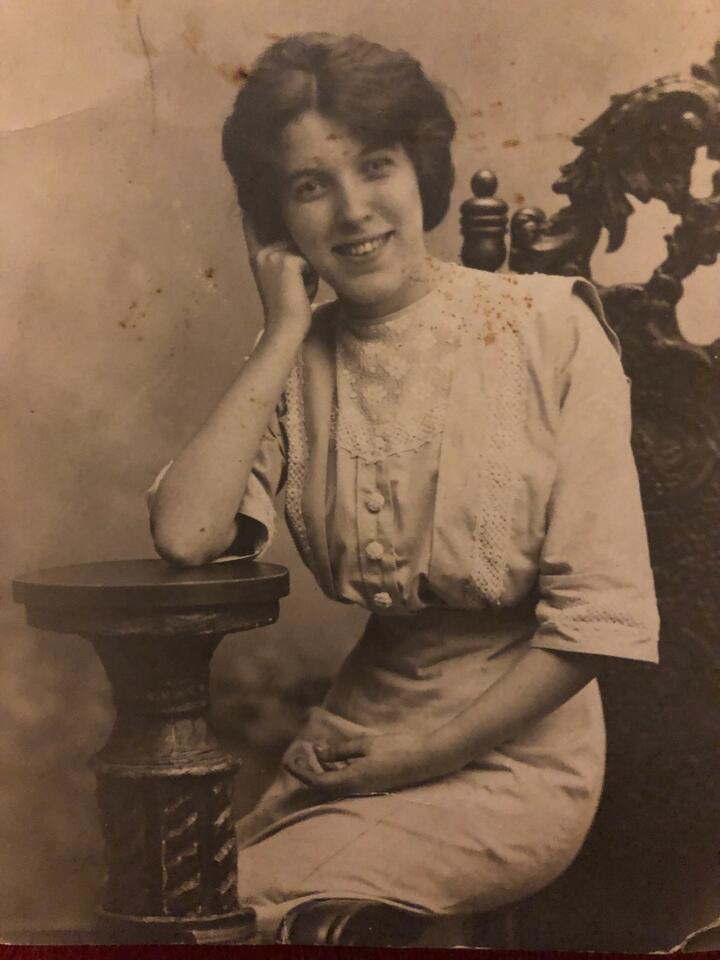
My paternal grandparents were Lt. Paul W. Proctor and Anne K. Mayhugh-Proctor. My grandfather was a Washington, D.C. native and a Metropolitan police lieutenant who ultimately transferred to The White House Police (Secret Service) in the 1920s – serving under several administrations including Hoover, FDR, and Truman. My grandmother was from “up home” in Greenwich, Virginia in the foothills of the Blue Ridge Mountains. My grandparents were an integral part of our lives early on and a safe harbor during tough times. They made us feel safe and loved.

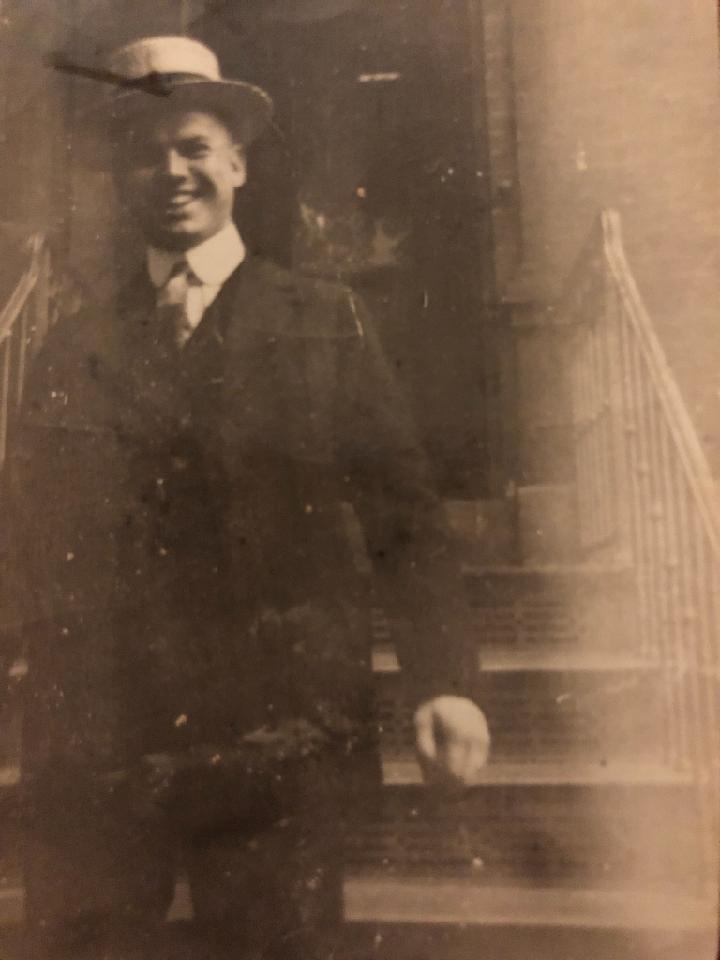
My grandfather, Paul W. Proctor, in the 1920s with his whole life ahead of him.

I think it is important for kids to know and be raised by their grandparents. It is also important for each of us to know and understand family history for as far back as we can find it. The beauty of http://www.ancestry.com and other websites like it is for baby boomers to get to know their ancestors and where they come from. I’ve been able to trace my family history as far back as the 1600s and Salem, Massachusetts where one ancestor, John Proctor, was hanged for suspicion of witchcraft. Another one of my ancestors signed the Declaration of Independence for the State of Delaware. You just never know who you’ll find tracking the generations.

Anne K. Proctor – my paternal grandmother.

I know my family history because the “old folks” liked chatting about the past, their youths, and those who brought them up. I knew my grandparents, yet never knew my great grandparents. People didn’t live as long at the cusp of the 20th Century due to disease and different forms of exposure that made them vulnerable.

My fraternal grandfather, as one example, was killed at age 30 in an industrial accident in his native Philadelphia. He never lived to see his grandchildren let alone The Great Depression. My fraternal grandmother, Pearl E. Kuhn, was left to care for her four children alone. In those days, employers didn’t feel a responsibility to those harmed and killed on the job with families left behind to fend for themselves. Thank goodness for labor laws that have made employers more accountable.

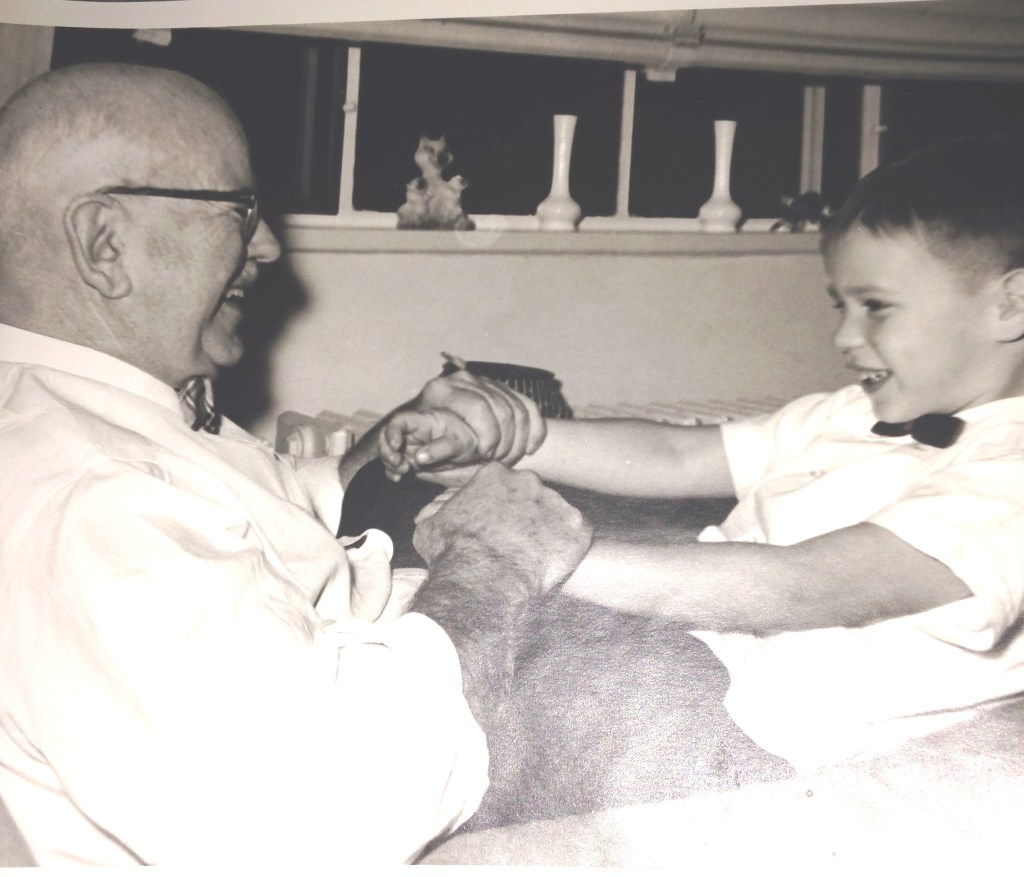
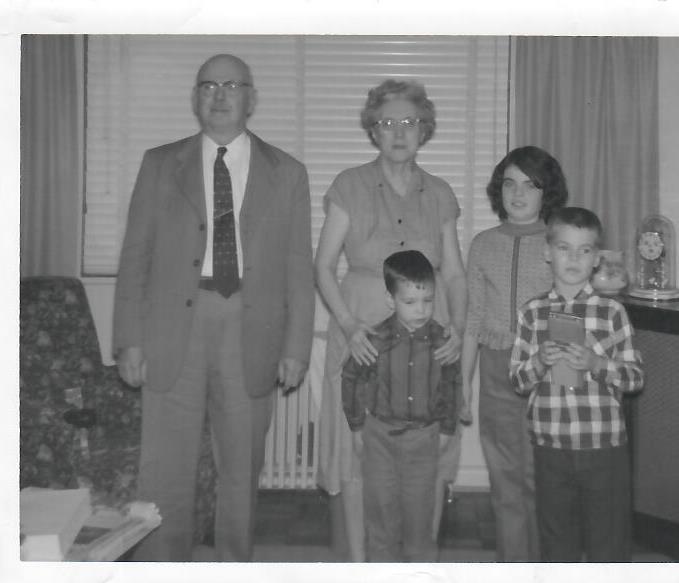
My paternal grandparents, my sister Cathy, cousin Steve, and me (far right) in 1963 in their Arlington, Virginia apartment. They watched after us and made us feel safe. The relationships kids share with their grandparents is critical to their development and knowledge of family history. They bring so much to the family.

As we all pass into the latter of our lives, it is a good idea to get in touch with our family histories and these ancestorial websites are a good place to start. Get online and see what kind of treasures and terrific stories you can find.

The Kennedy Years – the 1960s

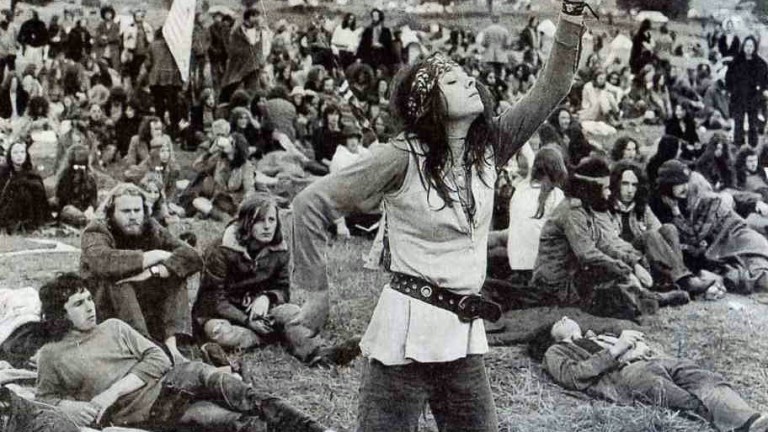
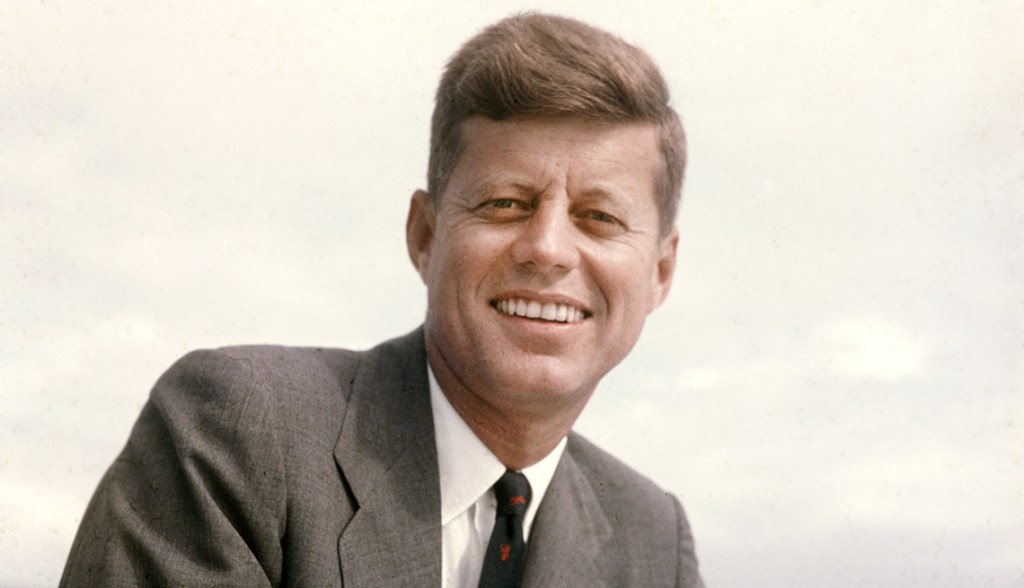
The transition into the 1960s was enormous – as different as night and day. With the election of John F. Kennedy in 1960 came a new decade of promise, hope, and the coming of the Baby Boomers. Kennedy was a young and vibrant leader. Everything changed overnight from what we knew in the 1950s post-war years to a new era where America was on the rise. The young would change the nation’s course. We went from “How do you do?” to “What’s shakin’ man?” From suits and ties and dresses to tie-dyed tee shirts and jeans.

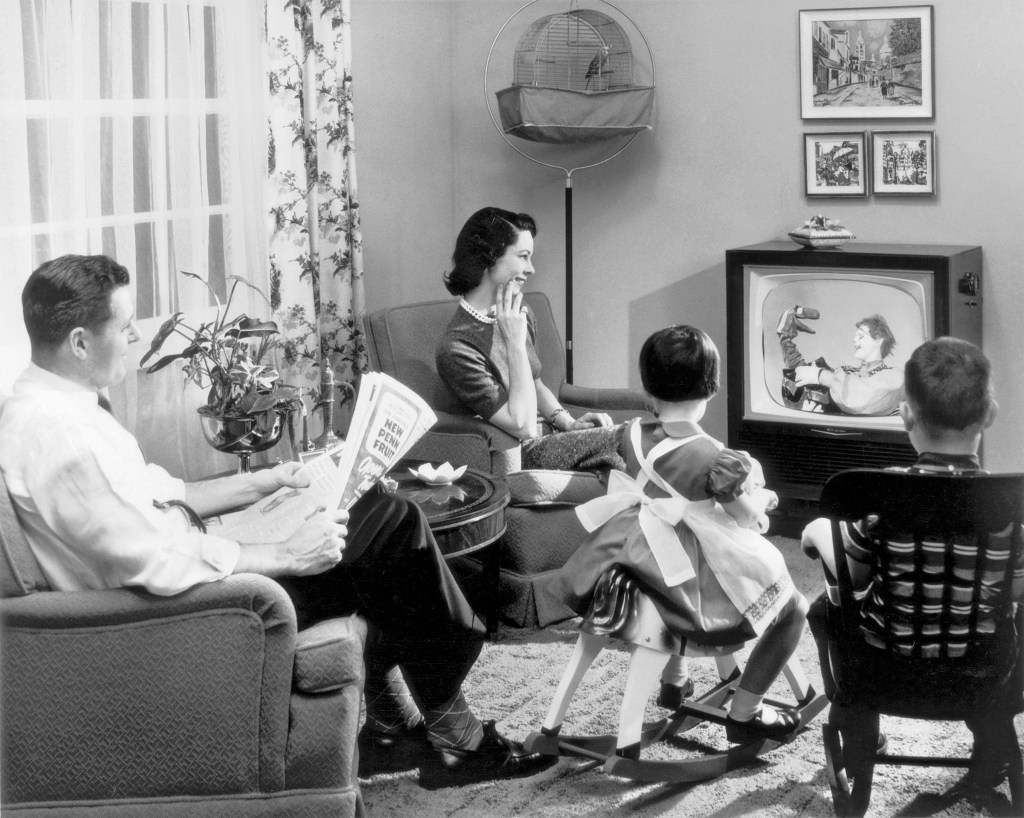
This first thing we notice about the 1960s, especially in television, is how different sitcoms became in a symbolic new age. In the 1950s, you had “Father Knows Best” and the wholesome Anderson family of Springfield, “Ozzie & Harriet” and the entire Nelson family, “I Love Lucy,” “Lassie,” “Disney,” “Ed Sullivan,” and a host of others that never really evolved with the times though Sullivan brought us The Beatles.

I decided to sit through a succession of “The Adventures of Ozzie & Harriett” from 1952 through 1966. This took monumental amounts of self-discipline because I’ve never thought the series was all that terrific to begin with. Mediocre acting, writing, and direction – stuck in the 1950s. More like an early version of reality TV – peering into the Nelson family’s personal lives. In truth, the show was scripted and nothing like their personal lives in the Hollywood hills. You felt like you knew the Nelson family, who pretty much played themselves. We all wanted them for neighbors. Storylines were decidedly dry, and the delivery was enough to put people to sleep.

You’ve got to hand it to Ozzie Nelson. He was a shrewd businessman and showman who cut a lucrative 10-year deal with ABC, which would end in 1966 whether the show aired or not. This meant ten more years of “Ozzie and Harriett” which was not much different than when it started. Rick Nelson’s music career was launched on the show in the course of the 1960s in an effort to gain appeal with Boomers. Tragically, Nelson died on an ill-fated Douglas DC-3 enroute to Dallas for a New Years concert in 1985 due to an in-flight fire.

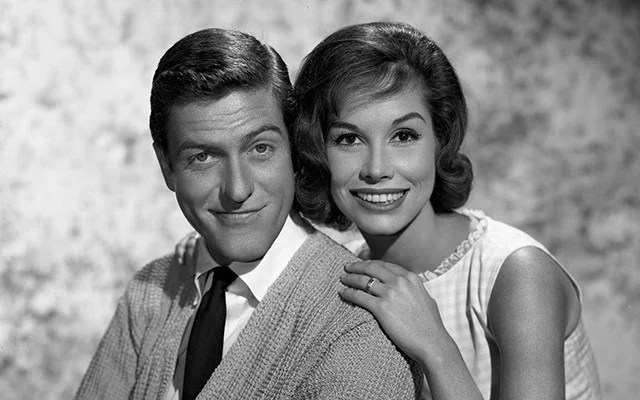
A quantum leap into the 1960s was “The Dick Van Dyke Show” in 1961 – which promptly thrust prime time television into a new era fresh and alive – with trendy storylines and belly-laughing comedy we still like to see.

Other sitcoms like the Van Dyke Show would surely follow. I’ve always enjoyed “My Favorite Martian” and the witty banter between Tim O’Hara (Bill Bixby) and Uncle Martin (Ray Walston) along with terrific character actors – Pamala Britton, Alan Hewitt, J. Pat O’Malley, Dick Wilson, Bernie Kopell, and a host of other great players who faces we would always remember yet could never remember their names.

I remember wondering when Uncle Martin would become romantically involved with Lorelei Brown who obviously had a crush on him. She was the absent-minded dingy landlord, but in my opinion, white hot gorgeous with an incredible hourglass figure. Her eyes and that lone dimple made men crazy. She was a great screen actress who segued into television without missing a beat.

The 1960s was a period of sitcoms where you had to wonder what kind of bad crack they were smoking in Hollywood and on Madison Avenue. So many ridiculous storylines to where you wondered where the idea came from. A lot of them were fantasy and make believe. A lot of drama, like “Perry Mason” and “Dragnet.”

There were plenty of futuristic experiences like “Time Tunnel,” “Planet of the Apes,” and “Star Trek.” And also – bizarre experiments like “It’s About Time…” and “My Mother the Car.” These fleeting telecasts were where the viewing public spoke with its feet. One season wonders that make you “wonder” how they ever made the small screen. Some never made it a full season.

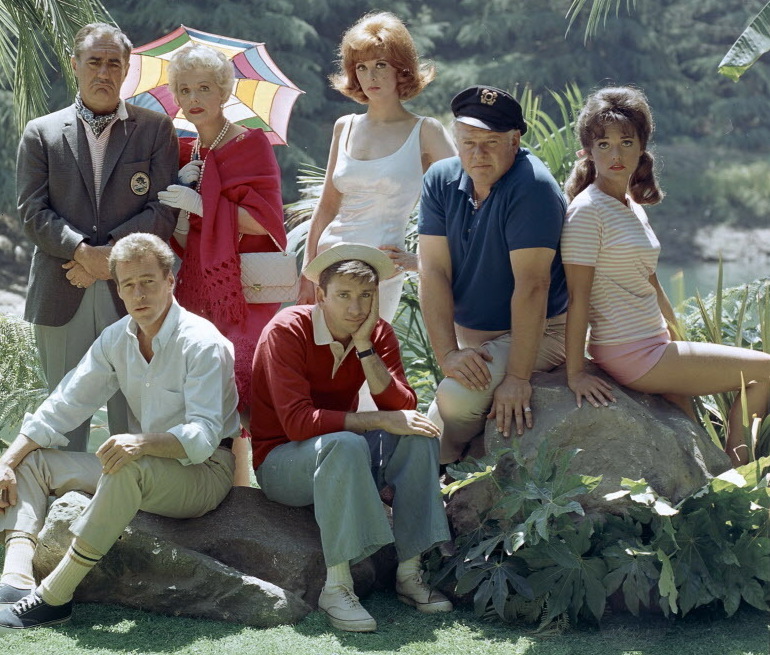
And then there was “Gilligan’s Island,” and “The Beverly Hillbillies” where it’s a wonder how they ever lasted beyond one season. What’s more, both have huge followings 60 years later. Go figure…

An American Icon Turns 60

Sixty Years is a lifetime.

Some never make it this far.

Ford’s iconic sporty Mustang has.

Mustang is 60 this year.

If you were alive at the time of the Mustang’s introduction – April 1964 – it was right up there with the British Invasion – The Beatles, Rolling Stones, Herman’s Hermits, and a host of others from across the pond. Ford Mustang never really lost its momentum. It has remained America’s favorite.

The evening of April 16, 1964, all three television networks aired a battery of commercials where audiences got their first look at a new kind of affordable sporty car with a base sticker price under $2,400.00 sans sales tax and shipping for a standard six-cylinder engine, three-speed stick, white sidewall tires, bucket seats, full carpeting, a padded dash, and full wheel covers.

Mustang was unlike anything mainstream America had ever seen – a sporty design conceived by the Ford Design team of Gale Halderman, Joseph Oros, and Dave Ash. All three are gone now – however, their strong legacy remains. The car was unthinkable – and hundreds of thousands lined up to buy it. Ford anticipated 100,000 units that first year. It sold more than a half million in 18 months.

By March of 1966, Ford had sold one million.

The Mustang’s success didn’t happen by accident. When Ford Presidant Robert McNamara left the company to join the Kennedy Administration, this opened the door for an enterprising young Ford executive, Lee Iacocca, with a strong background in automotive engineering and sales, to infuse adrenaline into the Ford Division, which had a reputation for stodgy utilitarian automobiles.

Iacocca began his efforts by getting Ford back into racing and performance. Galaxie and Falcon got fastback rooflines in the spring of 1963. The Falcon line got a convertible and a sporty Sprint option with V-8 power. Engines became larger and more powerful. The nimble 289ci V-8 got 271 horsepower with a hot cam, mechanical tappets, and cast-iron headers for 6,000 rpm performance.

Amid the improvements to existing carlines came an idea that had been brewing in Iacocca’s mind for quite a while – the Sporty Ford Car Project code named T-5. It was a secret marketing effort that would encompass key Ford product planning players known as “The Fairlane Group” because they would meet at the Fairlane Motel a mile away from the Ford campus. Mustang clearly was a “Skunk Works” project within the company. Few even knew about it.

When Iacocca presented this idea to Henry Ford II, who had fresh memories of the failed Edsel, it was dismissed as high risk, and Mr. Ford wasn’t up for another marketing disaster. Iacocca went back to the team and refined his approach, then, went back to Mr. Ford. Ford approved the project and made it clear – if it flopped, Iacocca would be on the street.

Iacocca presented the three Ford Design studios with a challenge in the summer of 1962 – a design competition between the Ford, Advanced, and Lincoln-Mercury studios. When the three entries were rolled out in the Ford Design courtyard on a hazy August day, one design concept was head and shoulders above the rest. The team of Halderman, Oros, and Ash from the Ford Studio made the cut with the Ford “Cougar” concept. Design boss Joseph Oros loved the name Cougar. Ultimately, the car would be named Mustang after extensive research.

The various departments enlisted with developing Mustang had just 18 months to get this car from concept to assembly line. Job 1 would happen at Ford’s Dearborn, Michigan assembly plant on Monday, March 9, 1964. The team consisting of stylists, product planners, engineers, manufacturing, financial, and management people worked around the clock for nearly two years to meet a grueling schedule that would allow Mustang to be introduced at the New York World’s Fair in April of 1964.

They got it done and we have the memories.

Ford’s sporty Mustang has touched more lives than any other automotive marque besides, perhaps, the Volkswagen Beetle driven to college and to work by untold numbers of boomers. Suffice it to say there were a lot of Mustangs and Beetles in every neighborhood where untold numbers of boomers grew up to embrace the memories we hold dear today.

Cabin Fever and Our Lust for The Great Outdoors

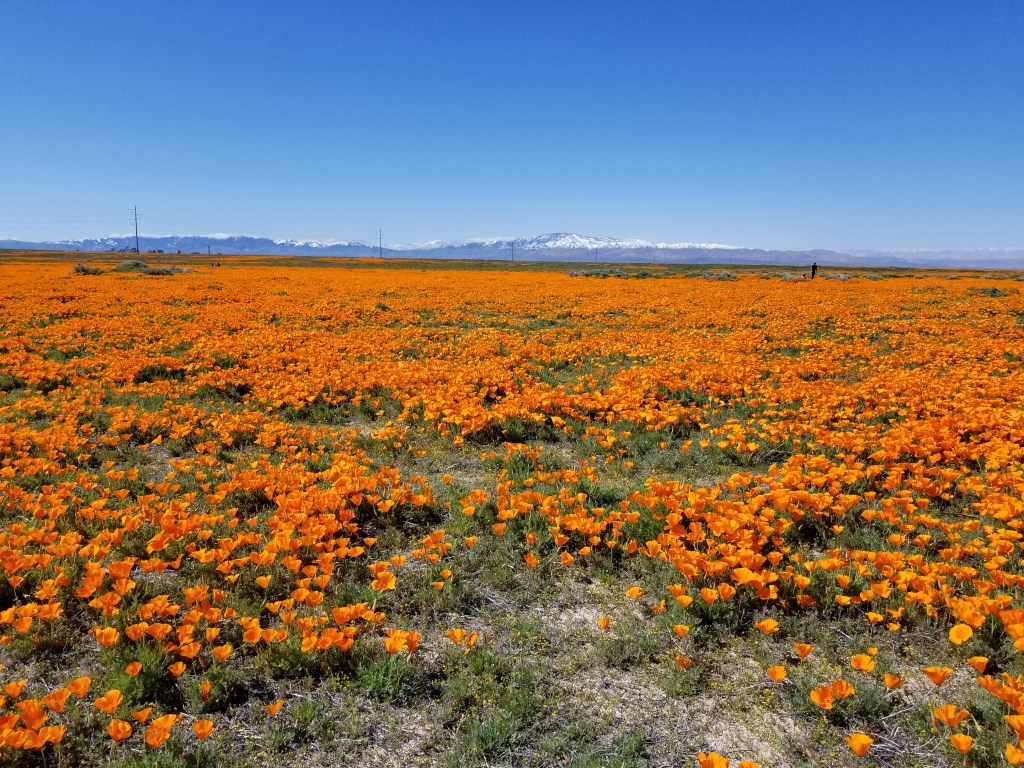
Behold our lust for the great outdoors, which comes with the annual onset of springtime.

The aroma.

The way the air feels.

Being outside for the first time in months.

The Spring thaw…

Welcome to the approach of summer heat and humidity.

Didn’t mean to remind you but it is coming.

Springtime is an emotional awakening that can be challenging to define. I believe it is something different for everyone. When I was growing up in the Mid-Atlantic a lifetime ago, springtime was euphoric for me. After being couped up in the house all winter and chomping at the bit to get outside and play, the air was refreshing and the aroma sweet. Both offered hope and promise as the future awaited. Best we didn’t see the future.

How did springtime affect your youth?

Springtime wasn’t always euphoric for everyone. Schoolyard bullies always managed to surface in spring – on the playground and in gym class. Green pollen dust accumulated all over our cars and patio furniture. It made us sneeze. For some, springtime was a reminder of what was gone or what used to be. At times, it made us grieve for who was no longer with us.

Springtime is the darnedest element now isn’t it?

The change of seasons invokes emotions that come primarily with a change of temperature, the angle of the sun, the timing of sunrise and sunset, and undoubtedly where we are in our journey around the sun. There are elements in the universe that affect our emotions we’re completely unaware of.

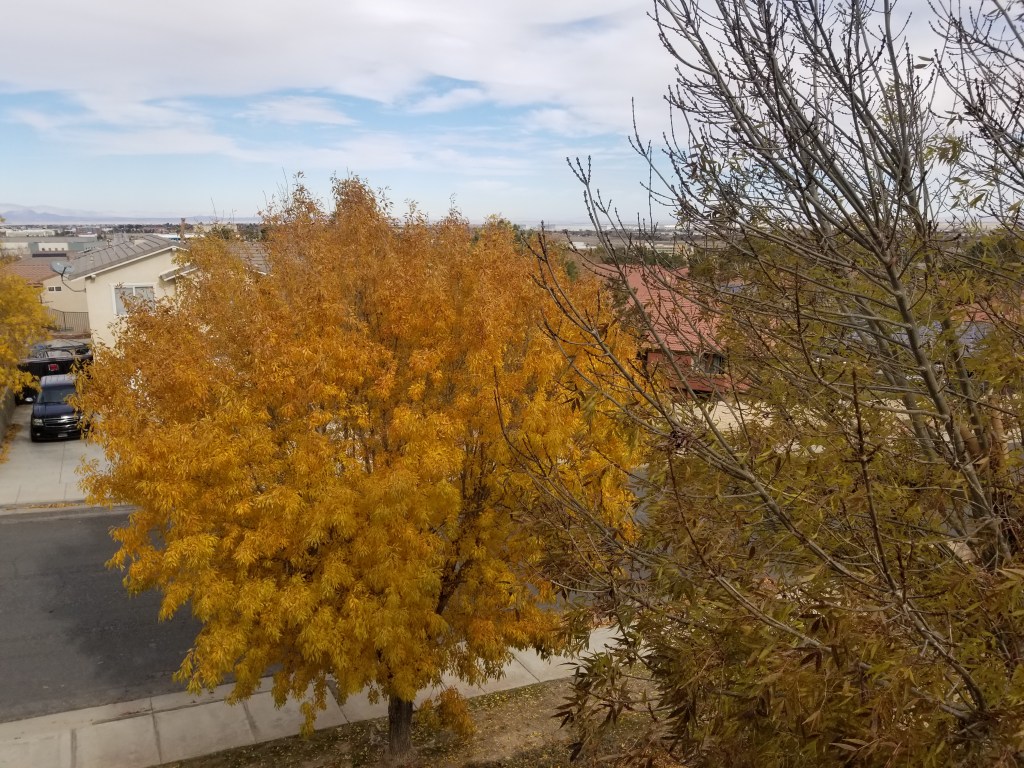
With each passing day – the sun’s journey across the sky became either shorter or longer with the change of seasons when we were growing up. Autumn offered an acute sense of finality – the end of another year and the anticipation of a new.

Seems more people die in the fall and winter than in springtime. The experts say January is the deadliest month according to the Centers for Disease Control and Prevention in Atlanta. Too many of us old folks fall down and can’t get up. Other wintertime months like February and March rank second and third. December – the holidays – is fourth.

It is true we tend to get the blues as the sun retreats in autumn, which becomes more apparent in the fall and winter, especially once the holidays pass. According to the American Psychiatric Association, at least five percent of us experience seasonal depression, which I suppose comes from the absence of sunlight and the timing of sunrise and sunset. I know folks who become very depressed in the fall, which is caused by shorter days and coming home in the dark.

Living in Southern California, I am less affected by fall and winter because both are different here in California’s Southland. Changes of season are more subtle here, yet the solar and lunar patterns really stand out on the open desert. In the end, the changes of seasons do affect the way people feel whether it is spring or fall.

Autumn tends to put people in a negative frame of mind, with an adverse effect on appetite and sleep patterns. Autumn makes people want to nap and sleep. If it is cloudy, there’s a strong desire to fall asleep to an old movie or classic sitcom. What’s more, those pesky projects can wait until spring. These are the same projects we said could wait until winter – right?

If you would like to correspond – I have a new email address and would be happy to hear from you: jimsmart.jbjmediagroup@yahoo.com.

I’ve Got A Secret…the Hidden Magic of Popular 1960s Sitcoms

It must have been challenging to live the secrets, fantasies, and magic of classic sitcoms like I Dream of Jeannie, Bewitched, Mister Ed, My Mother The Car, and My Favorite Martian.

How do you explain something like a genie in a bottle, a talking horse, a Martian turned uncle, a wife with magical powers, or a mother reincarnated as a 1928 Porter automobile?

How does anyone explain what cannot be explained logically? Of course, these popular sitcoms were all about fantasy, raw imagination, and to some degree – sexual tension, while trying not to look insane. These sitcoms were nothing new at the time. This type of fantasy had been done before on the big screen. If I think hard enough, it was probably done in the 1950s on the small screen.

The movie Harvey, which was rolled out in 1950 starring James Stewart and Josephine Hull, was a comedy based on Mary Chase’s 1944 play of the same title. This post-war flick focused on a character named Elwood P. Dowd whose best friend was an invisible, imaginary six-foot tall bunny rabbit, which put his sister in the position of having him committed to a mental institution. As you might imagine, Elwood took his imaginary friend around to the bars and other public venues introducing “Harvey” to nearly everyone who eventually accepts Harvey’s presence.

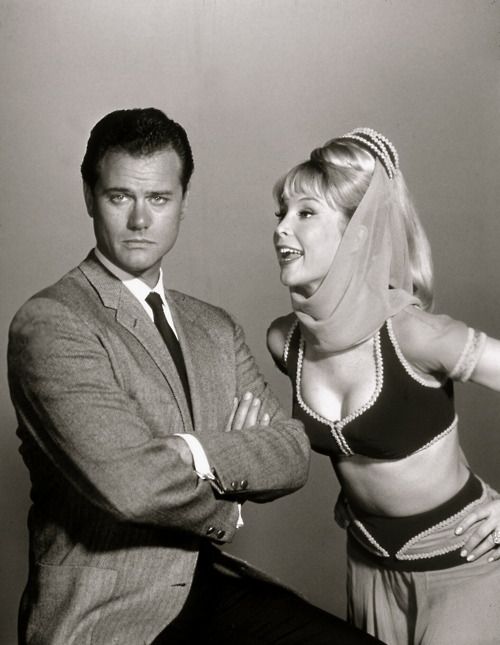
The difference between Harvey and these popular network sitcoms was Elwood hung “Harvey” out there for everyone to see what no one could see. Harvey wasn’t a secret. In I Dream of Jeannie, only two characters knew about the main character – Jeannie (actress Barbara Eden). Two young NASA astronauts, Tony Nelson (Larry Hagman) and Roger Healy (Bill Daily), knew about Jeannie after Nelson captured her bottle on a deserted island after the splashdown of Stardust One.

This successful NBC/Screen Gems television series began with Astronaut Tony spotting a colorful bottle rolling across the beach sand to meet him. Tony popped the top, rubbed the bottle, and out came Barbara Eden (Jeannie), changing Nelson’s life significantly.

I Dream of Jeannie was a dreamy magical sitcom birthed by writer and author Sidney Sheldon, with Barbara Eden as a stunning 2,000-year-old genie along with fictional astronaut Larry Hagman she fell in love with and ultimately married in the final season. She gave him a kiss, which undoubtedly drove men crazy from coast to coast who desired a piece of the action. Astronaut Roger Healey, being Tony’s best friend, was the only other character who knew about Jeannie. The two kept a bizarre secret for five seasons and 139 episodes.

“A horse is a horse, of course-of course…” has to be one of the funniest sitcoms in television history. It began with the immortal words, “It’s been a long time since I was a pony…” in Episode 1 of Mister Ed in 1961 followed by “I talk only to you…” to his new owner, Wilbur Post, in the five seasons to follow. Wilbur found himself in a variety of awkward situations, some quite embarrassing, in which he could not explain who he was talking to as friends would walk up.

It would be easy to wonder where the concept of a talking horse would have come from. Like a number of television shows and movies, Mister Ed came from a collection of short stories known as “The Talking Horse” by Walter R. Brooks written for children in the 1930s. It took a producer like Arthur Lubin to bring “The Talking Horse” to television some three decades later. Mister Ed never caved on his commitment to speaking only to Wilbur, which kept audiences laughing for five seasons. My favorite part was the Studebaker Lark coupe in an age when new Studebaker automobiles were fading away. The long-standing car company would be gone by 1966, timed with the wrap-up of Mister Ed.

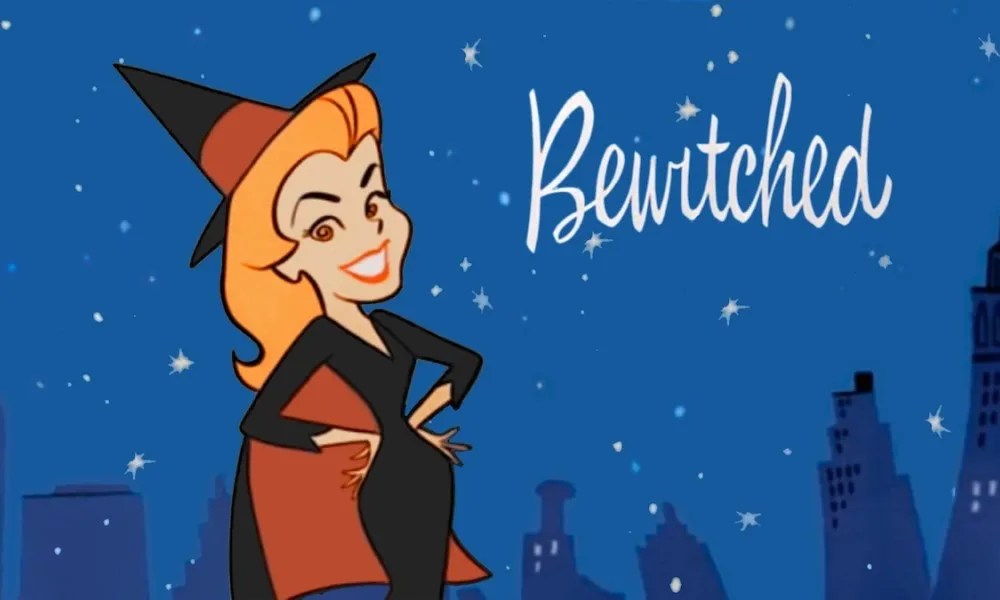
Bewitched was yet another fantasy sitcom in a decade of weird, bizarre sitcoms that kept American audiences laughing for eight seasons. Like Jeannie, Bewitched was a series where only one mortal knew who she was along with a cast of witch-in-law types who kept the show endlessly entertaining. Talents like Agnes Moorehead, Bernard Fox, Alice Ghostly, Marion Lorne, Paul Lynde, Maurice Evans, and a host of others kept us transfixed to the screen. Did you know Hanna-Barbera produced Bewitched’s opening and closing animation?

Bewitched ran from 1964 to 1972 before it wrapped up in a new decade when viewers were longing for something fresh. Bewitched never really ended any more than other fiercely popular sitcoms did. These shows have remained in syndication in the decades since. Nostalgia networks like TVLand, MeTV, RetroTV, Cozi TV, and Antenna TV and others have kept the spirit alive for Boomers who want to retreat from today’s chaotic and troubling news broadcasts and relive the magic of television from more than a half century ago.

Our Sense of Smell…Reminders Of A Time Gone By

It is springtime and cabin fever abounds.

I haven’t lived in four seasons in three decades. I’ve always lived in the Midwest and the East, which have traditional four seasons. In Southern California, we have two seasons – hot and cold – and somewhere in between. It is not uncommon to have a heat wave here in January or sudden cold in June. The locals here in Los Angeles call this phenomenon June Gloom.

Though I have been living in the desert Southwest for a long time, I have a longing for the sweet aroma of clover and honeysuckle in springtime which we don’t have here. When I was growing up in my native Maryland and Virginia, these were smells and sounds in the air that made me feel alive again. Yet, I can’t tell you what those smells and sounds were.

As I write this, it is chilly here on the Southern California high desert though there have been some warm days. Yet – I vividly remember the mid-Atlantic in spring when Mother Nature, which had been sleeping for months, was awakening and bursting with life. Trees were budding, grass was on the grow, crickets and tree frogs were beginning to sing, and lawnmowers in the neighborhood were beginning to sound. I remember how alive I felt as an adolescent in spring. We had been couped up all winter and house dust was getting the best of us kids. There was a huge sense of freedom and the great outdoors.

Have you ever noticed how dead the air sounds in winter? Because cold air is dense, it tends to muffle the ambient sounds around us. Traffic sounds distant in a dull roar. If children are outside at all, you can barely hear them playing. In that dead of winter, you don’t hear the sounds of nature – birds, tree frogs, crickets, and Blue Jays bullying other birds out of their nests.

Seems Mother Nature is in hibernation.

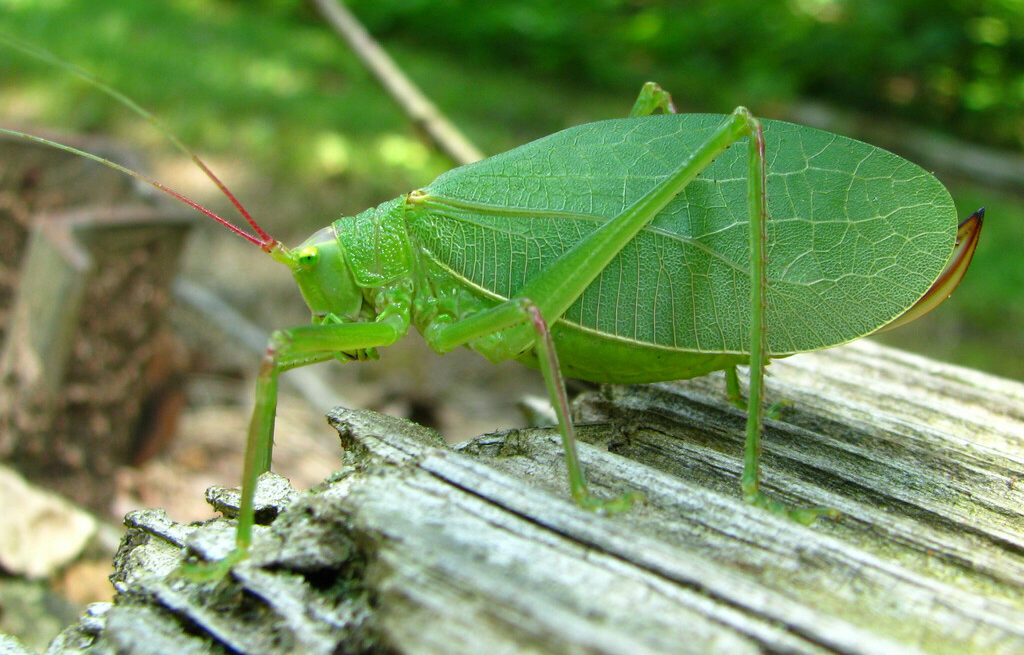
Summer yields its own array of unique sounds. As summer heat and humidity settle into the dog days of summer back in the Mid-Atlantic, the sounds of nature develop a familiarity. Whenever we began to hear “Katydids,” we knew the start of school was but a few weeks away. We also understood cold weather was just around the corner.

The Forest Preserve District of Will County in Joliet, Illinois tells us these crooning insects make themselves heard all across the area. It goes on to say these singing insects are cicadas, crickets, grasshoppers and Katydids in which the males produce loud calls in their search for a female mate – according to the University of Florida. These seasonal sounds may just be a loud “din” to most of us, however, each sound is unique to each species.

It may interest you to know Katydids, grasshoppers and crickets are all closely related according to the Forest Preserve District – belonging to the order Orthoptera, while cicadas belong to the order Homoptera. Who knew?

It goes on to say the Orthoptera insects — the Katydids, crickets and grasshoppers — typically produce sounds by rubbing one body part against another, which is known as “stridulation,” according to “Songs Of Insects.” Crickets rub structures on their wings together to produce their call per “The Singing Insects of the Chicago Region” by author Carl Strang. Male grasshoppers are able to produce sound by rubbing a hind leg against a forewing. Katydids make their traditional sound by rubbing their forewings together.

I did not know that… 

These folks versed on the subject go on to say, “Cicadas have sound organs called ‘tymbals,’ which have a series of ribs that can buckle onto one another when the cicada flexes its muscles. The buckling creates a clicking noise, and the combined effect of these clicks is the buzzing sound cicadas make.”

Even if you don’t know what you’re talking about, you might be able to tell the difference between some of these insect calls. Crickets, as one example, have more musical sounding calls because of their low frequency, according to the Forest Preserve District. Katydids and grasshoppers have a higher pitch call in varying frequencies.

When we settle into those first chilly days and the sweet aroma of woodsmoke and the sound of Trick or Treaters, one begins to wonder where the sounds and smell of summer went.

What’s In A Number? Plenty…

What’s in a number and how do numbers affect our daily lives?

Answer?

Plenty….

Numbers really are an emotional issue – especially when you consider how often we use them. How often do you look at a clock, watch, calculator, or your cell phone?

Doing your taxes? Lots of numbers there.

Did you just tell your grandchildren when to be home?

Yeah….I thought so…

Each of the ten basic numbers 0 through 9, has a personality. Whenever I see the Number 9, I think Channel 9, CBS and our local affiliate back home in Washington, D.C. – WTOP back in the day, now WUSA, which is what it has been for decades.

From a clinical standpoint, numbers are little more than mathematical in scope. We use them to count, measure, label, chart time, and more. Around the world, numbers take on different symbols such as Roman numerals like we were taught in school. Do you know schools are not teaching Roman numerals anymore? It is stunning what schools are not teaching kids today and no one seems to care of see the point in it. It’s right up there with teaching cursive or reading a clock face. School systems don’t see the importance of teaching these time-proven elements.

According to Wikipedia, “The most common numeral system is the “Hindu-Arabic” numeral system, which allows for the representation of any non-negative integer using a combination of ten fundamental numeric symbols, called digits.  In addition to their use in counting and measuring, numerals are often used for labels (as with telephone numbers), for ordering (as with serial numbers), and for codes (as with ISBNs). In common usage, a numeral is not clearly distinguished from the number that it represents.”

Sure…

Here in America and I suspect elsewhere, we attach a lot of emotion to the numbers we use. The number “13” is so significant that most high rise buildings do not have a 13th floor. Seriously! Thirteen is considered an unlucky number. One Million, or 1,000,000, is considered a lot of money. Yet, we can’t seem to comprehend anything beyond One Billion. The United States is in debt for roughly $32 Trillian. Just imagine a credit card bill for that much.

Numbers….math…are an ever-changing subject. We continue to find new ways to calculate using numbers. It is said that back in the 1800s, mathematicians found more and more ways to develop different abstractions in order to share different properties of numbers and are still working this subject. It is all Greek to me because I’ve never been any good at math.

Lassie! Memories of a Boy And His Dog…

We couldn’t wait for Sunday nights on CBS – 30 minutes of a boy and his dog – a “Rough” Collie named “Lassie.” The “Lassie” television series ran for 19 years on network television from 1954-73.

The timing couldn’t have been any more perfect in an age of millions of young baby boomer kids who loved animals and fictional stories about animals. It was all about a dog saving the day for a boy, his rural farm family, and animal friends. Lassie taught us kindness that could only come from man’s best friend.

“Lassie” spawned a succession of nature-oriented television series like “Flipper,” “Daktari,” “Gentle Ben,” and the like that extended into the 1970s. Disney’s great success has always been fueled by the universal love of animals. Rare is the person who doesn’t love animals.

Lassie was a fictional “female” Collie, which began in a 1938 short story penned out by Eric Knight. Ultimately, “Lassie” grew into a full-length novel, Knight’s Lassie Come-Homein 1940. In 1943, MGM turned “Lassie Come Home” into a movie only with a lead character named Pal. The “Pal” character went on to become “Lassie” in a series of MGM “Lassie” movies, which wrapped up in 1951 before going to television in 1954.

With the advent of television came “Lassie”, which had the same kind of following as “Law & Order” has had since 1990. Viewers just can’t get enough of it nor could they ever see every episode. “Lassie” debuted and, for the next 19 years, a long succession of “Lassie” Collies ensued, trained and owned by animal trainer Rudd Weatherwax. While most viewers saw Lassie as a female, Lassie was, in truth, always a male. Lassie appeared in radio, television, and films as well as hordes of toys, comic books, some animated cartoon series, novels, and a host of other media.

By 1973, the viewers had had their share of “Lassie” and Timmy had long been saved from the well. It was time to move on. Yet, the Lassie legacy never ended. We put “Lassie” on the shelf, but never forgot the magic and tenacity of the Collie. She never let us down.

In 2005, a redo of the original “Lassie Come Home” movie was shot in the United Kingdom starring Peter O’Toole and Samantha Morton. It hit the big screen the following year. What’s more, two animated television series featuring this legendary Collie were produced in the early 1970s after the series went off. A new animated series – “The New Adventures of Lassie” was produced by Superprod and Classic Media where Lassie was owned by the Parker family living in a national park.

When we were very young, “Lassie” kept us entertained every Sunday night along with Ed Sullivan and Disney. It was a wonderful time to be alive, grow up, and be entertained with the animal heroes we loved so much. In this age of mean-spirited tasteless television, old TV shows like “Lassie” are a nice escape.

The Way We Were…

I suppose we can be considered the end of an era. Some believe “The Greatest Generation” – our parents and mentors – was the end of an era. However, we are the last generation to remember playing together using our imaginations instead of electronic devices.

In all fairness to the young, if we had the technology kids have today, we would have been very engrossed in video games, virtual reality, and cell phone relationships. You can count on it. It would have been too tempting to ignore, peppered with “Hey, where did you get that?!”

Back in the day, we had battery powered toys, which kept us entertained. We had television, radio and record players. Yet – we still played with army men, and did Cowboys and Indians, Suzy Homemaker, Barbie, and other forms of make believe and we had a ball doing it. When we were kids, our minds were virtual reality.

I love to watch little kids – which are adults in training. Cool thing about children is they’re a clean sheet of paper with the exception being genetic programming – which is what they are born with.

Children become what they are taught. They are born with the ability to imagine and create, and they are born with no real awareness of race and cultural differences. They are born as a clean canvass waiting to be painted in a positive way. It is what we teach them along the way.

It was the simple pleasures we enjoyed as children that I miss today. Waiting for the ice cream man. Wandering the neighborhood searching for a friend to play with. We didn’t care if they were black, white, Asian, Hispanic, Jewish or anything different than we were. No one cared. We only knew we wanted someone to play with. That is the difference between little kids and adults. It depended upon how you were brought up and what you were taught.

What triggers memories for me most are the smells and aroma of the time period. It was catching the aroma of woodsmoke in the chilly autumn air knowing the holidays were right around the corner. For me, Halloween was the gateway to the holidays, waiting for the thrill of Christmas morning and what would be waiting for me under the tree.

Whenever I hear the roar of the crowds and the energized demeanor of a sports announcer, I think of NFL football on Thanksgiving Day in thr 1960s. That sound excites me to this day even though I do not follow professional football. Christmas Day was always good for sports events and that din of football games going on across the land while Mom was in the kitchen preparing a feast. In the wake of autumn football games was basketball during the cold winter months when we couldn’t go outside and play.

Kids today are thrilled with the latest video games. Me – I was excited by a new bright red 24-inch SEARS bicycle. I wanted one so badly that I so obsessed with having a bicycle that it was all I could think about. On Christmas Day 1965, the weather was unusually mild. I rolled that new bike out to the garage, put batteries in its twinset headlights, and headed for the streets. My two-wheeler was new-found freedom. Freedom to cruise the community and ride wherever I wanted.

I outfitted that bike with a generator set with a headlight and bright red taillight and could ride well into the dusk. However, by the time the streetlights came on and I could hear neighbors signaling it was time to come home, I knew I’d better get home. My neighborhood was alive with young baby boomers playing kickball, softball, Dodge Ball, tag, hide and go seek, and a host of other activities. Come nightfall, we’d play under the streetlights until bells started ringing, fathers were whistling, or mothers were yelling it was time to come in.

These were parental noises no kid wanted to hear. It meant a bath, brushing teeth, and bedtime right after “Family Affair.” My God, that dreaded Crest commercial at the close of “Family Affair” where the announcer told us to get regular dental checkups, watch treats, and brush twice daily with Crest. I grew to hate the sound and the commercial. Both always meant school tomorrow.

I’d like to hear about your childhood memories. That said – do share your childhood memories – both good and bad – and let’s make a Boomer Journey out of them. You may email me at jimsmart.jbjmediagroup@yahoo.com.

Hollywood-Burbank Airport is About to Enter the 21st Century

You’ve seen this place in countless movies and television programs. It was where fictional aeronautical engineer and father of three boys, Steve Douglas (Actor Fred Mac Murray) worked in the popular 1960s sitcom “My Three Sons” on CBS. Steve Douglas would have been employed by Lockheed, which designed and built aircraft here for decades – the mighty Constellation, the Electra, and even the SR-71 spy plane. Lockheed did it all right here at Burbank Airport.

Hollywood-Burbank Airport opened in 1930 as “United Airport” before it became the Union Air Terminal in 1934. The name eventually changed to Lockheed Air Terminal. In the post-war years, Burbank Airport became Hollywood-Burbank Airport, which it was for decades, then, Glendale-Pasadena-Burbank Airport. The name changed again to “Bob Hope Airport” for a short time before returning to “Hollywood-Burbank Airport” recently.

Apparently, the esteemed actor and comedian Bob Hope fell from grace amid complicated Burbank Airport politics.

Confused? So am I…

In 1930, flying was an exciting new phenomenon enjoyed by the few and the wealthy. No better place for it to gain notoriety than the entertainment capital – Hollywood, California.

Burbank, California is a small town in a large metropolis – Los Angeles. It just feels like a small town with all of the dynamics of a small town. Yet, most of the movie studios are here along with a large portion of the television industry. Most of the sitcoms you see on television are shot on a sound stage in Burbank. I’ve had a number of friends who live in Burbank. It feels good to hang out at their Burbank homes and take in the cuisine in any of the city’s many delicatessens.

Burbank is a feel-good place – a throwback in time.

You never know who you’re going to see on the streets of Burbank. Outsiders perceive there’s a celebrity on every street corner, however, this has never been true. I have a friend who lives in Toluca Lake within the City of Burbank. His neighborhood has been home to Bob Hope, Paul Henning, and a host of other celebrities. Actress Swoozie Kurtz (Joyce Flynn) of “Mike & Molly” lives right next door.

You get the idea.

Celebrities and the rank and file live together peacefully and respectfully in a place like Burbank. It is not uncommon to be in a restaurant or shopping mall and see a celebrity. Locals know to leave celebrities alone to live and eat in peace.

Honestly…I’ve never understood autograph seekers.

I’ve been living in the Los Angeles area for 30 years. I arrived here for the first time in September of 1990 to join Petersen Publishing Company, which was founded by the late Robert Petersen in 1948. Petersen founded Hot Rod Magazine out of the trunk of an old jalopy. “Pete” Petersen could never have known the empire he was creating in the car capital of the United States. Los Angeles has always been about personal transportation – cruising down the freeway in something to be seen in or something so beat up and pathetic that it blends.

Last month, the Burbank-Glendale-Pasadena Airport Authority (BGPAA) broke ground on a new, safer, modern, and more convenient passenger terminal at Hollywood-Burbank Airport. They’re calling this effort “Elevate BUR.” More than 300 community leaders and stakeholders turned out for this event to celebrate the launch of construction. This has been an event that has been coming for years. False starts, politics, a battle of wits. At last, it is here.

“From the friendly staff, to the airlines, to the convenience, Hollywood Burbank Airport is the gem of this community,” said Felicia Williams, President of the BGPAA, “We have a great team of Airport Commissioners with backgrounds in finance, law, construction, and public service, who are dedicated to moving this project forward on time and on budget.” And so the transformation begins.

The new state-of-the-art Burbank Airport terminal will offer a wide variety of features ranging from shopping and dining, upgraded restrooms, and more space. A new ticketing lobby, baggage screening system, updated TSA checkpoint and new baggage claim area will, in theory, make traveling easier.

The motivation to build the new terminal has always been about safety more than anything. Because BUR was opened in 1930, it is a dated design originally erected for dope and fabric biplanes, not jets. Runway 8-22 runs literally right past the terminal while 15-33 is longer and is some distance away. When you’re sitting in the gate area, the loud roar of thrust reverse is too close for comfort. Startled passengers look up with a “WTH!” look on their faces.

Though this has never happened, the thought of a jetliner leaving runway 8-22 and winding up in the middle of a 94-year-old terminal building is unsettling. Some years back, a Southwest Boeing 737-300 overshot Runway 8 and wound up in the middle of Hollywood Way just missing a gas station.

Following Sherman Way down across the San Fernando Valley on a long final for Runway 8 always leaves a knot in your stomach because you have just barely 6,000 feet to stop before turning left into the gate. The longer a jet lingers over the concrete before touchdown, the more on edge we become.

The big message from the BGPAA is safety and convenience. These folks tell us the design of the new terminal includes greater distance between both airport runways and the terminal building. What’s more, this effort also includes updates to meet current earthquake standards and ADA accessibility standards. For passengers, they’re including a 45,900-square-foot aircraft parking area for boarding and deplaning, a new parking structure with EV charging, and a new on-airport access road for convenience.

With all this excitement comes a lot of sadness. Because I have been traveling through Hollywood-Burbank Airport for more than 30 years, the existing terminal has become an old familiar friend. Access has always been easy from the ticket counter to security to the gate. Like any good old-fashioned airport in the land of perpetual sunshine, Burbank still continues to board planes via airstairs where passengers can get a good close look at the airframe about to carry them away. This is a lost custom we will all have to get used to.

I will long miss the feel of sun, rain, and wind on my face.