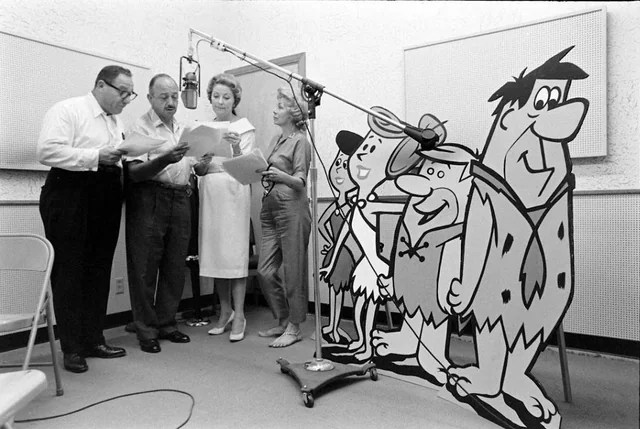
It is impossible to imagine our childhoods without William “Bill” Hanna and Joseph “Joe” Barbara – otherwise known as Hanna-Barbera Productions – known best for “The Flintstones,” “The Jetsons,” “Scooby-Doo,” and a host of other animated cartoons we spent hours watching growing up.
The Flintstones and The Jetsons were launched as primetime “adult” cartoons on the ABC Television Network at the cusp of the 1960s. I vividly remember when they debuted because my folks watched them. My father laughed at the antics. I was immediately hooked. I laughed hysterically when Fred let Dino out and Dino came back through the window and threw Fred out. Fred was yelling and banging on the door, waking the entire City of Bedrock, with lights coming
These incredible animators who created an empire spanning the decades began working together at MGM’s animation studio in 1938, thus beginning a long association that would endure. They enjoyed a terrific association that spawned dozens of cartoon franchises. Their first effort as a team was “The Adventures of Tom & Jerry” focusing on the antics of a cat and mouse on a par with the Coyote and Roadrunner in a “spy-vs-spy” theme. The seemingly weaker of the two always came out on top. The coyote never did catch the roadrunner, and Tom never did catch Jerry. I can remember rooting for the bad guys.
Each half of the Hanna-Barbera (HB) creative team had their duties. Barbera composed the stories and did pre-production for those original 114 “Tom & Jerry” cartoons the two did together at MGM. Hanna was known for conducting the animation. It is remarkable seven of these cartoons won Oscars for “Best Short Subject” films from 1943-53.
The Flintstones became an integral part of the Americana, with an abundance of cliches in everyday conversation coming from the incredible writing of the Hanna-Barbera team. The Flintstones focused on these pre-historic suburbanites – Fred and Wilma Flintstone, their pet dinosaur, Dino, and sabretooth tiger pet Baby Puss, and ultimately a baby girl named Pebbles. Like the Kramdens and the Nortons of The Honeymooners fame, the Flintstones had best friends Barney and Betty Rubble next door. Ed Norton drove Ralph crazy like Barney did Fred. And, like Ralph and Ed of The Honeymooners, working stiffs Fred and Barney were always searching for fast-quick ways to make a buck yet never achieved success.
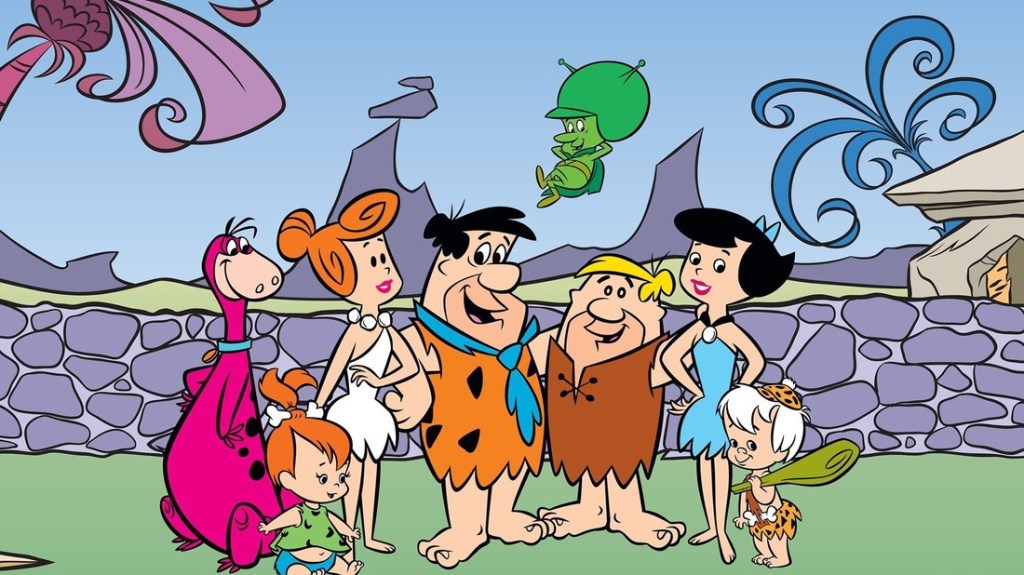
Hanna and Barbera had their work cut out for them – with the challenging task of coming up with 30-minute cartoon segments that would keep viewers coming back for more. The Flintstones spawned The Jetsons at the opposite end of the spectrum with a high rise building in space (yet no one knew what it sat on…). Some of what we saw in The Jetsons wound what we depend upon now – video chats, portable phones, robotics, moving sidewalks, jet propulsion motor vehicles, and more.
The challenge for Hanna-Barbera was a critical balance of storytelling and animation. These creative geniuses modernized animated cartoons. Instead of the shorts they did at MGM, they turned these shorts into 30-minute episodes for television. They weren’t just an animation studio; they were a mass production facility that could churn out cartoons at a remarkable clip.
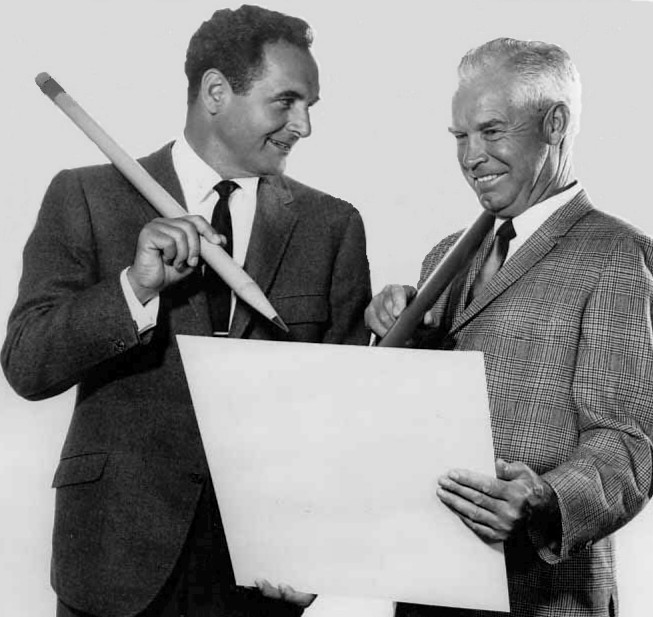
Joe Barbera (left) and William “Bill” Hanna – the heart and soul of successful animation for decades in the 20th century.
The team had to come up with an efficient system of cartoon generation. I have read that instead of 14,000 drawings for a seven-minute short, they reduced the number to 2,000 drawings, keeping character movements to a minimum. It was known as “segmented character design” where the characters were separated into body parts where only the mouth or an arm or leg moved while the rest of the body remained stationary. We’ve all seen the same clouds and buildings pass by over and over again as the characters drove down the road. This was known as “reusable backgrounds.” I have also read the characters wore collars, ties, and the like to hide the seams between body parts. Yet, who really noticed? I never did.
It has been said HB had the most extensive sound effects library in the world. We still hear HB sound effects in programming that reminds of us these terrific cartoons. Their work endures because it was unbeatable.
HB received a lot of criticism for their animation technique due to quality issues – yet we have continued to watch their cartoon efforts for nearly 70 years. What’s more, their approach to animation has continued in modern day cartoons like The Simpsons, which has remained in continuous production and programming for more than three decades with the same result. It continues to make us laugh.
Hanna-Barbera, founded in 1957, remained in continuous operation until it was absorbed into Warner Brothers in 2001. Without question, HB dominated the animation market until the 1980s when the cartoon began to change. In fact, things began to change in 1966 when the company was acquired by Taft Broadcasting, which held ownership until 1991, which was when Turner Broadcasting, which turned it all into The Cartoon Network in 1992.
William Hanna’s death in 2001 virtually led to the very end of what had always been Hanna-Barbera. It was all absorbed into Warner Brothers in 2001. Despite the business changes following Hanna’s passing, the efforts of Bill Hanna and Joe Barbera remain, giving us abundant laughter that will endure for generations.


Or, as referred to by the animation community “Hold ‘em and Blink ‘em.” There is a lasting intrigue in those. They were on in early prime time and I had to get the yard mowed after school before they started. I know this because the Flintstones was on one of those yesteryear TV stations while I waited to pick up Chines take out. Yogi, Huck, all of them. They must have appealed to a wide audience because I have an archive of old commercials where Fred and Barney sneak off to smoke cigarettes away from their wives. Great memories.
LikeLike
Thank You Phil…
LikeLike
Ahhh MGM – They used to have a sense of humor https://www.youtube.com/watch?v=8dSyaTbmvT4
LikeLike