If you were born between 1946 and 1964 you certainly remember the post-war housing boom. It was big and there hasn’t been anything like it since. Because I was a very curious young man – age 7 – building and construction fascinated me endlessly. I’d get on my bike and ride to construction sites and watch the action and observe the bones turn into a finished structure.
When I was growing up in suburban Washington, D.C., I remember when the flatlands and empty firmament became housing developments, apartment complexes, high-rises, and shopping centers overnight. In Arlington across the Potomac from Washington, most of the immediate area was already developed, with shopping, apartment complexes, and neighborhoods already established that came of wartime growth and the aggressive hiring of government workers.
Suburban Maryland was a different story – and most of you will be able to relate to this because this story could be told again and again in nearly every metropolitan area in the country. Developers were hungry for cold hard cash, and post-war suburban growth was the way to get it.
Suburbia emerged in every metropolis across America.
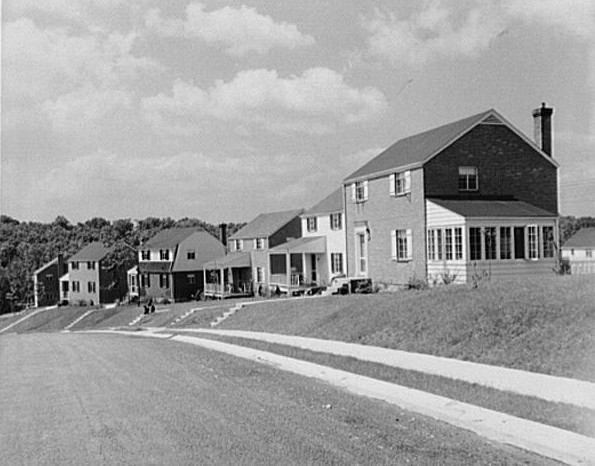
Arlington, Virginia’s “Arlington Forest,” which came of federal housing programs and the aggressive growth of the federal government in the 1930s and ’40s, remains a desirable place to live today, with home prices in the $1 million range.
Wartime and Post-War suburban growth can be credited to federal programs for the greater good that contributed to growth. Federal Housing Administration (FHA) and Veterans Administration (VA) programs that enabled Americans to buy homes and for developers to build same along with apartment complexes populated the landscape like never before. This wasn’t just about opportunities for families – but also businesses that got the unemployed back to work. There were other incentives – such as deducting mortgage interest, low-income HUD programs, cash for water programs, and the Clean Air Act to get people out of the cities.
So many other issues contributed to the growth of suburbia, including freeways and the Interstate Highway system that got people out of the cities and into the ‘burbs where they could prosper. Unfortunately, cities were left to rot and the focus became suburbia. There would be a price to be paid for urban neglect. We’re still living with this problem today, with few even paying attention.
The good news was – developers who understood the importance of community made sure homebuyers got some semblance of community – with sites committed to schools, places of worship, parks, recreation, fire rescue protection, shopping, and service stations. The result was self-contained communities where everything was within walking distance or a short drive. Residents never had to want for anything.
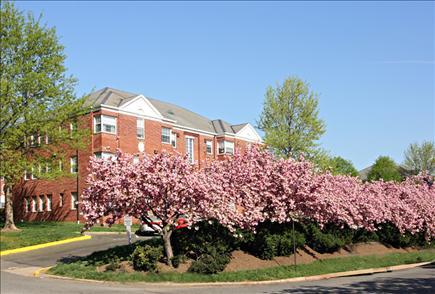
Sheffield Court was originally constructed as “Lee Gardens South” along Arlington Boulevard (Route 50) in Arlington to house federal workers, within an easy commute by bus to Washington. It is a stylish place to live today.
It has been said federal mortgage insurance programs arrived in 1934 during the Great Depression though any real meaning didn’t come until the 1940s and ’50s. No one had any money to rent let alone buy. Prior to the 1930s, roughly half of the U.S. population owned a home. This number grew to 60 percent – more than half – as the war unfolded and ended in 1945.
As a result, suburbia grew like never before. When I think of my suburban Washington memories from 60 years ago, the architectural pattern was clear, based on subtle nuances. There’s were clear architectural difference between pre-war and post-war homes. I believe the economics were affected by the cost and type of building materials. There was also a trend in the 1940s and early ’50s that brought us steel casement swing-out windows, the drift away from radiators (hot water heat) to central heating and air conditioning, heavily sculptured bathroom fixtures to mid-century modern, steel kitchen cabinets and the move to wooden cabinets to warm things up, one-car garages instead of carports and driveways, and the incorporation of low-cost, substandard building materials.
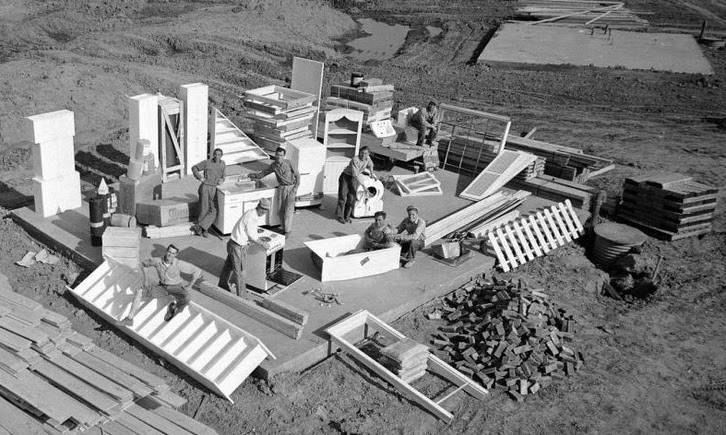
Builders and developers went to “reverse” assembly line approaches to where all of the parts necessary to build a home were dropped on lots waiting for labor, much of which was not qualified to carry out what they were hired to do. Some developers got the hang of it – while some did not – filing bankruptcy, leaving homebuyers empty-handed without their deposits.
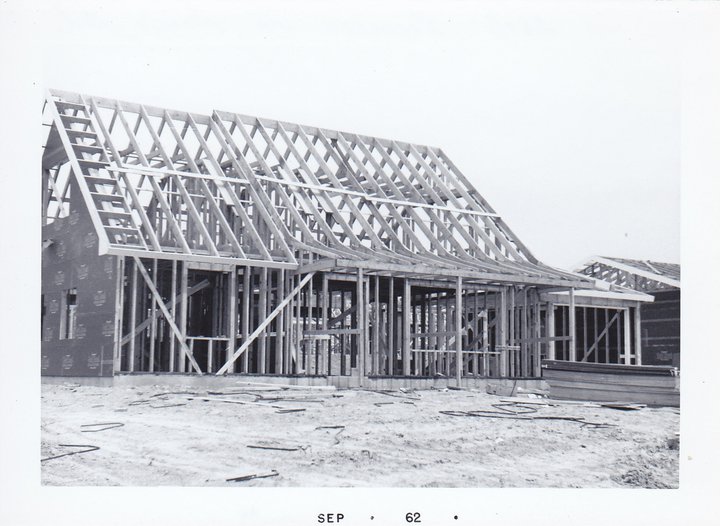
Levitt & Sons turned rural Prince George’s County into suburbia overnight with its “Belair At Bowie” community, with more than 9,000 homes built in historic PG County in nine years. Levitt’s reach was far and wide – well into Southern Maryland and north to Laurel and Howard County. Other prominent developers shared in the prosperity around the District line.
It can be safely said federal housing programs brought us suburbia and home ownership, but not without the price paid by urban areas that have suffered as a result. Ironically, there are suburban areas close into cities that have deteriorated with age and neglect. This was something we never could have envisioned a half century ago playing kickball in the streets until the streetlights came on.
As always – I invite your feedback and experiences.

