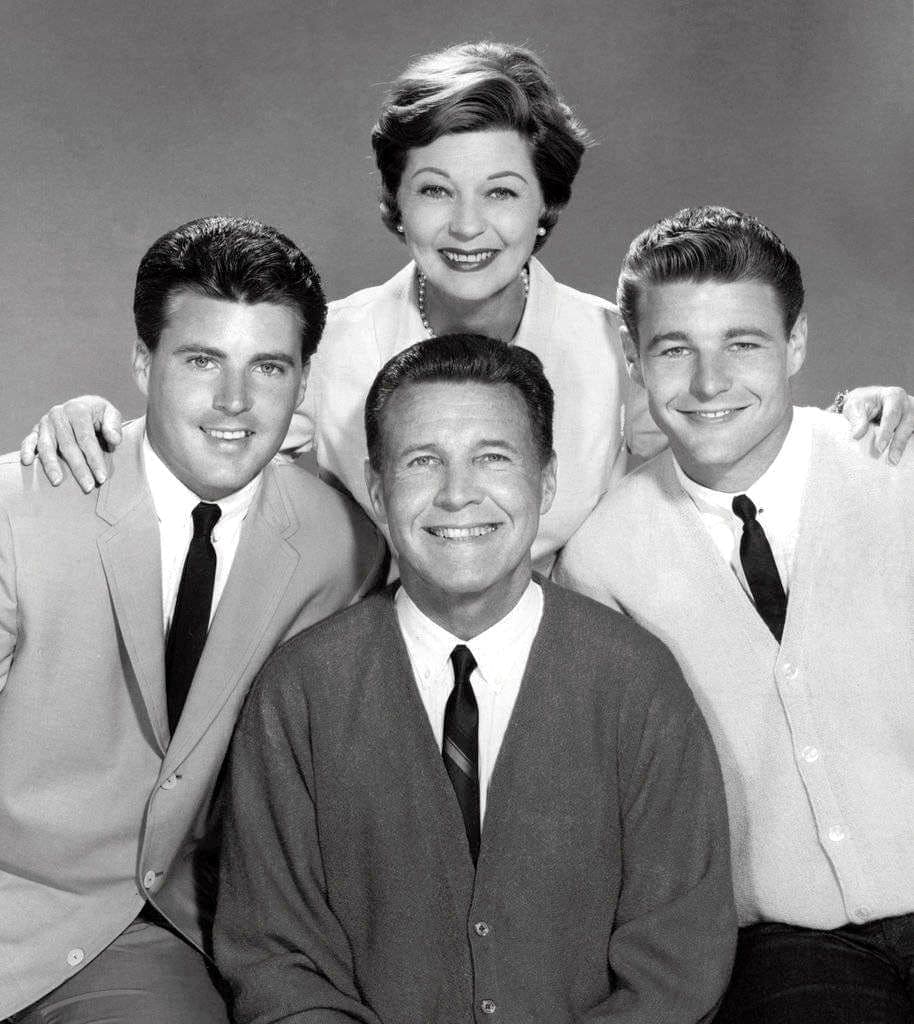
Who could forget the zany “Adventures of Ozzie & Hariett,” which aired on ABC from October 1952 until April of 1966? I suppose it could be easy to forget – the once popular television sitcom that couldn’t have tried harder to wear out its welcome.
Ozzie & Hariett lasted 14 television seasons.
An inside look at the Nelson family could be considered television’s first “reality” show, which wasn’t reality at all – but instead fiction – starring the “entire Nelson family” – Ozzie, Hariett, David, and Ricky. It began as a long-running radio program, segueing into television in 1952.
The radio Nelsons launched in March of 1944 when legendary comic Red Skelton was drafted into World War II. “The Adventures of Ozzie & Hariett” debuted on CBS radio in Skelton’s absence, eventually moving to NBC in 1948, then back to CBS in 1949. In the end, Nelsons had produced 402 radio broadcasts.
As radio evolved into television, the Nelsons followed suit by moving their program to ABC TV in 1952. I suppose the Nelsons were right for the time, with plenty of witty banty amongst the cast in family situations, which included Don DeFore as neighbor “Thorny,” who moved on to “Hazel” in 1961 to star as prominent lawyer and boss, George Baxter. David and Ricky Nelson joined the radio cast in 1949 at ages 12 and 8. It would become their constant companion for the next 17 years.
Because Ozzie was both an entertainer and a successful businessman, he founded Stage Five Productions, convincing ABC to sign a 10-year contract that kept the Nelsons flush with cash whether the series continued or was cancelled.
They couldn’t lose.
Though “America’s Favorite Family…” attempted to look like real life, it was anything but. The Nelson’s home, which was in the opening theme, was located in the hills above Hollywood and Los Angeles. Most of the filming was performed at the General Service Studios Stage 3 sound stage where Ozzie recreated the interior of their home while most exterior shots were in Los Angeles instead of a studio backlot, which offered realism to the show’s fictional community of Warfield.
Nelson family storylines were typical of the era, with domestic issues most experienced at the time. It is true most of these scripts were taken from the Nelson family’s personal lives. The cast of characters increased when Rick married Kristin Harmon and David June Blair, who appeared in the show as themselves.
Like Ward Cleaver of “Leave It To Beaver,” no one ever really knew what Ozzie Nelson did for a living though his role as a bandleader was mentioned periodically. Although Ozzie pursued an education in law as a young man in New Jersey, he wound up with a career as a bandleader, actor, and producer. Ozzie wrote most of the shows for the series’ entire run, which might explain how dry they were.
The show needed sensational writers.
Rick Nelson launched his music career on the show, appearing at each show’s ending before the closing theme. Rick’s career continued into the 1980s until an unfortunate and tragic plane crash ended his life in 1985. David continued in the entertainment industry as a director. He passed in 2011. Hariett did occasional acting, retiring to the Nelson family’s Laguna Beach home where she lived until her death in 1994. Ozzie was plagued with malignant tumors that ultimately led to his death in 1975.
Although “Ozzie & Hariett” appeared an intimate look into a wholesome American family, it was never what it appeared on screen. Although Ozzie appeared the easy-going husband, father, and neighbor, he was quite the high-achieving taskmaster. It has been written he robbed David and Rick of their childhoods, stressing the importance of their obligation to the show. This may explain the somber mood in some of the shows and the blank facial expressions. These young men were not actors, nor do I believe they ever even wanted to act. The stress and pressure of a grueling weekly shooting schedule had to have taken its toll, which makes you wonder whatever happened to their dreams.
It can safely be said “Ozzie & Hariett” wore out its welcome long before it finally wrapped up in 1966. The theme and content never left the 1950s. What’s more, it was never high in the ratings. The best it ever did was 29th in the Nielson ratings. It made the transition to color in its final season. Too little too late.

