It was a steamy late summer afternoon in the mid-Atlantic when the family crowded around my grandmother’s 1950s vintage RCA black and white console television for a surreal look at the Moon like we’d never seen it before. A youthful Neil Armstrong and Edwin “Buzz” Aldrin of Apollo 11 (Apollo’s fifth mission) descended to the surface and – in a dusty white powdery blast – landed and shut down while Command Module pilot Mike Collins and some 600 million of us looked on.
The Eagle had landed.
We held our breath and sighed with relief with Armstrong’s words. Like most Americans, our next thoughts were “what’s next?” Armstrong would take bold yet cautious steps down the ladder, sinking his feet into the powdered sugar texture lunar soil, describing what it was like to do that as the first human being to ever take steps on another celestial body outside of Earth’s gravitational pull. Aldrin would take those next steps, knowing he and Armstrong were etching their names into both the lunar firmament and Earth history books.
These courageous gentlemen were on their second and final journey into space, knowing they would never travel outside of Earth again. We didn’t completely understand it then – but our technology was primitive at the time, yet advanced for its day. It took raw guts and real tenacity to strap your backside to the top of the most power rocket booster of its time – the Saturn V – and get ride in mankind’s greatest hot rod.
The Saturn V consisted of several parts – the command module on top (the cockpit), the service module, which provided propulsion , electricity, oxygen for breathing, and water for the command module; the lunar module with two stages – the descent stage with an engine for landing on the surface – and a smaller engine for the return to the command module above and a return to lunar orbit. This does not include the powerhouse stages that got them into space.
The Apollo 11 astronauts splashed down in the Pacific for a “welcome home” like they’d never experienced in their entire lives. We were suddenly in a world where man had walked on the Moon. Other Apollo missions would follow before budget cuts ended the Apollo program in the 1970s. It would be more than 50 years before we ventured into lunar orbit again.
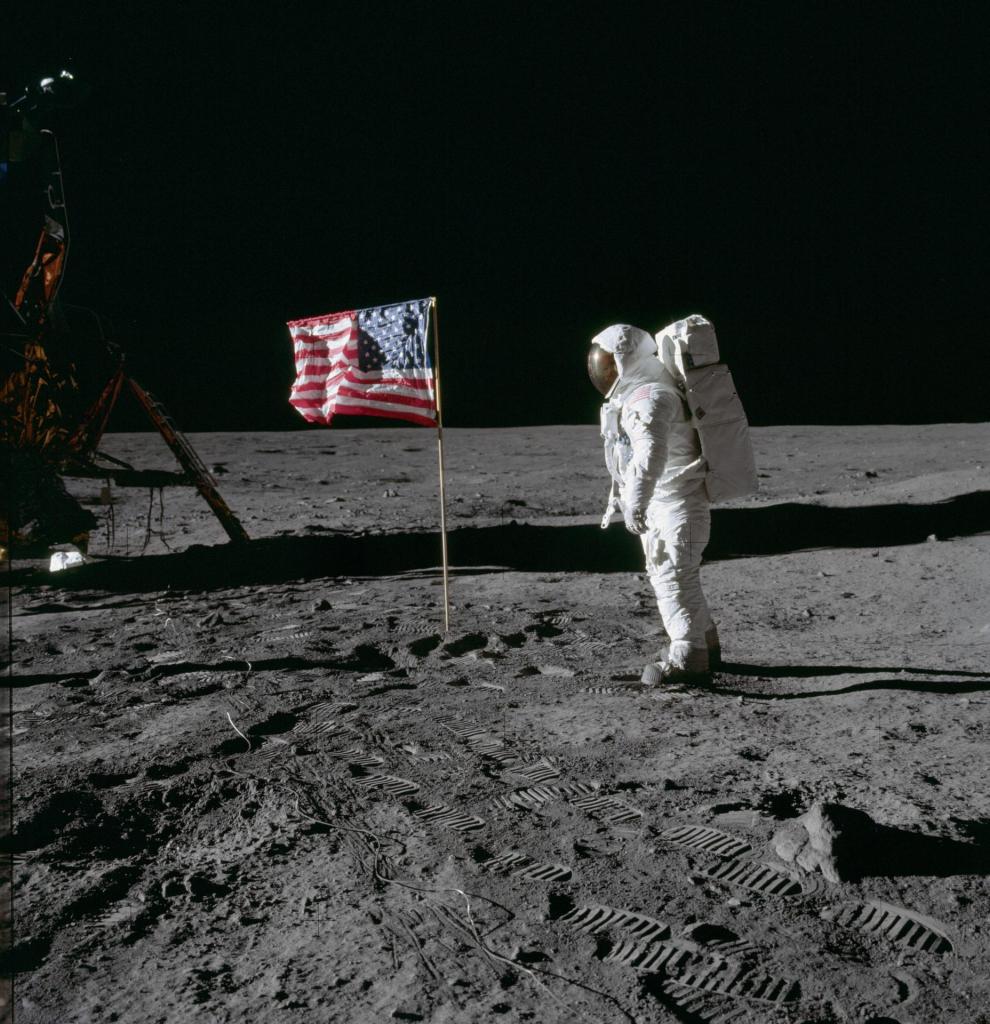
Apollo 11 was one for the history books for all of mankind. It would be more than 50 years before we ever went back.
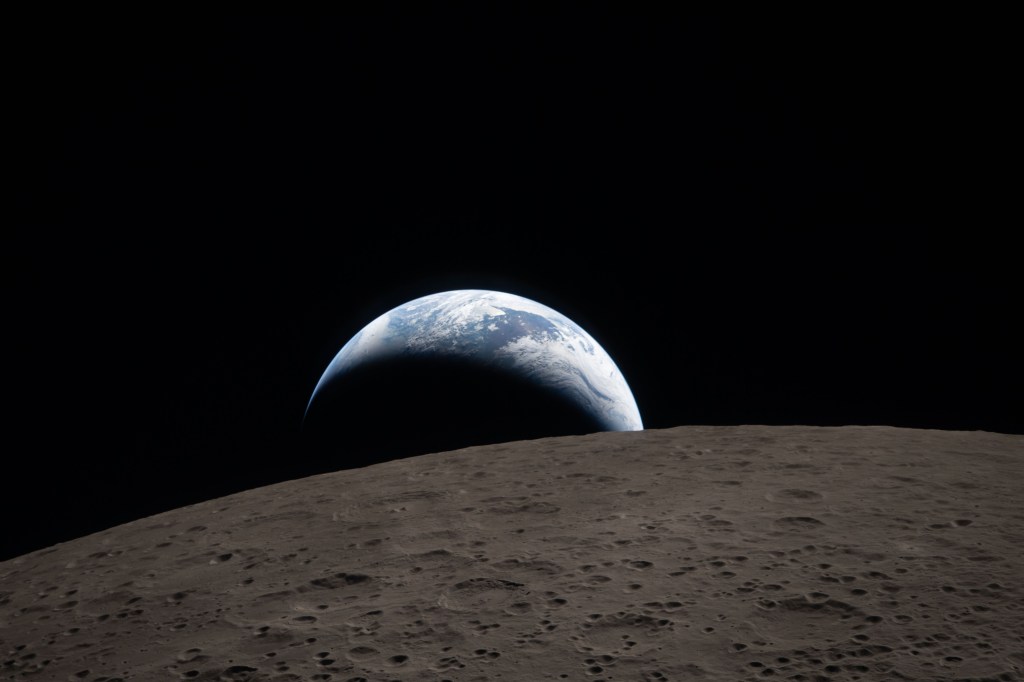
Artemis I and II are the beginnings of our return to the Moon, with Artemis II being another NASA launch for the history books, putting human beings the farthest from Earth that mankind has ever been. This has been but a reminder of how tiny we are in a vast cosmos, watching Earthrise from a different perspective this time around from the dark side of the Moon.
Artemis II was something of a “test drive” into lunar orbit to see how NASA’s latest and greatest achievement performed. The crew did some sightseeing and then came home from the most remarkable journey they will ever witness in a lifetime of service to country. Unless you’ve ever strapped millions of pounds of both dead weight and brute thrust to your backside, you will never understand what it was like for four remarkable space patriots.
At its origins in 2017, Artemis II was known as Exploration Mission-2 (EM-2), with the objective of validating the Orion spacecraft’s systems and function. Think of this as the foundation for longer lunar missions and exploration, with the ultimate destination being Mars.
Four crewmembers, Victor Glover, Christina Koch, Jeremy Hansen, and Reid Wiseman, embarked on this mission with a great sense of awe and adventure.
In their close lunar flyby, they achieved the greatest human distance ever from planet Earth – some 252,756 miles from the Earth’s surface – which surpassed Apollo 13’s 248,655 miles. There will be more Artemis missions to the Moon, with humans touching the lunar soil in due course. We just have to be patient.
This is a reminder that although we have serious problems to solve in America at this time, remember we remain the Champions, cognoscente of who we really are as courageous patriots who will collectively rise again.

